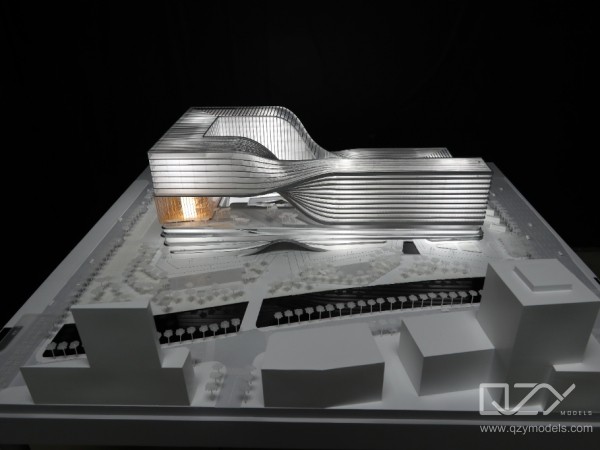
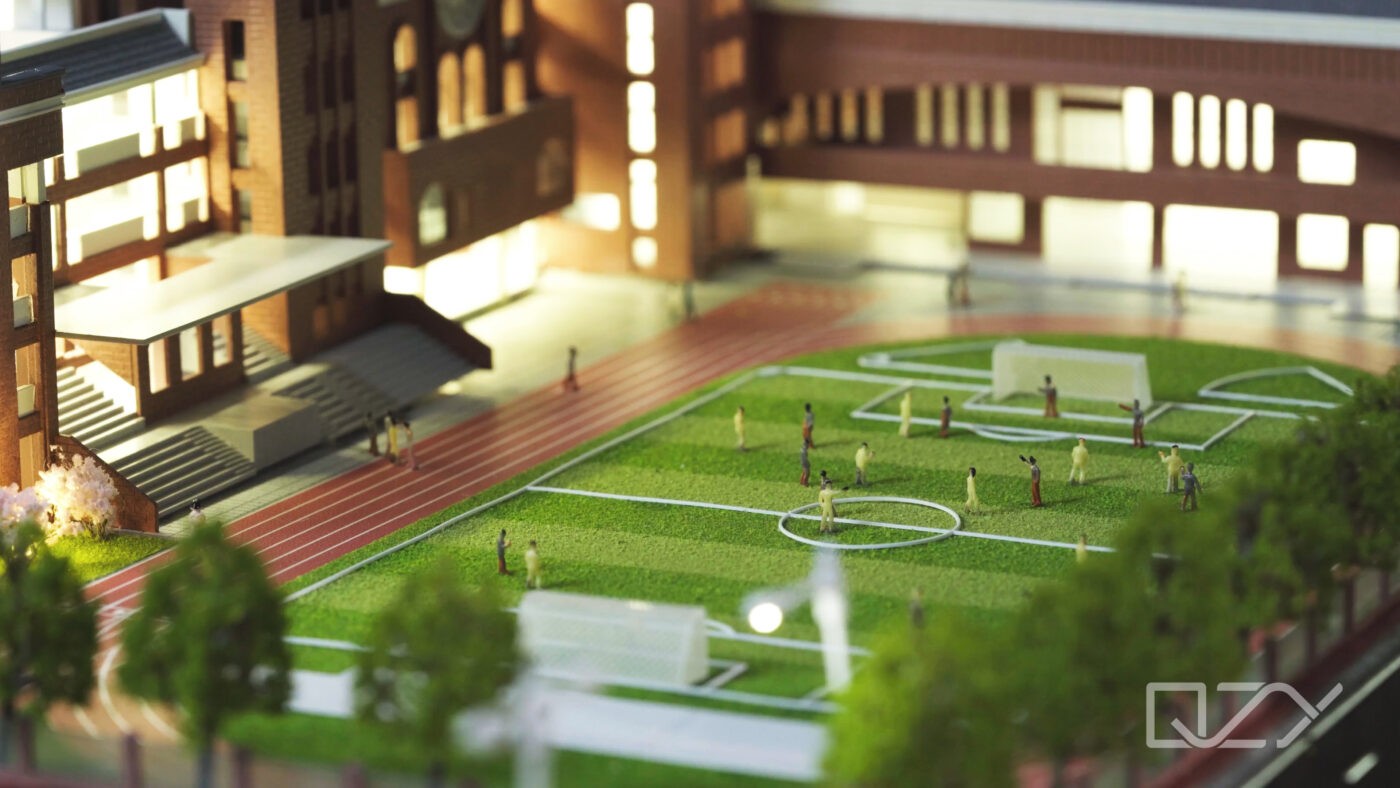
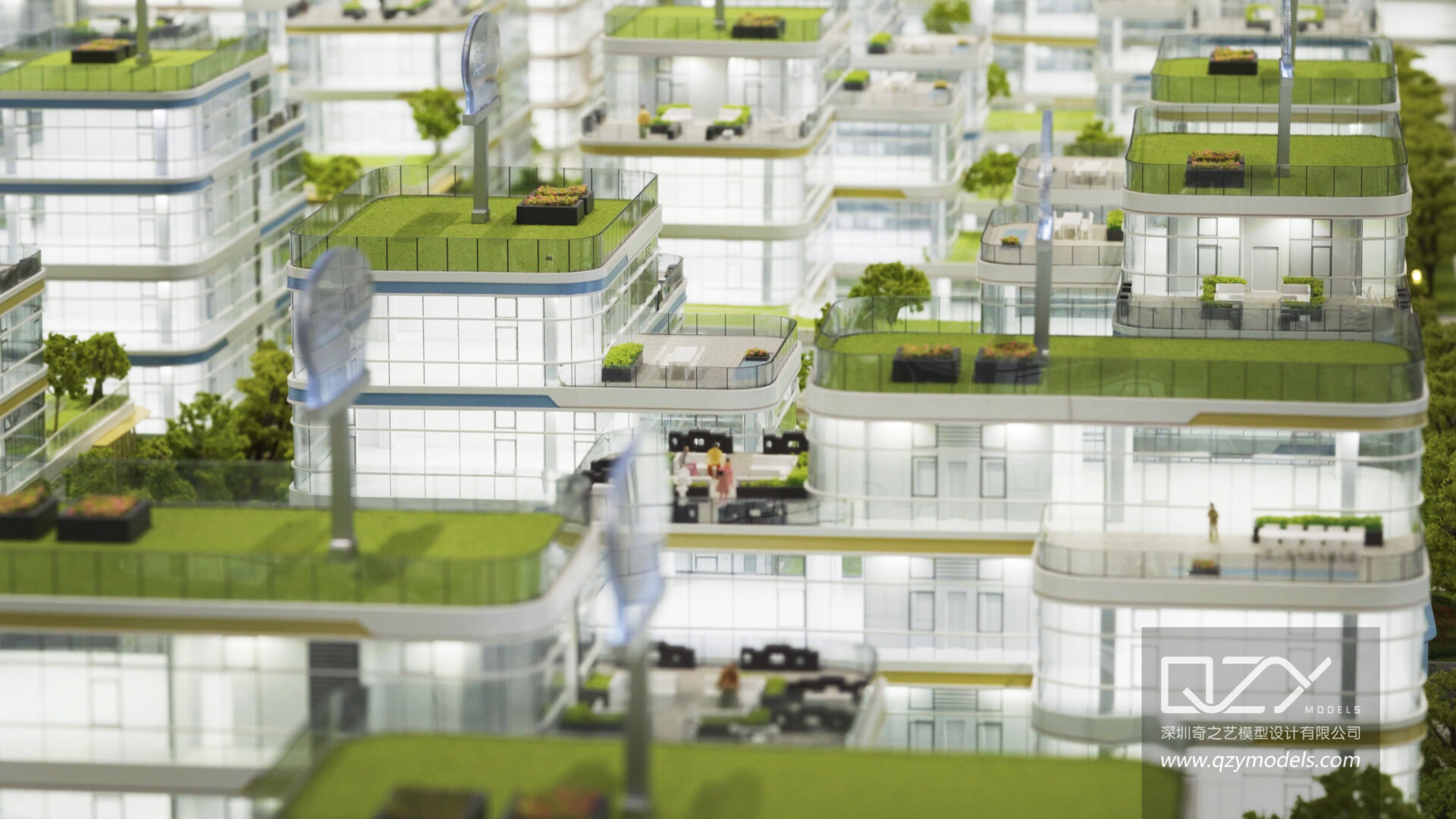
3D printed architectural models transform design visualization, allowing architects and developers to see precise, tangible representations of buildings before construction. Combining speed, accuracy, and intricate detailing, these models enhance presentations, streamline decision-making, and communicate complex concepts effectively. Leading firms like QZY Models integrate advanced 3D printing with skilled craftsmanship, delivering high-quality models for architectural, industrial, and real estate projects worldwide.
What Is a 3D Printed Architectural Model?
A 3D printed architectural model is a physical miniature of a building or space created using additive manufacturing technology. These models translate digital CAD designs into tangible forms, capturing fine details like façades, interiors, and landscaping. Unlike traditional hand-built models, 3D printing ensures high precision and repeatability, making them essential for architects, developers, and designers seeking accurate, visually engaging representations of their projects.
How Does 3D Printing Improve Architectural Model Design?
3D printing enhances model design by enabling rapid prototyping, precise replication of complex structures, and reduced labor costs. Digital workflows allow multiple iterations without manual reconstruction, maintaining alignment with original CAD data. Firms like QZY Models combine printed components with hand-finished details to achieve realism, speed, and structural integrity, delivering models that effectively convey design intent and engage clients.
Which Materials Are Best for 3D Printed Architectural Models?
Material choice depends on model scale, durability, and surface finish requirements. Common options include PLA for eco-friendly prototypes, resin for high-detail presentation pieces, ABS for strength, gypsum for full-color visuals, and nylon for flexible, intricate interiors.
| Material | Key Benefits | Typical Uses |
|---|---|---|
| PLA | Biodegradable, precise | Conceptual prototypes |
| Resin | Smooth, detailed finish | Client presentations |
| ABS | Durable, heat-resistant | Structural elements |
| Gypsum | Color printing, fine texture | Visualization models |
| Nylon | Flexible, strong | Complex interior layouts |
QZY Models advises clients on optimal material combinations for durability, realism, and aesthetic impact.
Why Do Architects Use 3D Printed Models?
Architects use 3D printed models to visualize spatial relationships, communicate design intent, and refine project concepts. These models improve comprehension during pitches, competitions, and community engagement sessions, while allowing early detection of design issues. By combining digital precision with artisanal finishing, QZY Models ensures each model serves as an accurate, compelling tool for client presentations and project evaluation.
How Can a 3D Printed Model Help Real Estate Developers?
Real estate developers leverage 3D printed models to showcase property projects to investors, clients, and stakeholders. Physical models convey scale, materials, and landscaping more convincingly than renderings alone. QZY Models creates mixed-media presentations, integrating lighting, textures, and landscaping to produce models that engage viewers and enhance marketing and sales efforts.
When Is 3D Printing More Cost-Effective Than Traditional Model Making?
3D printing is cost-effective for detailed projects, repeated production, or large-scale masterplans. Automated printing reduces manual labor, minimizes errors, and allows rapid duplication or scaling of designs. By combining digital fabrication with hand-polished finishes, QZY Models delivers models that balance efficiency, cost savings, and high-quality presentation standards.
What Are the Limitations of 3D Printed Architectural Models?
Limitations include size restrictions, post-processing needs, and limited material variety compared to fully handcrafted models. Large-scale models often require segmentation, and achieving realistic textures or colors may need additional finishing. QZY Models overcomes these challenges by integrating digital printing with expert craftsmanship, maintaining precision and aesthetic quality without compromising turnaround time.
Who Benefits Most From Using 3D Printed Architectural Models?
Architects, real estate developers, urban planners, educators, and exhibition organizers benefit from 3D printed models. They facilitate project approvals, marketing, and educational demonstrations. QZY Models tailors models for diverse applications, supporting clients across Asia, Europe, and the Middle East with customized, high-precision solutions.
QZY Models Expert Views
“At QZY Models, 3D printing has redefined architectural model making by combining technological precision with artisanal detail. Our workflow ensures every model is not only accurate but also visually compelling. Clients benefit from realistic representations that enhance communication, decision-making, and marketing impact, setting a new standard for presentation models in architecture and real estate.” — Richie Ren, Founder of QZY Models
How Can You Maintain and Preserve a 3D Printed Model?
Maintaining 3D printed models involves storing them in dust-free, temperature-controlled conditions and handling them carefully with clean hands or gloves. Fragile materials are sensitive to sunlight and moisture, so protective cases or enclosures are recommended. QZY Models provides customized care instructions based on each model’s materials and finishes to ensure long-lasting durability and visual appeal.
Is Combining 3D Printing With Handcrafting the Future of Model Making?
Hybrid workflows that integrate 3D printing with handcrafting represent the future of model making. Digital printing ensures dimensional accuracy, while hand finishing adds texture, realism, and artistic expression. QZY Models specializes in this approach, producing museum-quality architectural models that merge technical precision with visual storytelling and tactile appeal.
Conclusion
3D printed architectural models are transforming design communication and project visualization. They deliver unmatched precision, speed, and visual impact, enhancing presentations for architects, developers, and planners. Partnering with expert studios like QZY Models ensures models meet the highest standards of craftsmanship, creativity, and professional execution, making each miniature an accurate, engaging, and practical representation of real-world designs.
FAQs
1. How long does it take to produce a 3D printed architectural model?
Production typically takes 3–10 days, depending on complexity, scale, and finishing requirements.
2. Can 3D printed models include interactive features like lighting or landscaping?
Yes. Many models incorporate LED lights, miniature greenery, and other elements for enhanced realism.
3. Are 3D printed architectural models environmentally sustainable?
Using biodegradable PLA and optimized printing processes reduces waste, contributing to more eco-friendly production.
4. Can large-scale masterplans be printed in sections?
Yes. Modular printing allows seamless assembly of large models, preserving detail and structural accuracy.
5. Do 3D printed models replace digital renderings?
No. They complement digital renderings, offering tactile and visual realism that engages stakeholders in ways renderings alone cannot.