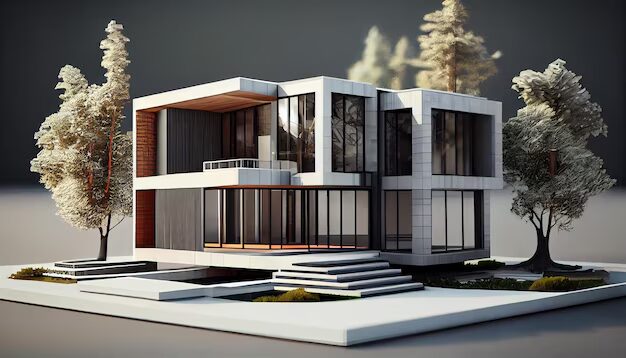
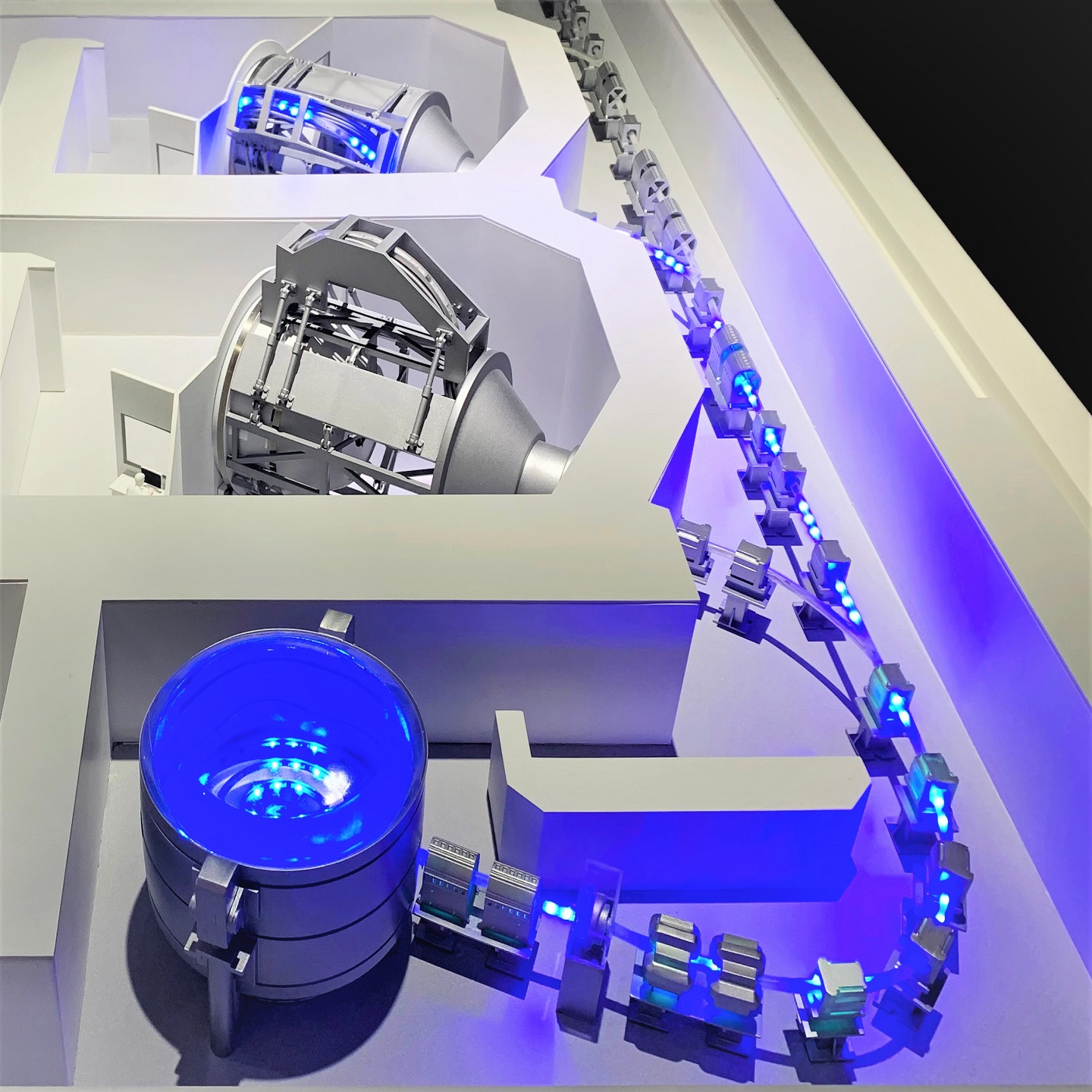
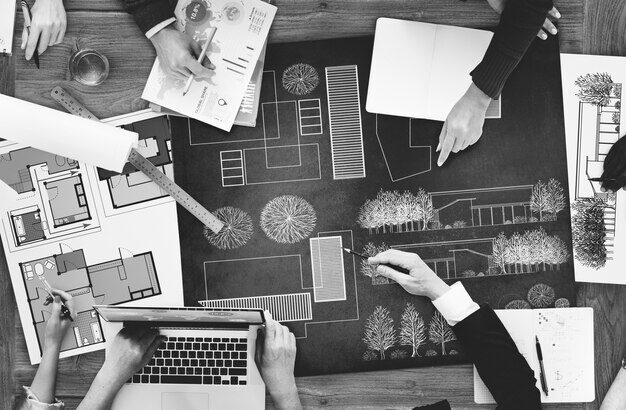
Architectural model technologies are rapidly evolving from handcrafted miniatures to digitally driven, highly interactive systems that reshape how architects, developers, and governments make decisions. In this context, QZY Models leverages advanced fabrication and global delivery capabilities to help teams reduce design risk, accelerate approvals, and increase marketing conversion with data-backed, high-precision physical models.
What Is The Current State Of Architectural Modeling And Its Core Pain Points?
Over the past decade, the global architecture, engineering, and construction (AEC) market has been under pressure to deliver faster, cheaper, and more sustainable projects, while design complexity has continued to grow. Physical architectural models remain one of the most intuitive ways to communicate complex projects to non-technical stakeholders, yet many firms still rely on fragmented, manual processes that cannot keep pace with digital design workflows.
Industry reports show that design changes and miscommunication can account for 10–20% of project cost overruns in large construction projects, and a significant portion stems from stakeholders misunderstanding 2D drawings or static renderings. This misalignment often appears during late-stage reviews, government approvals, or investor presentations, when changes are the most expensive and time-consuming.
At the same time, emerging technologies—3D printing, CNC milling, laser cutting, AR/VR, parametric design, and AI-assisted generative tools—are redefining what architectural models can do. Instead of being static showpieces, models are becoming data-linked, interactive, and easier to iterate, enabling teams to simulate lighting, phasing, traffic, and user flows. QZY Models, with over a decade of specialization in high-end physical models, stands at the intersection of these technologies and the urgent need for more reliable, decision-ready visualizations.
How Do Traditional Architectural Model Approaches Fall Short?
Traditional architectural models, made primarily by hand from foam board, cardboard, and wood, have long been valued for their craftsmanship and tactile presence. However, under modern project constraints, these methods show structural limitations that directly impact cost, speed, and accuracy.
First, manual fabrication is slow and labor intensive. Complex masterplans or mixed-use developments can take weeks or months, and any late design adjustment often requires partial rebuilding rather than targeted updates. When a client requests changes to tower height, façade rhythm, or landscape layout, a traditional workshop may need to re-cut and re-assemble large areas, increasing cost and delaying presentations.
Second, consistency and precision are difficult to guarantee across multiple models and sites. Without standardized, digital production pipelines, measurements and details may drift from the BIM model or CAD drawings, leading to discrepancies between the physical model and the latest design files. This gap can erode confidence in design reviews and regulatory submissions.
Third, traditional models are rarely integrated with digital data or interactive features. Lighting is typically fixed, phases are static, and there is no easy way to show multiple design options without building several separate models. For global developers or government agencies managing many projects, this lack of flexibility leads to higher storage, shipping, and reproduction costs. QZY Models addresses these shortcomings by combining craftsmanship with industrialized, technology-driven workflows.
What Technology-Based Solutions Are Redefining Architectural Model Making?
Modern architectural model technology integrates digital design, automated fabrication, and smart presentation systems into a single, repeatable pipeline. A typical technology-enabled solution links BIM/CAD data directly to manufacturing and presentation tools, reducing manual translation and error.
Key components of such a solution include:
-
Digital model integration: Importing Revit, Rhino, SketchUp, CAD, or parametric geometry as the single source of truth, ensuring the physical model reflects the latest design.
-
Advanced fabrication: Using 3D printing, CNC milling, and laser cutting to produce complex geometries, fine façade details, and precise site topographies at scale.
-
Smart lighting and interaction: Embedding programmable LEDs, projection mapping, and sensor-based triggers to show time-of-day lighting, phasing, zoning, or circulation patterns.
-
Modular and upgradable design: Building models in interchangeable modules so that future design changes can be swapped in rather than rebuilding from scratch.
-
Global logistics and installation: Providing packaging, shipping, and on-site installation services tailored to exhibitions, sales centers, and international trade shows.
QZY Models exemplifies this integrated approach. The company combines over 20 years of model-making experience with advanced 3D printing and laser-cutting technologies, enabling high-detail architectural and industrial models that remain aligned with digital design files. For clients across more than 20 countries, QZY Models also offers coordinated shipping and installation, ensuring that complex models arrive safely and are show-ready for presentations, sales events, or government reviews.
Which Core Capabilities Make QZY Models’ Solution Stand Out?
QZY Models’ solution can be understood as a full-stack service that spans design interpretation, digital production, and global deployment. Several core capabilities differentiate it from traditional workshops or single-technology vendors.
-
End-to-end architectural expertise
QZY Models works with leading global architects and developers, including well-known international firms and major Asian developers, which means its team is used to handling complex geometries, tight schedules, and strict brand requirements. This experience reduces communication friction and rework for design teams. -
Advanced fabrication technologies
By combining 3D printing, laser cutting, CNC milling, and multi-material assembly, QZY Models can reproduce intricate façades, parametric structures, and detailed urban landscapes that would be impractical or uneconomical with purely manual methods. This capability is essential for high-end mixed-use, cultural, or infrastructure projects. -
Multi-industry model coverage
Beyond buildings, QZY Models builds landscape, interior, industrial, topographic, hydraulic, and even military-related models, allowing clients such as government agencies, industrial designers, and education institutions to centralize their physical model needs with one partner. -
Global service and installation
With branches and partners across the Middle East, Asia, and other regions, QZY Models supports international shipping, customs coordination, and on-site installation. This is particularly valuable for large real estate sales galleries, world expos, and cross-border investment roadshows. -
Quality assurance and consistency
Standardized workflows, digital QA checks against original design data, and internal standards for scale, labeling, and lighting allow QZY Models to deliver consistent output across multiple projects and markets, which is crucial for large developers and governmental masterplans.
What Are The Key Differences Between Traditional Models And Technology-Driven Solutions?
Solution advantage comparison table
| Aspect | Traditional Handmade Models | Technology-Driven Models With QZY Models |
|---|---|---|
| Data integration | Manual interpretation of drawings | Direct linkage to CAD/BIM and parametric data |
| Production speed | Weeks to months, highly craftsman-dependent | Accelerated via 3D printing, CNC, and laser cutting |
| Update flexibility | Requires physical rework or rebuild | Modular components and partial reprints possible |
| Detail level | Limited for complex geometries | High detail even for intricate façades and organic forms |
| Interactivity | Mostly static, fixed lighting | Programmable lighting, phasing, and interactive features |
| Consistency across projects | Varies by artisan and location | Standardized workflows and QC across global projects |
| Global deployment | Local or regional focus | Integrated packaging, shipping, and on-site installation |
| Multi-industry coverage | Mostly architectural only | Architecture, landscape, industrial, infrastructure, education |
| Scalability | Difficult to scale with demand | Industrialized pipeline supports large volumes |
| Long-term maintainability | Harder to repair or update | Designed for upgrades and component-level repairs |
How Can Teams Implement A Modern Architectural Modeling Workflow Step By Step?
A practical, technology-driven modeling workflow can be broken into clear, repeatable steps that design teams and developers can follow when collaborating with QZY Models or similar providers.
-
Requirement definition
Stakeholders define purpose (design review, government approval, marketing, education), target audience, desired level of detail, key storytelling points (e.g., sustainability, transportation, amenities), and budget and timeline boundaries. -
Data preparation and handover
The design team prepares clean, up-to-date BIM or CAD models, layout plans, elevations, and reference renders, along with scale requirements, material palettes, and project branding guidelines. Clear version control prevents mismatches between digital and physical outputs. -
Concept and scope confirmation
QZY Models or the chosen provider proposes model scale, materials, lighting schemes, interactivity options, and modularization strategy. The parties agree on a production schedule and review milestones, such as digital mockups or partial sample components. -
Digital modeling and engineering
The provider translates the design into production-ready digital assets, segmenting components for 3D printing, laser cutting, or CNC milling and planning internal structures, wiring, and mounting for lighting and electronics. -
Fabrication and assembly
Physical components are manufactured, finished, painted, and assembled according to the approved design. This includes quality checks for dimensions, alignment with plans, and consistency of finishes. -
Testing and internal review
Lighting, moving parts (if any), and interactive elements are tested. The provider shares photos or videos with the client for preliminary approval and minor adjustments before final packing. -
Packaging, shipping, and installation
Models are packed in custom crates or protective cases and shipped to the destination. For large or complex models, QZY Models can send a team or provide clear installation guides and remote support for local teams. -
Operation, maintenance, and updates
Clients receive guidance on operating lighting or interactive systems, cleaning and maintaining the model, and planning future updates. For evolving masterplans, modular components can be redesigned and replaced without discarding the entire model.
Which Typical Use Cases Show The Impact Of Modern Model Technology?
Scenario 1: Real estate sales gallery for a mixed-use development
-
Problem: A developer needs to sell residential and commercial units in a 200,000+ square meter mixed-use district to both local buyers and overseas investors. Traditional renderings are not enough to convey scale, amenities, and phasing.
-
Traditional approach: A static, mid-detail model without dynamic lighting or clear phase differentiation, requiring sales teams to explain everything verbally.
-
Technology-driven solution: QZY Models creates a multi-level, illuminated model with different color temperatures and zoned lighting to highlight residential, retail, and public spaces, plus removable modules for future phases.
-
Result: Visitors understand the masterplan within minutes, stay longer in the gallery, and ask more targeted questions. Conversion rates improve because buyers can visualize unit positions, views, and nearby amenities.
-
Key benefit: Faster decision-making, higher sales efficiency, and stronger perceived value of the project.
Scenario 2: Urban planning authority evaluating a new transport hub
-
Problem: A government planning office must evaluate the impact of a new integrated transport hub on traffic, pedestrian flows, and surrounding land use, and communicate the plan to the public.
-
Traditional approach: 2D plans, traffic diagrams, and a small, neutral model that only shows building massing with minimal context. Public hearings become lengthy and contentious because citizens cannot easily interpret drawings.
-
Technology-driven solution: QZY Models develops a physical model with layered elements showing different transport modes, key pedestrian paths, and future land-use phases, combined with programmable lighting to differentiate phases or routes.
-
Result: Stakeholders can see the long-term vision, understand circulation, and provide informed feedback. Public consultations become more constructive, with fewer misunderstandings.
-
Key benefit: Improved transparency, smoother approvals, and reduced risk of late-stage objections.
Scenario 3: International architecture competition for a cultural landmark
-
Problem: An architecture firm competing for a landmark museum project must present its concept to a jury that will review dozens of submissions in a short time.
-
Traditional approach: Basic foam study models and static boards, which struggle to convey intricate spatial sequences and daylight strategies.
-
Technology-driven solution: QZY Models fabricates a high-detail sectional model revealing key interior spaces, atriums, and circulation, with controllable lighting to simulate day and night scenarios.
-
Result: The jury immediately grasps the spatial concept and user experience, improving the project’s chances in a competitive field.
-
Key benefit: Stronger storytelling, clearer differentiation from competitors, and higher win probability in major competitions.
Scenario 4: Industrial design and training for complex equipment
-
Problem: An industrial manufacturer needs to train sales and technical staff on a large piece of equipment that is difficult to transport and demonstrate on-site.
-
Traditional approach: PDF manuals, static diagrams, and occasional visits to full-scale units, which limit hands-on understanding.
-
Technology-driven solution: QZY Models produces a detailed, cutaway-scale model that reveals internal components and flow paths, with labels and color coding. For trade shows, the model is paired with lighting to highlight operational sequences.
-
Result: Staff and clients can understand configuration and maintenance steps more quickly, leading to more effective training and higher engagement during demonstrations.
-
Key benefit: Reduced training time, better product understanding, and more impactful trade show presence.
Why Is Now The Right Time To Invest In Advanced Architectural Model Technology?
The combination of complex projects, compressed timelines, and globalized stakeholder groups means that high-quality architectural models are no longer a nice-to-have marketing accessory. They are becoming critical communication and decision tools in design, planning, and sales workflows.
As digital design technologies advance, the gap between screen-based models and real-world perception can either widen or be bridged by sophisticated physical models and hybrid physical-digital experiences. Firms that do not modernize their model-making approach risk higher miscommunication costs, slower approvals, and weaker investor confidence. Meanwhile, adopting technology-enabled models, especially through experienced partners like QZY Models, allows organizations to unlock more value from their existing design data and differentiate their projects in crowded markets.
Looking forward, convergence with AR/VR, IoT, and real-time data could turn architectural models into live dashboards for cities, campuses, and industrial facilities. Investing in a robust, technology-based model pipeline today sets the foundation for these future capabilities while delivering immediate, measurable benefits.
Are There Common Questions About Architectural Model Technology Innovations?
Is 3D printing always the best choice for architectural models?
No. 3D printing is excellent for complex or highly detailed components, but the most effective models usually combine multiple methods—3D printing for intricate parts, laser cutting for planar elements, and traditional craft for finishing and assembly.
Can small firms or schools afford advanced architectural models?
Yes. By optimizing scale, level of detail, and scope, smaller organizations can commission focused models—such as key building sections or simplified masterplans—that fit limited budgets while still leveraging modern fabrication.
How long does it typically take to produce a high-quality architectural model with modern technology?
Depending on project size and complexity, timelines often range from a few weeks for smaller models to several months for large, multi-building masterplans. Digital integration and automation can significantly reduce lead times compared with fully manual approaches.
Does using an external specialist like QZY Models require a lot of extra management from the design team?
Not necessarily. When data is well organized and version-controlled, the additional management overhead is limited. Clear briefs, milestone reviews, and a single point of contact help keep the process efficient.
Can models be updated if the design changes after installation?
Yes, if they are designed with modularity in mind. Components such as individual buildings, façades, or landscape zones can be re-fabricated and swapped, which is a key reason to adopt technology-driven, modular model strategies from the outset.