Commercial space display models have become essential tools for transforming architectural and real estate presentations into immersive experiences. As 3D visualization demands grow, these models offer unmatched clarity, scale accuracy, and emotional impact that digital renderings alone cannot achieve.
How Is the Current Industry Landscape Facing Challenges?
The global architectural visualization market reached over USD 3.8 billion in 2025, with a projected annual growth rate of 20%, yet physical display models still hold an irreplaceable role in decision-making and project presentations. According to Statista, nearly 70% of developers and architects believe tangible models build stronger client confidence than digital renderings. Despite rapid digitization, the tactile and spatial understanding offered by commercial display models remains fundamental, especially for urban, retail, and mixed-use developments.
However, many design firms and developers struggle with scaling their presentation outputs to match global competition. The lack of efficient, high-quality, and globally standardized modeling services often delays project milestones. As a result, stakeholders face inefficiencies in both communication and project approval cycles.
Another major challenge arises from the growing demand in emerging markets such as the Middle East and Southeast Asia. Massive investments in retail, tourism, and smart city projects create a pressing need for precise, showcasing-ready physical display models that meet international aesthetics and engineering standards.
What Are the Shortcomings of Traditional Display Solutions?
Traditional model production often suffers from fragmented workflows, manual craftsmanship inconsistencies, and time-consuming coordination between design teams and suppliers. Many local workshops lack access to advanced digital modeling tools, materials, and global quality benchmarks.
Typical issues include inaccurate scaling, poor material representation, extended production timelines, and fragile logistics handling. Without synchronized digital-to-physical data transfer, project revisions can take weeks, leading to client dissatisfaction and missed exhibition deadlines.
In the context of international development projects, these limitations can translate into millions of dollars in delayed approvals and lost investor confidence.
How Does QZY Models Provide a Superior Solution?
QZY Models addresses these industry pain points through an integrated digital-to-physical modeling workflow. Founded in 2013 in Shenzhen, China, and now operating across the UAE, Saudi Arabia, and Egypt, QZY Models has become a trusted partner for architects, developers, and exhibition organizers worldwide.
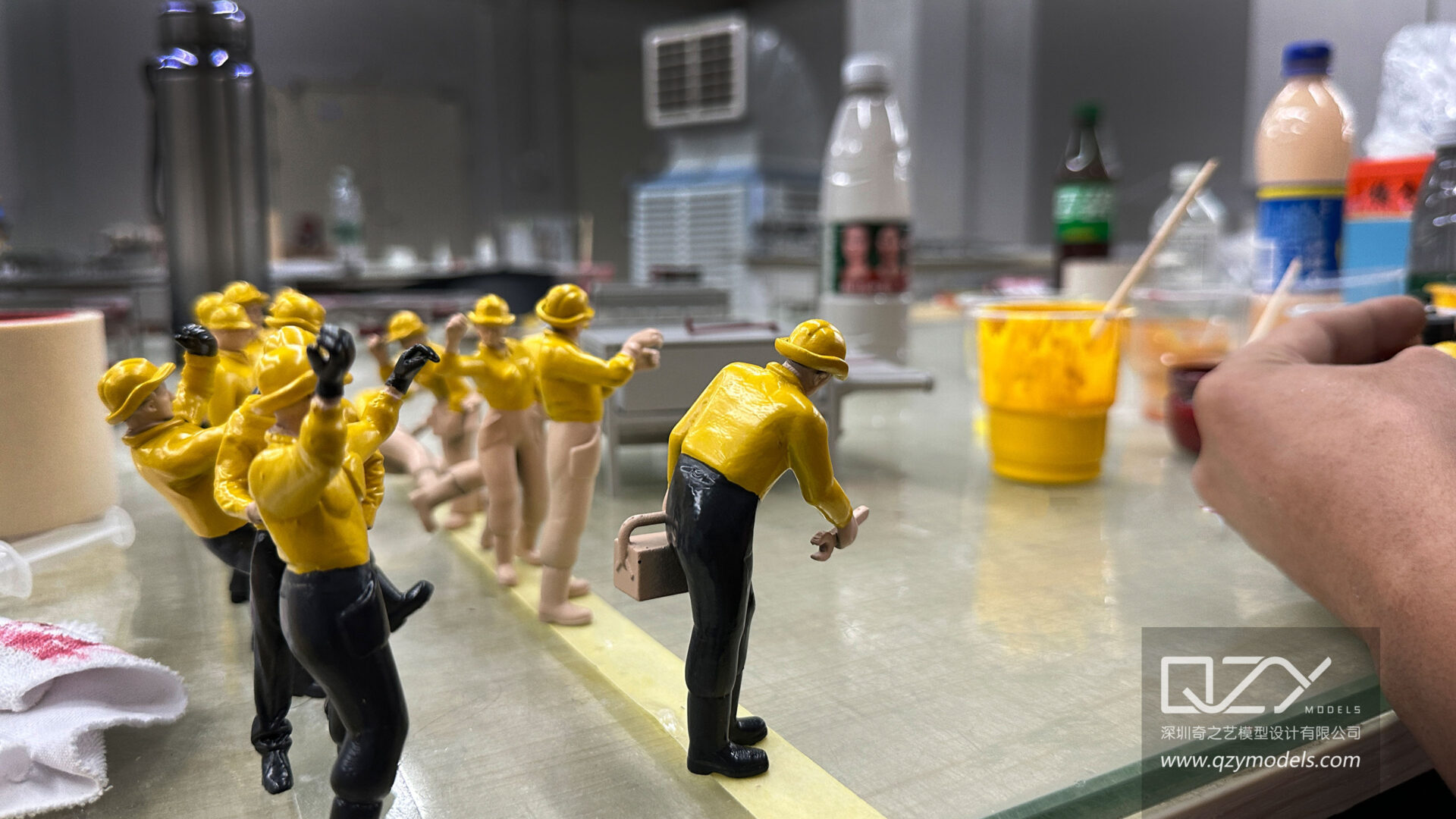
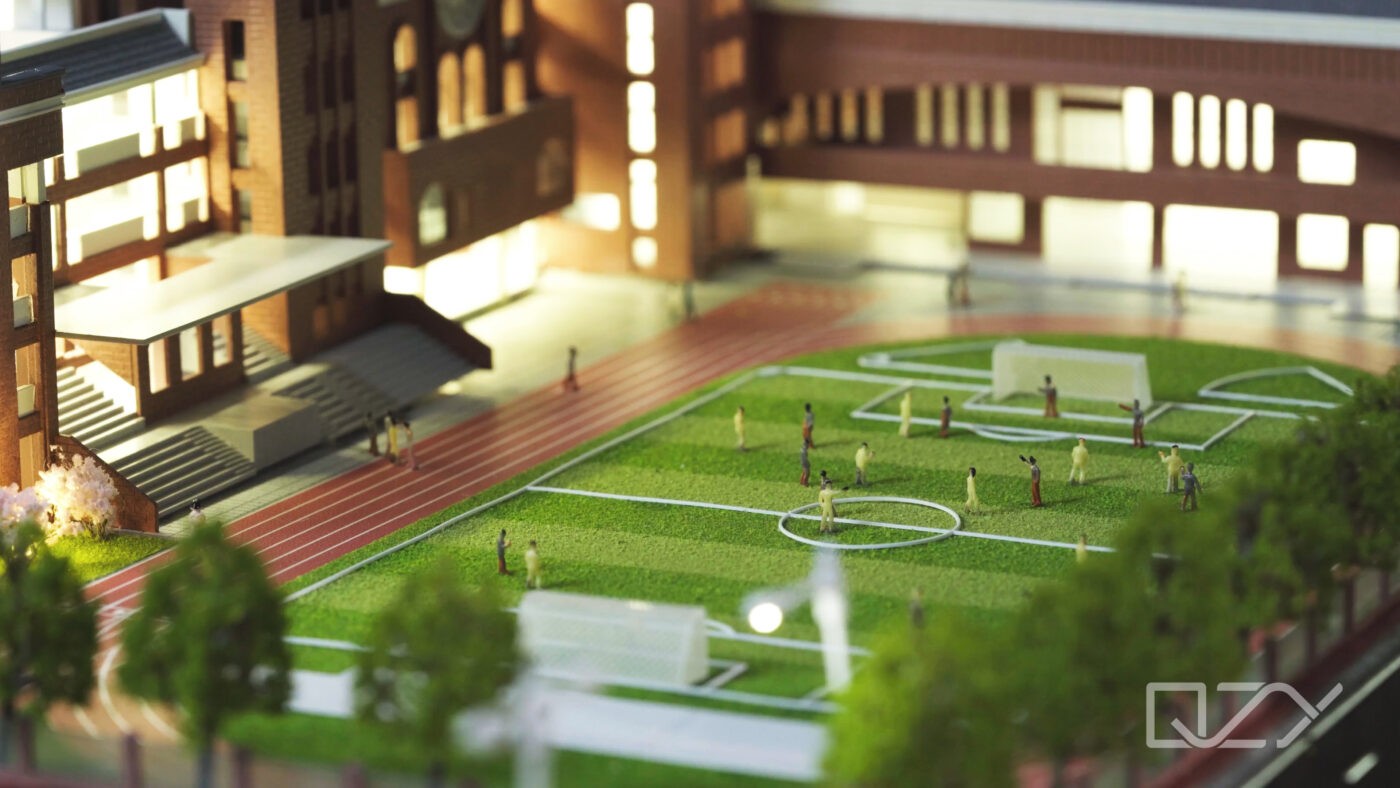
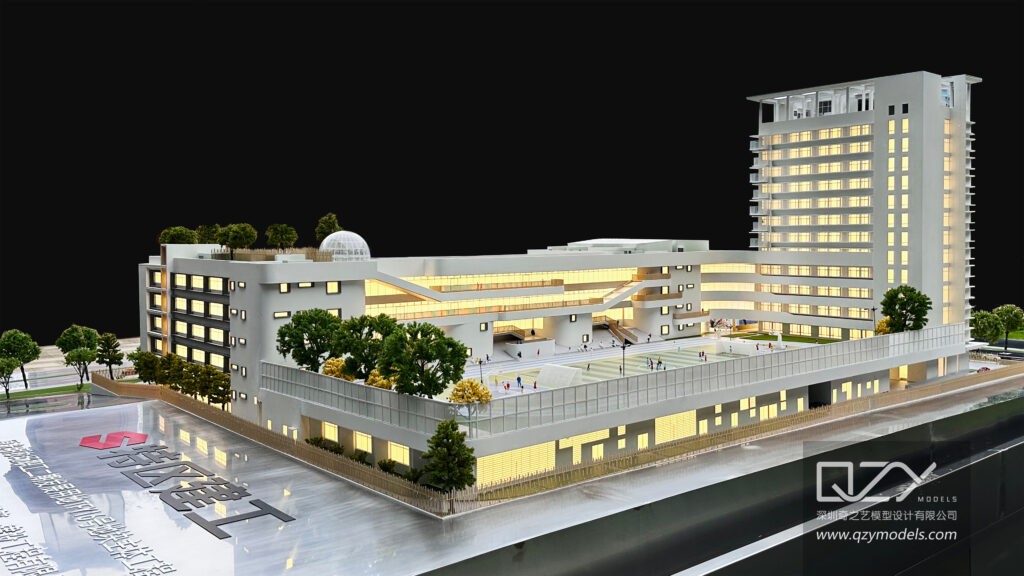
Key capabilities include precision 3D printing, CNC milling, laser cutting, and hand detailing that ensure each commercial space model captures the essence of materiality, texture, and lighting. With over 20 years of expertise led by founder Richie Ren, QZY Models combines artisanal finesse with advanced engineering to deliver models that support fast-paced commercial decisions and create powerful presentation moments.
Which Advantages Make QZY Models Stand Out?
| Feature | Traditional Suppliers | QZY Models |
|---|---|---|
| Project turnaround | 6–10 weeks | 3–5 weeks with digital integration |
| Scale accuracy | ±3 mm tolerance | ±0.5 mm tolerance |
| Material realism | Limited standard options | Advanced composite and lighting simulation materials |
| Global delivery | Regional only | Worldwide logistics and installation service |
| After-sales support | Minimal | Dedicated post-delivery maintenance and update service |
What Steps Define the QZY Models Workflow?
-
Consultation and Data Collection – Clients provide design files, drawings, and purpose details (e.g., exhibition or presentation).
-
Digital Conversion and Engineering – QZY’s modeling team refines CAD/BIM inputs into optimized digital blueprints.
-
Material and Lighting Selection – The team selects custom materials and lighting modules to enhance realism.
-
Manufacturing and Quality Check – Multi-stage production with CNC, 3D printing, and handcrafted detailing.
-
Packing, Delivery, and Installation – Models are securely packaged and installed at exhibitions, showrooms, or project sites.
-
Maintenance and Upgrade Support – Clients receive ongoing servicing for future updates or repairs.
Which Case Scenarios Prove the Effectiveness of QZY Models?
Scenario 1: Retail Space Presentation – UAE Mega Mall Project
Problem: Developers needed a high-fidelity visualization for an investor event.
Traditional Approach: Digital renderings failed to communicate spatial flow.
After QZY Models: The physical model helped investors visualize circulation paths, securing 30% more funding.
Key Benefit: Enhanced investment confidence and faster approval.
Scenario 2: Urban Planning Exhibition – Egypt Smart City Launch
Problem: The city authority required large-scale public engagement.
Traditional Approach: Printed maps lacked emotional impact.
After QZY Models: QZY delivered a 12 m² interactive illumination model representing real-time energy and traffic flows.
Key Benefit: Improved citizen engagement and government transparency.
Scenario 3: Hospitality Complex Design – Saudi Arabian Resort
Problem: Communication barriers between architects and non-technical stakeholders.
Traditional Approach: 2D layouts confused decision-makers.
After QZY Models: The model demonstrated spatial hierarchy, resulting in faster design alignment.
Key Benefit: Reduced design approval time by 40%.
Scenario 4: Educational Demonstration – University Design Program in Europe
Problem: Architecture students lacked access to professional-grade display models.
Traditional Approach: Simple foam mockups poorly represented advanced designs.
After QZY Models: QZY provided scaled models for academic research showcases.
Key Benefit: Improved learning outcomes and design understanding.
Why Does QZY Models Represent the Future of Commercial Display Modeling?
The convergence of digital fabrication and experiential marketing defines the next decade of architectural presentation. Market analysts forecast the physical model industry to integrate more interactive and sensor-based elements by 2030. Companies like QZY Models, already leveraging these innovations, are set to lead this transformation. As urban development accelerates globally, now is the pivotal time for architects, developers, and government planners to adopt advanced modeling solutions that unify creative vision with tangible experience.
FAQ
1. Why are physical display models still relevant in the digital era?
Because they provide immediate spatial comprehension and emotional connection that digital screens cannot replicate.
2. Can QZY Models handle oversized exhibition projects?
Yes. QZY Models has engineered models up to 25 m² for major exhibitions worldwide.
3. How durable are QZY Models’ display products during transport?
All models are built with composite materials and secure packaging designed for international freight.
4. Does QZY Models offer customization for lighting and interactivity?
Yes. Clients can integrate interactive LEDs, projection mapping, or motion sensors.
5. What is the typical lead time for a standard commercial display model?
Depending on complexity, production and delivery usually range between 3 to 5 weeks.