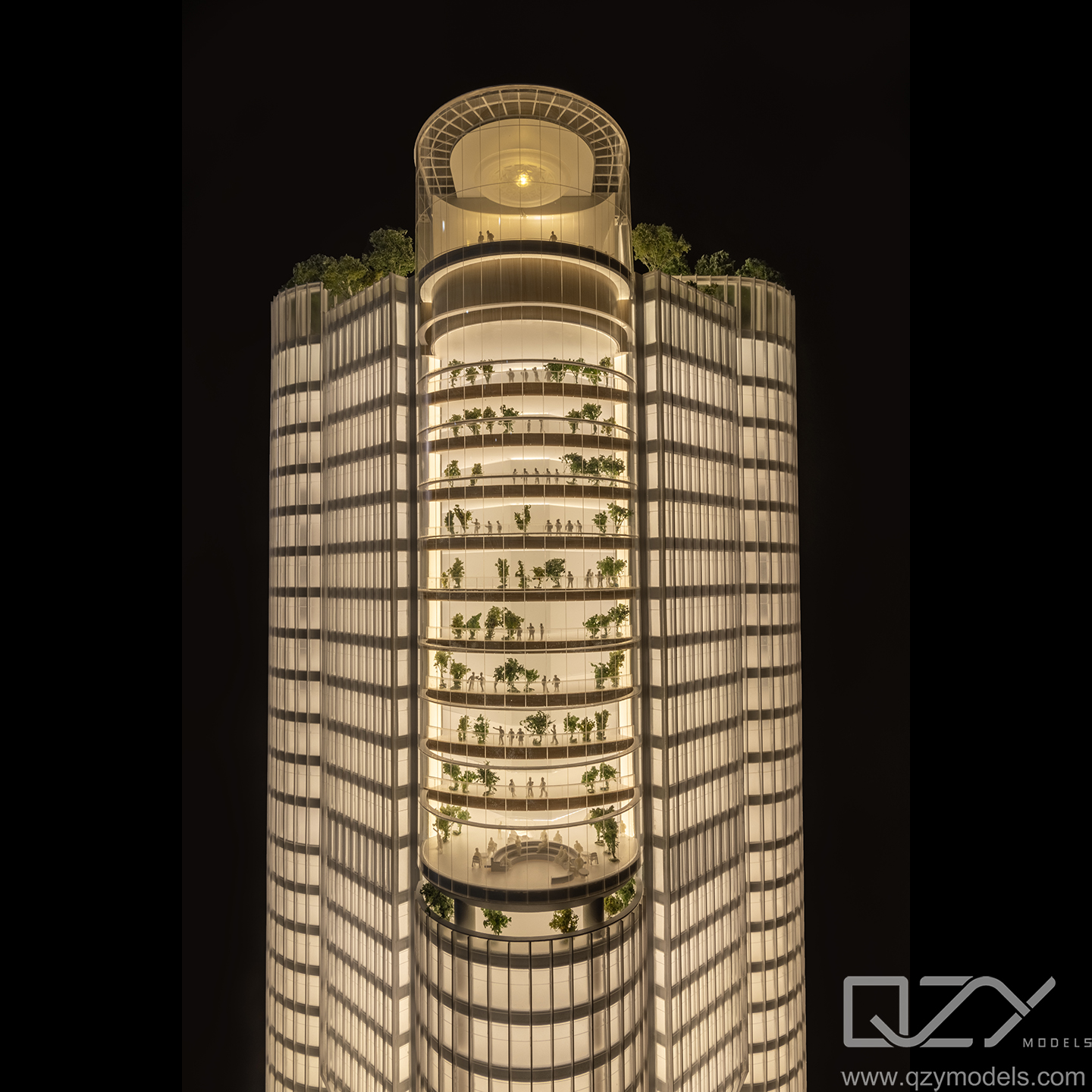
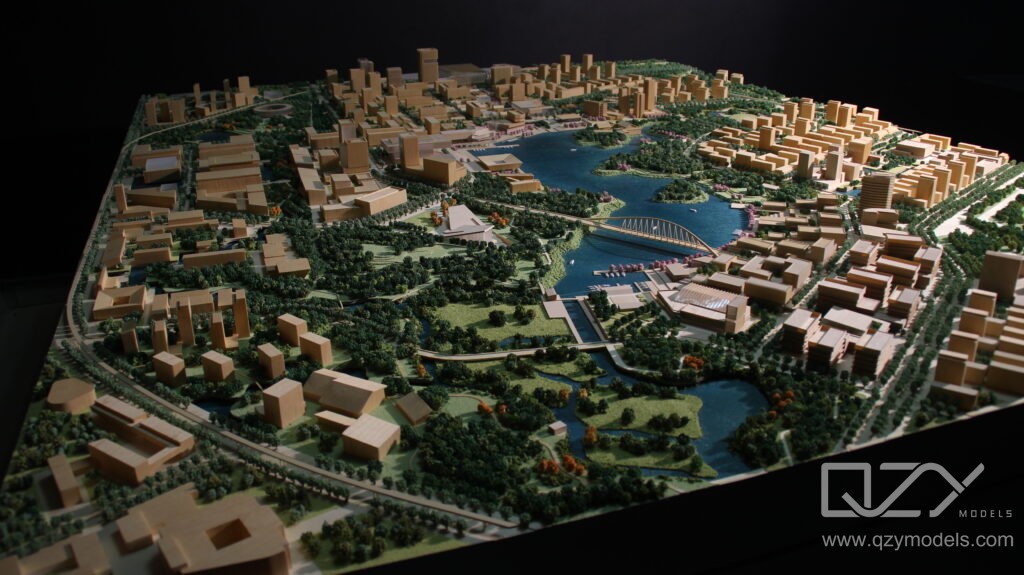
As digital expectations rise, traditional presentation tools are losing impact. Interactive scale models by QZY Models provide a tangible yet dynamic way to communicate complex ideas, empowering architects, developers, and designers to present with clarity and precision.
What Is the Current State of the Model Presentation Industry and Its Pain Points?
According to a 2024 report by Allied Market Research, the global architectural model-making market exceeded USD 4.2 billion and is projected to grow at 6.8% CAGR through 2030. Yet, over 65% of architects and planners report that clients struggle to fully grasp project proportions and spatial dynamics during digital-only presentations. Physical models are perceived as clearer, but static ones fail to capture modern engagement needs.
In real estate and government sectors, presentation quality directly affects investment and approval outcomes. New data from Knight Frank shows that visually immersive pitches have 35% higher client conversion rates compared with standard slide-based presentations. This gap underlines the urgency for an upgrade from static visuals to interactive display systems.
Despite advances in 3D rendering and VR, many firms face “presentation fatigue.” Decision-makers prefer authentic, tangible experiences over purely digital simulations—something interactive scale models provide uniquely by merging tactile engagement with advanced lighting, motion, and AR integration.
Why Do Traditional Presentation Tools Fail to Engage Modern Audiences?
Conventional physical models, though visually impressive, often require manual explanation and lack adaptability. They cannot dynamically show day–night lighting, structural sequencing, or spatial simulation. This limits their impact during high-stakes investor or planning meetings.
On the digital side, VR and 3D visualization tools demand heavy equipment, technical expertise, and setup time. Many clients find VR disorienting and less emotionally relatable compared with touching a real model.
Traditional models are also inefficient for iterative design updates—each revision demands labor-intensive rework and material costs. As a result, companies seek hybrid solutions that retain tactile value while adding real-time flexibility.
How Does QZY Models’ Interactive Scale Model Solution Work?
QZY Models integrates IoT controls, AR overlays, lighting automation, and projection mapping into precision-built physical models. This makes models responsive—users can light specific zones, trigger animations, and display dynamic information from a tablet or voice command.
Each model combines physical craftsmanship with embedded sensors, enabling synchronized storytelling across multiple media layers. QZY Models’ proprietary “SmartScene” technology allows architects and developers to visualize phases, simulate traffic flow, or display environmental data interactively.
Through a centralized interface, clients can update content instantly, ensuring models remain relevant even as project designs evolve.
Which Advantages Differentiate Interactive Scale Models from Traditional Ones?
| Feature / Aspect | Traditional Models | QZY Interactive Models |
|---|---|---|
| Visualization Depth | Static and fixed | Dynamic with AR & lighting effects |
| Update Flexibility | Rebuild required | Software-based real-time updates |
| Client Engagement | Passive observation | Interactive and immersive control |
| Presentation Impact | Limited narrative | Story-driven and data-integrated |
| ROI Efficiency | High maintenance cost | Reusable, scalable, and updatable |
How Can Businesses Implement QZY Models’ Interactive Solutions Step by Step?
-
Needs Analysis: QZY Models consultants assess client goals, project type, and expected interactions.
-
Concept Design: 3D digital prototype aligned with architectural data and interactivity plan.
-
Hardware Integration: Precision model fabrication with built-in LED, motor, and sensor systems.
-
Software Programming: Custom interface developed for lighting, movement, or AR triggers.
-
Testing & Delivery: System calibration, client user training, and global logistics support.
-
Ongoing Optimization: Remote content updates, cloud-based performance monitoring, and service upgrades.
Who Benefits Most from These Interactive Presentation Models?
Case 1 – Architectural Design Firms
Problem: Difficulty conveying spatial fluidity in concept presentations.
Traditional Approach: Static foam or wood models.
Result with QZY Models: Interactive lighting zones highlight circulation and views in real time.
Key Gain: 40% faster client approvals.
Case 2 – Real Estate Developers
Problem: Ineffective sales center presentations leading to low emotional engagement.
Traditional Approach: Printed renderings and brochures.
Result with QZY Models: Customers explore property layouts via touch or tablet.
Key Gain: 30% increase in pre-sale conversions.
Case 3 – Urban Planning Bureau
Problem: Public consultations lack clarity on scale and city integration.
Traditional Approach: 2D diagrams and maps.
Result with QZY Models: Interactive city model visualizes lighting, traffic, and environmental data.
Key Gain: 50% faster proposal approvals.
Case 4 – Educational Institutions
Problem: Students struggle to visualize structural systems.
Traditional Approach: Textbook illustrations and CAD models on computers.
Result with QZY Models: Real-time, interactive demonstrations.
Key Gain: 25% increase in conceptual comprehension metrics.
What Future Trends Will Define the Interactive Model Industry?
As data-driven storytelling becomes essential for decision-making, hybrid physical-digital experiences will dominate design and communication fields. QZY Models’ integration of AI-based interactivity and sustainability-conscious materials aligns directly with this shift. Analysts from MarketsandMarkets project that interactive model technologies will grow by over 12% annually through 2032.
Investing now allows organizations to differentiate early, reduce communication inefficiencies, and build lasting client trust through experiential presentation tools.
FAQ
Q1: Can interactive models connect to mobile apps or tablets?
Yes, QZY Models provides customized control interfaces compatible with iOS, Android, and Windows.
Q2: Are these models suitable for outdoor exhibitions?
Yes, with weatherproof materials and temperature-resistant electronics, QZY models support long-term outdoor displays.
Q3: How long does it take to produce an interactive model?
Depending on complexity, production timelines range from 4 to 12 weeks.
Q4: Does QZY Models offer international delivery and maintenance?
Yes, QZY Models operates global branches and logistics centers across the UAE, Saudi Arabia, and Europe for prompt service.
Q5: Can existing static models be upgraded to interactive ones?
In many cases, QZY engineers can retrofit traditional models with lighting and control modules.