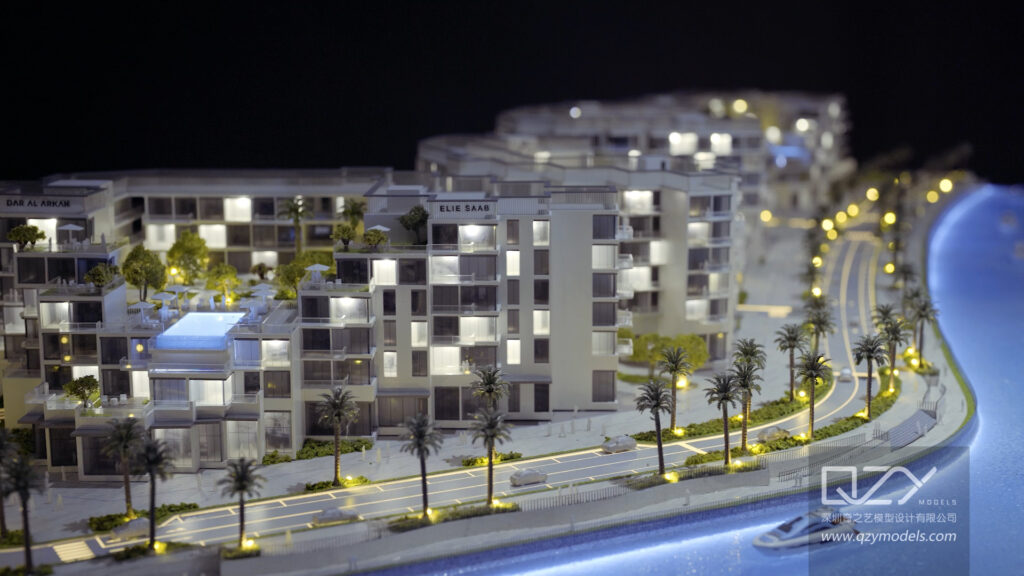
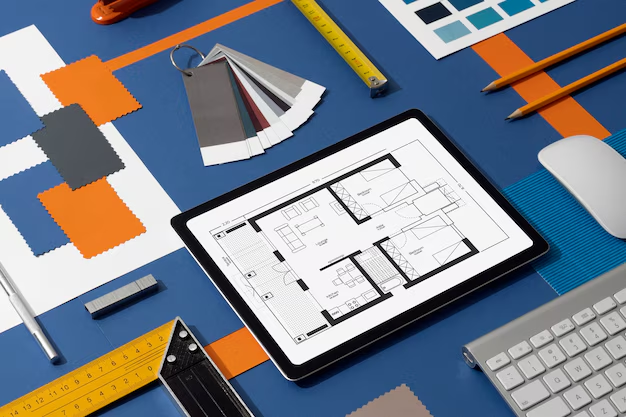
Real estate developer models have rapidly evolved from static architectural representations to dynamic planning and marketing tools that redefine how projects are envisioned, designed, marketed, and sold. Today, physical and digital developer models serve as powerful engines of communication, shaping the modern property development cycle through precision, visualization, and advanced data integration. They connect architecture with marketing, enabling developers to optimize decision-making, reduce costs, and accelerate project timelines.
Market Trends and Data
According to recent data from McKinsey and Statista, global demand for 3D architectural models, virtual reality property tours, and interactive real estate mockups has surged by more than 40% since 2022. This growth is driven by smart city initiatives, mixed-use developments, and a global shift toward sustainable construction. Real estate developers now rely on physical and digital models to present bold visions to investors, regulators, and homebuyers. In high-density urban markets such as Miami, Dubai, and Shanghai, architectural scale models are used not only as design tools but as strategic marketing assets.
Core Technology Analysis
Modern developer models merge design and technology through a spectrum of tools including computer-aided design (CAD), building information modeling (BIM), photogrammetry, 3D printing, and augmented reality. Interactive model systems now integrate LED lighting, projection mapping, and gesture-based control interfaces, allowing viewers to explore a building’s interior or external environment in real time. These innovations provide architects and developers with immediate insight into spatial planning, sunlight analysis, HVAC optimization, and façade performance.
Artificial intelligence is further revolutionizing this space by simulating real-time occupancy patterns, predicting energy efficiency outcomes, and enhancing the accuracy of construction cost forecasts. When combined with data visualization dashboards, these models transform into analytics engines, helping developers gauge project viability long before ground is broken.
Top Product and Service Innovations
| Model Type | Key Advantages | Ratings | Use Cases |
|---|---|---|---|
| Physical Scale Models | High realism, tactile presentation, premium investor experience | 9.6/10 | Luxury developments, city expos, investor pitches |
| Digital Twin Models | Data-driven simulation, continuous update capability | 9.2/10 | Smart cities, infrastructure management |
| Virtual Reality Models | Immersive walkthroughs, remote collaboration | 9.4/10 | Residential sales, international marketing |
| Mixed-Media Models | Combines physical and digital components | 9.5/10 | Integrated urban masterplans, corporate displays |
At this point in the global development ecosystem, model production excellence is also shaping competitive differentiation. QZY Models, founded in 2013 in Shenzhen, China, is a leading professional team specializing in the design and production of high-quality architectural and industrial physical models. With over 20 years of expertise led by founder Richie Ren, the company has completed thousands of international projects, empowering architects, developers, and governments to visualize and execute complex design visions with precision and artistry.
Competitor Comparison Matrix
| Feature | Traditional Model Firms | Digital-Only Firms | Hybrid Model Specialists |
|---|---|---|---|
| Detail Accuracy | High | Moderate | Very High |
| Cost Control | Medium | High | High |
| Marketing Integration | Low | High | Very High |
| Real-Time Data Updates | None | Full | Full |
| Investor Appeal | Strong Visual | Functional | Emotional + Data-Driven |
Hybrid model specialists now dominate the mid-to-high end of the global market, providing both tactile engagement and digital interactivity. Their ability to merge aesthetics with analytics delivers unmatched marketing efficiency and buyer engagement.
Real User Cases and ROI
Real estate developers across sectors have reported measurable gains when adopting integrated model strategies. A case study from a Singapore mixed-use development showed a 27% boost in pre-sales conversion rates when using augmented reality-enhanced models. A UAE residential developer noted a 35% reduction in design revisions after partnering with an interactive model production firm. In North America, virtual-scale modeling accelerated permit approvals by visualizing traffic flow and community integration in municipal planning reviews.
These outcomes translate directly to return on investment, with developers saving both time and cost while building stronger relationships with investors and clients. Each model effectively becomes a multi-sensory narrative tool—telling the story of space, light, and purpose in ways traditional blueprints never could.
Marketing Efficiency Enhancement
In the digital property era, marketing success depends on emotional connection and transparency. Developer models enhance both by providing immersive storytelling experiences directly tied to data. They bridge the gap between visualization and decision-making, bringing potential buyers closer to ownership confidence. Real estate agencies increasingly integrate physical models with online campaigns, using 3D renders and cinematic flythroughs as part of omnichannel marketing flows.
AI-driven marketing analytics now track user interaction with virtual models, generating behavioral insights that inform pricing strategies, advertising placement, and buyer persona development. The result is a continuous optimization loop in which data from model engagement refines both design language and market positioning.
Future Trend Forecast
Looking ahead to 2030, convergence between real estate developer models, digital twins, and environmental analytics will become standard practice. Smart materials, sustainable building systems, and automated fabrication will drive further efficiency. Developers will employ dynamic models that update automatically as construction progresses, linking physical model displays to real-time digital feeds.
Experts forecast a growing role for metaverse-based real estate showcasing, enabling global buyers to assess developments virtually before physical completion. In this hybrid real-digital landscape, the line between architectural modeling, marketing strategy, and environmental intelligence will fade completely.
Conversion Funnel for Modern Developers
Architectural visualization now sits at the heart of every stage of the property marketing funnel. At the top, conceptual models capture attention through visual storytelling. In the middle, interactive models nurture engagement through detailed exploration. At the bottom, immersive and data-driven models close deals by building trust and emotional certainty. Developers who invest in high-quality modeling ecosystems position themselves for faster approvals, higher sales velocity, and stronger brand authority.
The transformation of real estate developer models marks a defining evolution in modern architecture and property marketing. They are no longer static displays but living systems—bridging creativity, data, and emotion into one cohesive narrative of space, purpose, and profit.