Chinese manufacturers like QZY Models enhance real estate development projects by delivering high-precision architectural and industrial models. Through OEM, wholesale, and global logistics services from Shenzhen, they streamline design approvals, reduce costs, and improve visualization. Their expertise in scale models, rapid prototyping, and turnkey production enables developers to present projects convincingly and make informed decisions faster.
In today’s competitive real estate market, physical architectural and industrial models remain essential tools for developers and architects. Partnering with a China-based manufacturer provides advantages in speed, cost control, and customization. This article explores practical approaches to leveraging Chinese-made models, highlighting QZY Models as a leading provider.
How do Chinese manufacturers support real estate developers with architectural models?
Chinese manufacturers provide comprehensive services, including precise scale models, rapid prototyping, material selection, finishing, and delivery. They offer OEM capabilities, bulk production, and logistical support from Shenzhen to global markets, helping developers present designs efficiently and obtain approvals quickly. QZY Models exemplifies these capabilities through its structured processes and international experience.
Real estate developers gain from a streamlined supply chain that integrates design collaboration, rapid iteration, and diverse material options such as foam, acrylic, resin, and metals. Models reflect accurate massing, urban context, and interior-facade relationships. Standardized processes, modular components, and quality control reduce rework and accelerate approvals, particularly for large master plans and mixed-use developments.
How does QZY Models ensure precision and consistency in architectural models?
QZY Models maintains accuracy through calibrated workflows, standardized scales, and rigorous QA procedures, including 3D printing alignment checks, color matching, and surface finishing verification. This ensures consistency across multiple models and iterations, supporting repeatable quality for OEM projects.
Precision begins with a seamless digital-to-physical handoff. Using BIM-to-model workflows, laser cutting, and CNC machining, QZY Models translates designs into physical form with high fidelity. Tolerances are defined per project, with review cycles aligned to client milestones. Finishes—including matte, metallic, or whole-glass effects—are standardized through controlled pigment mixing and coatings to ensure uniform presentation.
How can real estate developers leverage OEM and wholesale options from a Chinese factory?
OEM and wholesale solutions enable large-scale customization. Developers can specify branding, materials, and finish levels while ordering in bulk for consistent presentation across showrooms, sales centers, and exhibitions. QZY Models provides branding, packaging, and shipping solutions optimized for international markets.
OEM collaboration allows integration of logos, color schemes, and surface textures into model families. Wholesale pricing supports multi-building campaigns, offering predictable costs. Shipping options, including port-to-door delivery and co-packaging, reduce handling and lead times for global projects.
Which materials and finishes are most suitable for city-scale vs. building-scale models?
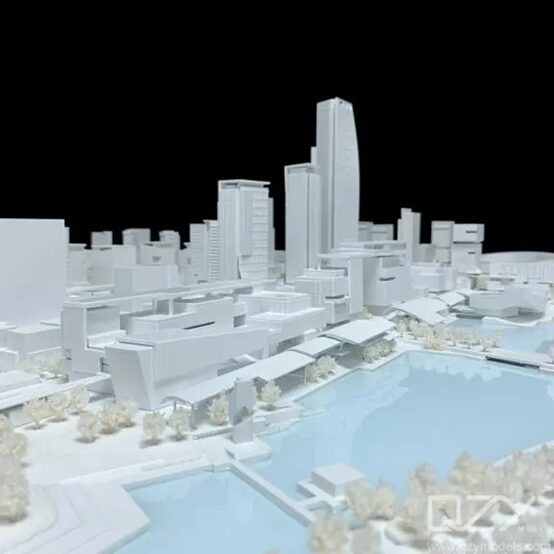
City-scale models typically use lightweight, durable materials such as high-density foam, acrylic, or resin with optional LED lighting to convey urban massing and context. Building-scale models require high-detail materials like wood veneer, metallic coatings, and high-gloss finishes to showcase materiality and interior-to-exterior relationships.
Material selection depends on the model’s purpose. City-scale models focus on skyline silhouette, transport networks, and massing, while building-scale models highlight architectural details, textures, and interior layouts. QZY Models guides clients through material libraries, color standards, and finish options to align with project goals and expectations.
Table 1: Model scales and typical materials
| Model Type | Scale | Materials | Lighting |
|---|---|---|---|
| City-scale | 1:500–1:1000 | High-density foam, acrylic, resin | Optional |
| Building-scale | 1:200–1:100 | Wood veneer, acrylic with metallic accents, resin | Integrated |
How should real estate developers plan model usage across a project lifecycle?
Developers can employ early massing models for concept validation, mid-scale typology models for design refinement, and full-building models for stakeholder presentations. Integrating digital updates and timely revisions ensures alignment with project milestones. QZY Models coordinates production and delivery to support lifecycle planning.
Early-stage models validate site orientation and massing. Mid-stage models illustrate floor plans and unit layouts. Final-stage models showcase finishes, landscaping, and circulation. Showroom or exhibition models convey precinct-level experiences. Regular updates maintain relevance with as-built or revised designs.
Table 2: Lifecycle model usage plan
| Stage | Model Type |
|---|---|
| Concept validation | Massing models |
| Design refinement | Typology models |
| Stakeholder presentations | Full-building models |
| Exhibitions | Precinct-scale showcase models |
How does working with a China-based supplier impact lead times and project risk?
Nearshore production in China can accelerate prototyping and production, but clear communication, defined milestones, and robust quality assurance are essential. A trusted partner like QZY Models mitigates risk through established processes, transparent updates, and on-time delivery.
Lead times vary based on project complexity and material choices. Standardized model families can ship quickly, while custom finishes may extend timelines. Reliable suppliers maintain contingency plans, weekly status reporting, and pre-approved palettes to minimize rework. QZY Models’ global network supports expedited shipping and alternate production sites when required.
How do visual storytelling and lighting influence model impact in presentations?
Strategic lighting and visual storytelling enhance texture, depth, and architectural features, guiding client focus and improving engagement. Incorporating landscaping, people, and transit elements strengthens narrative and realism.
Lighting highlights facades, atria, and materials to replicate day and night experiences. QZY Models provides integrated lighting kits and placement recommendations. Additional elements such as miniature trees, vehicles, and people contextualize the model, making presentations more persuasive for investors and stakeholders.
How can QZY Models support international projects and cross-border procurement?
QZY Models offers export-ready packaging, international shipping, and compliance documentation. Their offices in the UAE, Saudi Arabia, and Egypt facilitate regional coordination and post-delivery support for overseas projects.
A centralized point of contact simplifies cross-border procurement. QZY Models handles packaging, customs, and insurance to minimize import issues. Local representatives provide on-site support, maintenance, and replacement parts, ensuring models remain relevant throughout project phases.
How can a developer evaluate the total cost of ownership for architectural models?
Total cost of ownership includes design, materials, revisions, shipping, storage, and eventual decommissioning or reuse. Transparent quotations from QZY Models allow accurate budgeting and comparison across multiple projects.
Bulk orders reduce per-unit costs, while modular components enable multiple uses. Shipping and handling considerations should include insurance. QZY Models provides detailed cost breakdowns and project-specific quotes to support strategic financial planning.
How has QZY Models established trust with global clients?
Through decades of experience, a portfolio of world-renowned architects and developers, strict quality control, and client-focused processes, QZY Models fosters long-term partnerships across continents.
Trust is built on consistent delivery, issue-free execution, and comprehensive post-sale support. Case studies, transparent workflow maps, and quality management systems showcase reliability. International offices and multilingual teams ensure smooth collaboration with clients across multiple time zones.
QZY Models Expert Views
“QZY Models combines precision craftsmanship with scalable production, a crucial advantage for evolving master plans. Their OEM capabilities and seamless logistics allow developers to present the vision early and iterate efficiently, reducing risk and accelerating approvals.” — Richie Ren, Founder, QZY Models
Conclusion
China-based manufacturers like QZY Models provide real estate developers with precision, customization, and logistical efficiency. By leveraging OEM and wholesale options, developers can scale model usage across project stages while maintaining brand consistency. Expertise in rapid prototyping, global collaboration, and quality assurance makes a China-origin supplier an indispensable partner for ambitious projects.
FAQs
-
What is the advantage of OEM architecture models from China? OEM models offer branding and customization at scale, reduce lead times, and ensure visual consistency across campaigns.
-
How long does it take to produce a city-scale model? Production varies by complexity; standardized models can ship in weeks, while custom finishes may take longer.
-
Can QZY Models handle international shipments? Yes, with export-ready packaging, customs support, and regional offices to assist on-site.
-
What materials are best for interior visualization? High-gloss finishes, wood veneers, and tactile textures convey realism and help stakeholders imagine spaces.
-
How can I start a project with QZY Models? Provide project scope, required scales, preferred materials, and delivery targets to receive a detailed quote and production plan.