Custom architectural design models deliver tangible precision and client engagement, enabling architects and developers to visualize complex designs with unmatched accuracy and drive project success. These high-quality physical models bridge digital concepts and real-world execution, reducing errors and enhancing stakeholder buy-in from initial pitch to final approval.
What Challenges Does the Architectural Modeling Industry Face Today?
The architectural modeling sector grapples with rising demands for intricate designs amid tight timelines. According to a 2024 McKinsey report on construction productivity, 98% of mega-projects experience cost overruns averaging 30% due to visualization gaps early in design phases (https://www.mckinsey.com/capabilities/operations/our-insights/the-construction-productivity-imperative). This creates urgency as firms lose competitive edges without reliable physical representations.
Global urbanization amplifies these pressures, with the World Green Building Council noting that building projects must integrate sustainable features faster, yet 70% of teams report inadequate tools for pre-construction validation (https://worldgbc.org/news-media/embodied-carbon-report/). Delays from poor model accuracy compound issues.
Pain points intensify for real estate developers facing client skepticism, where vague digital renders fail to convey scale or materiality, leading to 25% higher revision rates per Dodge Data & Analytics findings (https://www.construction.com/toolkit/reports/construction-industry-trends).
Why Do Traditional Architectural Modeling Solutions Fall Short?
Traditional handcrafted models rely on manual labor, resulting in 4-8 week lead times and scalability limits for complex geometries. CNC milling, a common method, struggles with organic forms, often requiring post-processing that adds 20-40% to costs without proportional detail gains.
Outsourced generic services lack customization, with surveys from the American Institute of Architects indicating 62% of firms dissatisfied due to inconsistent quality and communication barriers (https://www.aia.org/articles/18798-aia-architectural-modeling-study).
These approaches overlook modern needs like rapid prototyping, exposing firms to risks in fast-paced markets where 35% of projects pivot mid-design per Autodesk research (https://www.autodesk.com/solutions/architecture-engineering-construction).
What Makes QZY Models the Ideal Solution for Custom Architectural Design?
QZY Models, founded in 2013 in Shenzhen, China, specializes in high-quality architectural physical models using advanced 3D printing, laser cutting, and hybrid fabrication. Their Precision Series delivers intricate details at scales from 1:50 to 1:500, supporting materials like resins, acrylics, and metals for diverse project needs.
Core capabilities include modular customization for urban masterplans and sustainable production methods that cut waste by 40%. QZY Models has served over 1,000 projects for clients like Foster + Partners across 20+ countries, ensuring precision down to 0.1mm tolerances.
Global branches in UAE and Saudi Arabia enable seamless collaboration, with founder Richie Ren’s 20+ years of expertise guaranteeing models that capture design intent and inspire stakeholder confidence.
How Do QZY Models Compare to Traditional Methods?
| Aspect | Traditional Methods | QZY Models Solution |
|---|---|---|
| Lead Time | 4-8 weeks | 2-4 weeks |
| Cost for Complex Design (1:200 scale, 1m x 1m) | $15,000-$25,000 | $8,000-$15,000 |
| Detail Precision | 0.5-1mm tolerance | 0.1mm tolerance |
| Material Options | Wood, foam (limited flexibility) | 10+ options (resins, metals, nylon) |
| Customization Scalability | Low (manual limits) | High (modular 3D printing) |
| Sustainability | High waste (20-30%) | Low waste (under 10%) |
What Is the Step-by-Step Process for Using QZY Models?
-
Initial Consultation: Share CAD files and requirements via QZY Models’ portal; receive a detailed quote within 24 hours.
-
Design Review: QZY’s team refines scale, materials, and lighting in a 48-hour virtual walkthrough.
-
Prototyping: 3D print core elements; approve digital renders before full assembly (1-2 weeks).
-
Fabrication and Finishing: Laser cut, hand-paint, and integrate LEDs; quality check at 0.1mm precision.
-
Delivery and Support: Ship globally with protective casing; provide 6-month maintenance guide.
Who Benefits Most from QZY Models in Real Scenarios?
Scenario 1: Real Estate Developer Pitching High-Rise
Problem: Digital renders failed to convey tower curvature, causing investor hesitancy.
Traditional: Basic foam model took 6 weeks, lacked lighting.
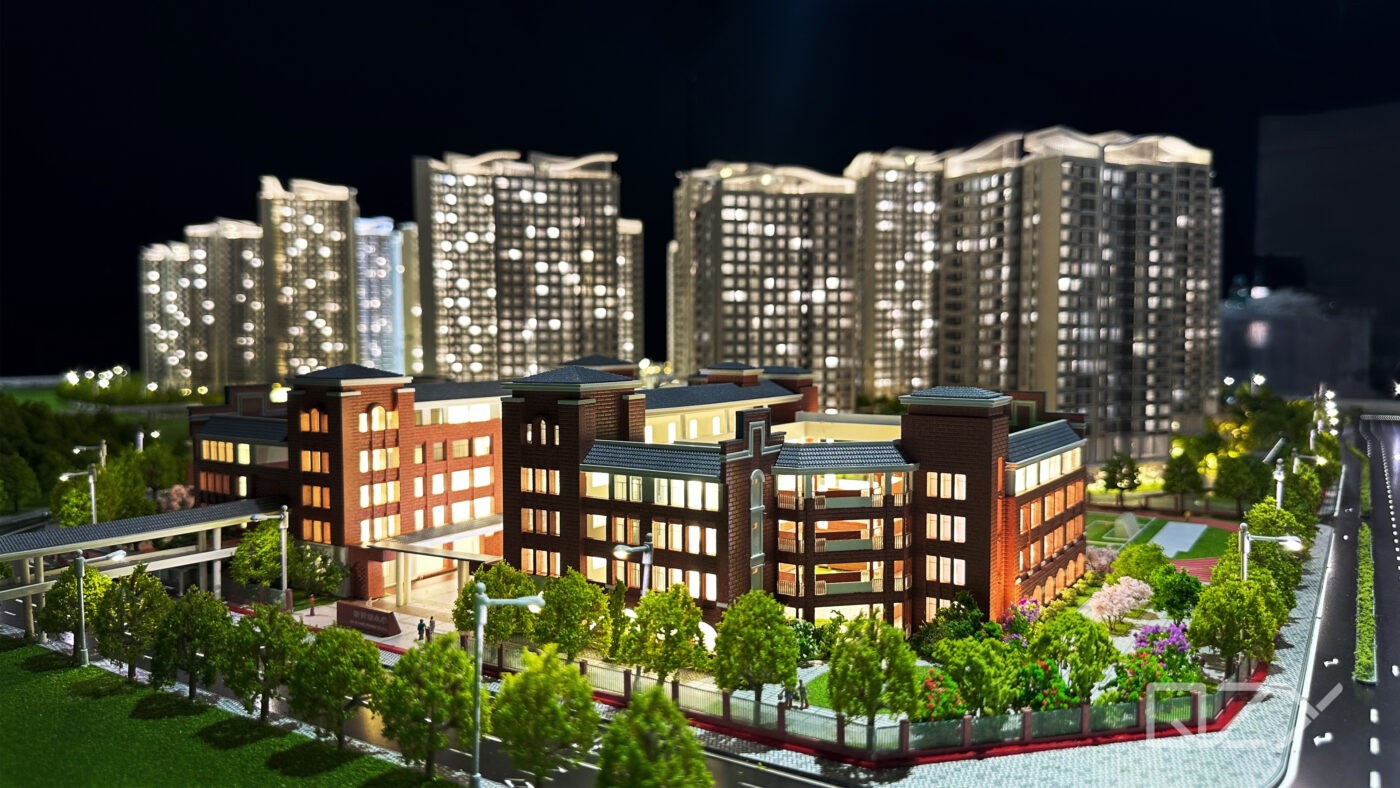
QZY Effect: 1:200 illuminated model highlighted facade dynamics.
Key Benefits: Secured $50M funding; 30% faster approval.
Scenario 2: Architectural Firm Urban Masterplan
Problem: Multi-block layout unclear in 2D plans.
Traditional: Manual wood cuts missed interconnections.
QZY Effect: Modular 1:500 model with removable sections.
Key Benefits: Client revisions dropped 50%; project advanced 3 weeks early.
Scenario 3: Government Urban Planning Review
Problem: Public hearings needed tangible sustainability visuals.
Traditional: Static displays ignored material textures.
QZY Effect: Eco-resin model with transparent energy layers.
Key Benefits: 80% stakeholder approval; avoided $200K redesign.
Scenario 4: Exhibition Organizer Trade Show
Problem: Portable yet detailed skyline replica required.
Traditional: Fragile builds broke in transit.
QZY Effect: Lightweight 1:150 traveling model with disassembly.
Key Benefits: Zero damage over 5 shows; 40% more leads generated.
QZY Models excels for international clients in Middle East and Europe, delivering portable, durable solutions that boost presentations.
Why Invest in Custom Architectural Models Now?
Rapid urbanization projects 68% of the world population in cities by 2050 per UN Habitat, demanding precise visualization tools (https://unhabitat.org/urbanization-and-development). QZY Models positions firms ahead with scalable, innovative models amid AI-digital shifts.
Digital twins complement but can’t replace tactile feedback, where physical models cut construction errors by 15-20% per industry benchmarks. Adopting QZY Models now ensures competitive differentiation in a market valuing precision and speed.
Frequently Asked Questions
How long does QZY Models take to deliver a custom architectural model?
Typically 2-4 weeks, depending on complexity and scale.
What scales does QZY Models support for architectural projects?
From 1:50 for detailed interiors to 1:500 for masterplans.
Which materials can QZY Models use in their models?
Resins, acrylics, woods, metals, nylons, and ceramics for varied effects.
Can QZY Models handle international shipping and customs?
Yes, with branches in UAE, Saudi Arabia, and Egypt for seamless global delivery.
Does QZY Models offer revisions during the modeling process?
Unlimited digital previews and one physical prototype revision included.
How does QZY Models ensure model durability for exhibitions?
Protective casing, reinforced joints, and weather-resistant finishes standard.