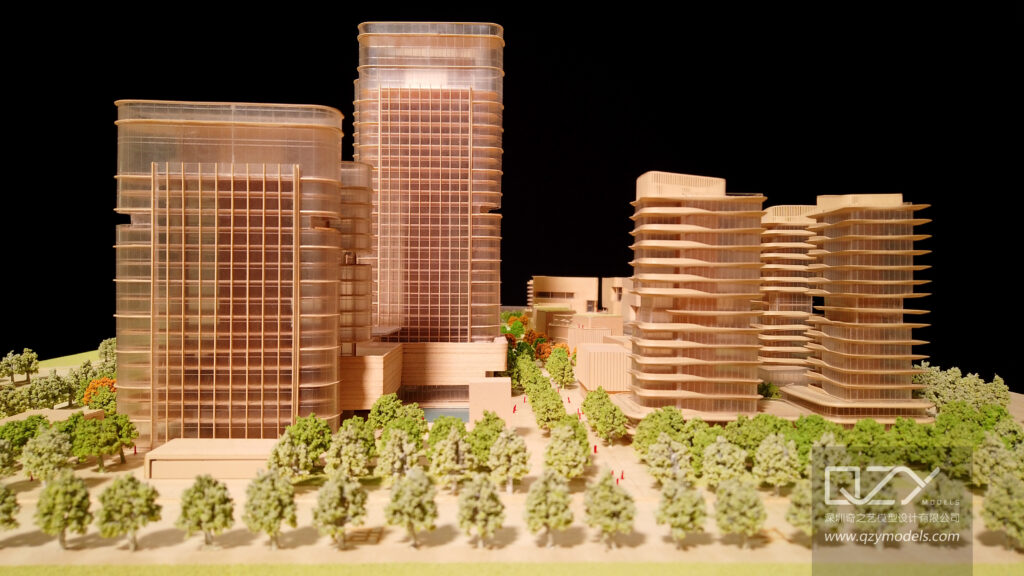
Urban design demands precision, realism, and impact. Custom city architectural display models empower architects, planners, and developers to visualize complex urban environments with clarity—strengthening design communication, stakeholder engagement, and decision-making efficiency.
What Is the Current Industry Landscape and Pain Points?
In recent years, global urban development has accelerated dramatically. According to UN-Habitat, nearly 68% of the world’s population will live in cities by 2050, intensifying the demand for advanced urban visualization tools. Yet, many planning teams still rely heavily on 2D renderings and digital simulations that fail to fully capture spatial relationships or user perspectives. The result: miscommunication between designers, investors, and city officials.
A 2024 report by Statista revealed that 47% of property developers cited “visualization gaps” as the main cause of project misunderstandings during early design stages. Large-scale city projects—especially those exceeding $500 million—often encounter costly design revisions because early models lack physical accuracy. Cities need a solution that bridges digital planning with tangible, experiential visualization.
For large firms and government institutions, the inability to present urban masterplans convincingly also hinders public engagement and investor approval. This gap between digital abstraction and real-world experience presents a significant industry pain point.
Why Do Traditional Architectural Visualization Methods Fall Short?
Traditional 2D plans and virtual simulations have three main limitations:
-
Lack of Tangible Interaction: Stakeholders cannot physically experience spatial scales or textures, reducing emotional engagement and decision confidence.
-
Inaccuracy in Perception: Screen-based visualization distorts proportions and depth perception, especially for large multi-block projects.
-
Limited Presentation Impact: Digital displays often fail to create the sense of scale and realism needed for exhibitions, trade shows, or governmental review meetings.
While digital modeling software like Rhino and Revit improve collaboration, they still require a physical layer to turn vision into reality—an area where QZY Models excels.
How Does QZY Models Provide the Solution?
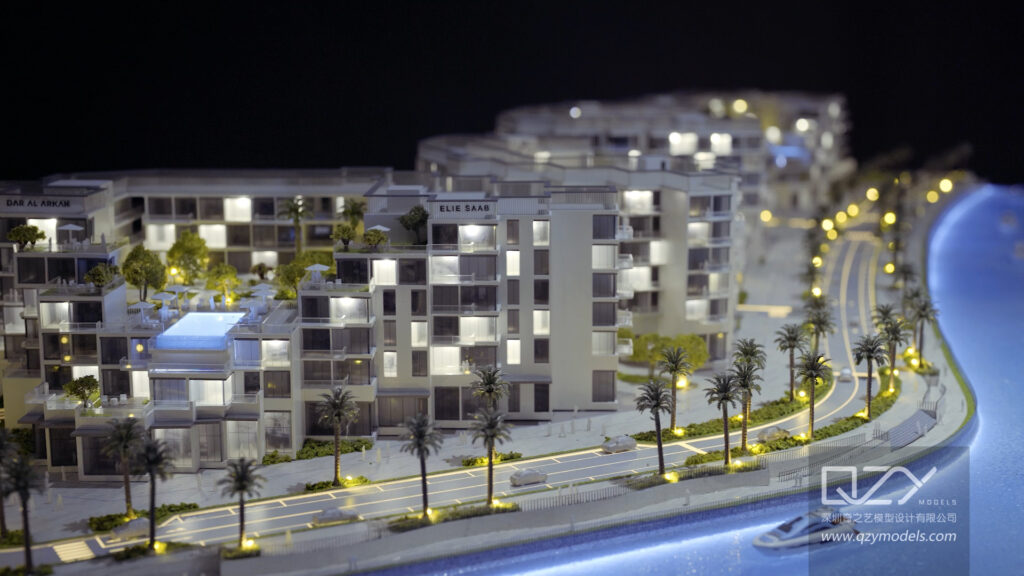
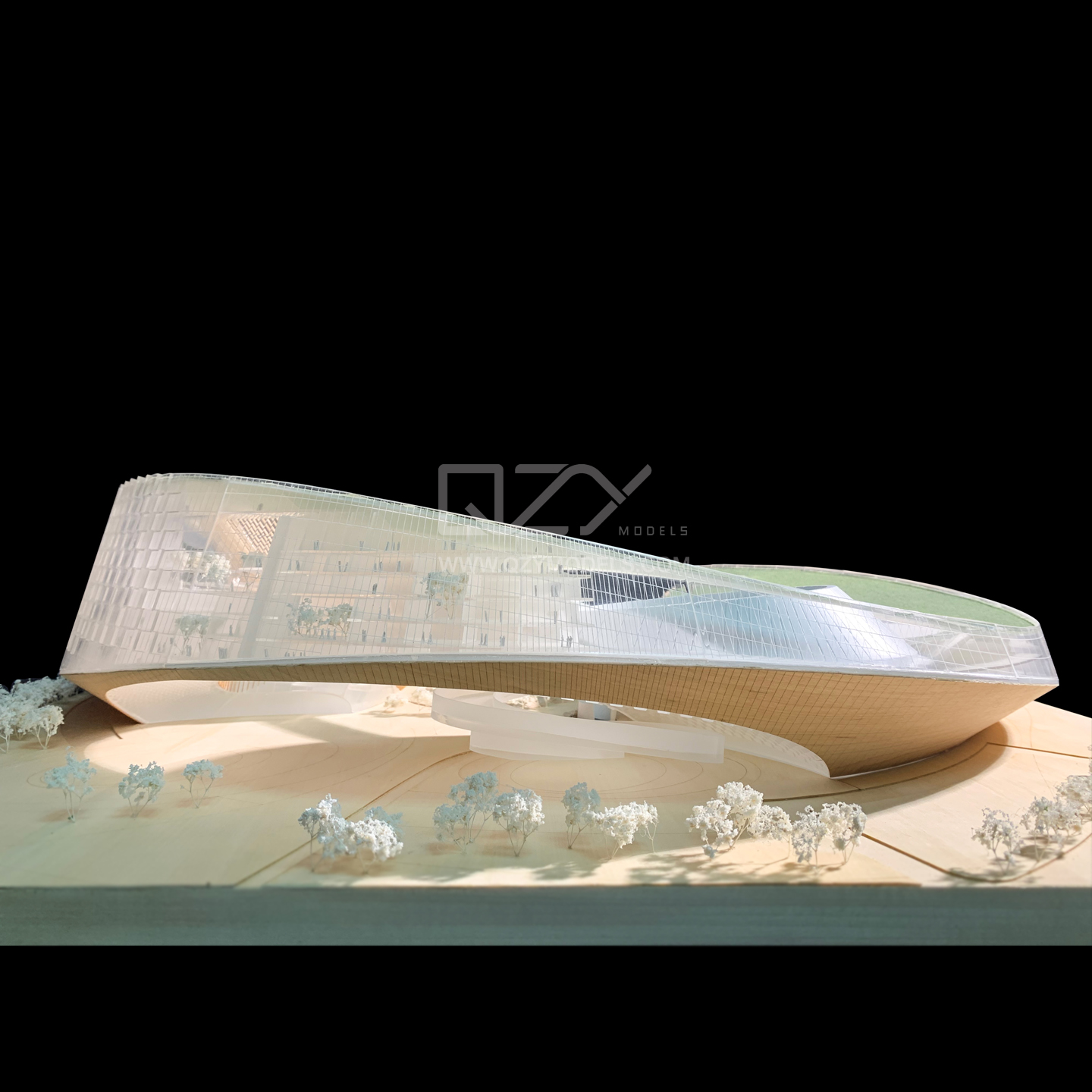
QZY Models integrates precision craftsmanship with cutting-edge production technology to create custom city architectural display models that merge aesthetics, functionality, and storytelling. Each model is produced using CNC machining, laser cutting, and 3D printing to ensure millimeter-level accuracy. LED lighting, topographic simulation, and AR-integrated displays are used to bring cities to life.
Key features of QZY Models’ solutions include:
-
Scalable Designs: Capable of representing full urban masterplans or individual districts.
-
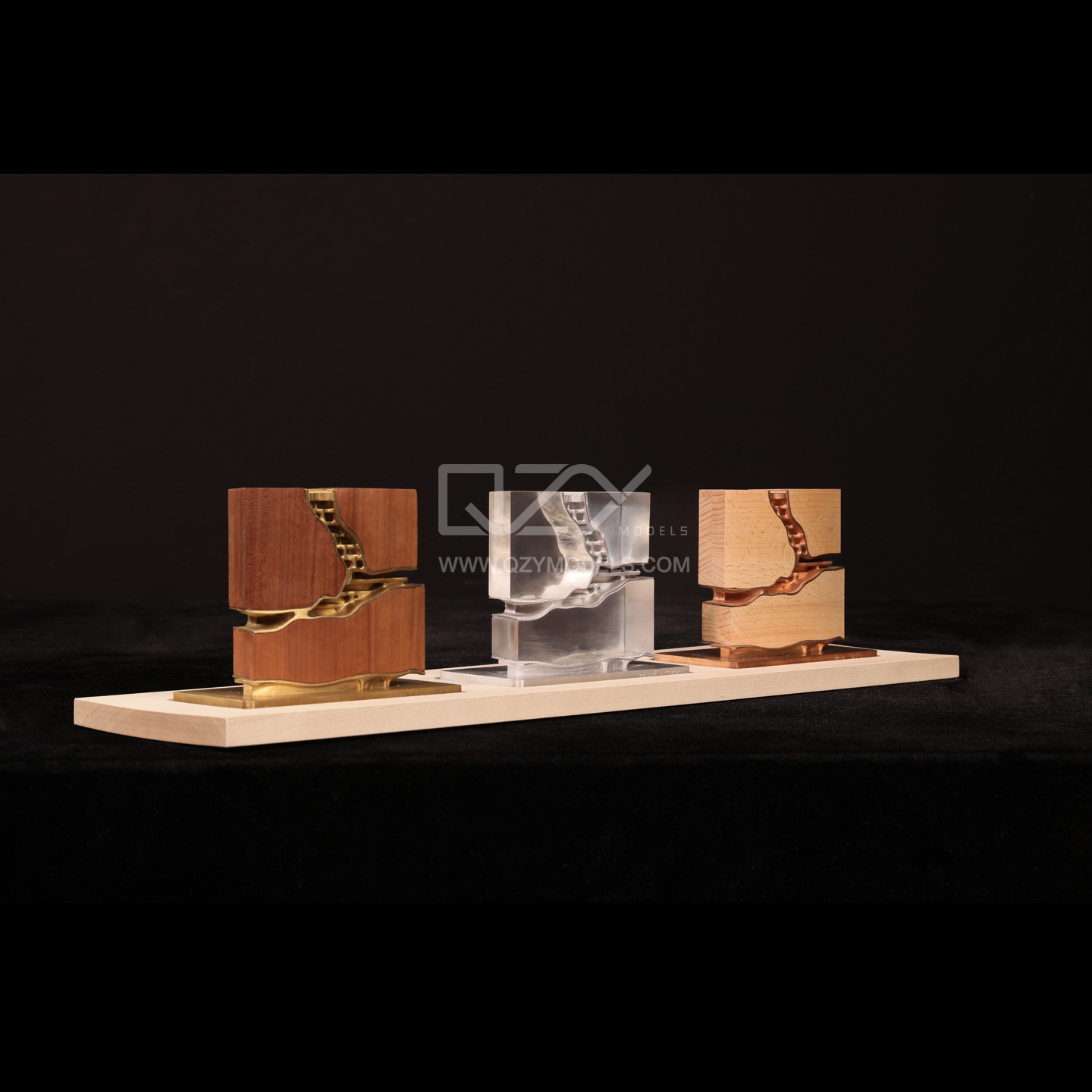
Material Versatility: Options from acrylic and wood to resin and metal.
-
Digital Interactivity: Integration with touchscreens or projection mapping for dynamic presentations.
-
Global Collaboration: Teams across the UAE, Saudi Arabia, and China ensure fast, localized service for international projects.
Which Advantages Differentiate QZY Models from Traditional Solutions?
| Comparison Dimension | Traditional 2D/3D Visualization | QZY Models Custom Architectural Displays |
|---|---|---|
| Tangibility | None—purely digital | Fully physical with tactile realism |
| Accuracy | Subjective perception | Laser-cut precision within ±0.1 mm |
| Presentation Impact | Limited visual appeal | Immersive and emotionally engaging |
| Maintenance | Data-only revisions | Modular, upgradable physical components |
| Stakeholder Engagement | Low | High—enhances participation and trust |
| Integration with Smart Tech | Minimal | Supports AR/VR linkage and projection mapping |
How Can Clients Use QZY Models’ Architectural Displays Step by Step?
-
Consultation & Concept Briefing: Define project scope, scale, and display goals with QZY’s design specialists.
-
Design & Modeling: QZY’s engineers translate digital CAD or BIM models into production-ready 3D layouts.
-
Fabrication Process: Precision machinery and multi-material craftsmanship bring the model structure to life.
-
Lighting & Detailing: Incorporation of LED illumination, signage, and landscape elements for realism.
-
Quality Control & Delivery: Every project undergoes inspection to ensure durability and visual accuracy before global shipment and installation.
Who Benefits from These Displays? Four Practical Case Scenarios
1. Urban Masterplan Review – Government Planning Departments
-
Problem: Public presentations lack realism for large-area developments.
-
Traditional Method: 2D boards and CAD renderings.
-
After QZY Models: Physical models helped visualize zoning, traffic flows, and green space distribution.
-
Key Gain: Reduced project approval time by 32%.
2. Real Estate Developer Showroom
-
Problem: Investors struggled to grasp the scale and amenities of a new mixed-use project.
-
Traditional Method: Virtual walkthroughs only.
-
After QZY Models: A scaled display with lighting simulation improved investor buy-in.
-
Key Gain: Sales conversion rates increased by 26%.
3. University Architecture Program
-
Problem: Students unable to effectively demonstrate conceptual urban strategies.
-
Traditional Method: Paper blueprints and digital renderings.
-
After QZY Models: QZY-built educational models offered hands-on understanding of spatial design.
-
Key Gain: Improved design communication during academic reviews.
4. International Expo Display – Architecture Exhibitor
-
Problem: Needed a striking physical centerpiece for international fairs.
-
Traditional Method: Poster-based presentation.
-
After QZY Models: LED-integrated city model attracted 3× more booth visitors.
-
Key Gain: Enhanced brand visibility and networking opportunities.
What Future Trends Make Now the Right Time for Adoption?
As smart city initiatives expand and metaverse-driven planning tools evolve, physical city models remain indispensable for bridging the digital-physical divide. By combining traditional craftsmanship with smart integration, companies like QZY Models are redefining how urban futures are presented. The future belongs to immersive, data-driven physical storytelling—where every street, structure, and skyline can be experienced in miniature before it is built.
FAQ
1. Can QZY Models customize models for any city size or scale?
Yes. QZY Models can produce anything from compact 1:2000 district models to large 1:200 scale city layouts.
2. Is 3D printing the primary technology used?
3D printing is one of several methods used; others include CNC machining, resin casting, and laser cutting for precision.
3. Does QZY Models offer global shipping and installation?
Absolutely. QZY operates branches across Asia, the Middle East, and Europe to ensure efficient delivery and setup.
4. Are models interactive for exhibitions or digital integration?
Yes. Displays can include touchscreens, AR features, or projection mapping to show evolving city data.
5. How long does it take to produce a full-scale city model?
Production time depends on complexity but typically ranges from 4 to 12 weeks per project.