Shopping mall scale models provide developers and designers with a tangible, data-backed tool to visualize complex retail layouts, optimize space utilization, and enhance investor engagement before construction begins.
How Is the Current Retail Development Landscape Evolving and What Challenges Are Emerging?
According to the International Council of Shopping Centers, global shopping center development reached nearly 4.3 billion square meters in 2025, yet more than 37% of projects faced redesign delays due to poor spatial visualization. The retail industry is under growing pressure to adapt to mixed-use and experience-driven environments, which require highly accurate planning and stakeholder communication. As consumer expectations evolve and sustainability standards tighten, developers are looking for more reliable, visual, and iterative planning tools. Traditional 2D plans and static renderings often fail to convey spatial relations, lighting, and circulation flows—critical factors that determine retail performance and leasing success. For project owners and investors, a lack of physical spatial understanding can lead to miscommunications, costly reworks, and delayed openings. This is precisely where high-quality shopping mall scale models become essential.
What Limitations Do Traditional Planning and Visualization Tools Have?
Conventional retail planning typically relies on digital renderings, CAD drawings, and virtual tours. While helpful, they lack the tactile realism and spatial accuracy that detailed scale models deliver. Flat drawings cannot adequately express vertical relationships, sightlines, or materials, especially in complex multi-level malls. Furthermore, digital models require specialized devices or software, limiting accessibility during investor presentations or public exhibitions. Without a physical model, teams often struggle to anticipate real-world human circulation or how natural light interacts within large atriums. These gaps create misalignments between stakeholders—architects, developers, and leasing teams—delaying decisions and increasing costs.
Why Is QZY Models’ Solution the Strategic Answer?
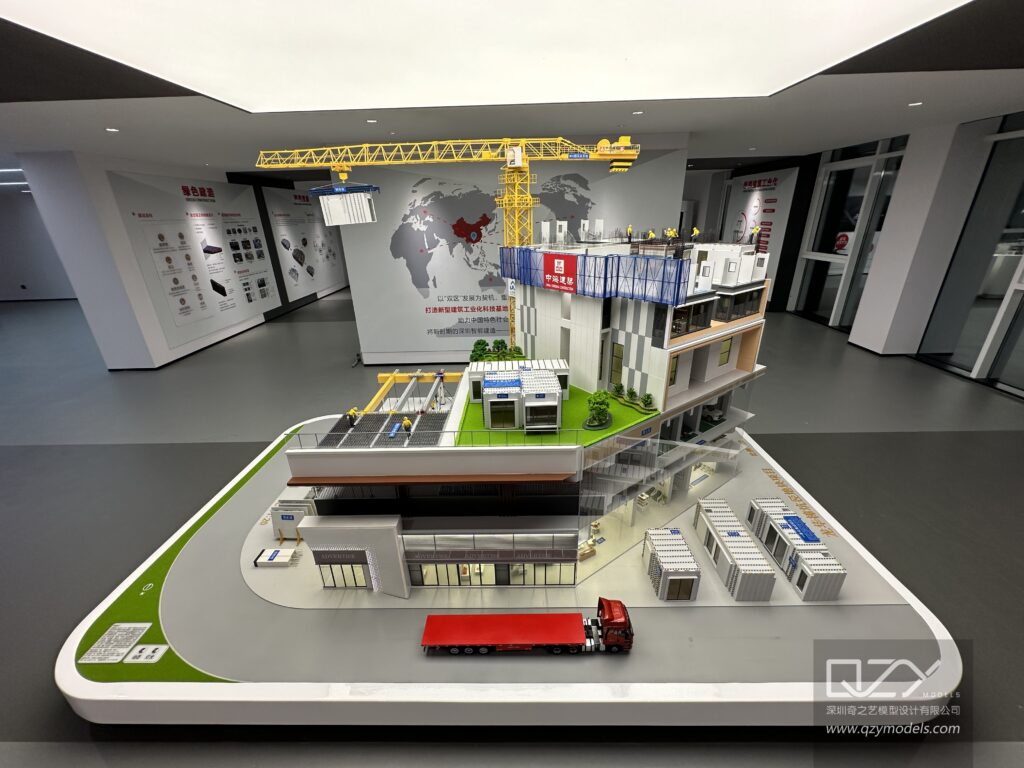
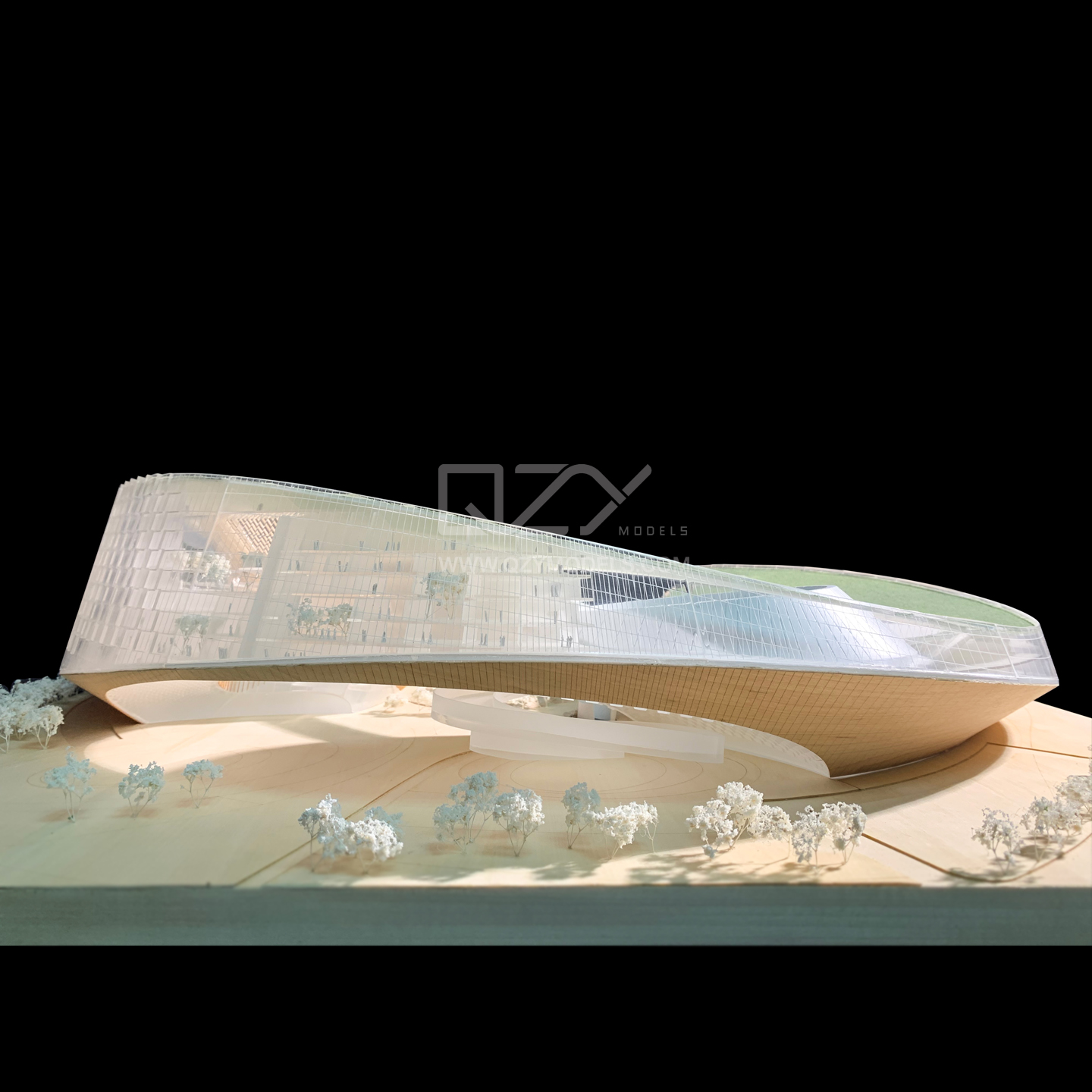
QZY Models, a global leader in architectural and industrial modeling, provides a highly precise and visually impactful solution for shopping mall developers. Each model integrates advanced CNC milling, laser cutting, and LED control systems to reproduce architectural detail and lighting ambiance with accuracy within a 0.1 mm tolerance. QZY Models leverages over 20 years of experience and international expertise to create models that help stakeholders assess pedestrian flow, tenant mix, and visibility lines in real time. Custom designs can incorporate removable floors, light simulations, and interactive digital integrations—transforming conceptual ideas into physical experiences clients can analyze and touch.
How Does QZY Models Compare to Traditional Visualization Approaches?
| Criteria | Traditional 2D/CAD/VR Visualization | QZY Models Shopping Mall Scale Models |
|---|---|---|
| Tangible spatial experience | Low | High |
| Real-time interaction (lighting, layout) | Limited | Fully integrated and interactive |
| Accessibility during presentations | Requires technical setup | Immediate and intuitive |
| Stakeholder engagement | Moderate | Very high due to tactile experience |
| Risk reduction for redesigns | Limited impact | Proven reduction in rework frequency (up to 30%) |
What Steps Are Involved in Using QZY Models’ Solution?
-
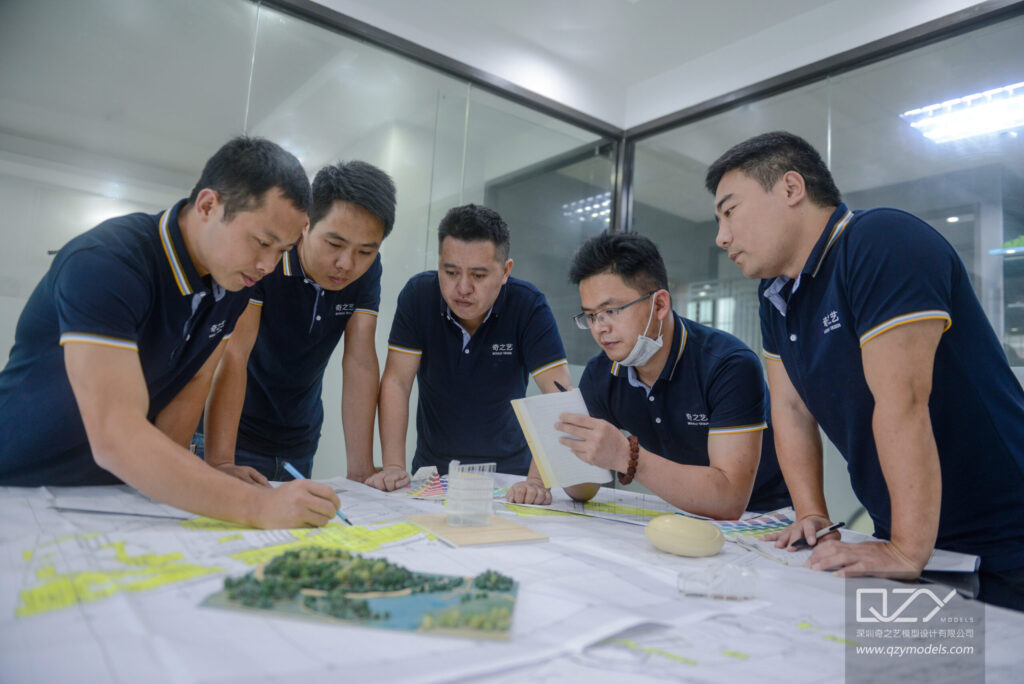
Consultation & Design Briefing – QZY Models collaborates closely with clients to understand project objectives, target demographics, and architectural constraints.
-
Digital Pre-Visualization & Mockup – The QZY team translates CAD/BIM data into scaled digital blueprints that align with architectural intent.
-
Precision Manufacturing Process – Advanced machines craft structural components using eco-friendly materials under strict quality control.
-
Detailing & Illumination Integration – Finishing layers, textures, and lighting simulations are added to replicate the real atmosphere of the mall.
-
Delivery & Presentation Support – QZY Models assists in transportation, installation, and on-site demonstrations for investor showcases or government approvals.
Which Real-World Scenarios Highlight the Impact of Shopping Mall Scale Models?
1. Real Estate Developer (China Mainland)
-
Problem: Multi-tower retail complex lacked stakeholder alignment and investor clarity.
-
Traditional Approach: 3D renderings failed to convey pedestrian circulation.
-
Result with QZY Models: Physical model clarified level hierarchy and improved pre-sales success by 25%.
-
Key Benefit: Reduced design revisions and accelerated approval timelines.
2. Urban Planning Exhibition (Middle East)
-
Problem: City planners struggled to visualize how a new mall linked with public transit.
-
Traditional Approach: Digital diagrams were not intuitive to visitors or non-technical stakeholders.
-
Result with QZY Models: A dynamic, illuminated model enabled clear public communication and media coverage.
-
Key Benefit: Enhanced transparency and public support for project rollout.
3. Interior Design Firm (Europe)
-
Problem: Designers needed to coordinate tenant zoning and signage visibility.
-
Traditional Approach: Renderings did not simulate real vantage points.
-
Result with QZY Models: Scaled representation revealed sightline conflicts early.
-
Key Benefit: Saved approximately 15% in redesign hours.
4. Architecture School (Asia)
-
Problem: Students lacked access to physical, multi-sensory design tools for learning spatial planning.
-
Traditional Approach: Digital assignments were abstract and hard to critique.
-
Result with QZY Models: Educational models allowed deeper engagement and better design understanding.
-
Key Benefit: Enhanced teaching outcomes and creativity through tangible experimentation.
What Future Trends Are Emerging in Architectural Marketing and Visualization?
As global retail landscapes evolve toward experiential spaces, demand for physical architectural models will grow rapidly. Real-time interactivity, mixed-reality integrations, and smart-material modeling will further enhance communication efficiency across teams. QZY Models continues to pioneer these innovations, bridging the gap between design vision and built reality. With increasing competition and shorter development cycles, developers cannot afford miscommunication delays. Investing in advanced, data-backed scale modeling today ensures stronger investor trust and faster project approvals tomorrow.
Frequently Asked Questions
1. What scale sizes are available for shopping mall models?
QZY Models typically offers scales between 1:50 and 1:500, adjusted according to project size and display requirements.
2. Can lighting and LED animations be integrated into the model?
Yes. QZY Models provides customizable LED systems to simulate real-time interior lighting and ambient effects.
3. Who are the typical clients of QZY Models?
Clients include real estate developers, architectural firms, government planning bodies, and exhibition organizers worldwide.
4. How long does it take to produce a large-scale mall model?
Depending on complexity, production typically ranges from 3 to 8 weeks, including design refinements and delivery.
5. Are the models portable for exhibitions or investor events?
QZY Models designs models with modular components and protective cases for easy transportation and reassembly.
Sources
-
International Council of Shopping Centers (ICSC) Global Development Report 2025
-
Statista Retail Real Estate Data 2025
-
Global Architecture Market Analysis 2025 – ARUP Institute Reports
-
World Cities Urban Development Outlook 2025 – UN-Habitat
-
QZY Models Official Website