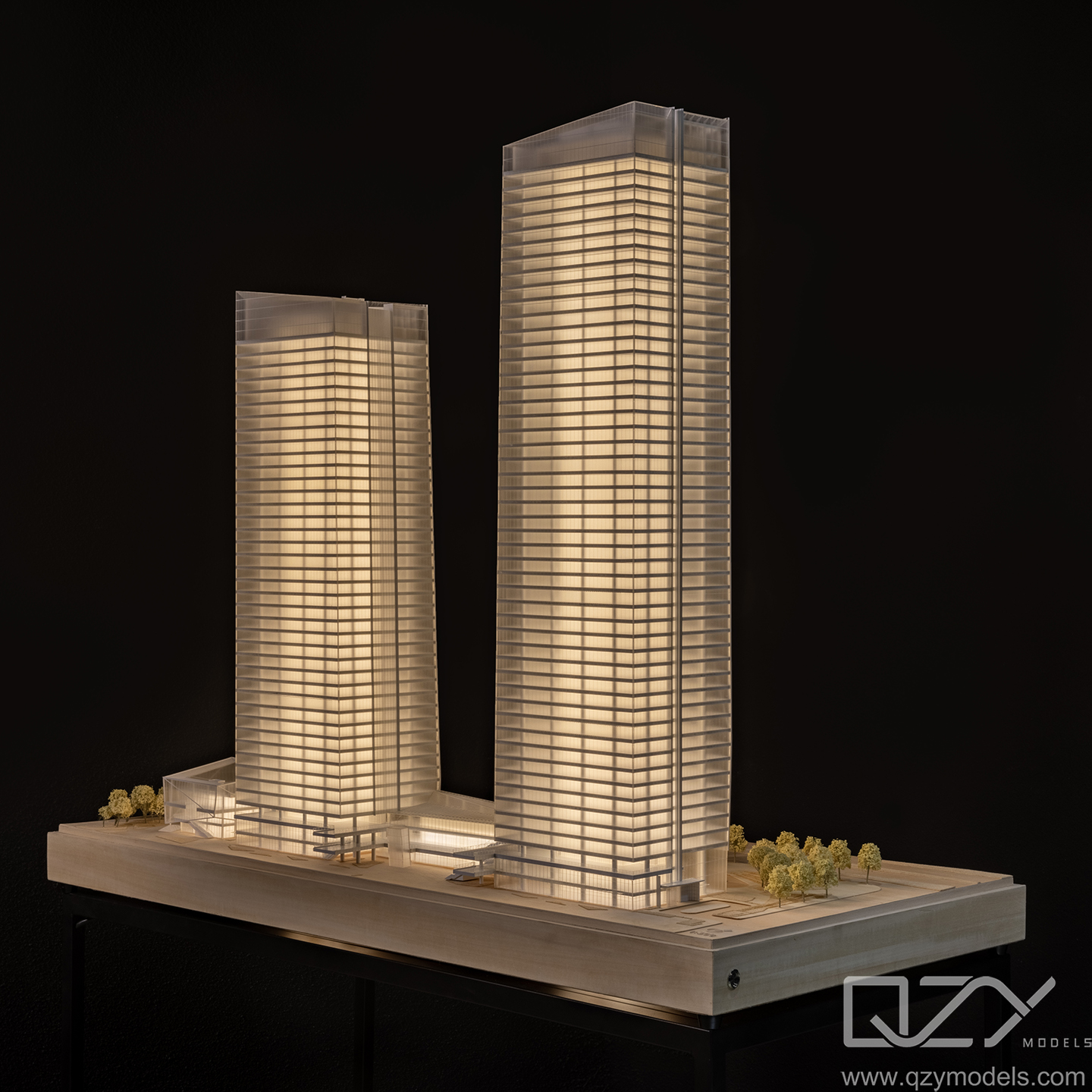
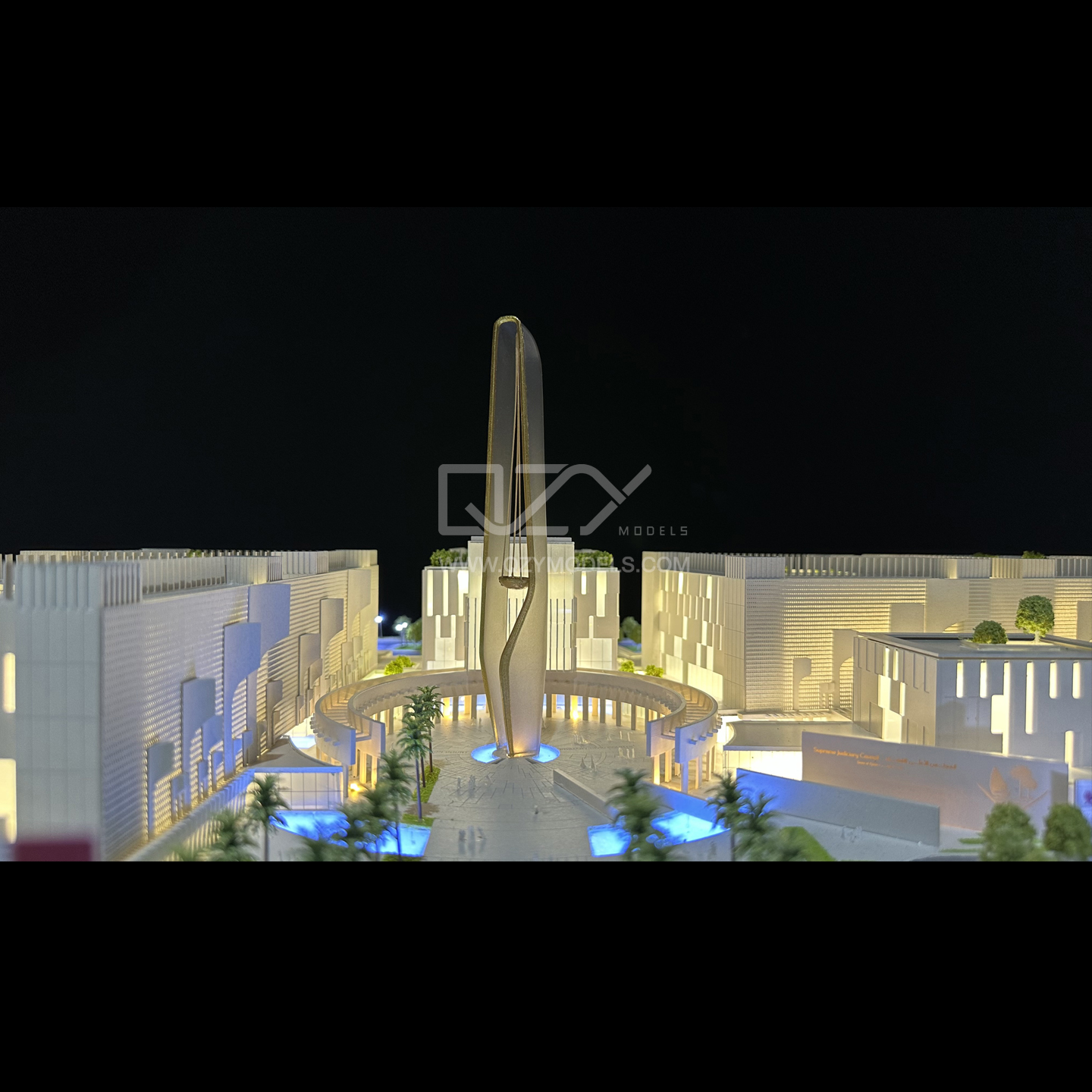
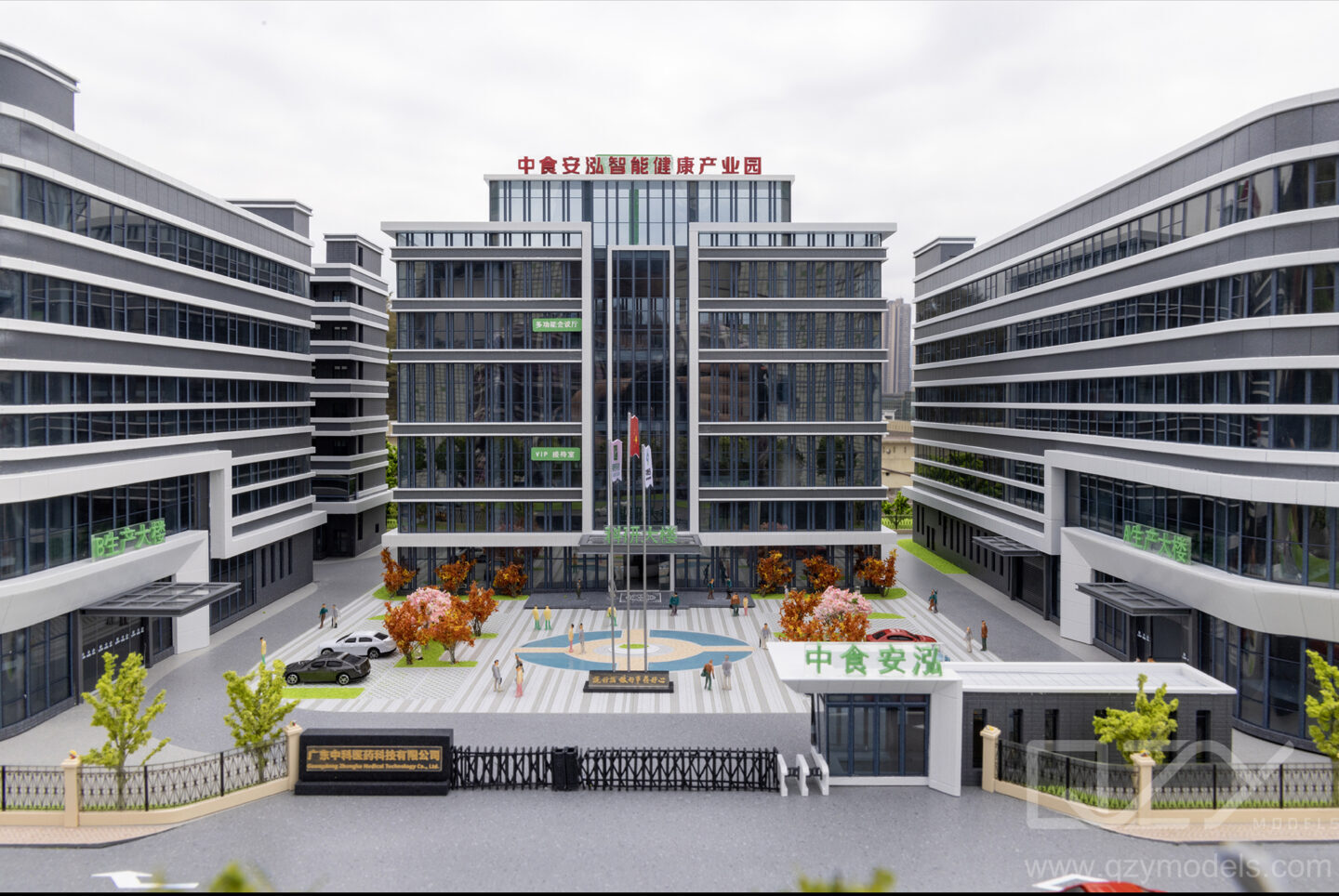
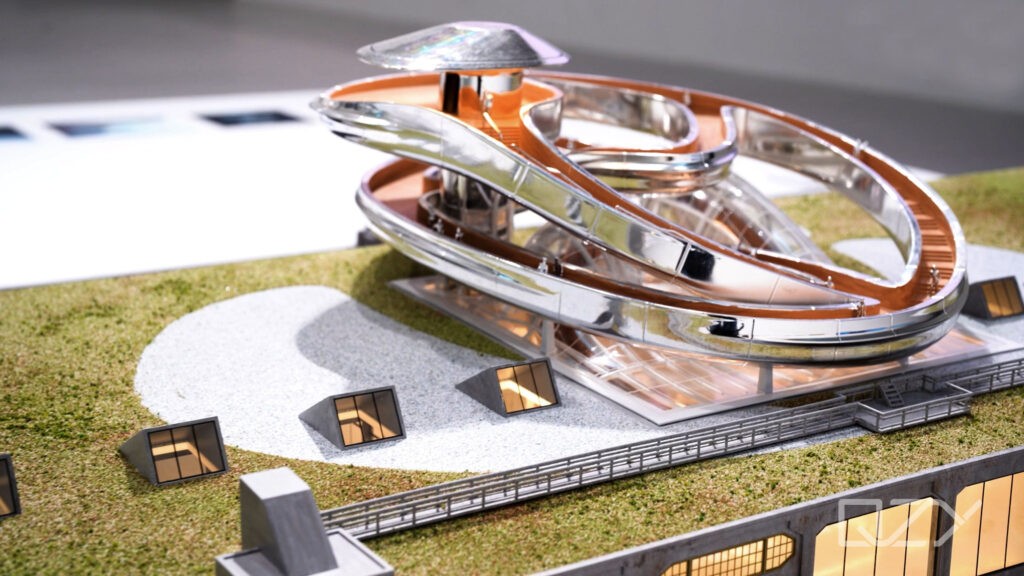
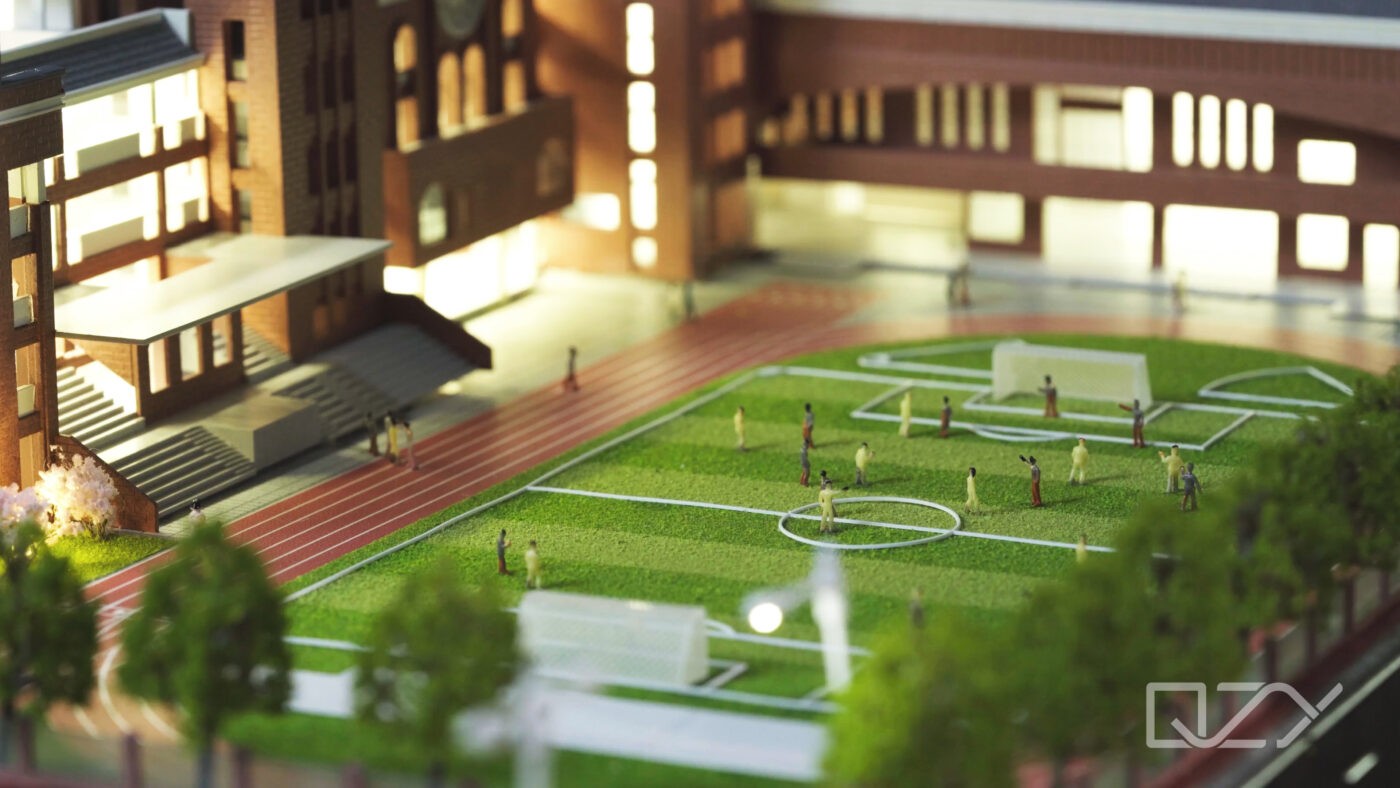
High-quality city architectural displays are redefining the way urban developers, architects, and planners envision the future of cities. Precision-built models bring data and design to life, helping decision-makers align creativity with reality. QZY Models, a global leader in physical model innovation, empowers stakeholders to visualize solutions that drive better planning and more sustainable urban growth.
What is the current state of the architectural display industry and what challenges does it face?
As cities expand globally, the architectural display industry has grown into a multi-billion-dollar sector. According to Statista, the global architectural services market exceeded USD 400 billion in 2024 and continues to rise steadily, driven by urbanization and smart city developments. Yet, display technology and physical modeling often lag behind digital speed, leading to costly misalignment in project communication. One major issue is that many firms rely on low-fidelity models or digital-only visualizations, which fail to capture the complexity of mixed-use urban projects. Stakeholders often struggle to interpret scale, relationships, and impact—resulting in project delays and budget overruns. In addition, sustainability and energy-awareness demands are pushing for more efficient urban planning displays, requiring advanced materials and precision that traditional modeling cannot easily achieve.
Why are traditional architectural display methods no longer effective?
Traditional display approaches rely heavily on manual craftsmanship and limited scalability. While artistry remains vital, models often lack integration with digital data sources such as BIM (Building Information Modeling) or 3D CAD. This isolation makes updates slow, increasing turnaround time by up to 40%. Another limitation lies in durability and transportation—older model materials are fragile and prone to color fading or deformation under exhibition lighting. In contrast, institutions and real estate firms now require long-term, transportable models that can withstand multiple presentations without losing accuracy. To remain competitive, display production must evolve from static representation to intelligent, data-aligned physical visualization.
How does QZY Models deliver a next-generation architectural display solution?
QZY Models has reimagined physical city displays by combining advanced prototyping, digital fabrication, and precision lighting integration. Using laser cutting, CNC milling, and 3D printing technologies, QZY creates high-resolution architectural representations down to 0.1 mm precision. Every model integrates seamlessly with digital planning data, ensuring perfect alignment with the client’s CAD and GIS systems. In addition, QZY Models supports modular installation design—allowing easy upgrades and transport across exhibitions globally. Through over two decades of expertise, QZY Models has established a reputation for both craftsmanship and technological innovation among top-tier clients such as Foster + Partners, Vanke, and international planning bureaus.
Which advantages distinguish QZY Models’ solution compared to traditional methods?
| Criteria | Traditional Display Models | QZY Models High-Quality Displays |
|---|---|---|
| Production Precision | Manual ±2 mm tolerance | Digital ±0.1 mm precision |
| Integration with BIM/Data | None | Fully synchronized with CAD/BIM data |
| Material Durability | Susceptible to warp/fade | Eco-friendly composite, UV resistant |
| Upgrade Flexibility | Fixed design | Modular, easily reconfigurable |
| Delivery Time | 6–12 weeks | 4–6 weeks average |
| Lighting Integration | Manual assembly | Smart embedded LED system |
| Global Service | Regional | 20+ countries with local branches |
How can clients implement the QZY Models display solution?
-
Consultation and Data Review – Clients submit master plans, CAD drawings, and design intent for review.
-
Digital Modeling and Material Planning – QZY Models engineers convert data into scalable digital prototypes and select precise material compositions.
-
Fabrication and Assembly – Models are produced with mixed fabrication technology (3D printing, laser cutting, CNC shaping).
-
Lighting and Animation Integration – Intelligent LED and motion systems are embedded to present urban flow and interaction.
-
Quality Inspection and Global Delivery – Final testing covers accuracy, color calibration, packaging, and secure global transportation.
What real-world scenarios illustrate the value of QZY Models’ displays?
Case 1: Government Urban Renewal Project
-
Problem: Low public participation due to abstract digital maps.
-
Traditional Approach: Poster and screen renderings during town halls.
-
Result with QZY Models: Detailed 3D city block display increased engagement by 78%.
-
Key Benefit: Improved public understanding and policy transparency.
Case 2: Real Estate Mega Development
-
Problem: Investors struggled to visualize mixed-use layout.
-
Traditional Approach: Digital walkthrough simulations only.
-
Result with QZY Models: A 1:500 physical illuminated model attracted international partners.
-
Key Benefit: 25% faster investment decision cycle.
Case 3: Architectural Exhibition
-
Problem: Exhibits lacked visual impact and durability.
-
Traditional Approach: Hand-painted foam prototypes deteriorating over time.
-
Result with QZY Models: Modular acrylic display used in three global exhibitions.
-
Key Benefit: 60% cost savings over repeated builds.
Case 4: University Design Education
-
Problem: Students found it difficult to relate 2D plans to tangible structures.
-
Traditional Approach: Manual cardboard models.
-
Result with QZY Models: Precision printed models used for teaching spatial analysis.
-
Key Benefit: 40% improvement in student comprehension rates.
Where is the architectural display industry heading next?
Urban visualization is rapidly merging physical and digital domains. Interactive city models that link to live environmental data are becoming standard in smart city planning. QZY Models is leading this evolution by experimenting with sensor-enabled models and augmented reality overlays that sync with physical displays. As carbon-neutral construction and sustainable planning rise as policy requirements, accurate visualization tools are more vital than ever. The convergence of AI, 3D fabrication, and data-driven display will make now the ideal moment for developers, planners, and institutions to invest in scalable architectural presentation solutions.
FAQ
1. How long does it take to produce a city architectural display?
Most QZY Models projects are completed within 4–6 weeks depending on complexity and materials.
2. Can the displays be transported internationally?
Yes. All QZY Models structures use reinforced modular systems designed for easy packing and reassembly.
3. Are sustainable materials available for model construction?
QZY Models uses recyclable composites, water-based paints, and energy-efficient lighting systems.
4. Does QZY Models provide digital integration with urban data?
Yes. The team integrates GIS, BIM, or CAD files into physical displays for complete accuracy.
5. Who are QZY Models’ typical clients?
Architectural firms, real estate developers, government urban planning departments, exhibitions, and educational institutions globally.
Sources
-
Statista – Global Architectural Services Market Size (https://www.statista.com/topics/1131/architecture)
-
United Nations – World Urbanization Prospects (https://population.un.org/wup)
-
McKinsey & Company – Smart Cities: Digital Solutions for a More Livable Future (https://www.mckinsey.com/industries/public-sector/our-insights/smart-cities-digital-solutions-for-a-more-livable-future)
-
World Economic Forum – Urban Transformation Reports (https://www.weforum.org/focus/global-future-council-on-urban-transformation)