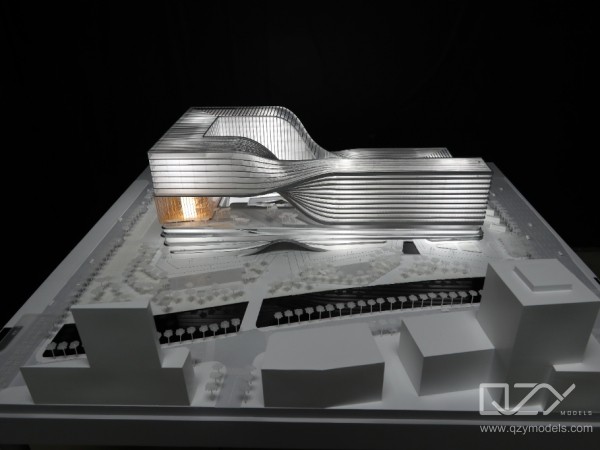
Creating a professional-quality model house isn’t just about craftsmanship—it’s about precision, planning, and technology. With advanced design methods and expert teams like QZY Models, building the perfect model house has become faster, more accurate, and more visually impressive than ever before.
How Is the Model House Industry Evolving and What Challenges Exist?
According to the IBISWorld 2025 market report, the global architectural model-making industry surpassed $1.2 billion in annual revenue, growing steadily as urbanization and real estate visualization demands increase. Yet, more than 64% of firms still rely on outdated manual processes that result in high costs, limited scalability, and inconsistent quality. The biggest pain point? Clients expect faster turnaround times and photorealistic precision without inflating project budgets. As architecture grows more complex—with parametric designs and smart-city infrastructures—model makers must evolve or risk obsolescence. Industry reports from McKinsey also show over 45% of architectural firms plan to outsource model production due to in-house inefficiencies.
What Are the Limitations of Traditional Model-Making Approaches?
Conventional model building often involves manual cutting, limited laser fabrication, and minimal digital integration. This process:
-
Consumes excessive time (average projects take 2–3 weeks longer).
-
Produces quality variations based on individual craftsmanship.
-
Struggles to translate digital design data (BIM or CAD) accurately.
-
Lacks scalability for international exhibitions or high-volume real estate presentations.
Without digital accuracy, traditional model-making can’t keep pace with the rapid design iterations and visualization demands of today’s market.
How Does QZY Models Provide a Modern Solution?
QZY Models merges advanced 3D printing, CNC machining, and laser cutting with architectural expertise. The company’s workflow integrates seamlessly with CAD/BIM systems, ensuring digital-to-physical accuracy within 0.1 mm. By leveraging global fabrication hubs across China, the UAE, and Egypt, QZY Models delivers high-quality architectural and industrial models to over 20 countries. Each project undergoes multi-stage quality control, guaranteeing precision, uniform illumination, and durability for exhibitions, trade shows, and development presentations.
Core capabilities include:
-
Digital fabrication with parametric accuracy.
-
Multi-material integration for realistic textures.
-
Smart lighting and motorized elements for interactivity.
-
Modular shipping and installation systems for international deployment.
Which Advantages Does the QZY Models Solution Offer Compared to Traditional Methods?
| Feature | Traditional Model-Making | QZY Models Solution |
|---|---|---|
| Fabrication speed | 2–4 weeks | 5–10 days |
| Dimensional accuracy | ±0.5 mm | ±0.1 mm |
| Integration with BIM/CAD | Minimal | Full digital sync |
| Durability for transport | Low | High due to reinforced materials |
| Visual realism | Limited | Advanced lighting & texture detailing |
| Scalability | Local only | Global production & logistics |
How Can You Build a Perfect Model House Using QZY Models?
-
Concept Integration – Import design files (CAD/BIM/Revit) to the QZY production system.
-
Material & Scale Selection – Choose precision materials (wood, acrylic, resin, metal) suited to purpose.
-
Digital Fabrication – Automated laser cutting and 3D printing ensure component uniformity.
-
Assembly & Quality Review – Expert craftsmen assemble, inspect, and finish surfaces by hand.
-
Final Delivery & Display Setup – Custom crates and logistics ensure the model’s safe transport and professional on-site installation.
What Real-World Use Cases Prove the Impact of QZY Models?
Case 1 – Real Estate Sales Center
Problem: Developers needed a high-impact model to attract investors before construction.
Traditional Approach: Manual assembly delayed presentation, reducing engagement.
QZY Impact: Delivered a 1:200 illuminated model within 7 days, increasing sales inquiries by 35%.
Key Benefit: Accelerated marketing success and early buyer confidence.
Case 2 – Urban Planning Bureau
Problem: Complex city-scale model required precise zoning visualization.
Traditional Approach: Mapping inconsistencies caused planning delays.
QZY Impact: Digitally synchronized GIS data with 3D printing, completing the 3x3m model in half the estimated time.
Key Benefit: Improved cross-departmental collaboration and public display efficiency.
Case 3 – Architectural Exhibition
Problem: Designers needed photorealistic miniatures of futuristic structures.
Traditional Approach: Manual styling couldn’t replicate curved facades.
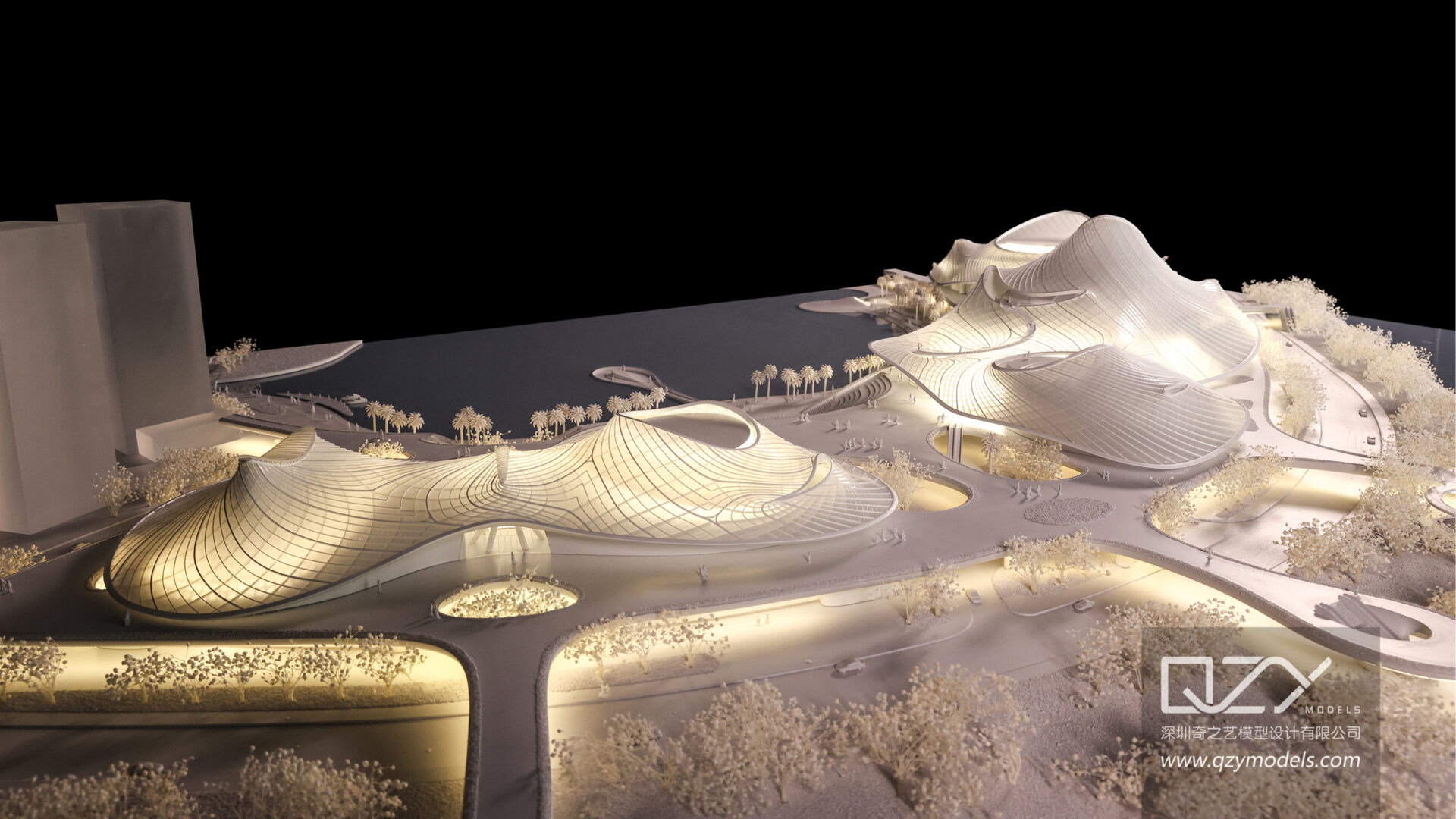
QZY Impact: Combined 3D resin printing and CNC carving, achieving optical clarity and true form.
Key Benefit: Won “Best Display Model” award at Dubai Design Week.
Case 4 – Education & Design School
Problem: Students lacked access to professional-grade model-making tools.
Traditional Approach: Low fidelity cardboard mockups limited learning outcomes.
QZY Impact: Provided modular kits and production support, enhancing design presentation quality.
Key Benefit: Boosted project completion quality and student competition performance.
Why Should You Adopt Modern Model-Making Now?
As design cycles shorten and visual storytelling becomes central to client communication, waiting means falling behind. QZY Models demonstrates how integrating digital accuracy with artistic craftsmanship delivers results far beyond traditional limits. With smart fabrication technology and global logistics, the “perfect model house” is no longer an aspiration—it’s an achievable standard for every project team ready to innovate today.
FAQ
How Can You Plan the Perfect Model House Design?
Start with a clear concept, accurate scale, and a detailed blueprint. Define room layout, proportions, and key features before building. Select materials early and create a step-by-step workflow. Use reference images and test components for fit. Professional teams like QZY Models recommend planning structure, lighting, and presentation simultaneously to ensure precision and visual impact.
What Are the Best Materials for Building a Model House?
Choose foam board, balsa wood, acrylic sheets, and high-quality adhesives for strength and detail. Use lightweight materials for structure and durable options for finishing. Match materials to scale and project purpose. Prioritize clean cutting and smooth surfaces. For large-scale projects, experienced studios such as QZY Models help select optimal materials for durability and realism.
How Do You Choose the Right Scale for a Model House?
Select scale based on project size, display space, and required detail level. Common scales include 1:50 and 1:100. Smaller scales suit large developments, while larger scales enhance interior detail. Maintain consistent proportion across all components. Always align scale with client expectations and presentation goals for accurate visualization.
Which Tools Are Essential for Building a Model House?
Use precision tools including hobby knives, cutting mats, metal rulers, tweezers, and strong adhesives. Add measuring tools for accuracy and clamps for stability. Keep blades sharp for clean edges. Good lighting improves detail work. Organized tool setup increases efficiency and reduces errors during assembly and finishing.
How Can You Create Realistic Interiors for a Model House?
Focus on furniture scale accuracy, surface textures, and lighting effects. Use miniature materials for floors, walls, and décor. Add small details such as curtains and fixtures for authenticity. Apply soft LED lighting to enhance depth. Consistent color schemes and careful arrangement improve realism and presentation quality.
What Are the Best Techniques for Exterior Finishing in Model Houses?
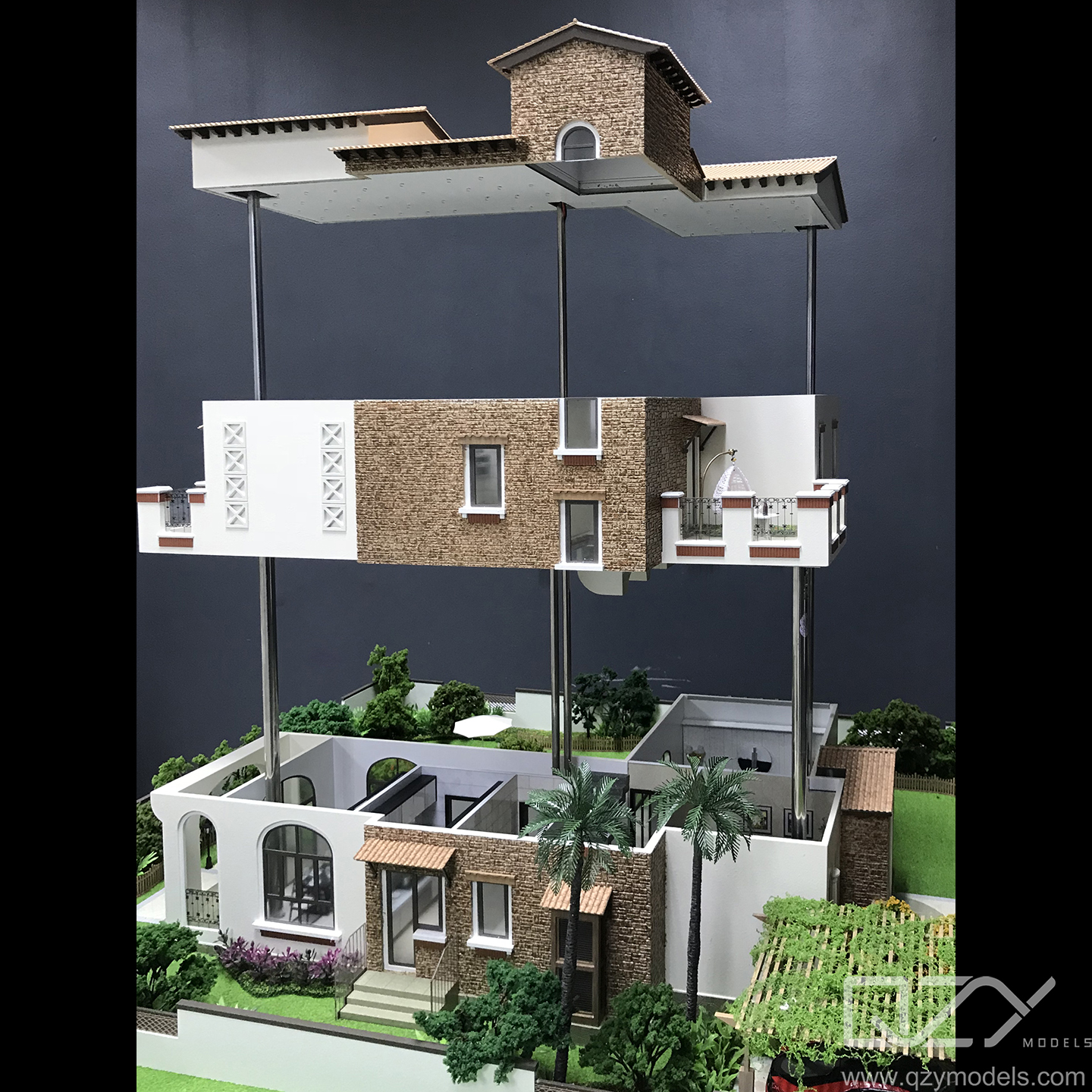
Apply smooth base coating, realistic textures, and weathering effects. Build accurate roofs, facades, and window frames. Add landscaping elements such as trees and pathways for context. Use fine brushes for detail painting. Proper exterior finishing enhances overall impact and makes the model visually compelling.
How Can You Build a Model House on a Budget?
Plan materials carefully and avoid waste. Use affordable options like cardboard and foam board for structure. Reuse scrap materials when possible. Prioritize essential details first. Compare supplier prices before purchasing. Efficient planning reduces costs while maintaining professional quality and presentation standards.
What Are the Best Ways to Present and Display a Model House?
Use proper lighting, neutral backgrounds, and stable display platforms. Position the model at eye level for clear viewing. Capture high-resolution photos for portfolios and marketing. Add labels or context boards when needed. Professional presentation improves visibility, engagement, and perceived value in exhibitions and client meetings.
Sources
-
IBISWorld: Architectural Model-Making Industry Statistics, 2025.
-
McKinsey Global Construction & Design Productivity Report, 2025.
-
QZY Models Official Website: www.qzymodels.com
-
Foster + Partners Annual Collaboration Report, 2024.
-
China Construction Visualization Market Analysis, 2025.