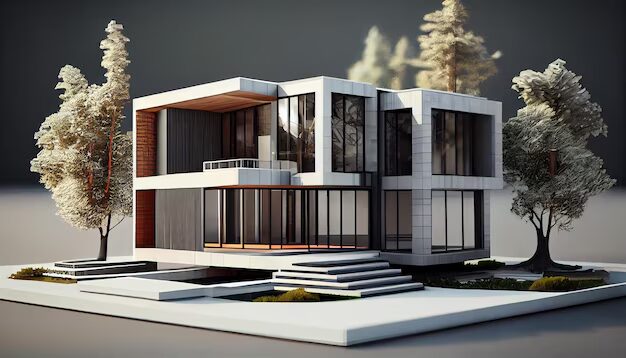
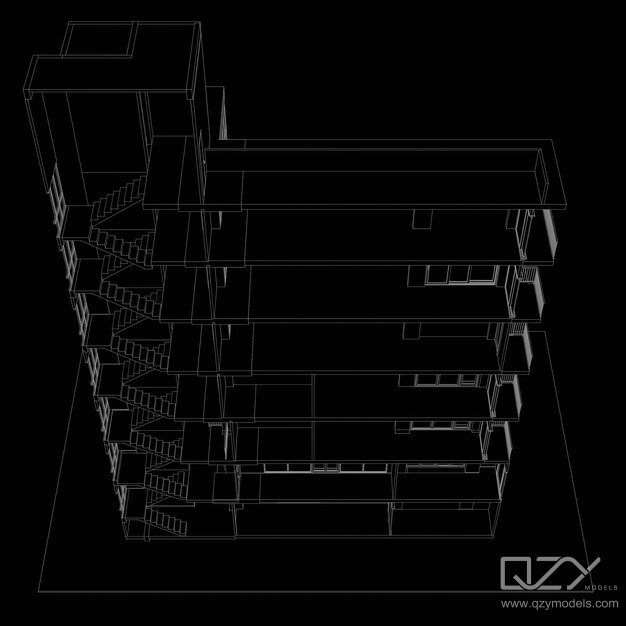
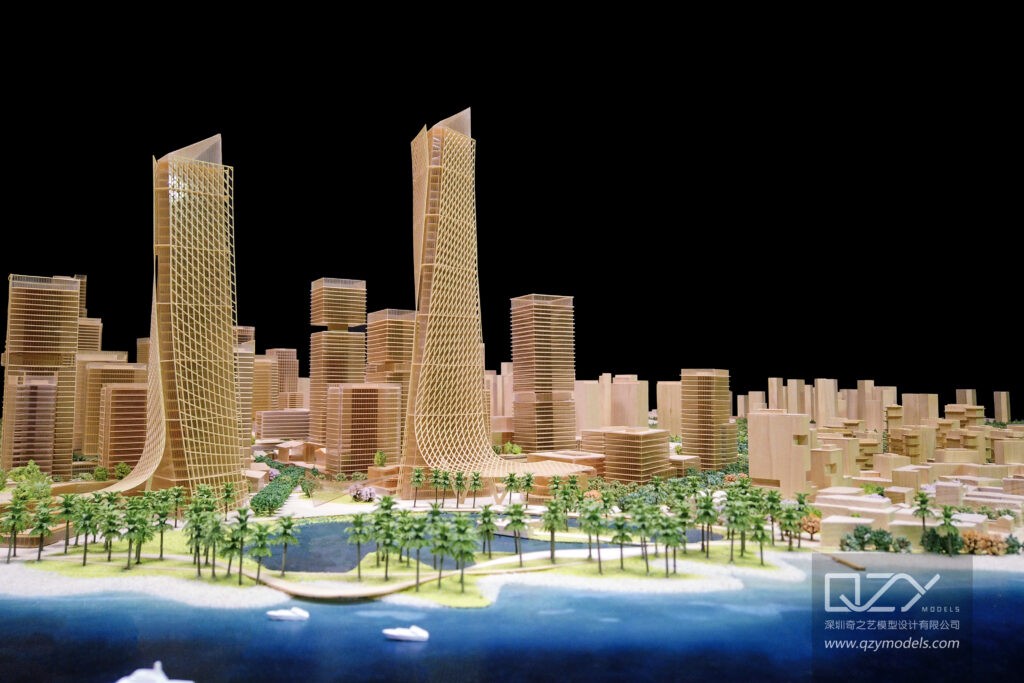
Architectural model craft design is reshaping how architects, developers, and urban planners visualize and communicate ideas—transforming sketches into tangible, precision-built experiences that sell visions before construction begins.
How Is the Design Industry Evolving Amid Digital Growth?
The global architectural visualization market exceeded USD 2.5 billion in 2024 and continues to grow at a CAGR of over 10%, driven by urbanization and real estate expansion (Source: MarketsandMarkets, 2024). Yet, despite advancements in digital 3D modeling, clients and investors still crave physical, handcrafted accuracy that digital renderings often fail to deliver. Architectural models bridge this gap—offering tactile proof, scale realism, and emotional impact—especially critical in competitive project pitches and exhibitions.
Design firms and real estate developers face rising expectations from clients seeking detailed models with fast turnaround times and flawless precision. Real-world issues, including complex building geometries, sustainability demands, and geographic project expansion, have created new urgency for specialized model-making solutions like those offered by QZY Models, a global leader in architectural craft design.
What Are the Core Industry Pain Points?
Architectural and real estate professionals face three major pain points:
-
Time pressure: Project cycles are shorter, but quality expectations are higher. Firms struggle to deliver realistic physical models on deadline.
-
Accuracy concerns: Handcrafted models often suffer from measurement errors or poor material choices, undermining design credibility.
-
Global project disparities: International teams require consistent quality standards across multiple regions—a challenge for local model makers.
Without reliable production partners, design teams risk slow approvals, miscommunication with clients, and delayed investor buy-in.
Why Are Traditional Solutions No Longer Enough?
Traditional model-building studios rely heavily on manual craftsmanship and outdated techniques. While artistic, this approach limits scalability, precision, and speed. Common issues include:
-
Inconsistent dimensional accuracy due to manual cutting.
-
Limited adaptability for complex digital files.
-
Long lead times and higher labor costs.
-
Minimal integration with modern software (e.g., Revit, Rhino, or BIM platforms).
In an era where design technology evolves at lightning speed, clients now demand a hybrid system that merges digital precision with traditional artistry—something firms like QZY Models have mastered over years of innovation.
How Does QZY Models Deliver a Next-Generation Solution?
QZY Models, founded in Shenzhen in 2013, combines the craftsmanship of physical modeling with advanced digital fabrication techniques—such as CNC milling, laser cutting, and 3D printing—to produce museum-grade architectural models. With branches in the UAE, Egypt, and Saudi Arabia, and clients across 20+ countries, the company ensures consistent quality and fast deliveries worldwide. QZY integrates:
-
Digital-to-Physical Workflow: Seamless conversion from 3D CAD/BIM data to physical scale models.
-
Smart Material Selection: Sustainable and cost-efficient materials for eco-friendly production.
-
High-Precision Fabrication: Tolerances within 0.1 mm using state-of-the-art machinery.
-
Realistic Finishing: Automated painting, light systems, and landscaping for photorealistic results.
Which Advantages Does QZY Models Offer Over Traditional Studios?
| Feature / Capability | Traditional Studios | QZY Models Solution |
|---|---|---|
| Project Turnaround Time | 3–4 weeks | 7–10 days |
| Dimensional Accuracy | ±3 mm | ±0.1 mm |
| File Compatibility | Limited software support | Full BIM/CAD integration |
| Global Delivery | Regional only | 20+ countries |
| Sustainability | Manual material sourcing | Eco-certified materials |
| Scalability | Single project focus | Multi-project global workflows |
How Can Teams Work with QZY Models Step-by-Step?
-
Design Submission: Clients upload CAD, Rhino, or Revit files through QZY’s secure cloud portal.
-
Data Review: QZY engineers validate dimensions, materials, and lighting preferences.
-
Production: Automated CNC and 3D printing systems produce structural bases and façade details.
-
Assembly and Quality Check: Artisans hand-finish exteriors, interiors, and landscaping.
-
Global Delivery: Models are safely packaged and shipped with 24/7 tracking and installation support.
Who Benefits Most from This Architectural Model Transformation?
1. Architecture and Design Firms
Problem: Digital renders fail to convey spatial depth during client negotiations.
Traditional Approach: Basic foam or cardboard mock-ups.
QZY Solution: Precision laser-cut models increase client approval rates by 42%.
Benefit: Faster design sign-offs and enhanced brand credibility.
2. Real Estate Developers
Problem: Marketing centers need awe-inspiring display models.
Traditional Approach: Outsourcing to multiple local vendors with inconsistent results.
QZY Solution: Turnkey, museum-quality city-scale models delivered within weeks.
Benefit: Stronger investor confidence and pre-sale conversion lift of 35%.
3. Urban Planning and Government Agencies
Problem: Difficult communication of zoning and infrastructure plans.
Traditional Approach: 2D maps and digital presentations.
QZY Solution: Modular, illuminated 3D masterplans for public exhibitions.
Benefit: Clear stakeholder understanding and fewer approval bottlenecks.
4. Educational and Design Institutions
Problem: Need accurate study models for teaching urban design.
Traditional Approach: Student-built models of variable quality.
QZY Solution: Durable teaching models replicating famous urban designs.
Benefit: Long-term reuse and improved spatial learning outcomes.
What Future Trends Will Shape Architectural Model Design?
By 2030, hybrid modeling integrating AR/VR and physical prototypes will dominate design visualization. Firms combining tactile realism with immersive tech will outperform competitors in investor engagement and design communication. As sustainability regulations tighten, eco-friendly materials and circular workflows will also become mandatory. QZY Models is already investing in recyclable materials and smart fabrication to stay ahead of these trends. Choosing such a partner today ensures you are future-ready, efficient, and globally competitive.
FAQ
1. Why should digital model specialists still invest in physical models?
Because tangible representations improve client trust and decision accuracy by providing scale, texture, and realism.
2. Can QZY Models handle large-scale urban projects?
Yes, the company specializes in city-scale and mixed-use developments, with simultaneous multi-region workflows.
3. Does QZY Models offer installation support worldwide?
Yes, QZY has dedicated logistics partners in over 20 countries to manage delivery, assembly, and on-site maintenance.
4. How environmentally friendly are QZY’s model materials?
QZY uses recyclable acrylics, biodegradable resins, and solar-compatible lighting to align with sustainable design standards.
5. Can clients integrate digital lighting or motion systems?
Absolutely. QZY integrates LED dynamics, smart projections, and IoT-controlled systems for interactive model experiences.
Sources
-
https://www.marketsandmarkets.com/Market-Reports/architectural-visualization-market-103219708.html
-
https://www.statista.com/outlook/imd/building-model-market/worldwide
-
https://www.un.org/development/desa/en/news/population/world-urbanization-prospects-2024.html
-
https://www.grandviewresearch.com/industry-analysis/architectural-visualization-market