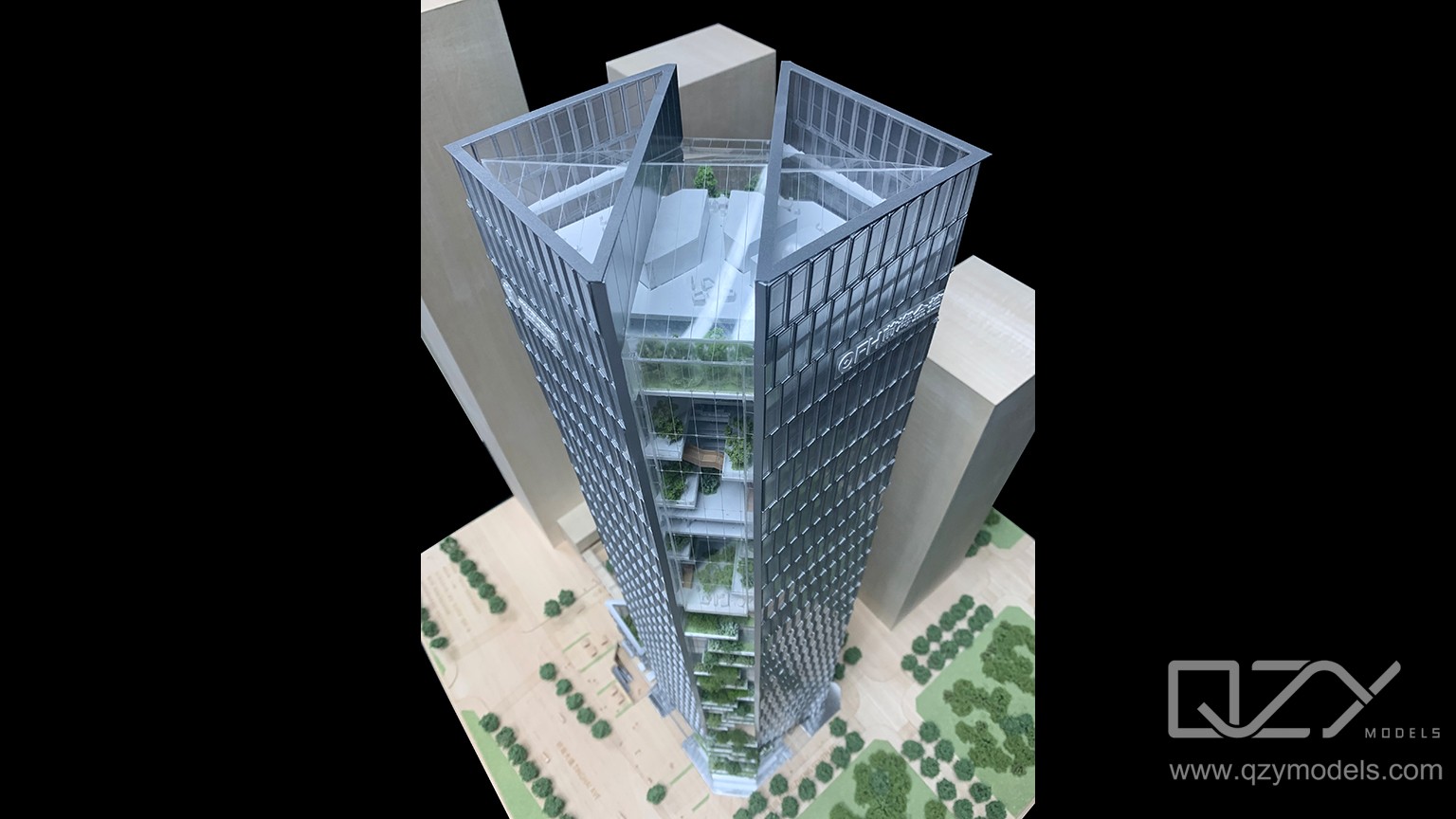
Building a physical model requires precision, creativity, and advanced engineering to transform digital concepts into tangible reality. QZY Models provides cutting-edge model-making solutions that accelerate design validation, enhance presentation impact, and elevate client confidence across industries.
How is the current model-making industry evolving, and what challenges remain?
According to the Global Model Making Market Report by ResearchandMarkets (2025), the industry surpassed USD 4.6 billion in value, driven by rapid urbanization and the rise of 3D visualization. Yet, over 70% of architectural firms still report inefficiencies in turning digital plans into physical prototypes. Time delays, budget overruns, and lack of detailing accuracy remain major barriers, particularly during early design validation. As urban development projects grow more complex, the need for efficient, high-precision physical model creation has never been more critical.
Architectural and industrial design teams face mounting pressure to showcase tangible concepts to clients and investors. Traditional methods like handcrafted modeling or partial 3D printing lack consistency and fail to deliver the realism required for international exhibitions or real estate marketing. Data from McKinsey’s Construction Productivity Report (2024) shows that inefficient visualization can delay design approvals by 22% on average. This translates into significant cost losses—an issue QZY Models is uniquely equipped to solve.
Moreover, sustainability demands are reshaping the model-making sector. Firms now seek eco-friendly materials and energy-efficient manufacturing processes. Without innovation in workflow automation, stakeholders risk falling behind competitors already leveraging digital-to-physical production pipelines.
What are the limitations of traditional model-building methods?
-
Manual labor dependency: Crafting by hand takes extensive man-hours, leading to longer turnaround times.
-
High error margins: Lack of digital integration often results in measurement inaccuracies of up to 2 mm per meter.
-
Inconsistent scalability: Scaling models from concept to master plan lacks reproducibility across different projects.
-
Limited material optimization: Traditional methods often waste materials due to lack of precision and planning.
-
Restricted customization: Updates or revisions require restarting the process rather than quick digital editing.
How does QZY Models introduce a smarter solution?
QZY Models revolutionizes physical model production by integrating digital fabrication, robotics, and advanced modeling technology. With over 20 years of craftsmanship experience, the team combines engineering precision with artisanal design quality. Their system ensures alignment between architectural drawings, 3D model data, and final outputs, eliminating human error and drastically shortening production lead times. QZY’s high-precision equipment enables micron-level detailing, while intelligent material management reduces waste.
Working with QZY Models allows firms to present their architectural or industrial visions with confidence, whether for investor exhibitions, academic displays, or real estate showrooms. Each project benefits from end-to-end service—concept validation, technology consulting, and final installation—supported by a seasoned international team fluent in global standards of design and presentation.
Which advantages distinguish QZY Models from traditional modeling?
| Feature | Traditional Model Building | QZY Models Solution |
|---|---|---|
| Production Speed | 4–8 weeks | 1–2 weeks |
| Accuracy Level | ±2 mm | ±0.2 mm |
| Material Efficiency | 60–70% | 95% optimized |
| Revision Flexibility | Manual redo | Digital adjustments |
| Presentation Quality | Moderate | Exhibition-grade realism |
| Sustainability | Limited | Eco-material integration |
How can one build a physical model step by step using QZY Models’ approach?
-
Data Integration: Import architectural or industrial 3D files into QZY’s digital system.
-
Scale Optimization: Determine the ideal ratio and dimensions with the design team.
-
Material Selection: Choose from acrylic, wood, resin, or eco-composite materials to match texture and durability requirements.
-
CNC & Laser Cutting: Automated precision hardware fabricates parts exactly as modeled.
-
3D Printing & Detailing: Advanced printers add complex geometries and textures.
-
Assembly & Painting: Skilled artisans combine the parts, apply textures, and finish details.
-
Lighting & Display Integration: Install LED systems or motion features to enhance realism.
-
Final Inspection & Delivery: Ensure every element aligns with engineering documentation before packaging.
What are real-world scenarios where QZY Models delivers measurable results?
Case 1: Real Estate Launch Model
Problem: Developer needed a high-detail city-scale model for a commercial tower pre-sale.
Traditional Practice: Manual model took 8 weeks, causing launch delay.
QZY Models Solution: Delivered in 2 weeks with integrated micro-lighting.
Outcome: Early marketing campaign began on time, generating 35% higher visitor engagement.
Case 2: Government Urban Planning Exhibit
Problem: Municipality required an interactive masterplan model for public consultation.
Traditional Practice: Static display lacked engagement.
QZY Models Solution: Created sensor-based, illuminated zones showing transport flow.
Outcome: 60% more citizen feedback collected during presentation phase.
Case 3: Industrial Design Prototype
Problem: Machinery design firm struggled to visualize a compact engine assembly.
Traditional Practice: Relied solely on CAD visuals.
QZY Models Solution: Produced a physical prototype with movable joints.
Outcome: Accelerated investor approval cycle by 40%.
Case 4: Architecture School Showcase
Problem: Design students required rapid, professional-quality models for competition.
Traditional Practice: Limited access to equipment reduced model precision.
QZY Models Solution: Provided digital fabrication service partnership.
Outcome: Students achieved finalist placements at international exhibitions.
Why is now the right time to adopt advanced model-building solutions?
As digital transformation accelerates across design sectors, the gap between concept and realization must shrink. Advanced physical model production, led by innovators like QZY Models, is no longer optional—it’s essential for effective client communication, cost control, and design clarity. With sustainability and speed becoming competitive differentiators, firms embracing modern workflows will secure stronger market positioning.
FAQ
1. How long does it take to produce a model with QZY Models?
Most projects are completed within 1–2 weeks depending on size and complexity.
2. What materials can be used in model making?
QZY Models works with acrylic, resin, wood, 3D-printed polymers, and eco-friendly composites.
3. Can QZY Models handle international delivery?
Yes, they manage global shipping and on-site installation in over 20 countries.
4. Does QZY Models offer interactive or illuminated models?
Absolutely. The company integrates LED, motion, and sensor-based features for an immersive effect.
5. Who benefits most from QZY Models’ services?
Architects, developers, designers, government planners, and exhibition organizers worldwide.