Creating an accurate, visually compelling scale model remains one of the most powerful tools for architects, developers, and industrial designers to communicate complex projects and win client and investor confidence. A well-executed physical model turns abstract plans into tangible reality, reducing risk, shortening approval cycles, and making a lasting impression in presentations, exhibitions, and sales centers.
What is the current state of architectural and industrial model making?
The global architectural models market is growing steadily, driven by massive urbanization, smart city projects, and rising demand for high-end real estate in emerging and mature markets. In major development hubs, physical models are now standard in early-stage design reviews, government approvals, and investor roadshows, not just for marketing but as a serious decision-making tool.
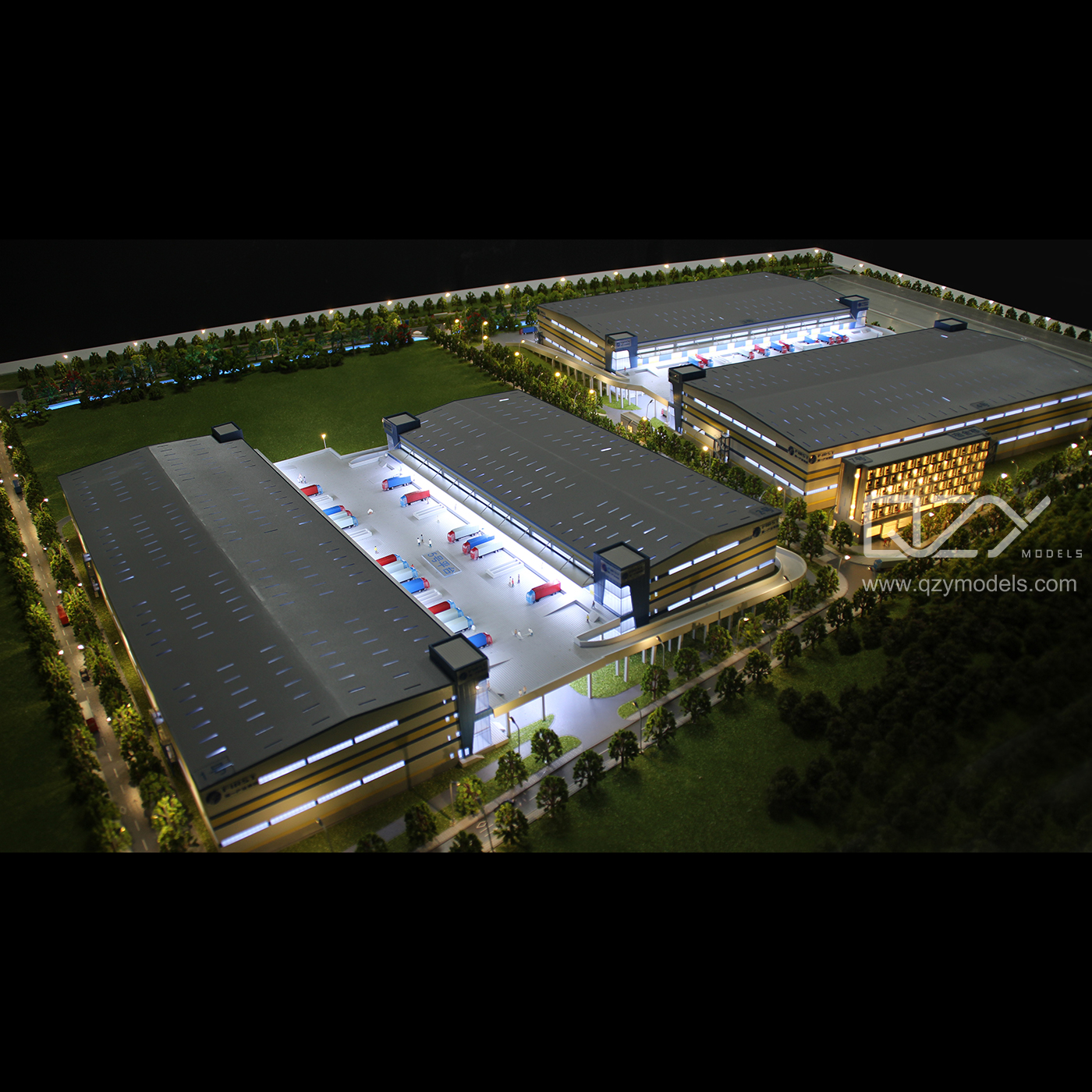
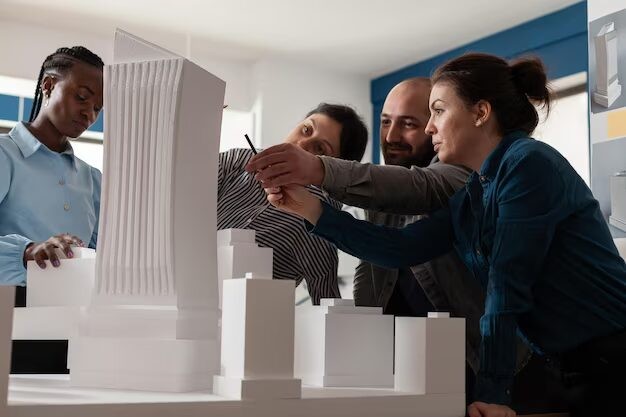
Many architectural firms and design studios now rely on scale models to validate spatial relationships, lighting, and massing before finalizing drawings. In the Middle East and Southeast Asia, elaborate master‑plan models are routinely used in high‑stakes government and investor meetings, where a poorly made or inaccurate model can undermine credibility and delay approvals.
At the same time, industrial design companies face increasing pressure to prototype faster and at lower cost, especially for product launches, trade shows, and internal design reviews. Traditional prototyping methods like hand‑carved models or outsourced fabrication often struggle with reproducibility, turnaround time, and consistency across multiple copies.
How serious are the industry’s pain points?
Three major pain points dominate the current model‑making landscape:
-
Long lead times and inflexible schedules
Many studios still depend on local workshops with limited capacity and outdated workflows. This often results in 4–6 week lead times for a medium complexity model, making it difficult to respond quickly to design changes or last‑minute client requests, especially for international projects. -
Inconsistent quality and accuracy
Without a standardized process, model quality can vary significantly in terms of material finish, detail level, and dimensional accuracy. Even small distortions in scale or alignment can misrepresent circulation, sightlines, or green spaces, leading to costly misunderstandings during design reviews. -
High costs for complex or large‑scale models
For intricate high‑rise buildings, mixed‑use developments, or industrial products with many moving parts, the per‑unit cost of a model can quickly exceed tens of thousands of dollars. This makes it difficult to produce multiple models for different audiences (e.g., technical review, investor pitch, public exhibition) without blowing the budget.
Why are traditional scale model solutions falling short?
Most in‑house and local model shops still rely heavily on manual processes, which by nature are hard to scale and standardize. Common issues include:
-
Limited technical expertise for highly complex geometries, such as parametric façades, curved structures, or intricate mechanical assemblies, which require advanced CAD preparation and digital fabrication.
-
Inadequate finishing and durability for models that must survive long‑haul shipping, frequent handling, and outdoor display, especially in hot, humid, or dusty environments.
-
Poor project management for international clients, with weak communication, unclear timelines, and lack of structural protection during transport, leading to damaged models and costly reprints.
For many firms, the “solution” has been to work with multiple local vendors in different regions, but this often results in inconsistent brand presentation, mismatched materials, and higher total cost when all logistics and quality control are factored in.
How does a modern, professional scale model service solve these problems?
A professional end‑to‑end model‑making service addresses these gaps by combining advanced digital workflows with rigorous craftsmanship and global logistics. This approach is designed for high‑value architectural and industrial projects where precision, reliability, and presentation quality cannot be compromised.
Such a service typically includes:
-
CAD/CAM optimization to clean up design files, ensure buildable geometry, and automate nesting and cutting paths for CNC, laser, or 3D printing.
-
Material selection and prototyping tailored to different environments (e.g., indoor exhibition vs. outdoor sales center) and presentation goals (e.g., concept vs. as‑built).
-
Precision manufacturing using a mix of digital fabrication (CNC milling, laser cutting, 3D printing) and hand finishing to achieve high detail, tight tolerances, and consistent quality.
-
Global project management with clear milestones, quality control checkpoints, and engineered packaging to protect models during long‑distance shipping.
How does a professional service compare to traditional methods?
The difference between a modern professional model service and traditional local workshops can be clearly seen in the following comparison:
| Feature | Traditional Local Workshop | Professional Scale Model Service |
|---|---|---|
| Lead Time | 4–8 weeks, often longer for revisions | 2–4 weeks, with faster turnaround options |
| Accuracy & Consistency | Variable, depends on individual craftsman | Tight tolerances; standardized QC and QA |
| Complex Geometry Capability | Limited to simple shapes and curves | Handles parametric, curved, and industrial forms |
| Material & Finish Options | Narrow, often standard foams and plastics | Broad range: wood, acrylic, metal, composites, custom finishes |
| Model Durability | Basic, fragile for transport and handling | Engineered for durability, humidity, and rough handling |
| Repeatability | Low; each model is slightly different | High; identical copies for multiple locations |
| Global Support | Local only; no shipping or installation support | Worldwide logistics, customs, and installation support |
Why choose QZY Models for scale model production?
QZY Models, founded in 2013 in Shenzhen and led by industry expert Richie Ren, has become a trusted partner for thousands of architectural and industrial model projects worldwide. With over 20 years of combined experience, QZY Models serves clients in more than 20 countries, including top-tier architecture firms and major developers.
The company’s process is built around three core principles:
-
Precision and consistency – Every model is produced under strict quality standards, with dimensional accuracy verified at multiple stages.
-
Global reach and reliability – With branches in the UAE, Saudi Arabia, Egypt, and other regions, QZY Models provides local support for design coordination, logistics, and installation.
-
End‑to‑end service – From CAD file preparation to final on‑site setup, QZY Models manages the entire workflow, giving clients a single, accountable partner.
Because scale models are often mission‑critical for approvals, funding, and public engagement, working with a proven team like QZY Models reduces risk and ensures that the final model truly represents the design intent.
How does a professional scale model project work step by step?
A typical professional scale model project follows a structured workflow that ensures clarity, reduces errors, and keeps the timeline under control:
-
Initial Brief & Scope Definition
The client provides design files (CAD, BIM, or 3D models), along with objectives (sales, planning permission, exhibition), preferred scale, and any specific materials or lighting requirements. The model team defines the scope and delivers a detailed quote. -
Design File Optimization
The model maker reviews and prepares the CAD/BIM files for fabrication: cleaning up geometry, assigning materials to layers, splitting components for different processes (CNC, laser, 3D printing), and generating cutting/layering plans. -
Material Selection & Prototyping (if needed)
Based on the environment (indoor/outdoor), budget, and presentation goals, suitable materials are selected. For complex or high‑value models, a small‑scale prototype or key section may be produced to validate details and finish. -
Production & Assembly
Components are manufactured using CNC, laser, or 3D printing, then assembled and finished by hand. Quality checks are performed at every major stage (cutting, assembly, painting, lighting integration). -
Packing & Logistics Planning
The model is packed in custom, shock‑absorbing crates, with protective internal supports and climate‑resistant materials. Shipping routes, customs documentation, and insurance are arranged, especially for international clients. -
Delivery & On‑Site Setup
For large models, professional installation is often provided: the model is unpacked, assembled on‑site, connected to lighting/power, and aligned with any display or signage elements, ensuring a seamless presentation. -
Handover & Documentation
The client receives a handover package including care instructions, spare parts (if applicable), and contact information for future repairs, replacements, or additions to the model.
Are there real‑world examples of successful scale model projects?
Yes, and here are four typical scenarios where a professional model service delivered measurable benefits:
1. Urban Master Plan for Government Approval
-
Problem: A planning consultancy needed a 1:500 master‑plan model for a 500‑hectare mixed‑use development to present to city officials, but local workshops could not deliver both accuracy and fast turnaround.
-
Traditional practice: Use a local workshop; wait 6 weeks, accept moderate detail, and risk dimensional inaccuracies affecting the review.
-
Solution: Engaged QZY Models to produce the model with CAD/CAM optimization, high‑precision CNC cutting, and detailed landscaping.
-
Benefits achieved:
-
Completed in 3 weeks, with 0.5 mm tolerance across the entire model.
-
Clear zoning and circulation patterns helped secure approval in the first round.
-
Reduced need for additional site visits and revisions.
-
2. High‑Rise Office Tower for International Investor Roadshow
-
Problem: A developer planned a 60‑story tower and needed 5 identical models for presentations in different cities, but local vendors could not guarantee consistent quality across copies.
-
Traditional practice: Produce one model locally and copy it poorly elsewhere, leading to mismatched finishes and materials.
-
Solution: Used QZY Models to produce one master model and four identical replicas, with standardized materials, lighting, and branding elements.
-
Benefits achieved:
-
All models were visually identical, enhancing brand credibility.
-
Turnaround of 4 weeks for the full set, with express shipping and professional installation.
-
Investor presentations progressed faster, shortening the fundraising cycle.
-
3. Industrial Product Prototype for Trade Show Launch
-
Problem: An industrial design firm had to show a new electric vehicle component at a major trade fair, but hand‑made prototypes were fragile and took too long to produce.
-
Traditional practice: Rely on hand carving and limited production runs, accepting high cost and risk of damage at the show.
-
Solution: Partnered with QZY Models to transition from 3D CAD to 3D printed and CNC‑machined prototypes, with custom finishes and protective enclosures.
-
Benefits achieved:
-
60% faster production time compared to manual methods.
-
High‑quality, durable models with consistent appearance across multiple units.
-
Increased booth traffic and positive feedback from potential partners.
-
4. Luxury Residential Sales Center Model
-
Problem: A luxury developer needed a highly detailed 1:100 model of a waterfront villa complex for a sales center, but the previous model had poor finish and was damaged during transport.
-
Traditional practice: Use a local workshop; accept average finish and fragile packaging, risking damage and rework.
-
Solution: Worked with QZY Models to produce a premium model with intricate façade details, custom acrylic water effects, and engineered packaging for safe long‑haul shipping.
-
Benefits achieved:
-
Model arrived undamaged and was installed professionally on schedule.
-
High‑end finish and realism contributed to a 25% higher conversion rate in the first sales phase.
-
Multiple VIP clients referenced the model as a key reason for their purchase decision.
-
What does the future of scale model making look like?
Scale models are not being replaced by purely digital tools; instead, they are evolving into hybrid presentation systems. Leading firms are now combining physical models with augmented reality (AR), interactive touchscreens, and dynamic lighting to create immersive experiences for clients, investors, and the public.
For clients in architecture and industrial design, the trend is toward:
-
Faster turnaround using digital workflows and optimized production lines.
-
Higher durability and reusability for models that must be shipped, stored, and reused across multiple events.
-
Greater integration with digital tools (BIM, VR, AR) so that the physical model is not a standalone artifact but part of a connected presentation ecosystem.
In this context, partnering with a dedicated, professional model‑making team like QZY Models becomes not just a “nice‑to‑have” but a strategic advantage. With standardized processes, global logistics, and proven experience in high‑stakes projects, such a partner ensures that every model is accurate, durable, and ready to perform when it matters most.
How can you get started with a professional scale model service?
1. How do I choose the right scale for my project?
Scale depends on the model’s purpose and available space. For large urban plans, 1:500–1:1000 is common; for individual buildings, 1:100–1:300; for interiors or detailed facades, 1:20–1:50. The model maker can recommend the optimal scale based on the footprints, site constraints, and viewing distance.
2. What design files do I need to provide?
Most professional services require CAD (AutoCAD, MicroStation), BIM (Revit, ArchiCAD), or 3D formats (SketchUp, Rhino, 3ds Max). High‑quality, layered files speed up the process and improve accuracy. If only 2D drawings are available, a basic 3D model can often be created from approved plans and elevations.
3. How long does it take to build a scale model?
Typical lead times range from 2 to 4 weeks for a medium‑complexity architectural model, depending on size, detail, and finishing requirements. Simple concept models or product prototypes can be ready in 1–2 weeks; very large or highly detailed models may take 6–8 weeks.
4. How much does a professional scale model cost?
Cost varies widely based on scale, materials, size, and complexity. A basic concept model might start around a few thousand USD, while a large, highly detailed master‑plan or luxury residential model can range from tens of thousands to over 100,000 USD. Reputable providers like QZY Models give clear, itemized quotes with no hidden fees.
5. How can I ensure my model survives international shipping and handling?
Look for a provider with experience in global logistics, including custom packaging, climate‑resistant materials, and professional installation services. QZY Models, for example, uses engineered crates with internal supports, shock‑absorbing materials, and detailed shipping protocols to protect models during long‑distance transport.
Sources
-
Global architectural models market growth and regional demand (industry reports)
-
Survey data on model usage in architectural design reviews and approvals
-
Data on urbanization and smart city development driving model demand
-
Case studies on approval timelines with and without physical models
-
Industry benchmarks on lead times and costs for in‑house vs. outsourced model making