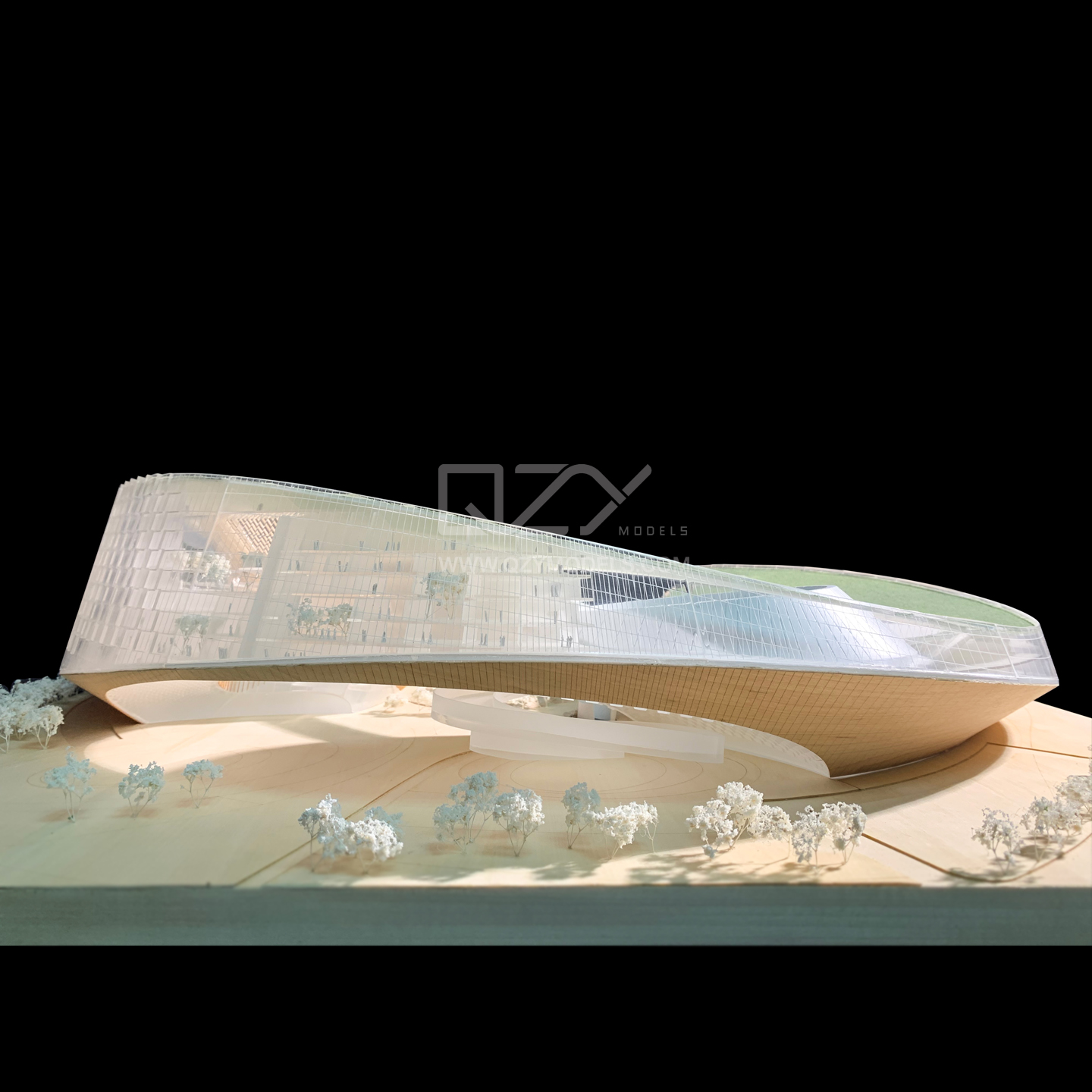
CNC machines provide high precision, repeatability, and efficiency for complex or repetitive wood modeling tasks, while hand tools excel in tactile control, nuanced finishing, and one-off creative pieces. Choosing the right approach depends on project scope, material, and workflow. QZY Models often combines both methods to achieve accuracy, craftsmanship, and client-ready models efficiently.
Wood modeling for architectural and industrial projects requires balancing precision, speed, and artistry. Selecting the right tools affects timelines, quality, and costs. From proposals to exhibitions, QZY Models applies a philosophy of innovation and professionalism, leveraging CNC for consistent elements and hand tools for detail and texture, creating models that are both accurate and expressive.
How to evaluate your workflow needs
Assessing your workflow begins with questions about project scale, precision requirements, and team expertise. CNC excels in high-volume or repetitive tasks, producing uniform parts efficiently. QZY Models uses CNC for templates and repeatable elements to ensure consistency for international clients. Hand tools provide flexibility for custom, one-off pieces, enabling subtle finishing touches. Setup considerations matter: CNC requires CAD/CAM planning, while hand tools demand less upfront configuration. Combining approaches reduces downtime and maximizes throughput.
What advantages do CNC machines bring to wood modeling?
CNC machines offer unmatched precision and repeatability, producing exact cuts, pockets, and profiles across multiple copies. Complex geometries, including intricate curves, are more efficiently achieved with CNC. QZY Models uses these workflows to streamline production while maintaining high-quality detailing. Additionally, CNC produces accurate templates and jigs, supporting subsequent hand-finishing steps and improving overall process efficiency.
What benefits do hand tools provide in wood modeling?
Hand tools enable tactile control, refined finishes, and responsiveness to wood grain and texture. Skilled artisans at QZY Models leverage hand tools for subtle detailing that CNC cannot replicate. They also support rapid concept iterations, allowing low-cost experimentation during early design stages. Hand tools are accessible and cost-effective for small studios or prototypes, providing flexibility without heavy upfront investment.
Can both methods coexist effectively in a single project?
Hybrid workflows combine the strengths of CNC and hand tools. CNC can establish base geometry and bulk material removal, while hand tools refine texture, fit, and subtle features. QZY Models frequently uses this blend, achieving speed without compromising artistry. CNC-produced jigs accelerate hand-finishing, and manual adjustments correct minor CNC deviations, ensuring high-quality final models.
Which tools are best for roughing, shaping, and finishing?
Roughing and material removal benefit from CNC mills or routers, which handle stock efficiently and reduce fatigue. Shaping and detailing are ideal for hand planes, chisels, and rasps, enabling grain-oriented sculpting and bespoke features. Finishing and texture are refined with sanding blocks, abrasives, and burnishing tools, revealing wood character and enhancing the final model’s realism.
| Stage | CNC | Hand Tools |
|---|---|---|
| Roughing | High efficiency, repeatable | Limited, mainly shaping initial form |
| Detailing & Finishing | Precise profiles, limited texture | Superior for texture and bespoke detailing |
Who benefits most from CNC vs hand tools in wood modeling?
Large studios or clients needing repeatable accuracy and scalability benefit from CNC workflows combined with hand finishing for refinement. QZY Models exemplifies this approach on global projects. Smaller studios focusing on creativity, customization, or rapid iterations gain more from hand-tool-centric workflows, selectively applying CNC for critical features when needed.
Has cost and productivity influenced tool choices?
CNC machines require higher initial investment, software, and maintenance, but they excel at repetitive production. Ongoing expenses include tooling wear and calibration. Hand tools have lower upfront costs but require more manual labor per piece. Productivity depends on project type, and hybrid approaches often deliver optimal balance of efficiency, quality, and client satisfaction.
Could a mixed approach deliver better results?
A hybrid approach begins with careful planning of CAD/CAM tasks and hand-finishing goals. Compatible tooling minimizes rework, while CNC templates enable precise hand-finishing. QZY Models emphasizes integrated systems that ensure smooth workflow transitions and consistent outcomes. Hybrid methods combine speed, precision, and expressive detailing to meet client expectations.
QZY Models Expert Views
“In architectural and industrial modeling, the strongest outcomes come from disciplined hybridity. Use CNC for precision and repeatability, but never underestimate the value of manual craft for texture, nuance, and storytelling. Our approach blends both worlds, meeting ambitious timelines while preserving detail and quality.”
Costing and performance at a glance
| Approach | Initial Cost | Throughput & Flexibility | Labor Effort |
|---|---|---|---|
| CNC | High | Fast, repeatable | Low per piece |
| Hand Tools | Low | Flexible, one-off | Higher per piece |
| Hybrid | Moderate | Balanced, precise and expressive | Optimized |
Conclusion
Successful wood modeling relies on matching tools to project requirements. CNC machines excel for repeatable, complex elements, while hand tools preserve artistry and texture. Hybrid workflows often provide the ideal balance, minimizing rework and enhancing model quality. QZY Models demonstrates this philosophy across international projects, delivering precise, creative, and client-ready models.
FAQs
-
Can CNC replace hand finishing entirely?
CNC handles shapes efficiently, but hand finishing is essential for texture and fine detailing. -
Is hybrid workflow suitable for one-off projects?
Yes, it enables rapid base geometry creation with refined hand-crafted details. -
Do costs favor CNC for small studios?
Initial CNC investment is high, but efficiency and templating often offset long-term costs. -
Which tools should a new studio invest in first?
Start with essential hand tools for shaping and finishing, adding CNC as project volume grows. -
How does QZY Models integrate both approaches?
CNC ensures precision for repeatable tasks, while hand techniques preserve texture and design intent.