A well-crafted diorama brings architectural concepts, industrial models, and creative storytelling to life with stunning realism. Leveraging precise design tools and expert craftsmanship, solutions like those from QZY Models redefine how professionals visualize and present miniature three-dimensional worlds with unmatched detail and efficiency.
How is the diorama industry evolving today, and what challenges does it face?
According to the Allied Market Research report, the global model display and miniature industry surpassed USD 7.2 billion in 2024 and is projected to grow at 5.7% annually through 2030, driven by architectural visualization, exhibition, and educational demand. However, the rising expectations for accuracy, realism, and customization have exposed major gaps between traditional handcrafted methods and modern creative needs.
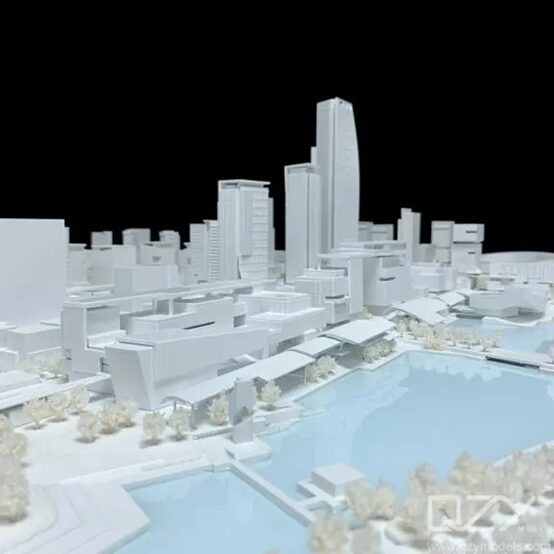
In architecture, for example, dioramas remain key in communicating design intent to investors and urban planners. Yet survey data from Statista shows that more than 68% of design firms struggle with time and cost overruns due to manual modeling inefficiencies.
For professionals like architects or design educators, slow delivery, inconsistent quality, and lack of scalable production are consistent pain points. This is where innovation-centered firms such as QZY Models play a vital role—bridging artistry with industrial precision.
What are the limitations of traditional diorama-making methods?
Traditional diorama-making relies heavily on manual craftsmanship using foam boards, clay, and paints. While artistically valuable, this approach struggles to meet precision and timeline standards required by today’s architectural visualization.
-
Low consistency: Manual cutting and assembly often result in measurement errors of up to 5%, affecting project accuracy.
-
Extended completion time: A typical complex diorama can take 2–6 weeks to complete by hand.
-
Limited scalability: Reforming an existing design means redoing the entire model structure.
-
Higher long-term costs: Accumulated labor and material waste can inflate costs by 15–25%.
These issues make traditional approaches unsustainable for large-scale developments or exhibition projects where precision, speed, and realism are non-negotiable.
How does QZY Models transform the diorama-making process?
QZY Models integrates digital design, precision fabrication, and real-time project management to deliver museum-quality dioramas at global scale. Founded in 2013, QZY Models combines over 20 years of technical expertise with advanced CNC machining, laser cutting, and 3D printing.
Key capabilities include:
-
Digital-to-physical modeling based on CAD/BIM interoperability.
-
Ultra-detailed finishing using multi-material printing and laser engraving.
-
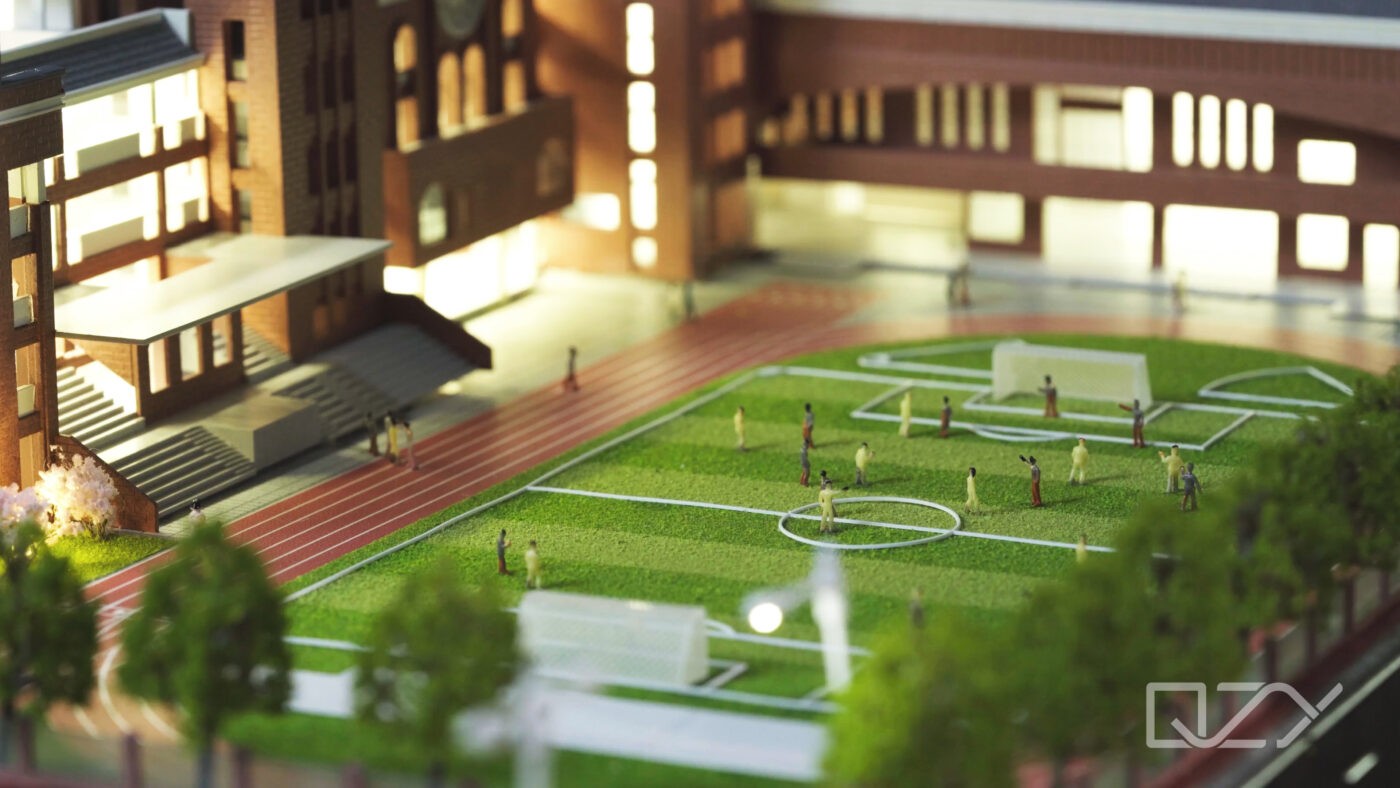
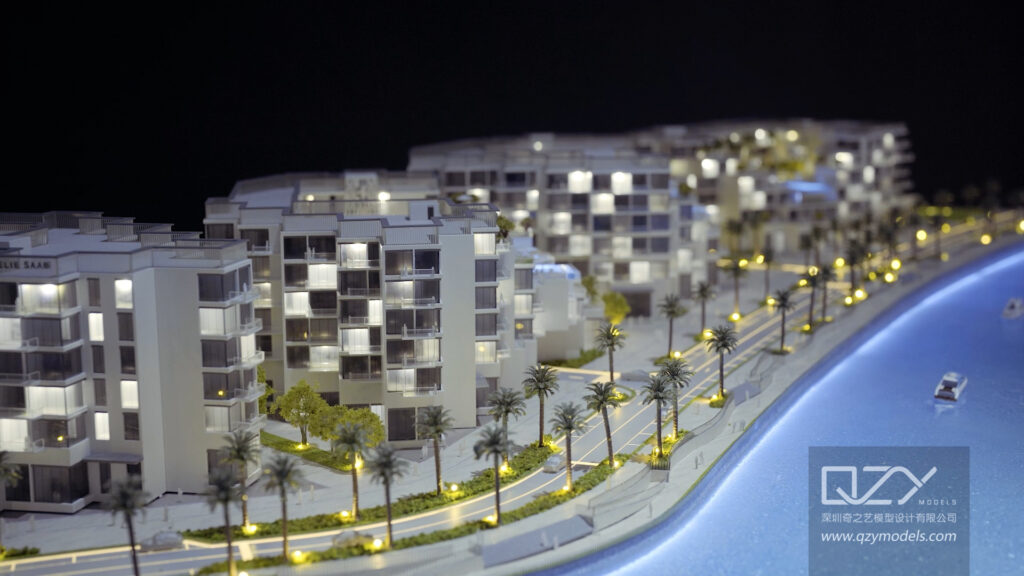
Integrated lighting and motion effects for interactive presentations.
-
Global project coordination across teams in China, UAE, and Saudi Arabia.
This end-to-end process ensures architectural models, landscape scenes, or industrial miniatures are built accurately, efficiently, and with captivating visual depth.
What are the advantages of QZY Models compared to traditional methods?
| Feature | Traditional Diorama | QZY Models’ Digital Diorama |
|---|---|---|
| Accuracy | ±5 mm deviation | ±0.2 mm CNC precision |
| Delivery time | 2–6 weeks | 3–7 days average |
| Scalability | Manual reconstruction | Digital reprinting capability |
| Cost efficiency | Labor-intensive | Automated production optimization |
| Visual quality | Basic textures | Realistic, multi-layer finish with lighting |
| Customization | Limited | Fully data-driven design flexibility |
How can you make a diorama with QZY Models step by step?
-
Concept drafting: Collect CAD drawings, sketches, and reference visuals.
-
Digital modeling: QZY Models’ team creates a 3D model aligned with your project specifications.
-
Material selection: Choose materials from acrylics, resin, metal, or mixed composites.
-
Precision fabrication: Automated CNC and laser processes build the base structure.
-
Assembly & finishing: Components are manually enhanced for realism.
-
Lighting integration: Smart LED lighting adds dimensionality and effect.
-
Quality inspection: Each model passes multi-tier calibration and visual checks before shipment.
Which real-world use cases demonstrate QZY Models’ impact?
1. Architectural Presentation
-
Problem: Developers needed a detailed model of a high-rise complex for investor presentations.
-
Traditional method: Took 5 weeks and resulted in inconsistent texture quality.
-
QZY Models solution: Delivered a laser-cut precision model within 7 days.
-
Key benefit: Accelerated project approval and improved investor engagement.
2. Urban Planning Exhibition
-
Problem: City planners struggled to communicate layout redesign ideas.
-
Traditional method: Utilized static foam prototypes.
-
QZY Models solution: Provided a scaled interactive urban diorama with modular lighting zones.
-
Result: 40% greater visitor interaction and clarity in presentations.
3. Interior Design Showcase
-
Problem: Designers required realistic room miniatures to demonstrate material combinations.
-
Traditional method: Relied on digital renderings alone.
-
QZY Models solution: Created multifinish dioramas using acrylic layers and LED ambiance.
-
Outcome: Improved customer conversion by 35%.
4. Educational & Institutional Projects
-
Problem: Design universities lacked professional-quality model resources.
-
Traditional method: Students hand-built models with limited precision.
-
QZY Models solution: Supplied modular kits based on school curriculums.
-
Result: Enhanced teaching outcomes and hands-on understanding of spatial design.
Why is now the best time to upgrade diorama production?
The global shift toward digital-twin visualization and immersive model experiences demands higher accuracy, faster production, and sustainable materials. QZY Models stands at this intersection of innovation—merging art with automated precision to support architects, developers, and educators worldwide. Now is the time for the industry to adopt data-driven modeling, not only for efficiency but for creative freedom that scales.
FAQ
1. What materials are most durable for professional dioramas?
Acrylic, resin, and ABS composites provide the best durability and finish precision.
2. Can QZY Models handle large-scale international projects?
Yes. QZY Models manages cross-border logistics and supports clients in over 20 countries.
3. How long does a typical diorama project take?
Depending on complexity, production ranges from 3 days for small models to 2 weeks for architectural sets.
4. Does QZY Models offer lighting and motion features?
Yes. Integrated LED systems, sensors, and motors enhance realism and engagement.
5. Are digital blueprints required before starting a project?
Providing CAD or BIM files streamlines production, but QZY Models can assist with design development if needed.