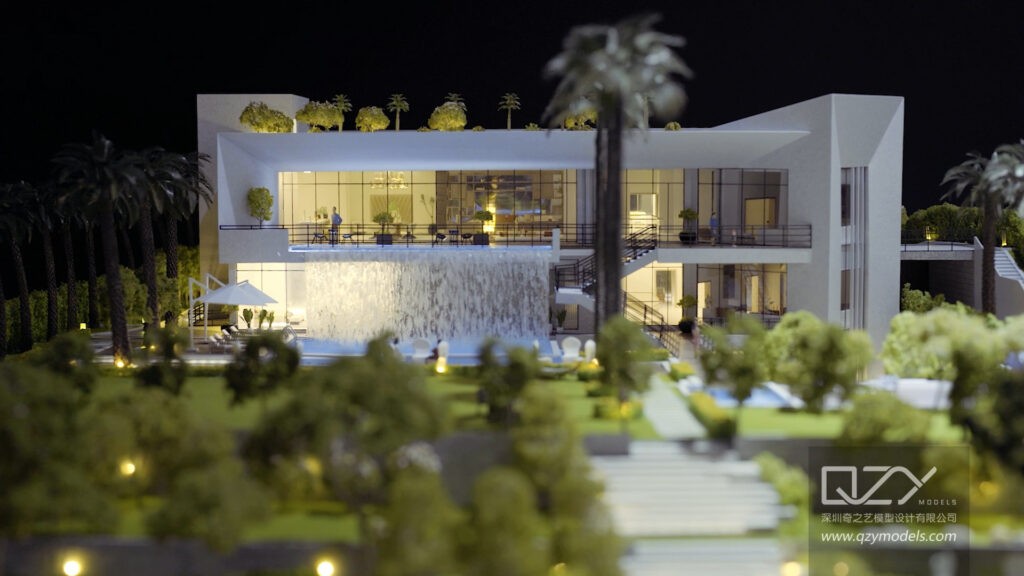
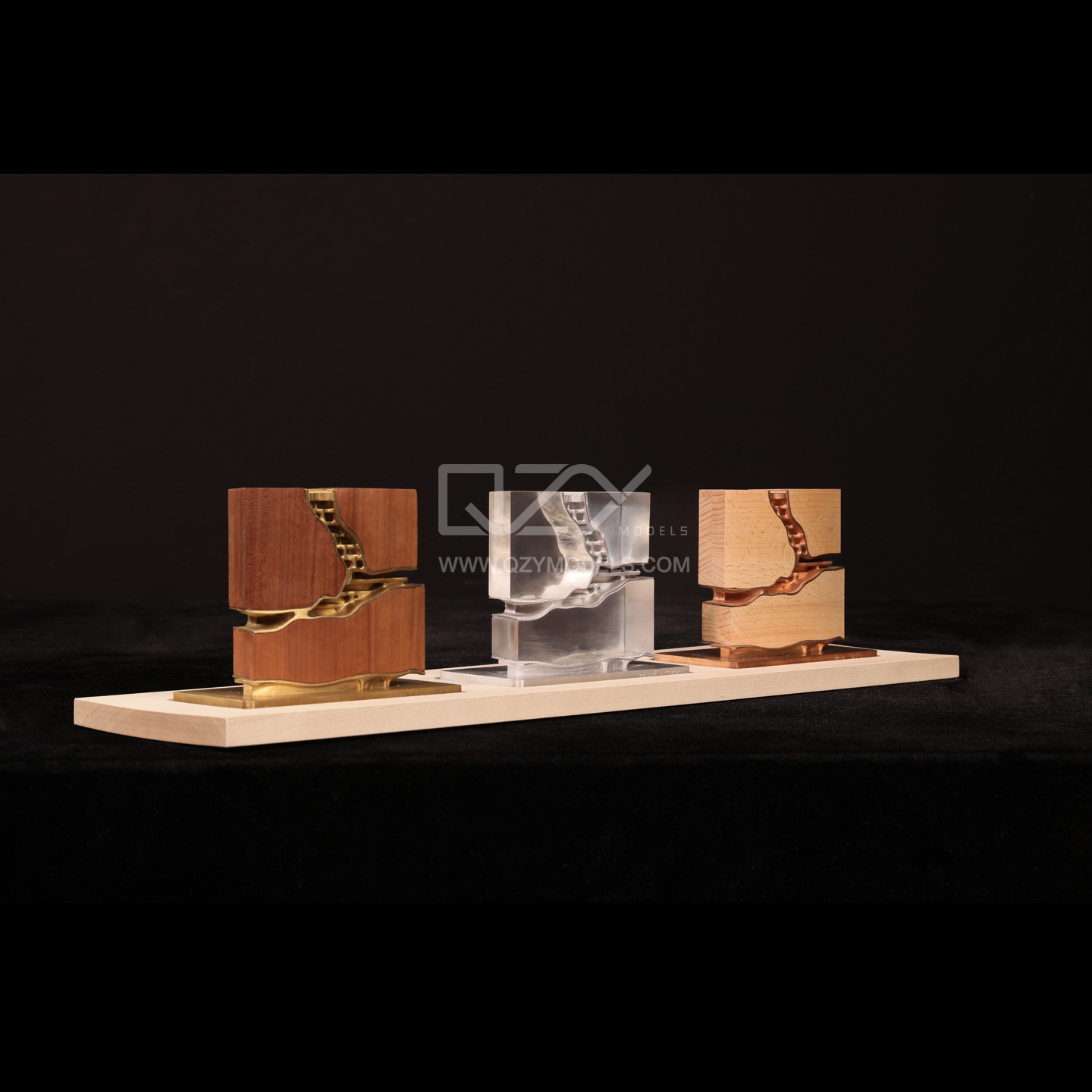
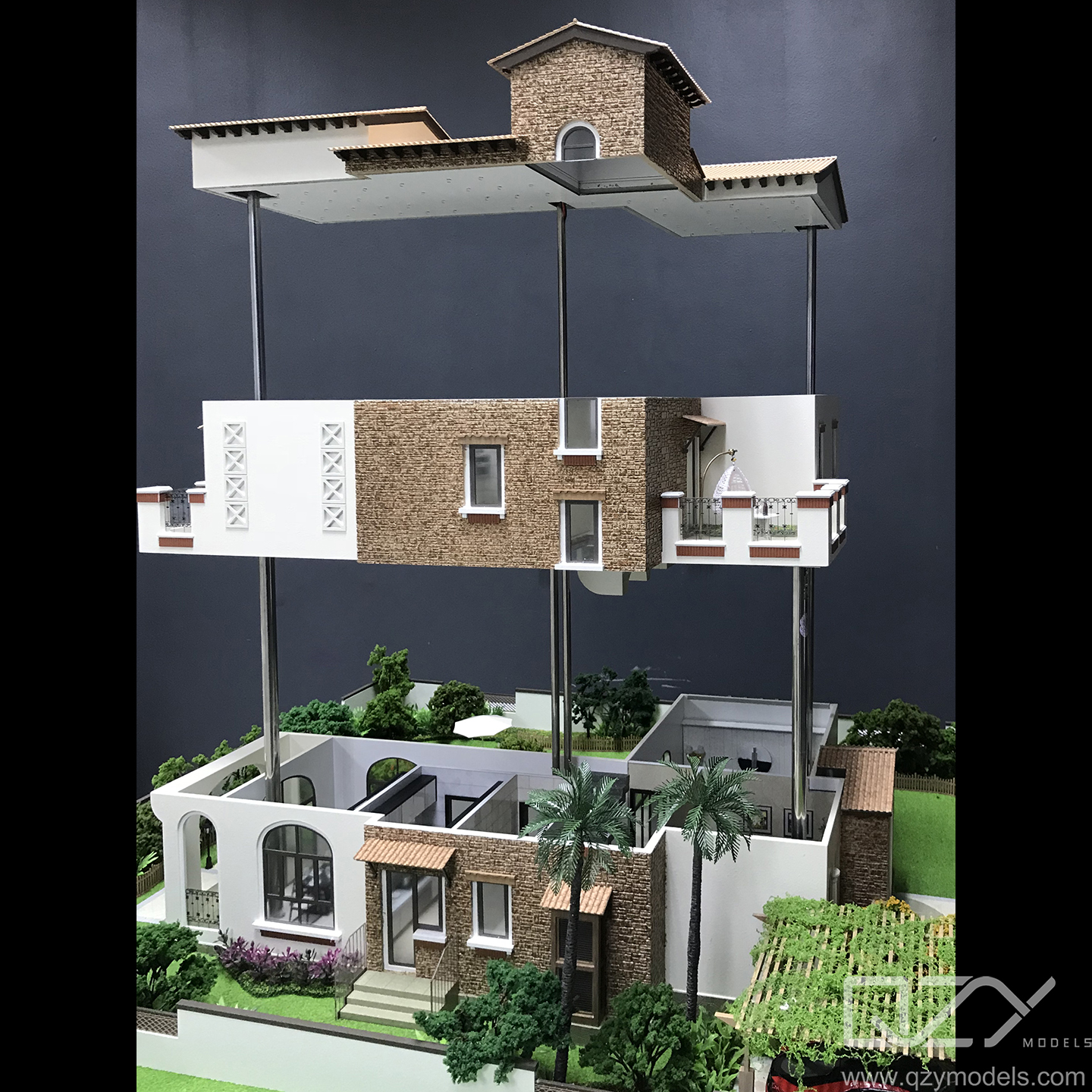
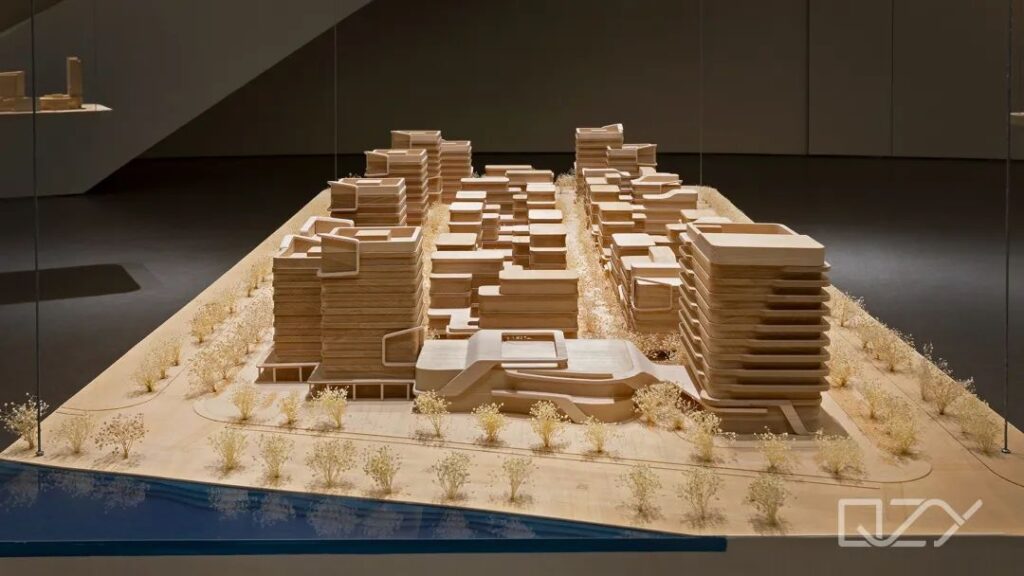
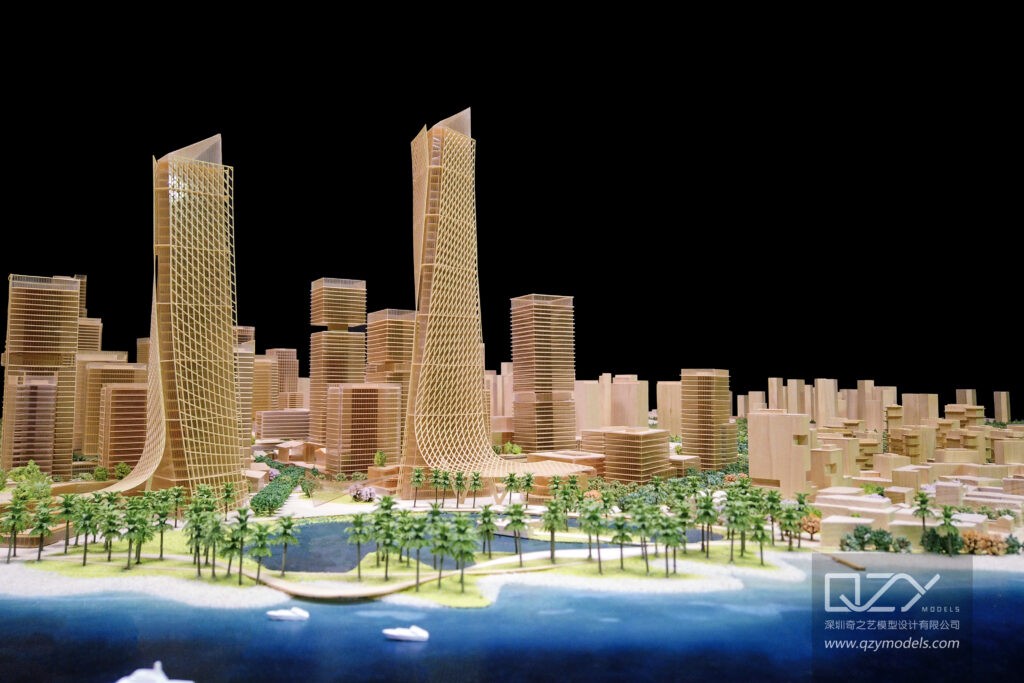
Soviet architecture models capture the ideological and technical ambitions of 20th‑century urban planning, from avant‑garde Constructivist experiments to Stalinist skyscrapers and mass‑housing blocks. High‑fidelity physical models—such as those produced by QZY Models—enable architects, developers, and educators to study these forms in three dimensions, turning abstract historical typologies into tangible design references for contemporary projects.
Are there still Soviet architecture models in demand today?
Urban‑design and heritage‑restoration markets are growing rapidly, with global spending on architectural visualization and exhibition models projected to exceed several billion dollars annually over the next few years. At the same time, many cities across Eastern Europe, Central Asia, and the Middle East are revisiting Soviet‑era masterplans, either for preservation, adaptive reuse, or reinterpretation in new developments. This creates a steady demand for accurate Soviet‑architecture models that can communicate scale, massing, and urban relationships more effectively than drawings alone.
Architectural firms and developers often struggle to find model‑makers who combine deep historical understanding with high‑precision fabrication. Many in‑house visualization teams rely heavily on digital renders, which can obscure spatial relationships and material textures. As a result, clients miss critical feedback opportunities from stakeholders who respond better to physical objects, especially in public‑consultation and competition settings.
Why do Soviet architecture models matter in modern practice?
Soviet architecture spans several distinct phases—Constructivism in the 1920s–early 1930s, Stalinist “Empire” style in the 1930s–1950s, and later Khrushchev‑era standardization and Brutalist mass‑housing. Each phase produced iconic building types that still shape city skylines and planning logic today. Constructivist models emphasize dynamic volumes and industrial materials; Stalinist models highlight verticality, symmetry, and ornament; and post‑war models focus on repetition, density, and functional zoning.
These models are valuable not only for museums and universities but also for contemporary urban‑design studios. When planning high‑density housing, mixed‑use districts, or transport‑oriented developments, teams can test massing, light, and circulation by referencing Soviet precedents at model scale. QZY Models has worked with international firms and institutions to translate these complex geometries into precise, durable physical replicas that support both academic research and commercial presentations.
How do traditional modeling approaches fall short?
Many architecture offices still rely on in‑house 3D printing or basic laser‑cut models for Soviet‑era references. These methods are fast but often lack the material richness and fine detailing needed to convey the layered textures of Stalinist facades, the exposed concrete of Brutalist blocks, or the delicate lattice of hyperboloid towers. Surface finishes can appear generic, and complex curved or intersecting volumes may be simplified beyond recognition.
Another common limitation is the gap between historical accuracy and aesthetic appeal. Some model‑makers prioritize “looks good in photos” over fidelity to original plans and proportions, which undermines the educational and planning value of Soviet‑architecture models. QZY Models addresses this by combining archival research, CAD refinement, and hand‑crafted finishing to ensure each model reflects the true scale, rhythm, and material logic of the original structure.
What makes QZY Models’ Soviet architecture models different?
QZY Models, founded in 2013 in Shenzhen and led by founder Richie Ren with over 20 years of experience, specializes in high‑quality architectural and industrial physical models for clients in more than 20 countries. The team has produced thousands of projects for world‑renowned architects such as Foster + Partners and major developers including Vanke and China Resources, including a growing portfolio of Soviet‑era and post‑Soviet typologies.
Key capabilities for Soviet‑architecture models include:
-
High‑precision massing and section models that preserve the monumental scale of Stalinist skyscrapers and Constructivist towers.
-
Material‑rich finishes that replicate concrete, steel, glass, and decorative elements typical of Soviet styles.
-
Custom baseplates and context models that show radial layouts, metro‑oriented nodes, and microdistrict planning.
-
Exhibition‑ready finishes suitable for museums, trade shows, and client presentations.
QZY Models’ global presence—with branches in the UAE, Saudi Arabia, Egypt, and beyond—allows it to support both local and international projects, from heritage exhibitions in Moscow to contemporary developments in the Middle East that draw inspiration from Soviet planning principles.
How do QZY Models’ Soviet architecture models compare to traditional options?
| Aspect | Traditional in‑house or generic models | QZY Models’ Soviet architecture models |
|---|---|---|
| Historical accuracy | Often simplified; proportions and details may be approximate | Rigorous research and CAD‑based scaling for true‑to‑life proportions |
| Material and finish quality | Limited palette; plastic‑heavy, less tactile | Concrete‑like, metal, glass‑effect, and hand‑finished textures |
| Complexity of forms | Avoids intricate curves, lattices, and ornamentation | Handles hyperboloid towers, intersecting cylinders, and ornate facades |
| Context and urban integration | Often isolated single‑building models | Full‑context baseplates with streets, metro lines, and microdistricts |
| Turnaround and reliability | Variable quality and delivery times | Structured workflow with predictable timelines and global logistics |
This structured comparison shows that QZY Models’ approach is tailored specifically to the demands of studying and presenting Soviet architecture, not just to producing generic presentation pieces.
How can you integrate Soviet architecture models into your workflow?
Using QZY Models’ Soviet‑architecture models typically follows a clear, repeatable process:
-
Define scope and typology
Decide whether you need a single‑building study (for example, Melnikov House or a Seven Sister skyscraper) or a broader urban context (a metro‑oriented district or a Khrushchevka microdistrict). -
Share reference materials
Provide plans, sections, elevations, and any existing 3D files or photos. QZY Models’ team will review these and propose a scale, materials list, and level of detail that aligns with your budget and purpose. -
Approve concept and CAD
The studio develops a CAD model and a preliminary rendering of the model. You can request adjustments to massing, materiality, or context before fabrication begins. -
Fabricate and finish
QZY Models uses CNC, laser cutting, and hand‑crafting to produce the model, applying finishes that reflect Soviet‑era materials such as exposed concrete, metal lattices, and glass curtain walls. -
Deliver and integrate
The completed model is shipped to your office, exhibition venue, or client site, where it can be used in presentations, competitions, or teaching sessions to illustrate Soviet planning principles in a tangible way.
Can you see real‑world examples of Soviet architecture models in use?
1. Urban‑design competition for a new city district
Problem: A European city planning team needed to demonstrate how Soviet‑style radial planning and metro‑oriented nodes could inform a new mixed‑use district.
Traditional practice: Teams relied on digital renders and 2D diagrams, which failed to convey spatial relationships and scale.
Using QZY Models: The studio produced a detailed Soviet‑inspired urban‑model that included radial boulevards, a central “palace‑for‑the‑people”‑style civic building, and surrounding housing blocks.
Key benefit: Jurors and stakeholders could walk around the model, grasp density patterns, and give concrete feedback, significantly improving the competition entry’s clarity and impact.
2. University course on 20th‑century architecture
Problem: Students struggled to understand the difference between Constructivist, Stalinist, and Khrushchevka typologies from slides alone.
Traditional practice: Professors used printed images and basic foam‑core models, which lacked detail and durability.
Using QZY Models: The department commissioned a set of Soviet‑architecture models covering Melnikov House, a Stalinist skyscraper, and a Khrushchevka block.
Key benefit: Students could examine materiality, scale, and spatial organization hands‑on, leading to deeper engagement and better exam performance.
3. Developer pitching a Soviet‑inspired mixed‑use project
Problem: A developer in the Middle East wanted to reference Soviet monumentality and communal planning in a new mixed‑use complex but needed a compelling visual tool.
Traditional practice: The team used render boards and animations, which were impressive but abstract.
Using QZY Models: QZY produced a large‑scale model of the proposed complex, clearly showing the relationship between a central tower, public plaza, and surrounding housing blocks.
Key benefit: Investors responded more confidently to the physical model, which helped secure funding and refine the design through direct interaction.
4. Museum exhibition on Soviet urbanism
Problem: A national museum wanted to explain how Soviet planning shaped Moscow’s radial layout and metro‑oriented development.
Traditional practice: Exhibits relied on maps and photographs, which were informative but static.
Using QZY Models: The museum commissioned a series of Soviet‑architecture models, including a contextual model of Moscow’s radial structure and detailed replicas of key metro stations.
Key benefit: Visitors could see the spatial logic of Soviet planning at a glance, increasing visitor dwell time and educational impact.
Where is Soviet architecture heading in the next decade?
Soviet‑era typologies are increasingly relevant in discussions about high‑density housing, public‑oriented infrastructure, and climate‑responsive urbanism. As cities worldwide confront housing shortages and the need for transit‑oriented development, planners are revisiting Soviet models of mass housing, radial layouts, and metro‑centric districts. Physical models that accurately represent these forms—such as those produced by QZY Models—become essential tools for testing ideas, engaging stakeholders, and bridging historical insight with contemporary design.
Moreover, digital workflows are not replacing physical models; they are enhancing them. Many firms now combine BIM‑based designs with high‑quality physical models to create hybrid presentation packages. QZY Models’ expertise in translating complex Soviet geometries into precise, durable models positions it as a strategic partner for architecture studios, developers, and institutions that want to make Soviet‑era lessons visible, tactile, and actionable.
Does this approach answer common questions?
What types of Soviet architecture can QZY Models replicate?
QZY Models can reproduce a wide range of Soviet typologies, from Constructivist experiments like Melnikov House and Shukhov Tower to Stalinist skyscrapers such as the Seven Sisters, as well as Khrushchevka housing blocks and metro‑oriented public buildings.
How long does it take to produce a Soviet architecture model?
Lead times vary by complexity and scale, but typical projects range from a few weeks to a couple of months, with expedited options available for competition deadlines or exhibitions.
Can QZY Models work with existing BIM or CAD files?
Yes; the studio regularly imports and refines BIM and CAD data to ensure that Soviet‑architecture models match the design intent and can be integrated into broader project workflows.
Do they ship internationally?
QZY Models operates branches in the UAE, Saudi Arabia, Egypt, and other regions, and has extensive experience shipping fragile architectural models to clients across Europe, Asia, the Middle East, and North America.
Are these models suitable for both education and commercial use?
Absolutely. The models are used in university courses, museum exhibitions, architectural competitions, and developer presentations, serving both academic and commercial audiences.
Sources
-
QZY Models – “What Are Key Soviet Architecture Models?”
-
Curatorial Project – “Soviet Modernism I”
-
Open Culture – “The Utopian, Socialist Designs of Soviet Cities”
-
Wikipedia – “Soviet architecture”
-
Architecture‑History.org – “Soviet Architecture”
-
Berkeley‑ISEEES – “Soviet Architecture’s Journey from Classicism to Standardization”