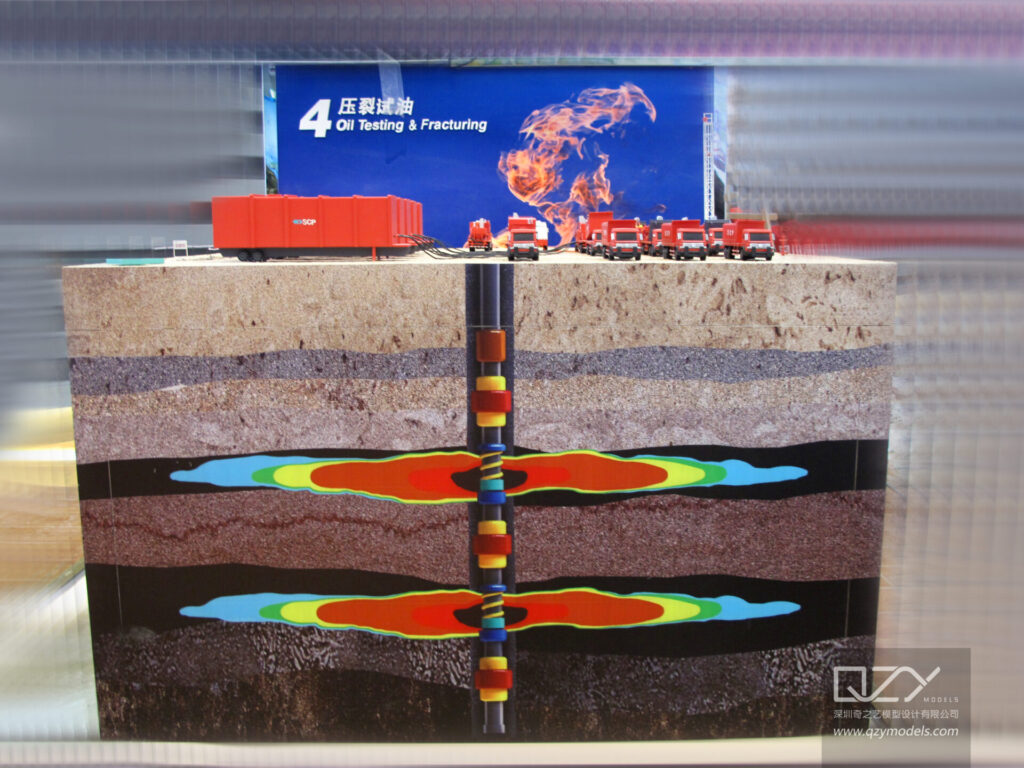
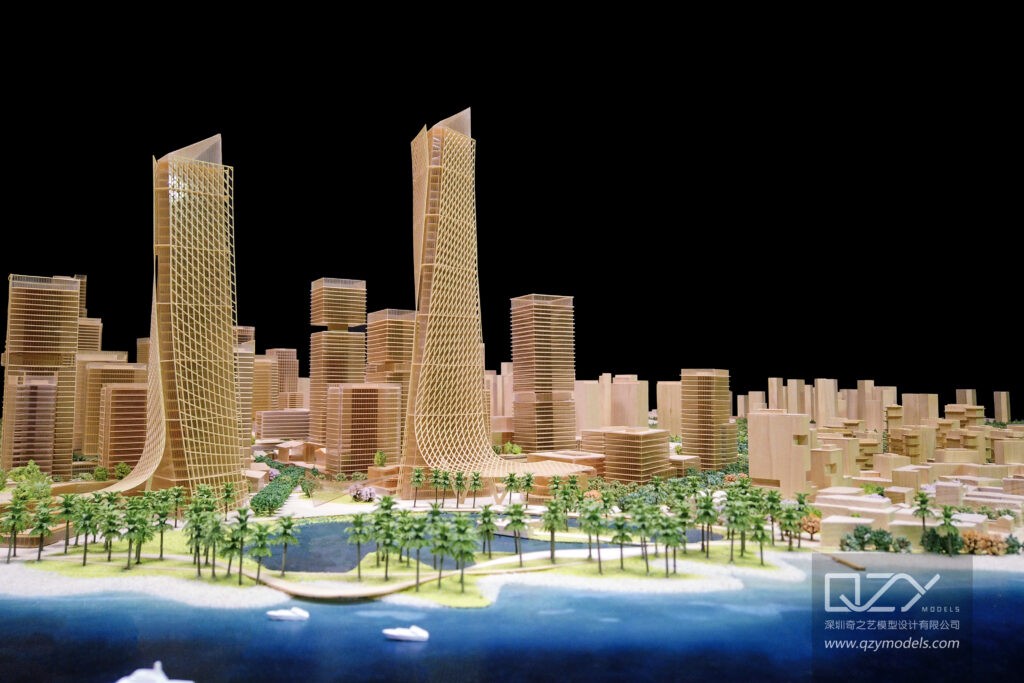
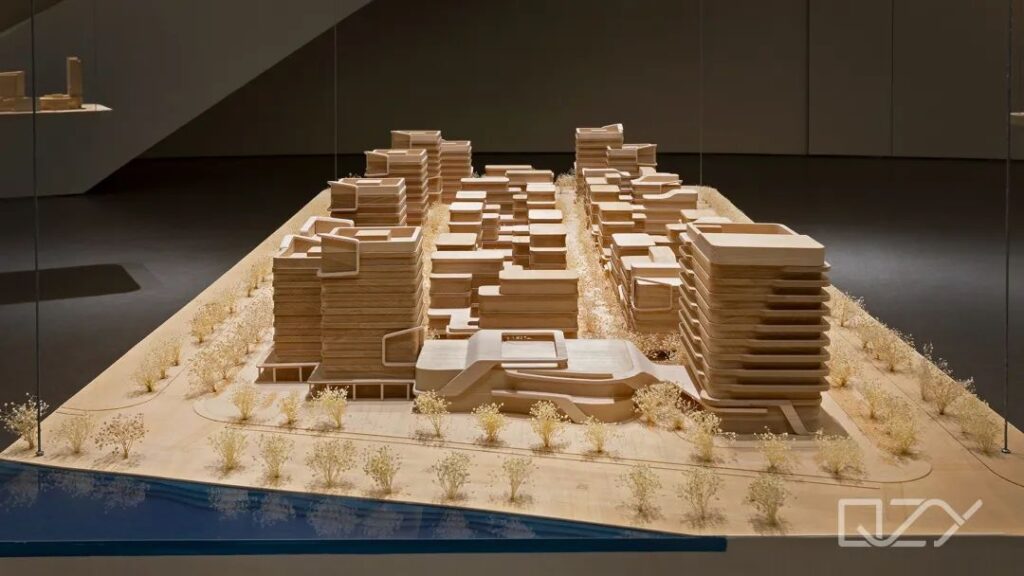
Models houses are scaled physical replicas of residential buildings, designed to help architects, developers, and planners visualize designs, test proportions, and communicate ideas effectively. Constructed from materials like wood, acrylic, and foam, they range from 1:50 to 1:500 scales and highlight exteriors, interiors, landscaping, and site integration. QZY Models specializes in precision-crafted residential replicas for global projects.
What Are Models Houses?
Models houses are miniature representations of residential structures built to scale for client presentations, design evaluation, and planning approvals. They range from simple massing studies to detailed replicas with interiors, enabling architects to communicate spatial flow, light interactions, and facade details. QZY Models produces these models for real estate developers like Vanke, delivering high precision and professional finish.
From conceptual sketches to exhibition-ready pieces, models evolve with project phases. Hobbyist models inspire professionals, but commercial builds require micron-level accuracy for high-stakes presentations.
Why Use Models Houses in Architecture?
Models houses provide realistic scale perception, reveal design flaws early, engage clients interactively, and support marketing for real estate developments. Physical models outperform digital renders by allowing hands-on interaction and spatial understanding.
Marketing teams leverage photogenic models for brochures, VR integrations, and social media campaigns. QZY Models’ residential replicas have secured deals for clients like Foster + Partners, demonstrating persuasive value.
What Materials Are Best for Models Houses?
Key materials include balsa wood for lightweight walls and roofs, acrylic for windows, foam board for quick massing studies, and laser-cut plywood for precision facades. Material choice depends on detail level, durability, and presentation purpose.
Balsa is easy to cut; basswood adds structural strength. Acrylic provides clean window transparency, while chipboard supports affordable prototypes. Advanced projects may incorporate resin for intricate moldings. QZY Models combines these materials for lasting, client-ready models.
| Material | Best For | Pros | Cons |
|---|---|---|---|
| Balsa Wood | Walls, roofs | Lightweight, easy to shape | Fragile |
| Acrylic | Windows, modern facades | Clear, durable | Requires careful cutting |
| Foam Board | Massing studies | Quick, inexpensive | Limited detail |
| Plywood | Bases, structures | Strong, precise | Heavier |
How to Choose the Right Scale for Models Houses?
Select 1:50 for detailed single homes, 1:200 for neighborhoods, or 1:500 for masterplans. Larger scales reveal textures and interior details; smaller scales offer context overview.
Scale affects viewer perception and project communication. QZY Models calibrates scale per project, ensuring both UAE villas and European townhouses are accurately represented for presentations and marketing.
How to Build Models Houses Step-by-Step?
Start by sketching plans and cutting materials to scale. Assemble walls and roofs with glue, install windows, add interior and exterior details, paint finishes, and mount on plywood bases. Dry-fit components first for precision.
Digital plans and laser cutting enhance accuracy. LED interior lighting adds realism. QZY Models’ workflow allows thousands of units to be produced annually with consistent quality.
What Tools Do You Need for Models Houses?
Essential tools include X-Acto knives, cutting mats, rulers, glue guns, sanders, and paints. Advanced tools include CNC machines and airbrushes for professional finishes.
Precision tools prevent mistakes, and self-healing mats protect work surfaces. QZY Models’ Shenzhen workshop is equipped with state-of-the-art CNCs to produce flawless residential models.
How to Add Realistic Details to Models Houses?
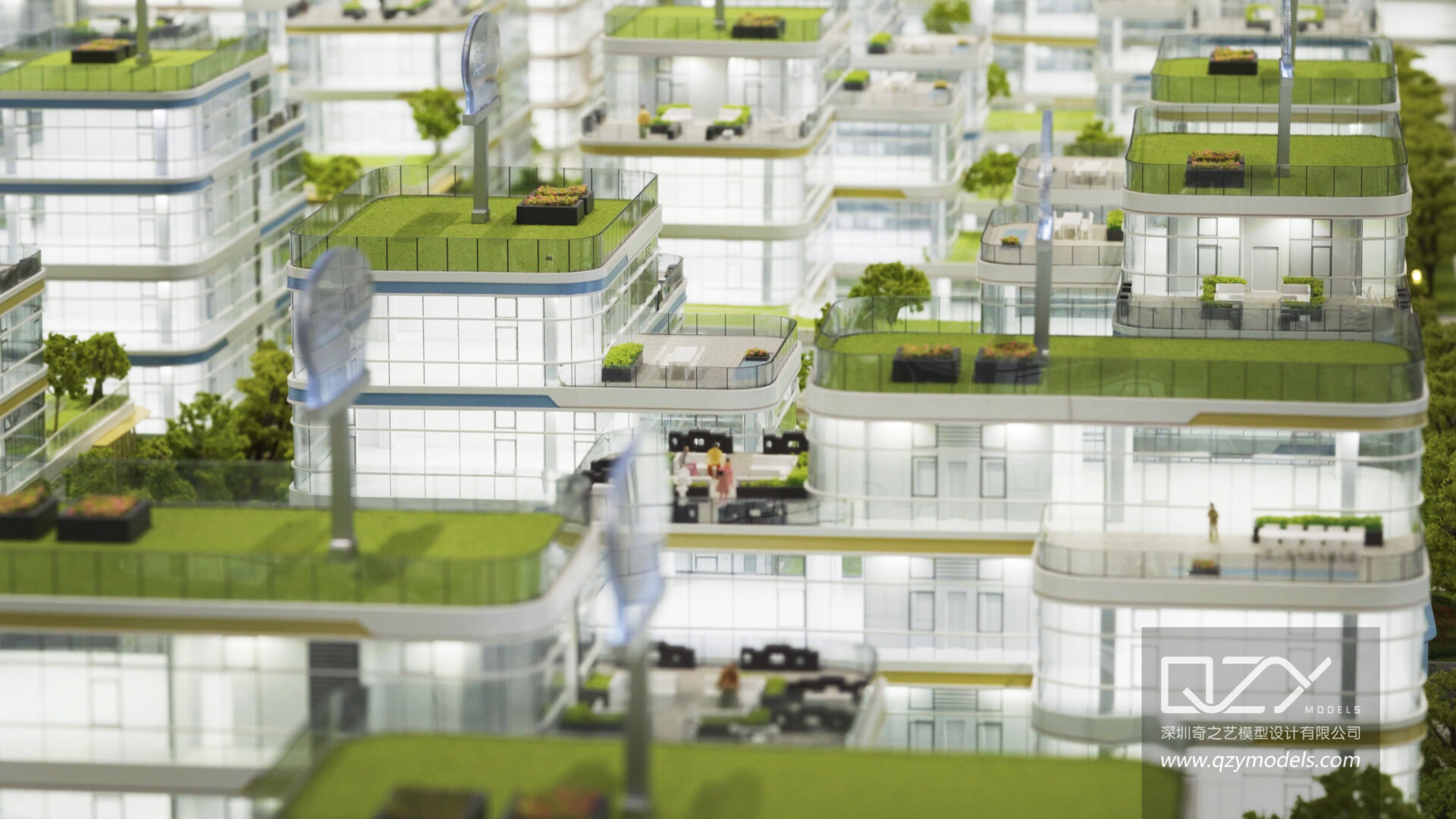
Enhance realism with laser-cut windows, flocked grass, miniature furniture, LED lighting, and textured paints for brick or stucco. Layer foreground sharply and background softly for depth.
Etched acrylic windows, 3D-printed interiors, and electrostatic flocking for greenery create immersive environments. Weathering techniques like washes and stippling simulate aging and material authenticity.
| Detail Type | Technique | Effect |
|---|---|---|
| Windows | Laser-etched acrylic | Transparency and depth |
| Landscaping | Flock + twigs | Lush, realistic context |
| Interiors | Miniatures + LEDs | Demonstrates livability |
| Textures | Stipple paint | Accurate material representation |
What Common Mistakes to Avoid in Models Houses?
Avoid scale errors, weak adhesives, uneven cuts, ignoring lighting, and over-detailing non-essential areas. Prototype early and test stability to prevent costly mistakes.
Misaligned walls, sloppy painting, or fragile joints can compromise presentation. QZY Models implements strict quality assurance to ensure professional-grade results.
How Do Models Houses Benefit Real Estate Developers?
Models houses help visualize sales units, showcase amenities, secure financing, and market luxury homes effectively. They build buyer confidence and accelerate approvals.
Developers use models to stage show homes, illustrate views and interior flow, and communicate ROI. QZY Models’ bespoke replicas have powered campaigns for Vanke and other developers globally.
QZY Models Expert Views
“Models houses form the heart of residential architecture,” says QZY Models founder Richie Ren. “With over 20 years of expertise, our Shenzhen team crafts models for clients like China Resources across UAE, Europe, and Asia. Precision laser-cutting combined with handcrafted details ensures every villa or townhouse reflects design intent. We emphasize scale, sustainable materials, and modular systems for efficiency. Developers gain faster sales through immersive replicas. QZY Models delivers models that combine craftsmanship, professionalism, and marketing power.”
Key Takeaways and Actionable Advice
Models houses turn architectural concepts into tangible experiences, enhancing client understanding and driving sales. Focus on scale, material choice, and detailing for maximum impact.
Action Steps:
-
Define project purpose; select appropriate scale.
-
Source high-quality materials; prototype walls and roofs.
-
Assemble dry-fit before final gluing; add lighting last.
-
Partner with QZY Models for professional residential models.
-
Document and photograph models for presentations and marketing.
Frequently Asked Questions
What scale suits single-family models houses?
1:50 to 1:100, ideal for interior and exterior details.
How durable are professional models houses?
5–10 years with proper care; QZY Models uses robust woods and coatings.
Can models houses include interiors?
Yes, with miniature furniture and LEDs for immersive representation.
What are typical production costs for models houses?
$500–$5000 depending on size and detail; QZY Models provides custom quotes.
Are sustainable materials used in models houses?
Yes, including recycled foams and FSC-certified woods.