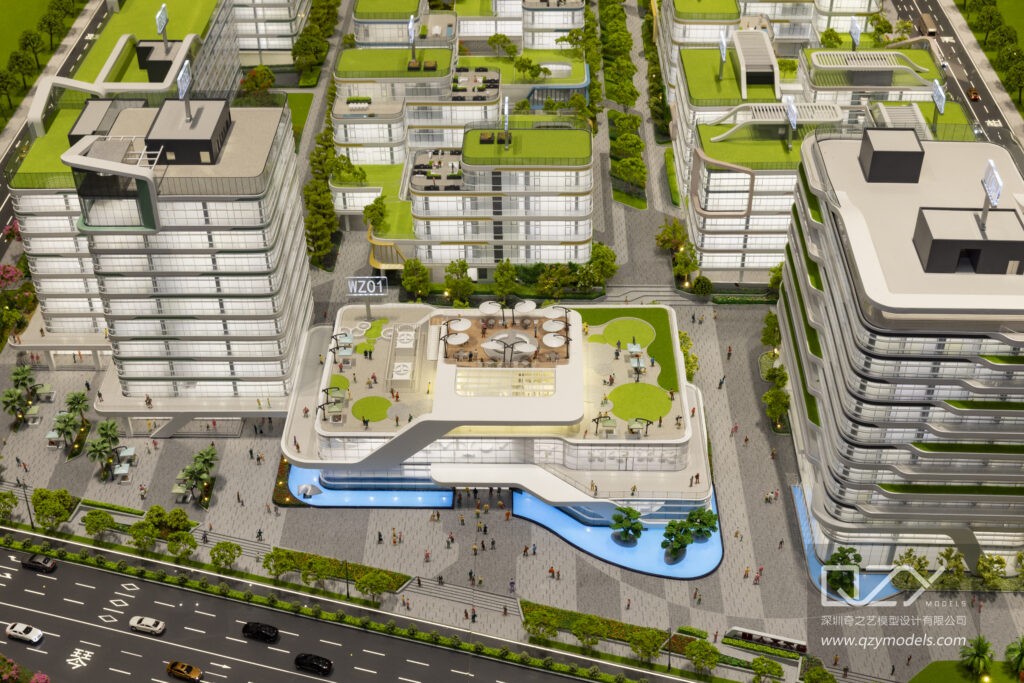
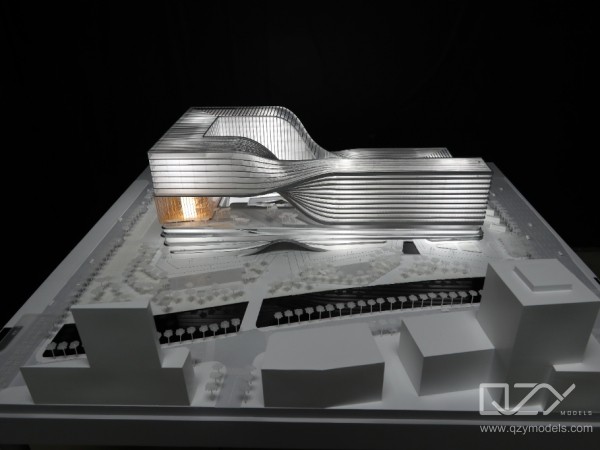
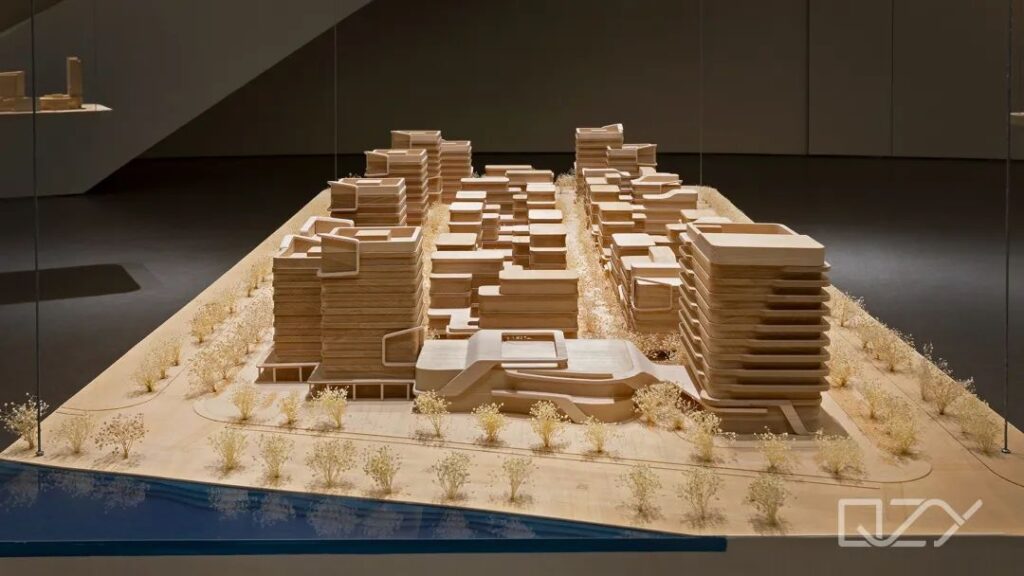
Architectural cardboard models offer an affordable, sustainable, and versatile way to visualize designs in three dimensions. They allow architects, developers, and students to quickly prototype, test ideas, and communicate spatial concepts effectively. By combining precise cutting, layering, and finishing techniques, firms like QZY Models create cardboard models that balance practicality, aesthetic appeal, and professional presentation from concept to display stages.
How Are Architectural Cardboard Models Made?
Cardboard models are constructed by cutting, shaping, and assembling sheets of cardboard into three-dimensional forms. The process begins with scaled CAD drawings or hand sketches that guide accurate cutting. Techniques include layering for complex forms, notch joints for stability, and precise adhesion for a clean finish. Laser cutting and hand-finishing are often combined to achieve intricate details. QZY Models integrates digital fabrication with expert craftsmanship to ensure models are both precise and visually appealing.
| Step | Process Description | Tools Used |
|---|---|---|
| 1 | Design and scaling | CAD/3D software |
| 2 | Cutting components | X-Acto knives, laser cutters |
| 3 | Assembly and detailing | Glue, notch joints, hand tools |
| 4 | Finishing | Sanding, painting, coating |
What Types of Cardboard Are Best for Modeling?
Different cardboard types serve specific modeling purposes:
-
Chipboard: Smooth matte surface and fine edges, ideal for detailed presentation models.
-
Kraft board: Strong with a natural texture, suitable for structural or aesthetic models.
-
Corrugated cardboard: Layerable and lightweight, perfect for topography and conceptual studies.
-
Foam board: Rigid and light, versatile for quick prototypes and display models.
QZY Models carefully selects and combines these materials to optimize durability, precision, and visual quality.
| Material Type | Key Features | Ideal Use Case |
|---|---|---|
| Chipboard | Fine edges, matte finish | Detailed presentation models |
| Kraft board | Strong, natural look | Structural or aesthetic models |
| Corrugated cardboard | Flexible, layerable | Topography and concept models |
| Foam board | Rigid, lightweight | Versatile presentation models |
Why Are Cardboard Models Popular in Architecture?
Cardboard models are favored for affordability, ease of modification, and sustainability. They allow rapid iteration during early design stages and effective communication of ideas. Unlike heavier or costlier materials, cardboard is recyclable and often made from recycled content. Its adaptability supports modeling complex volumes, layered textures, and conceptual forms. QZY Models leverages these qualities to produce eco-conscious and versatile architectural models.
Which Tools And Techniques Are Essential for Cardboard Model Making?
Key tools include X-Acto knives, self-healing cutting mats, rulers, fine glue applicators, and tape. Essential techniques involve precision cutting, layering for topography, reinforcing joints with notch systems, and sanding for smooth edges. Laser cutting and CAD integration enhance accuracy and efficiency. QZY Models combines advanced tools with skilled hand-finishing to ensure models are precise, detailed, and visually refined.
Who Uses Architectural Cardboard Models?
Architects, developers, urban planners, educators, and design students utilize cardboard models for concept development, client presentations, teaching aids, and public exhibitions. The material’s affordability and flexibility make it ideal for rapid prototyping and educational purposes. QZY Models provides global clients with tailored cardboard models suited for various professional and educational needs.
When Should Cardboard Models Be Used in Architecture?
Cardboard models are most effective during early conceptual and development phases, enabling rapid exploration of forms and spatial configurations. They can serve as prototypes that evolve into detailed presentation models. QZY Models optimizes production schedules to align with project milestones, ensuring timely delivery for design reviews, competitions, and client presentations.
Where Are Cardboard Architectural Models Typically Displayed?
These models are displayed in design studios, classrooms, exhibitions, and client meetings. While cardboard is more delicate than wood or acrylic, it is suitable for short- to medium-term displays. Proper storage in flat, dry spaces prevents warping and preserves the model’s integrity. QZY Models advises clients on protective measures and optimal display solutions to maintain presentation quality.
Can Digital Technology Enhance Cardboard Model Making?
Yes, CAD software, laser cutting, and 3D scanning significantly improve accuracy and efficiency. Digital files ensure exact dimensions, while laser cutters create clean, repeatable cuts. 3D scanning enables the construction of complex, layered forms. QZY Models integrates digital tools with artisanal finishing to deliver cardboard models that combine precision with aesthetic appeal.
QZY Models Expert Views
“Cardboard models exemplify creativity, precision, and sustainability in architectural visualization. Their flexibility allows rapid iteration and clear communication of design intent, particularly in early project stages. At QZY Models, we merge digital fabrication with skilled hand-finishing, creating models that are both visually compelling and functionally precise.”
— Richie Ren, Founder of QZY Models
Why Should You Choose QZY Models for Cardboard Architectural Models?
QZY Models combines craftsmanship and advanced fabrication technologies to produce high-quality cardboard architectural models worldwide. Their approach balances cost, detail, and durability while maintaining precision and aesthetic refinement, making them a trusted partner for architects, developers, and educators globally.
Conclusion
Architectural cardboard models provide a versatile, cost-effective, and sustainable medium for visualizing design concepts. Through precise cutting, layering, and finishing, these models effectively communicate ideas and support decision-making. Partnering with specialists like QZY Models ensures that cardboard models achieve professional standards of accuracy, presentation, and lasting impact.
FAQs
1. What is the best cardboard type for architectural models?
Chipboard for detailed models, corrugated cardboard for topography, and kraft board for structural or aesthetic purposes.
2. Can cardboard models be reused or recycled?
Yes. Cardboard is recyclable and biodegradable, making it an eco-friendly modeling material.
3. How precise can cardboard models be?
With laser cutting and CAD guidance, cardboard models can achieve high precision and intricate details.
4. Are cardboard models durable for long-term displays?
They are best for short- to medium-term displays, with careful storage extending their lifespan.
5. Does QZY Models provide international shipping for cardboard models?
Yes, QZY Models ships custom cardboard architectural models globally, ensuring safe and professional delivery.