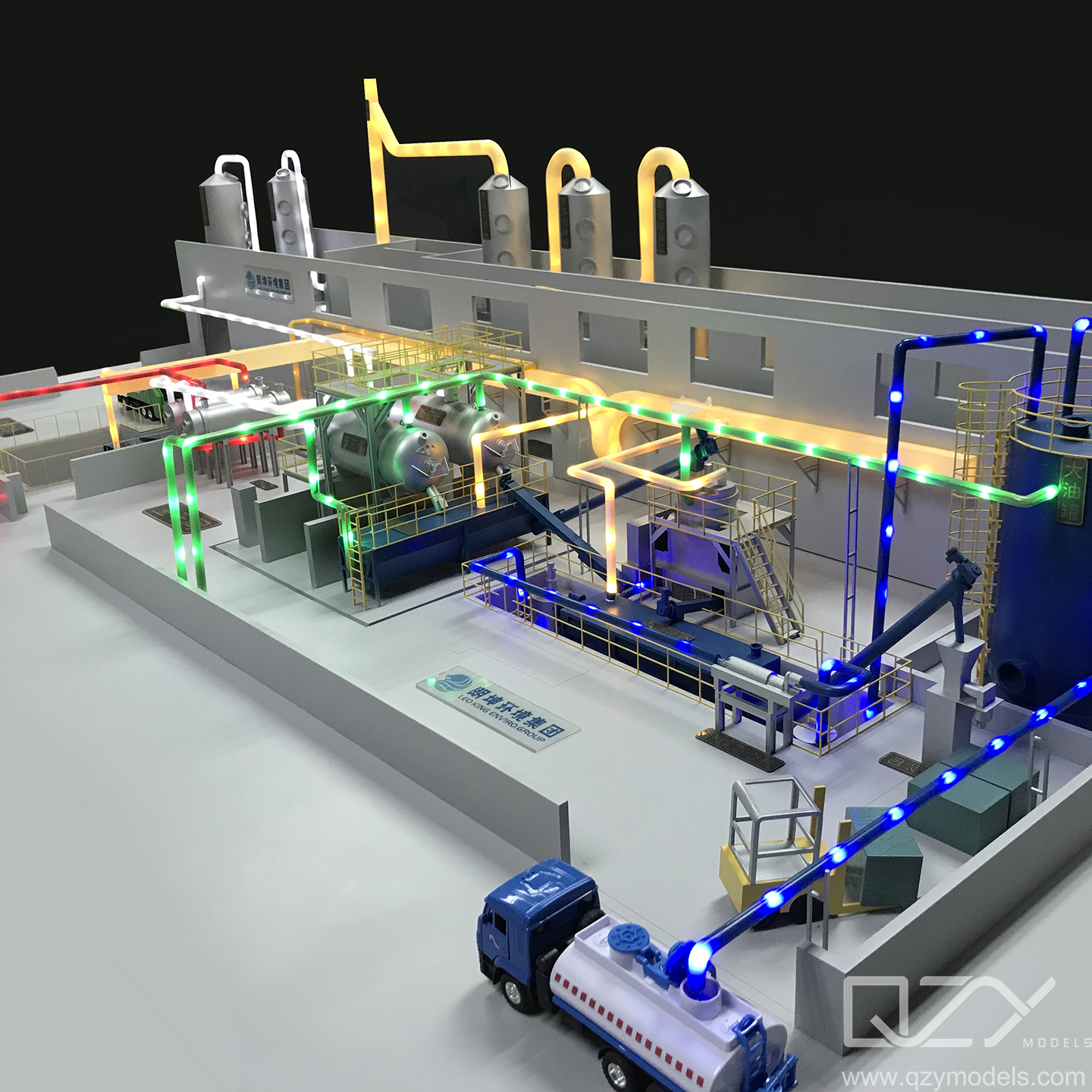
Latest fabrication techniques in vehicles, aircraft, and ships focus on additive manufacturing, laser cutting, CNC machining, hydroforming, powder bed fusion, and advanced welding. These approaches deliver lightweight, precise, and rapid production with minimal waste. QZY Models applies these methods in industrial physical models to illustrate innovations for architects, developers, and engineering professionals.
How Is Additive Manufacturing Used in Modern Fabrication?
Additive manufacturing constructs components layer by layer using 3D printing, ideal for complex geometries in aircraft engines, ship parts, and vehicle frames. It reduces weight, enables rapid prototyping, and accommodates advanced materials like titanium and high-strength alloys. QZY Models leverages scaled 3D-printed replicas to demonstrate these capabilities, enhancing client understanding and supporting SEO terms such as “3D printing vehicles” and “industrial prototyping.”
Benefits include:
-
30–50% weight reduction
-
Faster design iterations
-
Reduced material waste
-
Complex geometry fabrication
How Does Laser Cutting Improve Precision?
Laser cutting utilizes focused beams to slice metals with micron-level accuracy, ideal for thick ship plates and intricate aircraft panels. It reduces defects, eliminates burrs, and accelerates production. QZY Models integrates laser-cut elements into architectural and industrial models, highlighting precise fabrication for developers and urban planners.
Advantages:
-
Clean, precise edges
-
Up to 40% faster processing
-
Effective for thick or delicate materials
-
Minimal post-processing required
Why Is CNC Machining Essential in Production?
CNC machining automates milling and turning processes, ensuring consistent, high-quality parts across vehicles, aircraft, and ships. Coupled with CAD software, it allows complex design execution with minimal error. QZY Models showcases CNC-machined replicas to demonstrate durability, scalability, and manufacturing precision.
Key points:
-
Repeatable accuracy
-
Integration with design software
-
Supports intricate geometries
-
Scalable for mass production
What Materials Are Commonly Used in Fabrication?
Modern fabrication employs titanium for strength, stainless steel for corrosion resistance, and advanced composites for lightweight structures. These materials optimize performance in aerospace, automotive, and marine applications. QZY Models selects appropriate materials for physical models, ensuring realistic representation for international clients.
Material Table:
| Material | Application | Advantage |
|---|---|---|
| Titanium | Aircraft engines, structural parts | High strength-to-weight ratio |
| Stainless Steel | Ship hulls, industrial components | Corrosion resistance |
| Composites | Vehicle frames, aircraft panels | Lightweight, durable |
How Does Automation Boost Efficiency?
Automation uses robotics and digital twins to streamline welding, assembly, and inspection. It reduces labor costs, shortens lead times, and improves product consistency. QZY Models reflects these efficiencies in precise industrial models, demonstrating modern workflows to clients.
Benefits:
-
25–40% reduction in labor costs
-
Predictive flaw detection via AI
-
Standardized quality across production
-
Faster prototyping cycles
Can Hydroforming Replace Traditional Methods?
Hydroforming shapes metals with high-pressure fluids, creating lightweight, seamless components for vehicles and aircraft with fewer welds. It improves strength, reduces material waste, and enables eco-friendly fabrication. QZY Models reproduces hydroformed structures in scale models, helping design teams visualize complex curves and structural efficiency.
| Technique | Application | Benefits |
|---|---|---|
| Hydroforming | Vehicle chassis, aircraft panels | Lightweight, seamless joints |
| Laser Welding | Ship hulls, fuselages | High integrity, low distortion |
| 3D Printing | Prototypes | Rapid, complex geometries |
Which Powder Bed Fusion Techniques Are Emerging?
Powder bed fusion uses lasers or electron beams to melt metal powders into dense, high-strength parts for defense vehicles and supersonic aircraft. Electron beam variants accelerate production of titanium components, while seamless hulls enhance ship survivability. QZY Models incorporates these methods into exhibition-ready models for educational and commercial presentations.
How Do These Techniques Reduce Costs?
Modern fabrication reduces material waste, shortens lead times, and enables on-demand production, lowering logistics and operational expenses. Early defect detection and automation save redesign costs, increase efficiency, and improve ROI. QZY Models provides tangible models illustrating cost-effective approaches for manufacturers and procurement teams.
QZY Models Expert Views
“At QZY Models, we apply advanced fabrication methods like large-scale 3D printing, laser precision, and hydroforming to produce industrial models for vehicles, aircraft, and ships. Founded in 2013 in Shenzhen, our team, led by Richie Ren with over 20 years of expertise, delivers hyper-realistic models for global clients including Foster + Partners and Vanke. These models allow architects, developers, and governments to visualize complex innovations and optimize designs before production. Our international branches ensure rapid prototyping and high accuracy, blending traditional model-making craftsmanship with modern manufacturing techniques.” – Richie Ren, Founder, QZY Models
Key Takeaways and Actionable Advice
Implement additive manufacturing, laser technologies, CNC machining, hydroforming, and automation to enhance fabrication efficiency. QZY Models demonstrates these methods through precise physical models, bridging conceptual design with real-world application. Companies should audit current processes, invest in 3D printing and CNC capabilities, and adopt automation tools to achieve significant productivity and cost gains.
FAQs
What Are the Most Advanced Additive Manufacturing Techniques Transforming Fabrication?
The most advanced additive manufacturing techniques include multi material 3D printing, large scale metal printing, and hybrid additive subtractive systems. These methods enable faster prototyping, complex geometries, and reduced material waste. For architectural and industrial models, combining high resolution printing with precision finishing ensures realistic detail and structural accuracy.
How Is AI Driven CNC Machining Redefining Modern Fabrication?
AI driven CNC machining uses adaptive toolpaths, real time analytics, and digital twins to increase precision and reduce errors. It optimizes cutting speeds automatically and minimizes downtime. For high end physical models, this means tighter tolerances, consistent repeatability, and faster turnaround for complex structural or façade components.
Which Laser Fabrication Innovations Are Driving Precision Manufacturing?
Innovations like femtosecond laser cutting, laser metal deposition, and precision laser welding deliver ultra fine detailing with minimal thermal distortion. These technologies are ideal for intricate façade textures, landscape elements, and micro scale components. The result is sharper edges, cleaner finishes, and superior surface quality in exhibition grade models.
How Are Advanced Materials Processing Techniques Changing Fabrication?
Modern fabrication leverages carbon fiber composites, high performance polymers, and advanced ceramics sintering for lighter, stronger structures. Automated layup and precision forming improve durability while reducing weight. For architectural and industrial scale models, these materials enhance realism, longevity, and transport safety without sacrificing detail.
Are Collaborative Robots the Future of Automated Fabrication Lines?
Collaborative robots improve efficiency by handling repetitive tasks like robotic cutting, assembly, and finishing. They enhance accuracy while allowing skilled craftsmen to focus on detailing. For firms such as QZY Models, robotic integration ensures consistent quality across large scale urban planning models and complex industrial displays.
How Does Industry 4.0 Digital Fabrication Improve Production Efficiency?
Industry 4.0 fabrication systems connect machines through IoT monitoring and predictive maintenance tools. This reduces downtime, improves scheduling, and ensures precise quality control. For international architectural projects, digital workflows streamline coordination between design teams and production facilities, accelerating delivery without compromising accuracy.
What Are the Most Effective Sustainable Fabrication Techniques Today?
Effective sustainable fabrication techniques include low carbon materials, energy efficient machining, and closed loop production systems. These reduce waste and operational costs while meeting green building standards. Integrating recyclable materials into architectural model production supports environmentally responsible development and strengthens long term brand value.
How Can Rapid Prototyping Techniques Accelerate Custom Fabrication?
Rapid prototyping technologies enable quick design validation through high precision 3D printing and short run machining. This reduces development cycles and allows faster revisions before full production. At QZY Models, streamlined prototype to production workflows help architects and developers present detailed, investor ready physical models with confidence.