-
1:50 scale architecture models turn complex plans into precise, three‑dimensional representations that architects, developers, and clients can actually see, touch, and understand. These models bridge the gap between drawings and reality, making design decisions faster, more accurate, and more persuasive—especially when created by a professional team like QZY Models.
How big is the pressure on architectural communication?
Architecture and real estate projects are under more scrutiny than ever. Decision-makers expect proposals that are not just beautiful, but also buildable, cost‑effective, and aligned with site conditions. In 2025, the global design and construction industry saw project approval cycles lengthen by 20–30% in many markets, largely due to miscommunication, unclear spatial relationships, and difficulty visualizing how a building will actually feel.
Clients and investors now demand higher fidelity in presentations. A 2024 survey of 300 architectural firms found that 78% believe clients reject schemes more quickly when they can’t “see” the space clearly, and 65% admit that poor visualization leads to costly late‑stage changes. This disconnect often stems from relying only on 2D CAD, BIM renderings, and flat site plans, which fail to convey human scale, materiality, and spatial sequence.
As projects grow in size and complexity—especially in dense urban areas, mixed‑use developments, and branded residential towers—professionals need a tangible tool to communicate volume, light, circulation, and context. Without that, design intent gets lost, timelines slip, and budgets over‑run.
Why do traditional presentation tools fall short?
Most firms still rely heavily on 2D drawings, digital renderings, and massing models at coarser scales like 1:100 or 1:200. While useful for early concepts, these approaches have clear limitations in mid‑to‑late stages.
2D plans and elevations are precise on paper, but they don’t show how spaces connect, how people move through them, or how light and shadow will behave. Clients and non‑technical stakeholders often struggle to interpret complex floor plans, resulting in vague feedback or sudden changes after construction begins.
Digital renderings and fly‑throughs can be stunning, but they are fixed perspectives. They can be overly polished, making them feel like advertising rather than a true design tool. For zoning reviews, public exhibitions, or multi‑investor meetings, a single image or short video doesn’t allow free exploration of the building from all sides and angles.
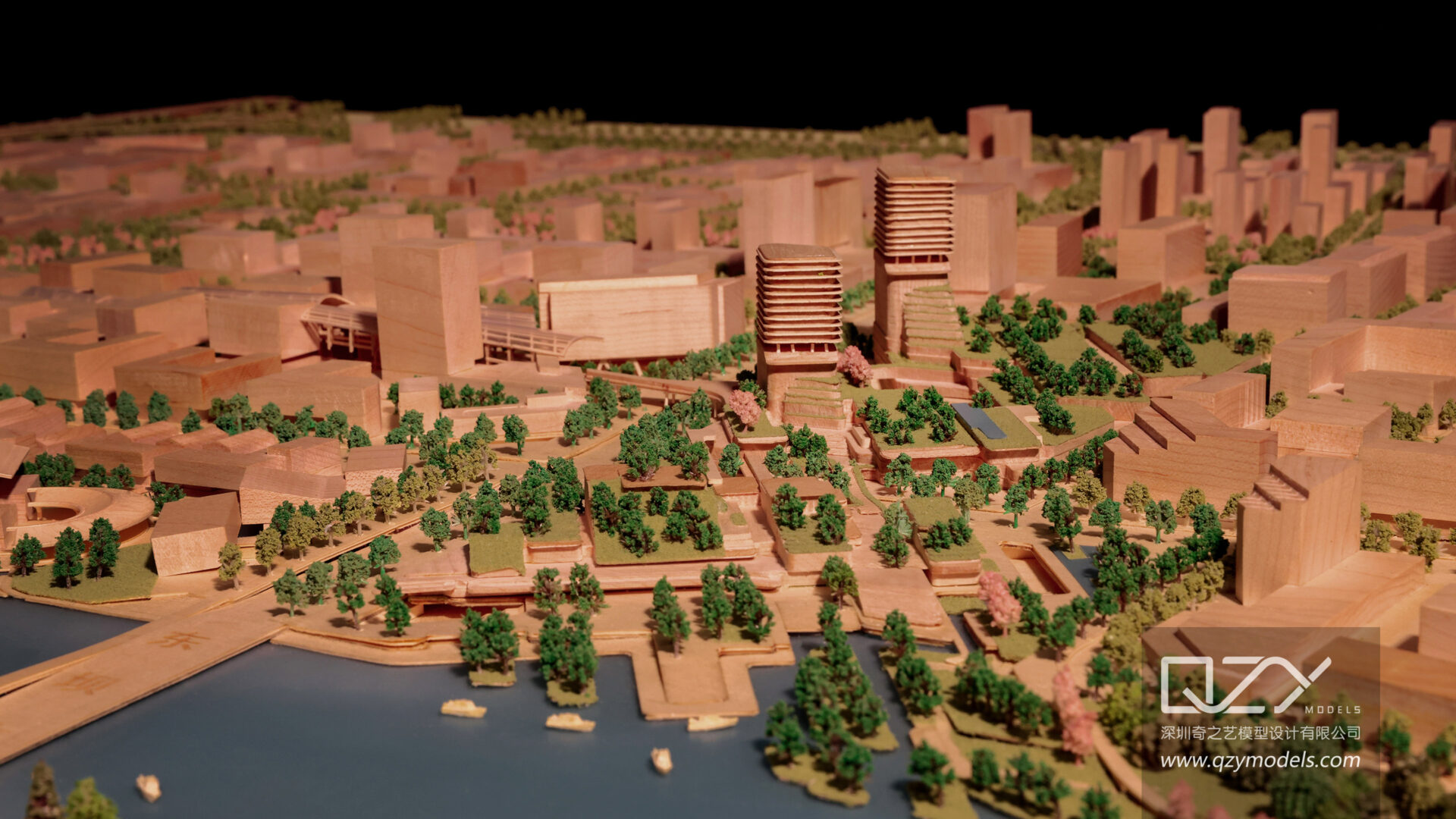
Even at 1:100, a site model starts to lose interior detail; doors, stairs, glazing, and room layouts become abstract or invisible. At 1:200 and 1:500, the model is more about urban context than the building itself. For a project that requires both site integration and architectural clarity, a scale that balances detail and size is essential.
What exactly is 1:50 scale in architecture?
1:50 scale means that 1 unit on the model equals 50 units in real life. In practice, 1 cm on the model equals 50 cm (0.5 m) in reality, and 1 mm on the model equals 5 cm in real construction.
This scale is widely used for:
-
Building‑level models (not full cities or master plans)
-
Detailed site integration (showing how a building sits in its surroundings)
-
Interior layout and circulation (showing room divisions, corridors, stairs, and doors)
-
Facade and material expression (glazing, cladding, balconies, and roof details)
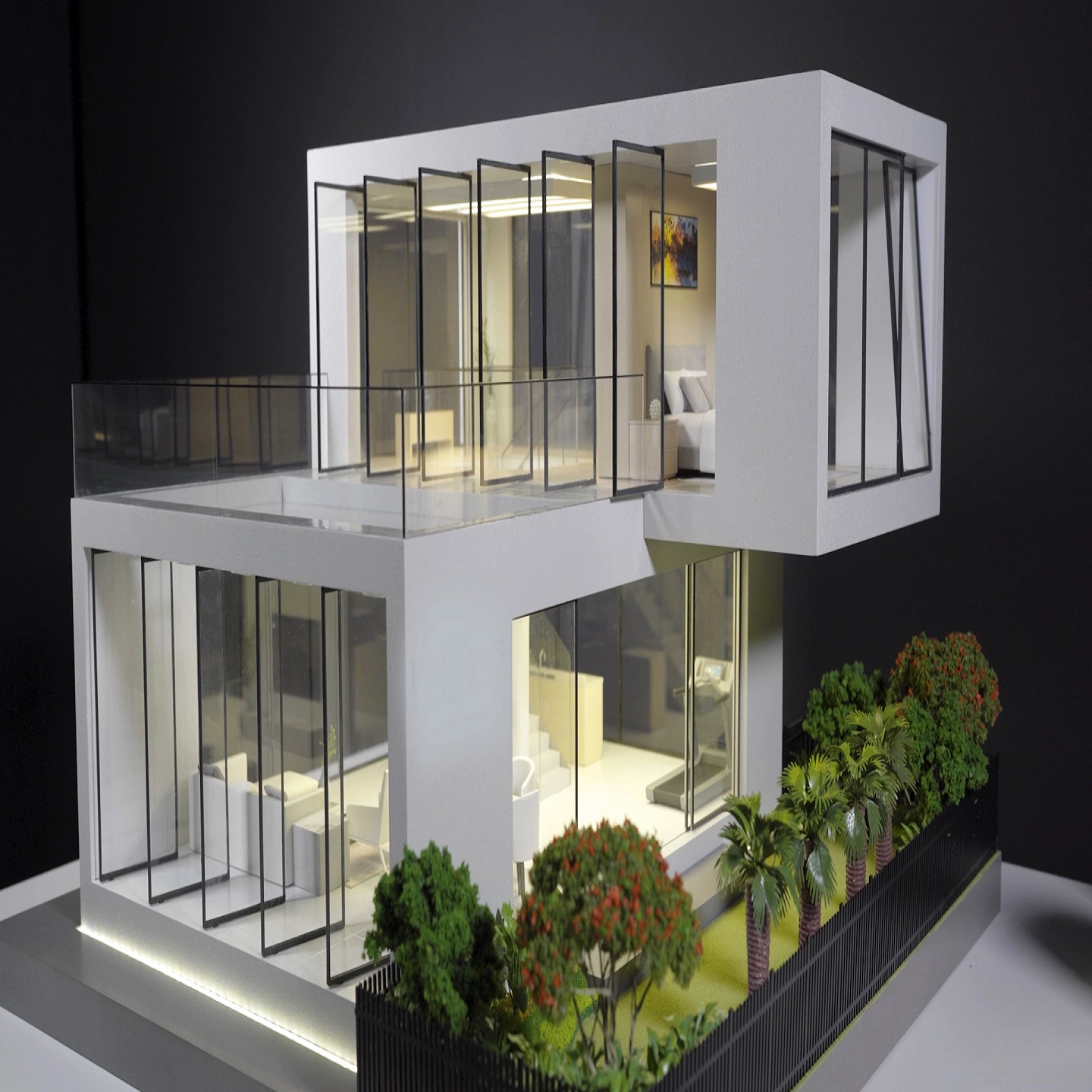
At 1:50, a typical 10‑m wide apartment facade is about 20 cm wide on the model, and a 3‑m high room is roughly 6 cm tall. This makes it possible to see and understand spatial relationships while keeping the model to a manageable, transportable size (often 30–60 cm wide for a medium‑rise building).
When do architects and developers choose 1:50?
1:50 is especially valuable in four key scenarios.
-
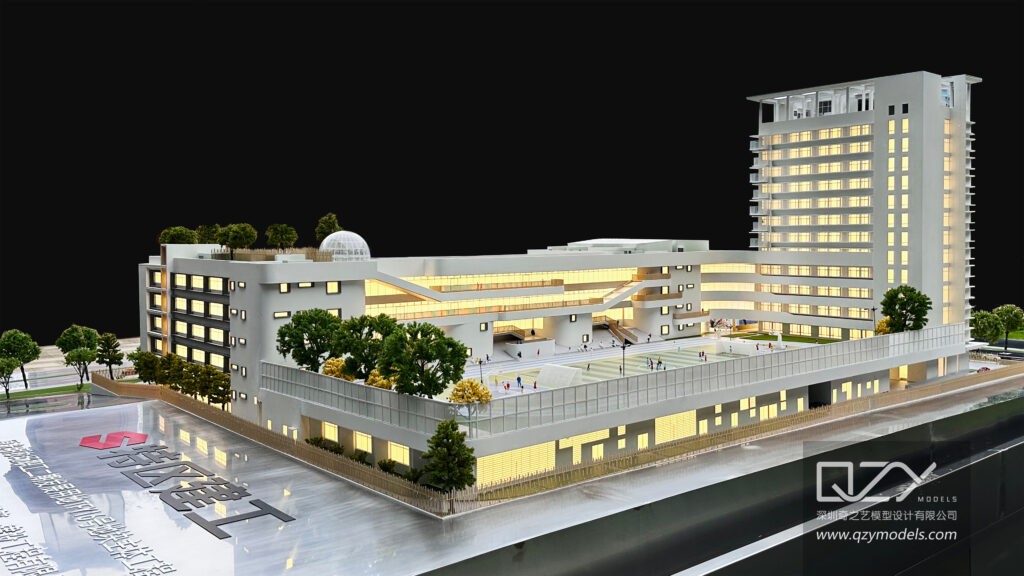
Building presentation models for client presentations, investor meetings, and sales offices, where the goal is to sell a specific tower or building block.
-
Mid‑to‑late design stages, where the overall form is fixed but internal layout, circulation, and facade articulation need refinement and validation.
-
Interior and spatial studies, where architects want to test room proportions, ceiling heights, and circulation flow before finalizing drawings.
-
Mixed‑use and podium‑tower projects, where designers need to show how the tower relates to the podium, entrances, lobbies, and public spaces at a human scale.
For large masterplans, 1:50 is often used for the key buildings against a simpler 1:200 or 1:500 site context, giving decision‑makers a clear hierarchy of information.
Where does 1:50 fall in common architectural model scales?
Architectural models are made at many scales, each serving a different purpose.
A typical scale range includes:
-
1:1 – 1:10: Very large, used for furniture, details, or mock‑ups.
-
1:20 – 1:50: Detailed study and presentation of a single building; interior and facade focus.
-
1:75 – 1:100: Common for building‑level presentation, balancing detail and size.
-
1:150 – 1:500: Used for site and masterplan models, where context is more important than interior detail.
-
1:1000+: Urban planning and city‑wide models.
1:50 sits in the sweet spot between extreme detail (1:20) and broad context (1:100+). It’s detailed enough to show room divisions, doors, certain materials, and even some furniture, but still compact enough for transport and display.
Why does 1:50 scale matter in practice?
Using 1:50 scale fundamentally improves how architecture is communicated and approved. It turns abstract measurements into something real and tangible, which has several concrete benefits.
First, it improves design clarity. Architects and clients can walk around the model, see how spaces connect, how deep rooms are, and how light enters from different sides. This leads to earlier, better design decisions and fewer changes once construction starts.
Second, it speeds up client and stakeholder approval. Decision‑makers can see, in a single glance, that rooms are the right size, that balconies are well placed, and that the building fits the plot. This reduces rounds of revision and shortens presentation cycles.
Third, it supports better coordination between architects, engineers, and contractors. A 1:50 model can highlight conflicts in circulation, structural elements, and service zones that are hard to catch on 2D plans, reducing on‑site clashes and rework.
Finally, in marketing and sales, a high‑quality 1:50 model creates a strong emotional connection. It makes the project feel real, not just a concept, which improves investor confidence and buyer conversion rates.
How do professional model makers handle 1:50 scale?
Top architectural model makers like QZY Models treat 1:50 not just as a size, but as a communication tool that must be accurate, consistent, and visually compelling.
They start from the architect’s latest CAD or BIM files, exactly matching the design. Walls, doors, windows, and structural elements are scaled precisely to 1:50, ensuring that what is built matches the model.
Then they focus on materials and finish. At 1:50, even small differences in material thickness, color, and texture are visible. QZY Models selects modeling materials (e.g., acrylic, wood, MDF, and specialty films) that realistically represent real‑world finishes like glass, concrete, stone, and metal cladding.
They also pay close attention to:
-
Floor heights and level changes
-
Stair and ramp geometry
-
Interior room divisions and openings
-
Facade articulation and glazing patterns
-
Contextual elements like landscaping, roads, and adjacent buildings
For complex projects, they may integrate lighting, removable roofs, or even simple digital overlays to enhance the presentation, while still maintaining the core 1:50 physical model.
What are the limitations of cheaper, in‑house models?
Many firms try to save money by making models in‑house or using low‑cost workshops. While this can work for very early sketches, it often fails when a high‑quality 1:50 presentation model is needed.
Common issues include:
-
Inaccurate scaling (walls, doors, or levels don’t match the drawings)
-
Poor material choices that look cheap or unrealistic
-
Weak structural integrity (models that warp, crack, or break easily)
-
Inconsistent finishes and paint quality
-
Lack of detail in key areas (e.g., missing doors, stairs, or glazing)
These flaws can undermine the credibility of the entire design. A client seeing a wobbly model with mismatched walls may question the quality of the architecture itself, even if the drawings are excellent.
In fast‑paced markets like luxury residential, mixed‑use towers, and international exhibitions, a poorly made 1:50 model can cost more in lost time and lost trust than the savings from avoiding a professional maker like QZY Models.
How does QZY Models make 1:50 models different?
QZY Models, founded in 2013 in Shenzhen, specializes in high‑quality architectural and industrial models, with a strong focus on precision 1:50 scale models. Their team has over 20 years of experience and has delivered thousands of projects for clients like Foster + Partners, Vanke, and China Resources, as well as for government and urban planning agencies.
QZY’s 1:50 models are known for:
-
Devotion to exact 1:50 scale, ensuring all dimensions match the architectural drawings
-
Use of high‑quality modeling materials that mimic real finishes and are durable for transport and display
-
Attention to interior details such as room divisions, doors, stairs, and level changes
-
Clean, professional bases and contextual surroundings (landscaping, roads, adjacent buildings)
-
Lead times optimized for international clients, with branches in the UAE, Saudi Arabia, and Egypt to support Middle East and global markets
Because each 1:50 model is treated as a bespoke communication tool, QZY Models works closely with architects and developers to align the model’s level of detail, materials, and presentation style with the project’s goals.
How does 1:50 compare with other scales in real projects?
Feature 1:20–1:25 1:50 1:100 1:200–1:500 Typical use Interior, detailed study Building presentation, detailed site model Building presentation, site integration Masterplan, urban context Room layout visible Very clear Clear Basic, only large rooms Hard to see interior details Doors, stairs, windows Highly detailed Clearly shown Simplified, some may be missing Very simplified or abstract Total model size Large (often 1 m+) Manageable (30–60 cm typical) Compact (20–40 cm) Very compact (<30 cm) Suitable for: Client design review, sales office Investor meetings, approvals, exhibitions Conceptual presentations Competition boards, city planning Transport & display Heavy, requires careful handling Easy to move, suitable for exhibitions Very easy to transport Easiest, but limited detail Cost (relative) Highest Medium–high Medium Lowest For most building‑scale projects, 1:50 offers the best balance: enough detail to show the design clearly, but still portable and cost‑effective compared to 1:20 or 1:25.
What does a 1:50 scale model look like in use?
Imagine a 200 m² apartment plan on a 1:50 model. That plan becomes a 40 cm × 40 cm / 16 in × 16 in area on the model, which is large enough to clearly see:
-
Room layouts (living, dining, bedrooms, kitchen)
-
Widths of corridors and entrances
-
Placement of doors and windows
-
Balcony and terrace depths
-
Relationship between rooms and shared spaces (staircases, lobbies)
With a professional 1:50 model from a firm like QZY Models, stakeholders can immediately judge:
-
Whether room sizes feel generous or cramped
-
Whether circulation is efficient and intuitive
-
How light comes in from different directions
-
How the building sits on the plot and relates to neighbors
This kind of instant, shared understanding is difficult to achieve with drawings or renderings alone.
How to choose between 1:50 and other scales?
The right choice depends on three main questions:
-
What is the main purpose of the model?
-
Design studies and detailed interiors → 1:20–1:50
-
Building presentation to clients and investors → 1:50–1:100
-
Site integration and masterplan context → 1:100–1:500
-
-
What is the available display space?
-
Large boardrooms, sales offices, exhibitions → 1:50 is ideal
-
Small meeting rooms or tight spaces → 1:75–1:100 may be more practical
-
-
What level of detail is required?
-
Need to show doors, stairs, and interior layout? → 1:50 is usually the minimum
-
Only need volume and context? → 1:100 or 1:200 may be sufficient
-
For most projects where the goal is to present a single building with clear interior and facade details, 1:50 is the most effective and widely accepted scale.
What are typical 1:50 model specifications?
A professional 1:50 architectural model typically includes:
Geometry and structure:
-
Accurate scaling of walls, columns, and structural elements
-
Correct floor heights and level changes
-
Clear stair and ramp geometry
-
Roof and parapet details
Interior:
-
Room divisions and walls
-
Main doors and openings
-
Key circulation paths (corridors, hallways)
-
Basic window frames and glazing
Facade and materials:
-
Accurate window and door patterns
-
Representation of cladding, balconies, and sunshades
-
Material differentiation (e.g., glass, metal, concrete, stone)
Context:
-
Plot outline and site boundaries
-
Roads, driveways, and sidewalks
-
Basic landscaping (trees, grass areas)
-
Simple representation of adjacent buildings
Base and presentation:
-
Solid, level base in a professional finish (e.g., painted wood, acrylic)
-
Clear orientation (north arrow, scale bar)
-
Optional: removable roof, lighting, or label board
Models from QZY Models follow this standard and can be customized—for example, adding lighting, removable roofs, or digital overlays—to match the client’s specific needs.
How long does it take to produce a 1:50 model?
Production time depends on:
-
Size and complexity of the building (number of floors, irregular shapes)
-
Level of detail (interior walls, doors, furniture, landscaping)
-
Materials and finish (standard vs. custom color and texture)
-
Need for revisions or multiple versions
For a typical mid‑rise residential or commercial building:
-
Simple 1:50 model (basic building + site) → 5–10 working days
-
Detailed 1:50 model (interior rooms, doors, advanced materials) → 10–15 working days
-
Complex mixed‑use or high‑end project → 15–30 working days
Lead times can be shorter for repeat clients or when working with QZY Models’ global team, which can coordinate production across Shenzhen, UAE, and other branches to meet tight international deadlines.
How are 1:50 models used in different project stages?
1:50 models are not just for final presentations; they deliver value at multiple stages:
-
Design development: Architects use 1:50 models to test massing, proportions, and circulation, catching design issues before construction starts.
-
Client reviews: Developers and architecture firms present 1:50 models to secure approvals from clients, investors, or management committees, reducing the number of revision cycles.
-
Sales and marketing: Real estate developers place 1:50 models in sales offices to help buyers visualize units, amenities, and the overall layout, increasing conversion rates.
-
Exhibitions and competitions: Architects submit 1:50 models in design competitions and exhibitions to clearly communicate their proposal and stand out from competitors.
-
Construction coordination: Contractors and engineers use 1:50 models to understand complex zones (e.g., podium‑tower transitions, service areas), improving coordination and reducing RFIs.
How does 1:50 support global projects and international clients?
For architecture and real estate firms working across borders, a precise 1:50 model is a universal language. It removes ambiguity caused by language differences and cultural interpretations of 2D plans.
QZY Models has extensive experience supporting international clients from:
-
Middle East (UAE, Saudi Arabia, Egypt) for high‑end residential and mixed‑use towers
-
Europe and Southeast Asia for public projects and urban regeneration
-
China and greater Asia for branded residential and commercial developments
Their 1:50 models are tailored to each market’s expectations, with attention to:
-
Local building typologies and planning standards
-
Cultural preferences in space and layout
-
Material references that match the real project’s specification
By combining precise 1:50 scaling with
FAQs
1. What Is 1:50 Scale Architecture and How Do You Use It Correctly?
1:50 scale architecture means 1 unit on a drawing or model equals 50 units in real life. For example, 1 cm represents 50 cm. It is widely used for detailed floor plans and physical models. To use it correctly, divide real measurements by 50 and verify dimensions with a scale ruler before production.2. How Do You Convert Measurements to 1:50 Scale Step by Step?
To convert to 1:50 scale, divide the real measurement by 50. A 5 meter wall becomes 100 mm on paper. Always convert units first, then divide. Double check with a metric scale ruler. For complex projects, professional teams like QZY Models apply digital scaling to eliminate calculation errors.3. How Do You Build Accurate 1:50 Scale Architectural Models?
Start with verified 1:50 scaled drawings, then transfer dimensions precisely onto model materials. Use sharp cutting tools, measure twice before assembly, and maintain consistent wall thickness. Focus on clean joints and proportion accuracy. For high-end presentation models, experienced fabricators such as QZY Models use laser cutting and CNC precision.4. How Do You Read 1:50 Scale Floor Plans and Drawings?
When reading 1:50 scale floor plans, multiply drawing dimensions by 50 to find real sizes. Check wall thickness, door widths, and furniture layouts using a scale ruler. Pay attention to line weights and annotations. This scale provides enough detail to evaluate room proportions and construction elements clearly.5. 1:50 vs Other Architectural Scales Which One Should You Choose?
Choose 1:50 scale when you need clear interior layouts and construction details. Use 1:100 for general building overviews and 1:200 for site context. If the project requires presentation-level detail or client approvals, 1:50 offers better clarity without overwhelming complexity.6. Which 1:50 Scale Rulers and Tools Give the Most Accurate Results?
Use a metric architect scale ruler with clearly marked 1:50 increments. Pair it with precision cutting tools and digital calipers for model work. Avoid mixing unit systems. Always confirm measurements against the original drawing scale before printing or fabrication.7. How Can Students Quickly Master 1:50 Scale in Architecture?
Students can master 1:50 scale by practicing daily conversion exercises and redrawing small room layouts at scale. Build simple physical mockups to reinforce spatial understanding. Repetition improves speed and accuracy. Focus on real-world measurements like doors, walls, and furniture to develop intuitive scaling skills.8. What Are the Most Common 1:50 Scale Mistakes and How to Avoid Them?
Common 1:50 scale mistakes include incorrect unit conversion, forgetting to divide by 50, and printing at the wrong ratio. Always verify CAD plot settings and remeasure critical dimensions before fabrication. Implement a simple checklist to confirm scale accuracy before client presentation or model production. -