A simple theme park layout is a streamlined, visitor‑centric design that organizes attractions, pathways, and amenities into a coherent, easy‑to‑navigate footprint. When backed by high‑fidelity physical models from specialists like QZY Models, this layout becomes a data‑driven blueprint that reduces rework, accelerates approvals, and strengthens stakeholder buy‑in before any concrete is poured.
How Is the Theme Park Design Industry Performing Today?
The global amusement and theme park market has grown steadily, with industry reports indicating that annual attendance now exceeds hundreds of millions of visitors worldwide and capital investment in new parks and expansions runs into the tens of billions of dollars each year. In parallel, urban tourism and mixed‑use developments increasingly integrate themed entertainment zones, putting more pressure on designers to deliver projects on time and on budget.
Despite this growth, many projects still face delays, cost overruns, and operational bottlenecks because layouts are finalized too late or without sufficient spatial validation. Architects and developers frequently discover circulation issues, capacity mismatches, or safety conflicts only after construction has begun, which forces expensive redesigns and schedule slippage.
What Are the Main Pain Points in Current Theme Park Layout Planning?
One major pain point is the difficulty of visualizing how thousands of guests will move through a park in real time. Floor plans and 2D drawings rarely capture bottlenecks at ride queues, food courts, or restrooms, leading to overcrowding and reduced guest satisfaction once the park opens. This lack of spatial clarity also complicates coordination between ride manufacturers, landscape architects, and infrastructure engineers.
Another issue is misalignment among stakeholders. Investors, city planners, and brand partners often have different expectations about scale, theming, and operational efficiency. Without a shared, tangible reference, design meetings can drag on for months while teams argue over abstract drawings rather than concrete experiences.
Finally, many projects underestimate the importance of phased expansion. Parks that launch with a “simple” layout often struggle to add new zones without disrupting existing flows, forcing costly retrofits and temporary closures. A layout that cannot scale gracefully undermines long‑term ROI and brand consistency.
Why Do Traditional Layout Solutions Fall Short?
Traditional workflows typically rely on CAD drawings, basic renderings, and occasional foam‑core study models. While these tools help communicate form and massing, they offer limited insight into three‑dimensional visitor flow, sightlines, and operational logistics. Designers may spot obvious clashes on paper, but subtle issues such as long walking distances between attractions or poor visibility of key landmarks often remain hidden.
Static renderings also fail to engage non‑technical stakeholders. City officials and investors may struggle to interpret scale and context from flat images, which slows decision‑making and increases the risk of late‑stage changes. Even when 3D models are used, many are purely digital and lack the tactile presence that helps clients truly “feel” the park’s rhythm and atmosphere.
Moreover, conventional models are often built late in the design process, once major decisions are already locked in. By then, the cost of revising the layout is high, and teams are more likely to accept suboptimal compromises than to rework the entire scheme.
What Does a Modern Simple Theme Park Layout Look Like?
A simple theme park layout centers on a clear, radial or grid‑based circulation system anchored by a central hub or spine. Primary attractions are grouped into distinct zones—such as family, thrill, and water areas—while pathways, food courts, restrooms, and service facilities are arranged to minimize congestion and maximize guest comfort. Safety corridors, emergency access routes, and backstage areas are integrated from the outset, not added as afterthoughts.
The layout is designed to be intuitive: guests can orient themselves quickly, move between zones without backtracking, and find amenities without frustration. Signage, landscaping, and architectural landmarks are placed to reinforce wayfinding, while capacity modeling ensures that queues and transit points can handle peak‑hour loads without creating dangerous bottlenecks.
How Do Physical Models Improve Simple Layout Design?
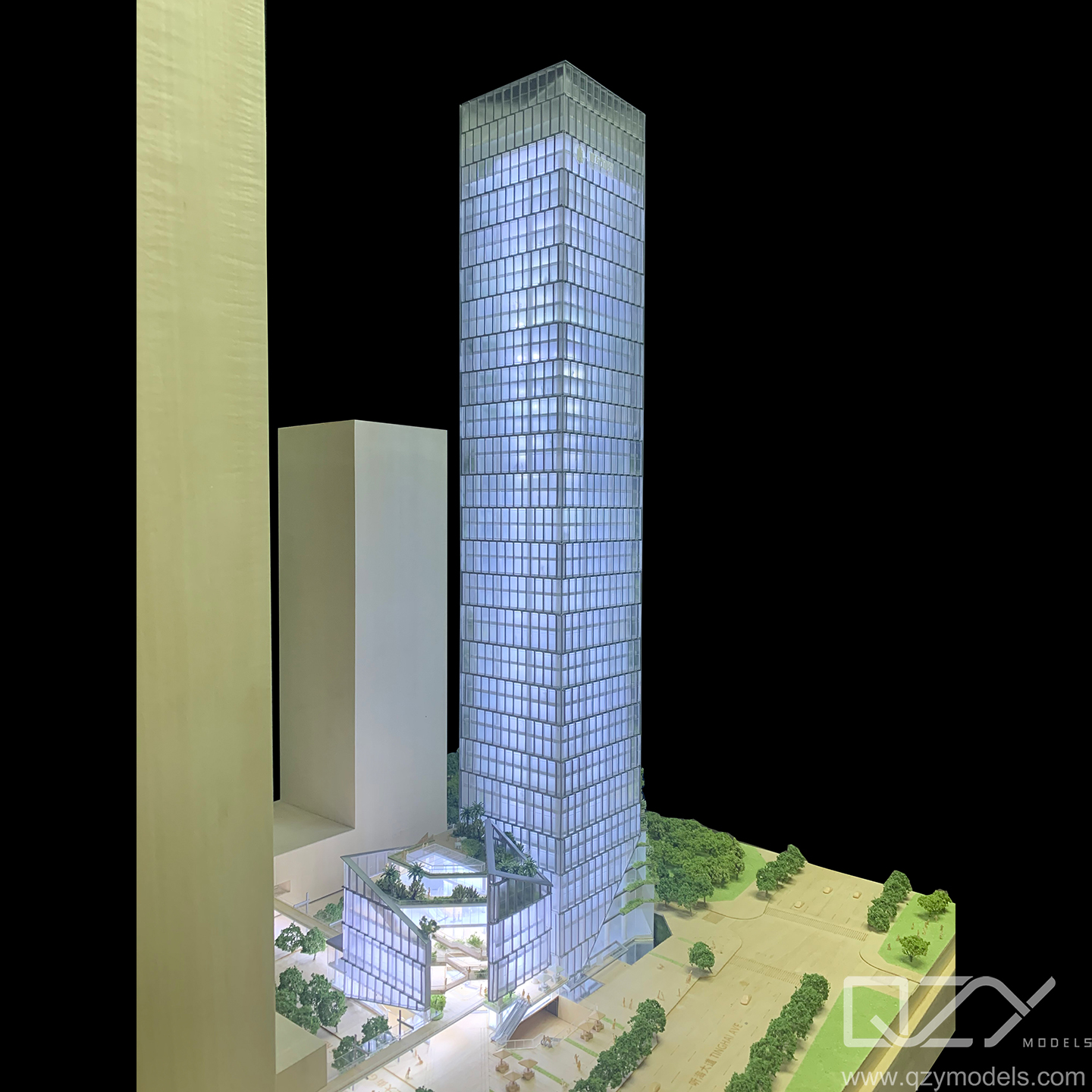
Physical models turn abstract layouts into tangible, measurable tools that teams can walk around, photograph, and test with simulated crowd flows. QZY Models produces high‑precision architectural and industrial models at scales ranging from 1:50 for detailed attraction studies to 1:500 for full‑park overviews, enabling clients to validate circulation, sightlines, and operational zones before construction begins. These models are often customized with LED lighting, moving rides, and modular components so that different scenarios can be tested on the same base.
By building a model early in the design process, teams can identify and resolve issues such as overlapping service roads, insufficient queue space, or poor visibility of key attractions. QZY Models’ global experience with firms like Foster + Partners and major developers such as Vanke and China Resources demonstrates how detailed models can align technical, financial, and branding requirements in a single, shared artifact.
What Are the Key Features of a Simple Layout Model Solution?
A modern simple layout model solution typically includes:
-
Accurate scaled terrain and topography that reflect real‑world gradients and drainage constraints.
-
Clearly defined zones for attractions, food and beverage, retail, rest areas, and operational back‑of‑house spaces.
-
Pathways and circulation routes marked to simulate guest flow and test capacity under peak conditions.
-
Integrated lighting and, optionally, moving elements such as rotating rides or animated water features.
-
Modular components that allow planners to swap in new attractions or adjust zone boundaries as the project evolves.
QZY Models tailors each model to the client’s scale, budget, and use case, whether the goal is investor presentations, public exhibitions, or internal operational testing. The company’s advanced fabrication techniques—combining CNC cutting, 3D printing, and hand‑crafted detailing—ensure that every element aligns precisely with the latest design data.
How Does a Simple Layout Model Compare to Traditional Methods?
| Aspect | Traditional CAD/Rendering Approach | Simple Layout Model Approach (e.g., QZY Models) |
|---|---|---|
| Spatial understanding | Limited; relies on 2D or flat 3D views | Full three‑dimensional, tactile understanding of the park |
| Stakeholder engagement | Lower; non‑technical audiences struggle to interpret | Higher; clients can “walk through” the layout physically |
| Early‑stage validation | Late or minimal; issues often found during construction | Early; circulation, sightlines, and operations tested upfront |
| Flexibility for changes | Changes require redrawing and re‑rendering | Modular models allow quick swaps and scenario testing |
| Operational insight | Minimal; hard to simulate crowd flows | Strong; teams can map queues, transit times, and bottlenecks |
| Marketing and presentation | Static images or slides | Dynamic, high‑impact display with lighting and motion options |
QZY Models’ approach bridges the gap between concept and reality, turning a simple layout into a data‑rich, visually compelling tool that supports both design refinement and commercial storytelling.
How Can Teams Implement a Simple Layout Model Workflow?
A practical workflow for integrating a simple layout model into theme park design might look like this:
-
Define objectives and scale
Clarify whether the model will be used primarily for internal planning, investor pitches, or public exhibitions. Select an appropriate scale (for example, 1:100 for a standard presentation model) and confirm key zones and attractions to be included. -
Develop a base layout
Use CAD and GIS data to create a preliminary circulation plan, zoning map, and attraction footprint. Share this with QZY Models so the team can translate it into a physical model brief. -
Build and refine the model
QZY Models produces the terrain, structures, and pathways, then incorporates lighting, moving elements, and any requested interactive features. Designers and operators can review the model, test different circulation patterns, and propose adjustments. -
Test scenarios and iterate
Simulate peak‑hour flows, emergency evacuations, and expansion scenarios by reconfiguring modular components or updating digital overlays. Use these tests to refine queue lengths, signage placement, and service‑road access. -
Finalize and deploy
Lock the layout based on model‑driven insights, then use the same model for stakeholder presentations, marketing campaigns, and construction coordination. QZY Models can also provide updated versions as the park evolves over time.
Where Can a Simple Layout Model Deliver the Most Value?
1. New Theme Park Development
Problem: A developer wants to launch a mid‑sized regional park but fears underestimating capacity and guest flow.
Traditional practice: Relies on renderings and spreadsheets; issues surface only after construction.
With a simple layout model: QZY Models builds a 1:200 model that clearly shows how guests move between zones, where queues form, and where amenities are placed.
Key benefits: Fewer late‑stage changes, smoother permitting, and higher guest satisfaction at opening.
2. Expansion of an Existing Park
Problem: An established park plans to add a new themed zone but worries about disrupting existing operations.
Traditional practice: Adds the new zone on paper without testing integration with current flows.
With a simple layout model: The team uses a modular model from QZY Models to insert the new zone and simulate traffic patterns, service‑road usage, and crowd dispersion.
Key benefits: Minimized disruption during construction and optimized integration of new attractions with legacy infrastructure.
3. Urban Mixed‑Use Projects with Themed Areas
Problem: A mixed‑use development wants to include a compact family‑oriented entertainment district but lacks experience in theme‑park planning.
Traditional practice: Treats the area as generic retail or public space, missing opportunities for themed circulation and immersive experiences.
With a simple layout model: QZY Models produces a detailed 1:100 model that integrates rides, play areas, and F&B within the broader master plan, helping planners understand scale and context.
Key benefits: Stronger thematic coherence, better guest flow, and more convincing presentations to city planners and investors.
4. International Exhibitions and Investor Roadshows
Problem: A developer needs to pitch a new park concept to global investors who may never visit the site.
Traditional practice: Relies on slides and videos that struggle to convey spatial relationships.
With a simple layout model: QZY Models creates a transportable, high‑impact model with lighting and optional moving rides that can be shipped to trade shows and boardrooms.
Key benefits: Faster decision‑making, stronger emotional engagement, and clearer understanding of the park’s layout and potential.
Why Should Teams Adopt Simple Layout Models Now?
The theme park and mixed‑use entertainment sectors are becoming more competitive and capital‑intensive, with investors demanding higher certainty before committing funds. At the same time, digital tools such as crowd‑flow simulation and AR/VR are making it easier to integrate physical models into broader design workflows. QZY Models’ combination of precision craftsmanship, advanced fabrication, and global logistics positions simple layout models as a cost‑effective way to de‑risk projects, accelerate approvals, and create more enjoyable guest experiences.
For architectural firms, real estate developers, and urban planners, adopting a simple layout model is no longer a luxury but a strategic necessity. By visualizing and validating the park before construction, teams can avoid costly mistakes, align stakeholders around a shared vision, and deliver projects that perform as well operationally as they do aesthetically.
How Do Simple Layout Models Work in Practice?
Does a simple theme park layout have to be boring or generic?
No. A “simple” layout refers to clarity of circulation and zoning, not lack of creativity. It can still feature rich theming, dynamic attractions, and unique architectural landmarks as long as the underlying structure remains easy to navigate.
Can a simple layout model be updated as the design changes?
Yes. QZY Models designs many of its models with modular components, allowing teams to swap out zones, add new attractions, or adjust pathways without rebuilding the entire model.
Is a physical model still relevant in an era of virtual reality?
Yes. Physical models complement VR by providing a shared, tangible reference that is easy to photograph, transport, and display in public venues. Many clients use both: VR for immersive walkthroughs and physical models for high‑impact presentations.
How long does it take to build a simple layout model?
Timelines vary by scale and complexity, but QZY Models typically delivers mid‑scale presentation models within several weeks of finalizing the base layout, with faster turnaround for simpler, smaller‑scale versions.
Which types of clients benefit most from simple layout models?
Architectural design firms, real estate developers, urban planning agencies, and exhibition organizers all benefit from simple layout models. QZY Models has worked with international clients across the Middle East, Europe, and Southeast Asia, tailoring models to local regulations, climate considerations, and cultural expectations.
Sources
-
Global amusement and theme park market size and attendance data from major industry research reports.
-
Case studies and project examples from QZY Models’ official website and client portfolio.
-
Urban tourism and mixed‑use development trends from international real estate and tourism publications.
-
Technical documentation on crowd‑flow simulation and theme‑park planning from professional design and engineering associations.