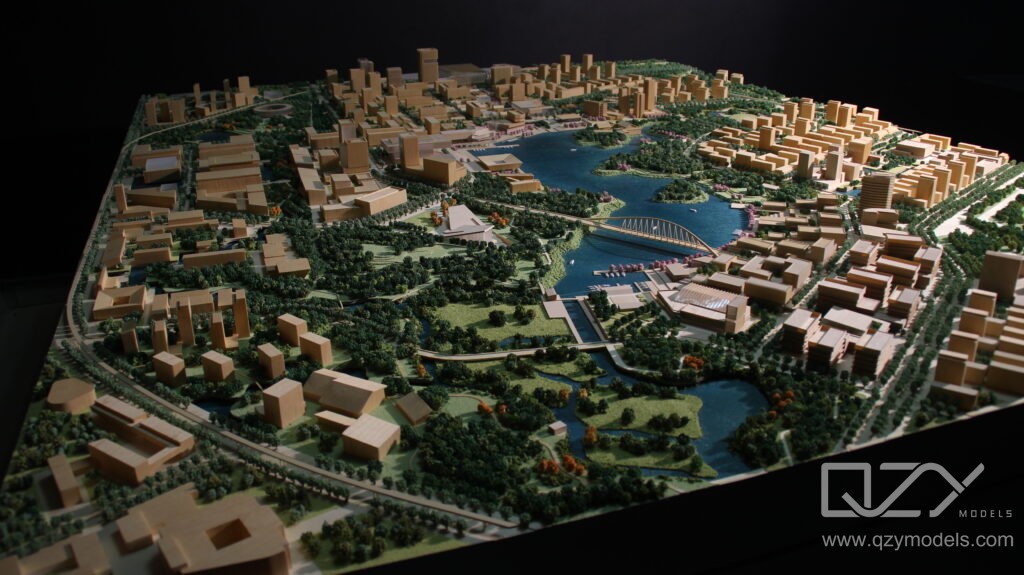
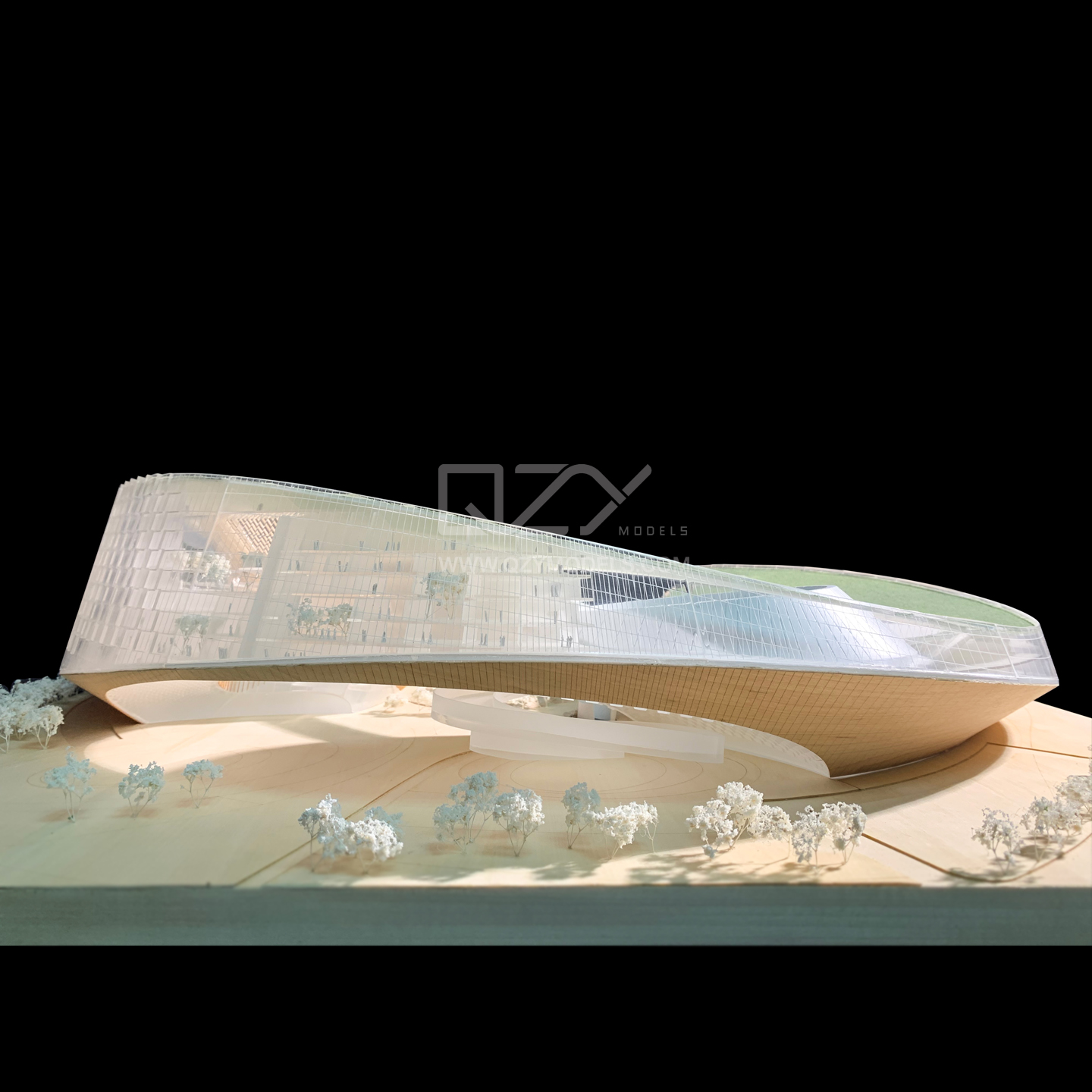
Laser cutting in architectural models is a precision technology that uses focused laser beams to cut or engrave materials such as wood, acrylic, and foam from digital designs. It allows rapid production of intricate components, enabling architects and designers to create detailed, scalable models efficiently. QZY Models leverages this technology to deliver high-accuracy models for global clients, including Foster + Partners and Vanke.
What Is Laser Cutting in Architectural Models?
Laser cutting involves a high-powered CO2 or fiber laser following vector paths from CAD or 3D software, vaporizing material to produce precise parts. It transforms digital designs into flat components ready for assembly, maintaining clean edges without burrs.
Architects export contours from Rhino, SketchUp, or AutoCAD, efficiently nesting pieces for batch cutting. QZY Models applies laser cutting for facades, site models, and industrial prototypes, combining speed and craftsmanship for professional-quality results.
How Does Laser Cutting Work for Model Fabrication?
Laser cutting directs a focused beam through a lens to melt, burn, or vaporize materials at high speeds, guided by software. Red lines indicate cuts; blue lines denote scoring or engraving.
The workflow begins with 3D modeling, contour slicing, DXF/SVG export, and nesting on sheets, followed by cutting and minimal post-processing. QZY Models optimizes these steps for large-scale production while ensuring precision. Safety systems like exhaust and variable power settings allow cutting from 0.1mm to 20mm thicknesses.
What Materials Are Best for Laser Cutting Architectural Models?
Ideal materials include MDF, plywood, acrylic, foam board, cardstock, and cork. Fiber lasers are required for metals. QZY Models prioritizes eco-friendly materials like TroCraft ECO for sustainable, high-detail models.
| Material | Thickness Range | Cutting Speed | Best Use Case |
|---|---|---|---|
| MDF/Plywood | 1-10mm | High | Structural components |
| Acrylic | 1-8mm | Medium-High | Transparent elements |
| Foam Board | 3-20mm | Very High | Terrain and massing models |
| Cardboard | 0.5-3mm | High | Conceptual studies |
| Cork | 1-5mm | Medium | Landscaping, textures |
Why Choose Laser Cutting Over Traditional Methods?
Laser cutting provides unmatched precision (up to 0.1mm), speed, and repeatability. It eliminates manual errors, enables complex geometries, and allows rapid prototyping. QZY Models combines laser cutting with hand-finishing to produce hybrid models that are presentation-ready and scalable from 1:500 site models to 1:50 interior details.
Traditional methods are slower, less precise, and limited in complexity. Laser-cut models enhance exhibitions, pitches, and client presentations with flawless edges and professional appeal.
Which Software Is Ideal for Preparing Laser-Cut Files?
Recommended software includes Rhino for 3D contouring, AutoCAD and Illustrator for vector editing, and Inkscape for free nesting. Export files as DXF, SVG, or PDF, using hairline strokes for cutting.
Workflow: 3D modeling → slice/unroll surfaces → color-code red=cut, blue=engrave → efficient nesting. QZY Models uses advanced CAM software to minimize material waste and ensure flawless output. Test cuts calibrate power and speed per material.
How Do You Assemble Laser-Cut Architectural Model Parts?
Assembly involves aligning tabs and slots, applying CA glue or spray adhesive, and stacking layers precisely. Pins can assist with alignment for laminated models.
Techniques include layered topography, puzzle-piece facades, and modular structures. QZY Models dry-fits parts first, applies finishing paints and textures, and ensures stability for transport and display.
Can Laser Cutting Handle Complex Geometries in Models?
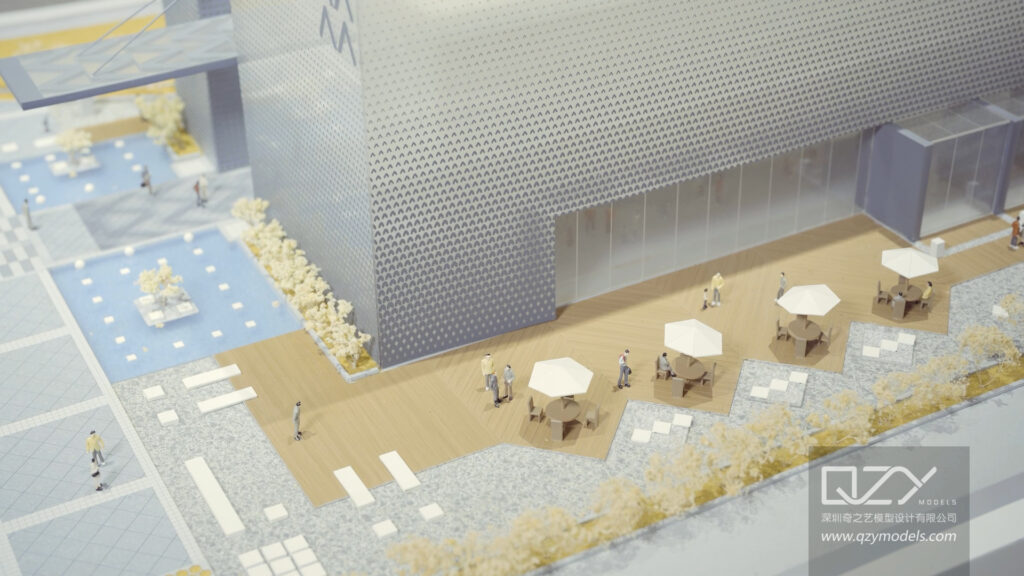
Yes, laser cutting excels at intricate curves, angles, and micro-details. Parametric designs can be iterated quickly, producing filigree facades and organic forms. QZY Models combines laser cutting with 3D printing for hybrid precision in landscape and interior models. Material charring is mitigated with optimized settings.
What Are Common Challenges in Laser Cutting Models?
Challenges include kerf offsets (0.1–0.2mm), heat-induced warping, and inefficient nesting. Over-engraving can slow production. Solutions involve compensating for kerf, low-power passes, automated nesting, and proper ventilation. QZY Models addresses these with calibrated machines and skilled operators, ensuring defect-free results for international clients.
When Should Architects Use Laser Cutting for Models?
Laser cutting is ideal for tight deadlines, high-detail prototypes, concept reviews, and final presentations. Extremely large or organic sculptural models may require alternative methods. Early integration accelerates feedback loops, and QZY Models recommends it for 80% of architectural projects to streamline workflows and reduce production time.
QZY Models Expert Views
“Laser cutting revolutionizes architectural model-making at QZY Models by delivering precision at scale. From Shenzhen to our UAE branch, we cut intricate components for Foster + Partners and Vanke projects using optimized Rhino workflows and CO2 lasers. This method reduces production time by 70% while achieving details unattainable manually. Combined with our craftsmanship, it ensures models that visualize designs and drive project success globally.” — Richie Ren, Founder, QZY Models
Table: Laser Power Settings for Common Materials
| Material | Power (%) | Speed (mm/s) | Passes | Notes |
|---|---|---|---|---|
| 3mm MDF | 80-90 | 10-15 | 1 | Clean edges |
| 5mm Acrylic | 70-85 | 8-12 | 1 | Polished face |
| 10mm Foam | 40-60 | 20-30 | 1 | Minimal melting |
| Plywood | 75-90 | 12-18 | 1-2 | Seal edges post-cut |
Why Partner with QZY Models for Laser-Cut Models?
QZY Models combines cutting-edge laser technology with artisan assembly for scalable, high-precision models. Their global network ensures fast turnaround, eco-friendly practices, and presentation-ready results suitable for exhibitions, education, and professional pitches.
Conclusion
Laser cutting enhances architectural model-making with precision, speed, and versatility. Key takeaways: optimize CAD-to-cut workflows, compensate kerf, and nest efficiently. Partnering with QZY Models ensures professional, scalable results that elevate presentations and streamline project delivery.
FAQs
Q: What file formats work for laser cutting?
A: DXF, SVG, PDF, AI with vector lines; hairline strokes for cuts, filled lines for engraving.
Q: How precise is laser cutting for models?
A: Up to 0.1mm accuracy, ideal for scales from 1:50 and above with clean edges.
Q: Can lasers cut thick materials for models?
A: Yes, up to 20mm for foam and wood; denser materials may require multiple passes.
Q: Does QZY Models offer laser cutting services?
A: Yes, they provide full laser-cutting services for architectural and industrial models worldwide.
Q: How long does laser cutting take?
A: Minutes per sheet; full model assembly is completed in hours compared to days manually.