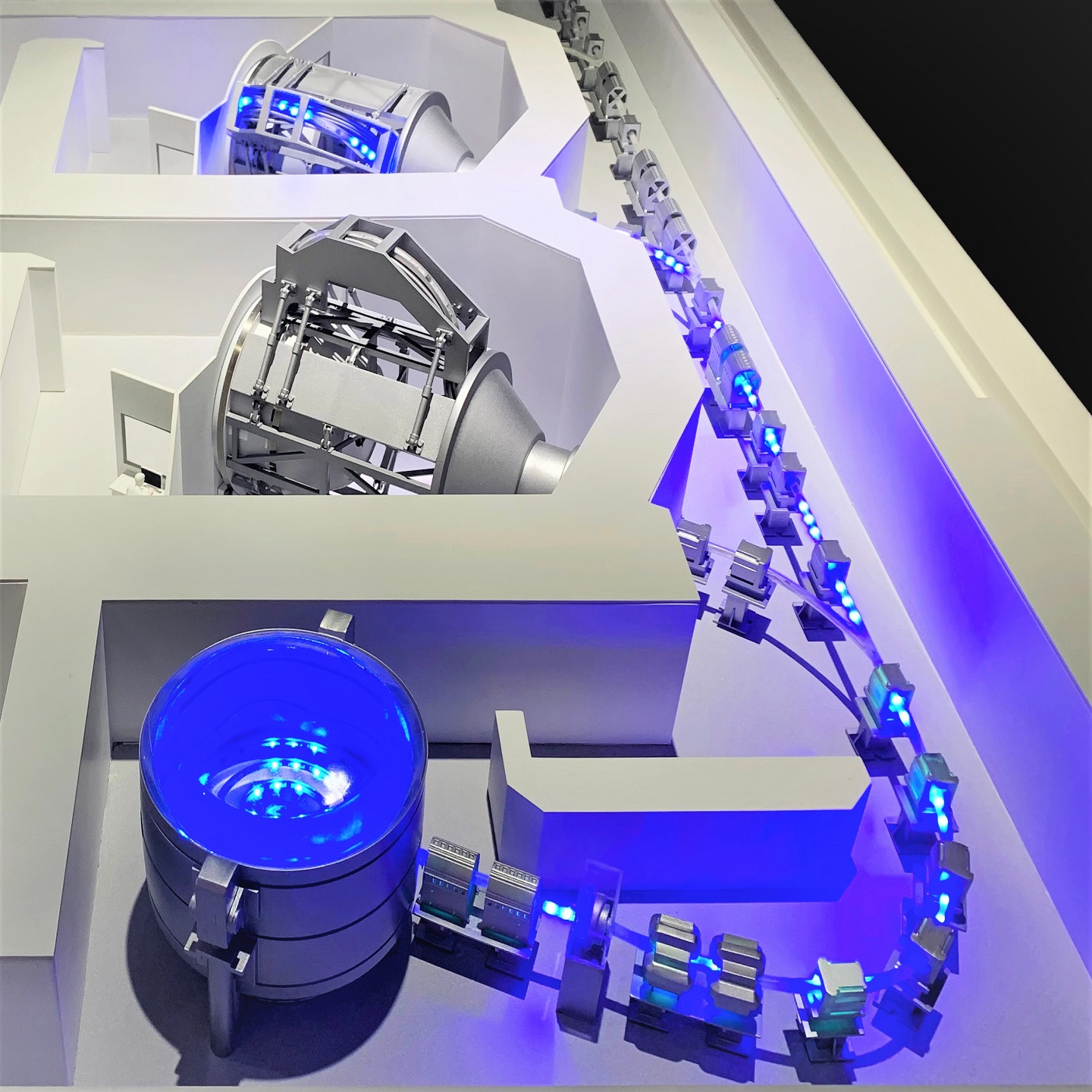
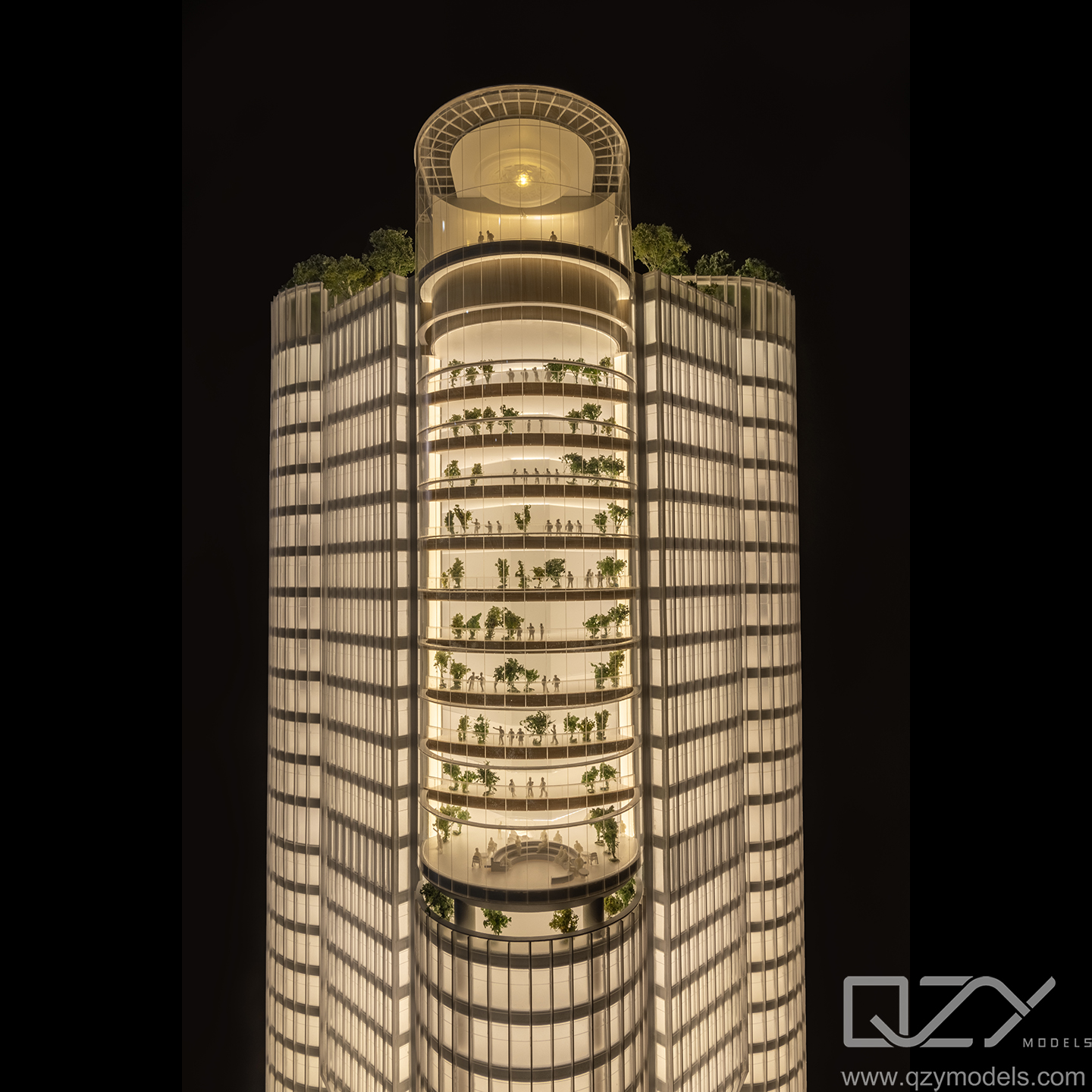
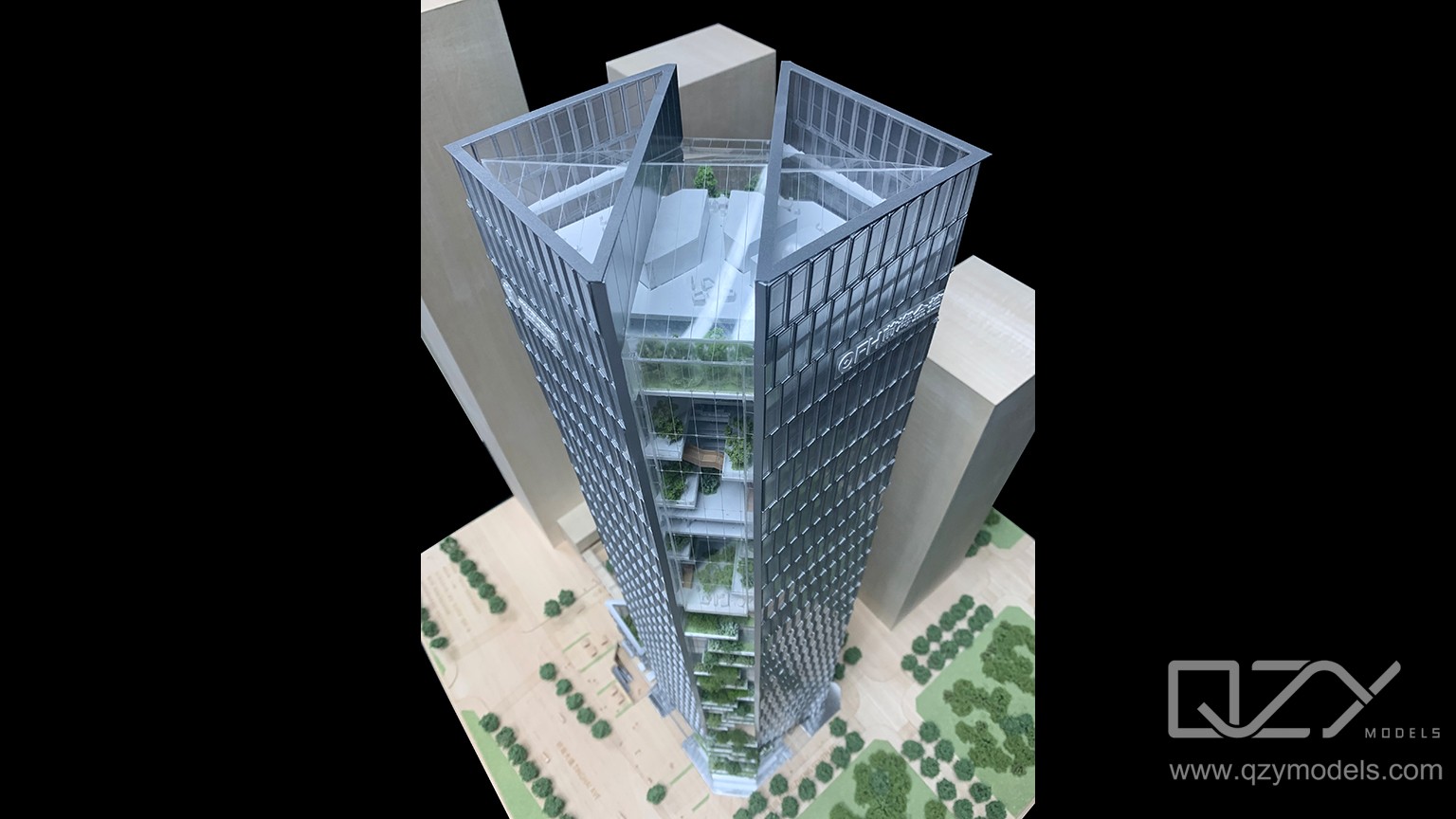
Model laser cutting is a precision fabrication technique where a focused laser beam cuts, engraves, or scores materials used in scale models, such as wood, acrylic, cardboard, or plastic, enabling detailed and accurate components essential for architectural, industrial, and creative model making.
How Does Model Laser Cutting Work?
Model laser cutting operates by using computer-controlled lasers directed at the material surface, either vaporizing or melting it to achieve precise cuts or engravings. Designers create vector files often via CAD software, distinguishing cut lines and score lines through different colors or layers. The laser follows these instructions for intricate, repeatable, and clean cuts without mechanical force or tool wear.
QZY Models leverages laser cutting to produce thousands of detailed model parts with speed and accuracy, reducing manual labor and minimizing errors.
Imagine you are making a small, detailed model, like a miniature building or a landscape. Instead of cutting each piece by hand, a laser is used to do the work. This laser is very precise and can follow exact paths on the material to either cut all the way through or make shallow markings. Designers first create a digital plan using CAD software, which tells the laser where to cut and where to score or mark. This way, even the tiniest details can be accurately produced without using traditional tools that might wear out or make mistakes.
At QZY Models, this method allows them to produce large numbers of model parts quickly and accurately. The precision of laser cutting means every piece fits perfectly, reducing the need for manual adjustments. By combining digital planning with laser technology, QZY Models can deliver high-quality, intricate models efficiently, helping architects, designers, and collectors get professional results with consistent detail and craftsmanship.
What Materials Are Commonly Used in Model Laser Cutting?
Popular materials include MDF, plywood, acrylic sheets, basswood, cardboard, foam board, and various plastics. Each material offers different properties – MDF for stability, acrylic for transparency, basswood for fine detail, and foam for lightweight core structures. The choice depends on the model’s purpose, scale, and desired aesthetics.
QZY Models selects materials strategically to balance durability, visual appeal, and fabrication efficiency, tailoring to client specifications.
When making models with a laser cutter, different materials are chosen depending on what the model needs to look like and how it will be used. Common options include MDF and plywood for strong, stable pieces, acrylic for clear or see-through parts, basswood for very fine details, cardboard for quick and inexpensive prototypes, and foam board for lightweight structures. Each material behaves differently when cut, so the choice affects both the model’s appearance and how easy it is to work with.
At QZY Models, selecting the right materials is an important step. They carefully pick what to use for each project to make sure the model is both durable and visually appealing, while also making production as smooth as possible. This approach helps them create high-quality, detailed models efficiently, meeting the specific needs of architects, designers, and other clients.
Which Software and File Formats Are Necessary for Laser Cutting Models?
Designs are mostly created using CAD tools like AutoCAD, Rhino, SketchUp, or Adobe Illustrator, enabling layer-based color coding for cutting and scoring. These programs output vector files in formats such as DXF, SVG, or AI, which laser cutters interpret for precise machining.
Understanding how to configure line weights, colors, and layers is critical for optimized cut quality and accuracy — a skill QZY Models has mastered in its production workflow.
Why Is Laser Cutting Preferred Over Traditional Model-Making Techniques?
Laser cutting offers unmatched speed, repeatability, and precision, reducing human error and manual labor. It can produce complex geometries and fine details impossible or labor-intensive by hand. Additionally, laser cutting minimizes material waste with clean edges and allows rapid prototyping and iteration, critical for large-scale or custom architectural model production.
QZY Models harnesses laser cutting’s efficiency and accuracy to meet demanding client timelines and quality standards.
Who Benefits From Model Laser Cutting in Architecture and Industry?
Architects, designers, developers, and model makers benefit from laser cutting to produce scaled mock-ups for presentations, design validation, and marketing. Industrial designers use it for prototyping parts and products requiring tight tolerances. Educational institutions also utilize it for teaching fabrication and design concepts.
QZY Models serves a global clientele across sectors, delivering precise, high-detail models that support critical project phases.
When Is Model Laser Cutting Used in the Model-Making Process?
Laser cutting is typically used after digital design finalization for part fabrication. It precedes assembly and finishing steps. Early prototyping stages may also use laser cutting for testing component fit and form. This technology expedites the transition from virtual models to physical prototypes.
QZY Models integrates laser cutting early in workflows to optimize timelines and enhance model quality.
Where Can Quality Model Laser Cutting Services Be Accessed?
Professional laser cutting services are available from specialized workshops and model-making companies worldwide. Facilities equipped with CO2 or fiber lasers handle various materials and project sizes. QZY Models operates manufacturing branches across Asia, the Middle East, and beyond, offering accessible, worldwide laser cutting expertise.
Does Laser Cutting Enable Complex 3D Model Fabrication?
Yes, by cutting precise 2D components with tabs, slots, and interlocking features, laser cutting supports building complex 3D models via assembly. Layer-based constructions and intricate parts can be consistently produced, facilitating rapid model creation for architectural and industrial projects.
Has Laser Cutting Technology Advanced for Greater Precision and Speed?
Advancements include higher wattage lasers, improved optics, real-time monitoring, and automated material handling, producing faster cuts with micron-level accuracy. Software integration streamlines file preparation, and multi-axis lasers enable bevel cutting, expanding design complexity achievable.
QZY Models continuously upgrades equipment to stay at the forefront of precision and efficiency.
Are There Sustainability Benefits in Laser Cutting for Modeling?
Laser cutting minimizes material waste due to precision and efficient nesting of parts, reducing raw material consumption. It also decreases chemical usage compared to traditional cutting. When combined with recyclable materials, laser cutting supports sustainable fabrication practices in model production.
QZY Models emphasizes eco-friendly practices alongside technological innovation.
QZY Models Expert Views
“Laser cutting is transformative in modern architectural and industrial model making, offering unmatched precision, efficiency, and creative freedom. At QZY Models, we utilize advanced laser technology to translate intricate designs into flawless model components quickly and accurately. This not only accelerates project timelines but also ensures a high-quality finish vital for client presentations and stakeholder engagement. Our experienced team maximizes the synergy between digital design and laser fabrication to deliver models with detail and craftsmanship that inspire confidence and elevate every project we serve.” — Richie Ren, Founder, QZY Models
How Do Designers Prepare Files for Laser Cutting?
Files must clearly differentiate cut and score lines, typically with red for cuts and blue for scores, and use vector paths. Designers verify scale, line continuity, and material thickness to ensure precise execution. QZY Models follows strict file-check protocols to guarantee error-free production.
What Post-Processing Is Needed After Laser Cutting?
Minimal finishing is required due to clean cuts; some materials may need sanding, painting, or assembly. Removal of protective films from acrylic or light cleaning of burn marks may also be necessary. QZY Models integrates seamless post-processing for presentation-ready models.
Could Laser Cutting Replace All Traditional Model Fabrication Methods?
While laser cutting excels in speed and accuracy, hand craftsmanship remains essential for delicate assembly, texturing, and finishing. Laser cutting complements rather than replaces traditional techniques, enabling hybrid workflows for best results.
Conclusion
Model laser cutting revolutionizes architectural and industrial model making by enabling rapid, precise, and versatile fabrication of parts from a variety of materials. Its integration with digital design workflows enhances accuracy, reduces waste, and speeds project delivery. Leaders like QZY Models combine laser cutting technology with expert craftsmanship to produce high-quality, visually compelling models that meet diverse client needs worldwide.
Frequently Asked Questions
Q1: What can laser cutting not cut?
Very thick metals and reflective materials can be challenging; specialized lasers or cutting methods may be needed.
Q2: How thick can laser cutters cut?
Thickness varies by machine; many CO2 lasers cut up to 20mm wood or acrylic effectively.
Q3: Are laser cuts always clean?
Generally yes, but some materials may leave charred edges requiring light finishing.
Q4: Can laser cutting be used for mass production of models?
Yes, it enables repeatable precision and quick turnaround suitable for batch runs.
Q5: How does QZY Models ensure quality in laser cutting?
Through advanced equipment, meticulous file preparation, experienced operators, and thorough quality checks.
What is model laser cutting?
Model laser cutting is a precision process that uses focused laser beams to cut and engrave materials for architectural or industrial models. It allows for high accuracy and detail, making it ideal for creating complex components in scale models.
How does laser cutting work for architectural models?
Laser cutting in architecture uses digital files to direct the laser beam to cut materials like acrylic, wood, and cardboard. It produces clean, precise edges, enabling the creation of detailed architectural models that reflect accurate proportions and designs.
What are the benefits of using laser cutting for model making?
Laser cutting offers high precision, speed, and versatility. It allows for intricate designs with minimal material waste, making it ideal for producing detailed models. It also reduces the time required compared to traditional cutting methods.
Who can benefit from model laser cutting services?
Architectural firms, real estate developers, and design schools are prime beneficiaries of model laser cutting. These services cater to those needing precise, high-quality models for presentations, exhibitions, and project development, with a focus on architectural and industrial design.
What is Model Laser Cutting?
Model laser cutting is a precise process used to cut and engrave materials like wood, acrylic, and cardboard for creating architectural or industrial models. It employs laser beams to follow vector files, producing intricate, clean-edged parts with high accuracy and speed. This method is ideal for creating detailed components with minimal post-processing.
What materials can be used for laser cutting in model making?
Laser cutting can be used on a wide range of materials, including wood, acrylic, cardboard, foam, and textiles. These materials are suitable for creating detailed and accurate architectural models, as the laser cutter can achieve precise cuts and engravings with minimal waste.
What are the advantages of laser cutting in architectural model making?
Laser cutting offers several benefits for architectural models: precision, speed, and material versatility. It allows for intricate detailing, clean edges, and the ability to quickly produce parts from digital files. Additionally, it works with a variety of materials, making it ideal for creating accurate, high-quality physical models.
What is the process of creating a model with laser cutting?
The process begins by designing a model in a vector-based program, converting it into 2D layers. These layers are then fed into a laser cutter, which cuts and engraves the material according to the design. The individual pieces are assembled to form the final model. This method ensures high accuracy and efficiency.