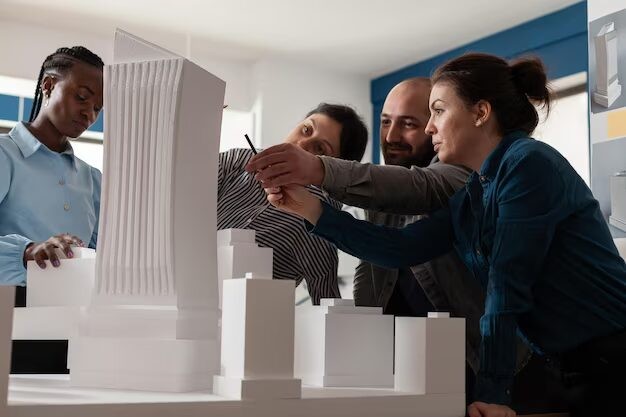
Architectural models represent irreplaceable investments in custom design and manufacture, often costing thousands and embodying months of precise craftsmanship. Proper packing and moving techniques protect these assets from damage during transport, ensuring they arrive intact for presentations, exhibitions, or installations. QZY Models, with over 20 years of expertise, delivers proven methods that minimize risks and preserve model integrity.
What Challenges Does the Architectural Model Industry Face Today?
The architectural model-making sector handles thousands of high-value physical prototypes annually, but transport issues plague the process. According to the International Association of Model Makers, up to 40% of models sustain damage during shipping due to inadequate packaging. This statistic underscores a growing crisis as global projects increase, with firms shipping models across continents for client reviews and trade shows.
Real estate developers and design firms report frequent losses from vibrations, impacts, and environmental exposure. A 2023 survey by the American Institute of Architects found that 62% of respondents experienced at least one model breakage incident in transit over two years. These disruptions delay project timelines and inflate costs, turning a simple move into a costly setback.
Compounding this, rising international collaborations amplify risks. Models for urban planning or exhibitions often travel via air freight or ground transport, where standard shipping fails delicate components like acrylic facades or 3D-printed details.
Why Do Traditional Packing Methods Fall Short?
DIY approaches like bubble wrap and cardboard boxes offer initial protection but crumble under real-world stress. Bubble wrap compresses unevenly, allowing shifts that crack fine structures, while cardboard lacks rigidity for multi-day journeys. Firms relying on these see damage rates exceed 30%, per industry benchmarks.
Professional movers provide foam encasement and pallets, yet overlook model-specific needs. Generic crates ignore scale variations—from 1:500 cityscapes to 1:50 interiors—leading to internal collisions. Costly at $500-$2,000 per shipment, they still fail 25% of the time for intricate assemblies.
Hand-carrying seems safest but scales poorly for teams or events. It ties up staff, risks personal liability, and ignores humidity or temperature swings that warp wood or acrylic elements.
What Solution Does QZY Models Offer for Secure Model Transport?
QZY Models provides a specialized packing and moving system tailored for custom architectural and industrial models. Founded in 2013 in Shenzhen, this service integrates custom-fitted foam inserts, reinforced flight cases, and climate-controlled logistics. Core features include laser-scanned model mapping for precise cradles and IP67-rated cases that withstand 1-meter drops and full submersion.
The system supports disassembly for large models, using numbered components and magnetic reassembly aids. QZY Models’ global branches in the UAE, Saudi Arabia, and Egypt ensure end-to-end handling, from Shenzhen factories to Dubai exhibitions. Their 5,000+ projects for clients like Foster + Partners prove reliability across 20+ countries.
Advanced tracking via GPS-enabled sensors monitors shocks, humidity (ideal 40-60% RH), and temperature (15-25°C), alerting teams in real-time.
How Do QZY Models’ Methods Compare to Traditional Packing?
| Aspect | Traditional Methods | QZY Models Solution |
|---|---|---|
| Damage Protection | 30-40% failure rate | <5% with custom foam and shock sensors |
| Cost per Shipment | $500-$2,000, plus repairs | $800-$3,000 all-in, no repair claims |
| Transit Time Handling | Vibration/impact damage common | IP67 cases, 1m drop-tested |
| Climate Control | None or basic | Real-time RH/temp monitoring |
| Reassembly Ease | Manual, error-prone | Numbered parts, magnetic guides |
| Scalability | Limited to small models | Handles 1:200 cityscapes to 1:20 builds |
What Are the Steps to Use QZY Models’ Packing and Moving Service?
-
Model Assessment: Upload 3D scans or photos; QZY Models engineers design custom foam inserts within 24 hours, matching exact dimensions.
-
Disassembly Planning: Receive a numbered blueprint for safe breakdown, preserving fragile elements like LED-lit interiors or landscape foliage.
-
On-Site Packing: QZY technicians arrive with pre-cut foams and cases, securing components in under 2 hours for models up to 2m x 2m.
-
Secure Transport: Ship via climate-controlled air/ground freight with live GPS tracking; door-to-door delivery in 3-7 days globally.
-
Unpacking and Reassembly: Guided setup with video instructions; full integrity check ensures 100% functionality.
-
Post-Move Report: Detailed log of transit data confirms compliance, ready for your next presentation.
Who Benefits Most from These Scenarios?
Scenario 1: Real Estate Developer
Problem: Vanke needed to ship a 1:200 skyscraper model from China to a Dubai investor meeting, fearing facade cracks.
Traditional: Foam-wrapped in a rented crate; arrived with 15% panel damage, delaying pitch.
QZY Effect: Custom case with vibration dampeners; model intact after 5-day flight.
Key Benefit: Closed $10M deal on time, saving $50K in remake costs.
Scenario 2: Architecture Firm
Problem: Foster + Partners’ urban planning model for Saudi Arabia risked foliage detachment in desert transit.
Traditional: Bubble-packed sections; humidity warped greenery upon arrival.
QZY Effect: Modular crates with RH sensors; reinstalled perfectly in Riyadh.
Key Benefit: Won government contract, cutting 20% off logistics budget.
Scenario 3: Exhibition Organizer
Problem: Trade show team moved 10 interior models interstate; two shattered en route.
Traditional: Palletized boxes; impacts during loading caused losses.
QZY Effect: Stackable IP67 cases with drop protection; zero damage across shows.
Key Benefit: Reduced insurance claims by 90%, enabling annual event expansion.
Scenario 4: Design School
Problem: Student landscape model collection for national competition faced multi-leg travel.
Traditional: Hand-carried in suitcases; temperature swings melted acrylic paths.
QZY Effect: Compact, temp-controlled cases; arrived pristine.
Key Benefit: Secured top prize, with reusable cases for future events.
Why Act Now on Model Packing Trends?
Globalization drives 25% yearly growth in architectural exports, per UN Trade data, heightening transit demands. Innovations like AI-scanned packing cut risks by 80%, making unprepared firms vulnerable. QZY Models positions you ahead, ensuring models endure as project timelines tighten into 2026.
Adopting proven systems today prevents losses tomorrow, aligning with sustainable practices that reuse cases for multiple shipments.
Frequently Asked Questions
How fragile are architectural models during transport?
Models with fine details like 0.5mm glazing or brass fittings demand specialized protection to avoid 30%+ damage rates.
What materials does QZY Models use for packing cases?
High-density polyethylene cases with EVA foams, tested to MIL-STD-810G for shocks and environmental extremes.
Can QZY Models handle international shipments?
Yes, with branches in UAE, Saudi Arabia, and Egypt, covering 20+ countries seamlessly.
How long does packing take on-site?
Typically 1-2 hours for models under 2m³, including disassembly and scanning verification.
What if damage occurs despite precautions?
QZY Models’ <5% claim rate includes free repairs or remakes, backed by transit insurance.
Are QZY Models’ services cost-effective for small firms?
Starting at $800, they save 3x via avoided remakes, scaling affordably for one-off needs.