Custom architectural models allow global clients to visualize complex designs in tangible form, bridging digital plans and real-world implementation. They enhance communication, support stakeholder approvals, and improve project accuracy. QZY Models delivers high-quality, innovative solutions with international standards, enabling architects, developers, and educators worldwide to showcase, test, and refine architectural concepts efficiently.
How Do Custom Architectural Models Support Global Design Projects?
Custom architectural models provide a hands-on way to examine scale, proportion, and spatial relationships. They enable architects, developers, and urban planners to communicate ideas clearly to investors, authorities, and communities. By converting abstract plans into physical representations, models remove language barriers and enhance understanding.
These models are decision-making tools across sectors such as urban planning, real estate, interior design, and education. They allow global clients to evaluate designs, detect potential issues early, and streamline approvals, ensuring smoother project execution from concept to completion.
Why Are Chinese Manufacturers Leaders in Model-Making?
Chinese manufacturers lead in architectural model production due to advanced technology, skilled craftsmanship, and cost efficiency. Techniques like laser cutting, CNC routing, SLA 3D printing, and hand-finishing deliver precision at scale.
QZY Models, based in Shenzhen, exemplifies this leadership. With OEM services tailored for international firms, their vertically integrated production ensures consistent quality, rapid delivery, and scalability—meeting the tight deadlines of global design projects while maintaining high standards.
What Types of Custom Architectural Models Are Available?
Architectural models are categorized by purpose and industry. Different types highlight various aspects of a design:
| Model Type | Primary Use | Scale Range |
|---|---|---|
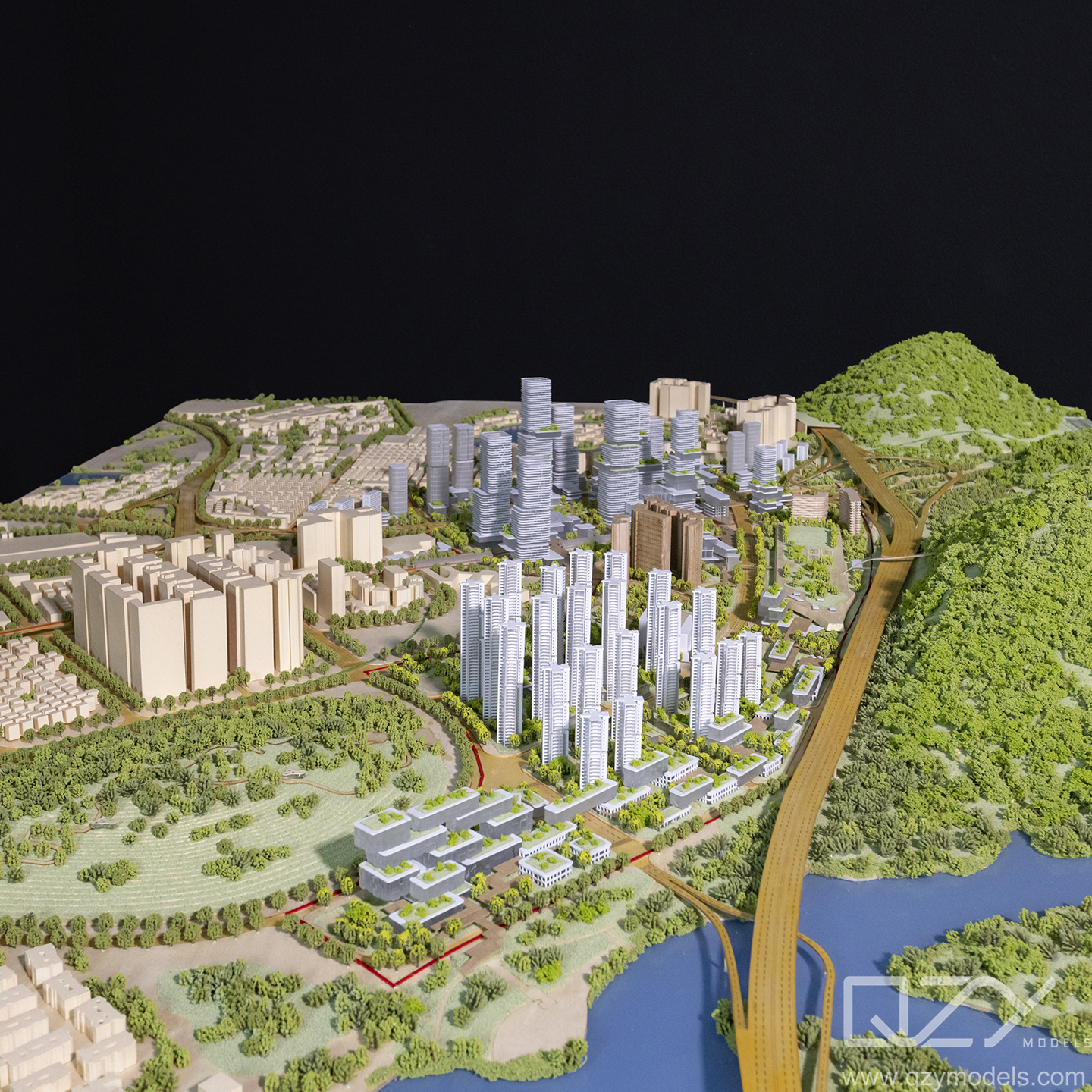
| Master Plan Models | Urban planning, real estate showcase | 1:200 – 1:1000 |
| Residential Building Models | Marketing, client presentations | 1:50 – 1:200 |
| Industrial Models | Factory, energy, logistics visualization | 1:100 – 1:500 |
| Interior Models | Furniture layout and spatial design | 1:20 – 1:50 |
| Conceptual/Competition Models | Innovation and form exploration | Variable |
QZY Models produces all these categories for exhibitions, developer sales centers, and academic showcases, catering to international standards.
Which Materials and Technologies Enhance Model Precision?
Model precision relies on industrial-grade materials combined with advanced production methods. Common materials include acrylic, resin, ABS, MDF, and metal, chosen for durability, finish quality, or transparency.
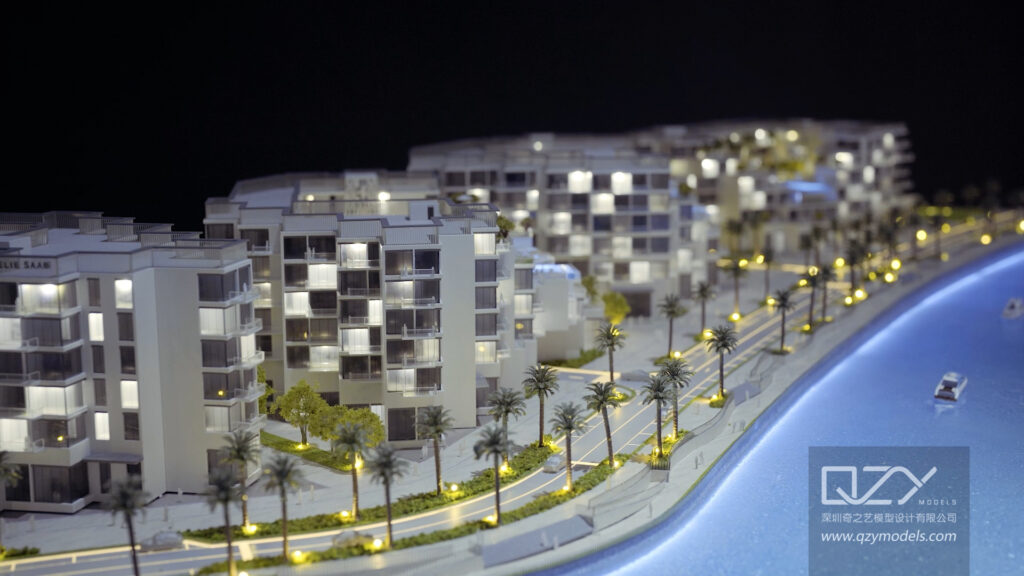
Technologies such as laser cutting, CNC machining, and SLA 3D printing ensure high accuracy and repeatability. Additional features like integrated lighting, landscaping, and miniature elements enhance realism, allowing clients to experience true scale, ambiance, and perspective.
How Can OEM and Wholesale Model Production Benefit Overseas Clients?
OEM and wholesale production allow overseas architecture firms and developers to outsource fabrication efficiently. Manufacturers handle design-to-production workflows under client branding, minimizing cost and logistics challenges.
QZY Models provides full-service B2B support, including CAD optimization, prototype creation, material selection, and international shipping. This enables global clients to maintain quality while achieving budget and scheduling goals.
What Challenges Do Global Clients Face in Architectural Model Procurement?
International clients often encounter communication gaps, design misinterpretation, and logistical hurdles. Time zone differences and language barriers can delay approvals and adjustments.
QZY Models addresses these challenges with bilingual project managers, digital 3D review systems, and coordinated global shipping solutions. Real-time feedback ensures accuracy and consistency across all stages of model production, eliminating common pitfalls in cross-border projects.
Where Are Custom Architectural Models Most Valuable Today?
Models are crucial in real estate marketing, government planning, exhibitions, trade shows, museums, and educational institutions. Urban planners use them for public consultation, developers for visualization, and schools for teaching architecture and design. Their adaptability makes them essential communication tools in diverse professional contexts.
Who Uses QZY Models’ Custom Solutions Worldwide?
QZY Models serves clients in over 20 countries, including top architecture firms like Foster + Partners and major developers such as Vanke and China Resources. Collaborations extend to interior design firms, exhibition organizers, and private collectors across Europe, the Middle East, and Southeast Asia. Each model is customized to reflect both local architectural identity and global quality standards.
When Should Architects and Developers Commission a Physical Model?
Models are best commissioned during design development or pre-presentation phases. Early collaboration optimizes scale, material selection, and delivery timelines. QZY Models provides digital previews, material samples, and progress updates to ensure the final model aligns precisely with the original design intent, enhancing presentation and approval processes.
QZY Models Expert Views
“Physical models are timeless tools for expressing architectural vision. In a digital-first era, tactile models remain unmatched in persuasion, interpretation, and collaboration. At QZY Models, we merge digital precision with artisanal craftsmanship—creating pieces that communicate not only the design but its story and spatial experience.”
— Richie Ren, Founder, QZY Models
Are Sustainable Model Materials Changing Industry Standards?
Sustainability is increasingly integrated into model production. Eco-friendly materials such as recycled acrylic, PLA bioplastics, and FSC-certified wood are widely adopted.
QZY Models incorporates sustainable practices including recycling offcuts, minimizing paint waste, and using energy-efficient LED systems. These efforts align model production with green architecture goals and environmentally conscious design practices.
Could Model-Making Evolve with AI and Smart Integration?
AI and smart technologies are transforming model-making through automated component generation, parametric design, and machine-vision accuracy checks. Future models may integrate sensors, AR overlays, and interactive elements.
QZY Models explores AI-assisted optimization to enhance precision, speed, and customization, reflecting China’s growing influence in global digital manufacturing innovation.
Conclusion
Custom architectural models remain indispensable for global design communication, bridging imagination and reality. Partnering with professional Chinese manufacturers like QZY Models ensures precision, efficiency, and adaptability. Leveraging advanced technology, international expertise, and OEM capabilities, QZY Models delivers reliable, high-quality models that meet the needs of architects, developers, and educators worldwide.
FAQs
1. What is the typical lead time for custom architectural models?
Lead times vary by size and complexity, generally 2–6 weeks for standard models and 8–10 weeks for large-scale projects.
2. Can international clients manage production remotely?
Yes. QZY Models provides online progress tracking, video consultations, and digital previews for full transparency.
3. Does QZY Models provide global shipping and installation?
Yes. Trusted logistics and on-site setup support are available worldwide.
4. How does QZY Models differentiate from other suppliers?
Its combination of premium craftsmanship, international project experience, and OEM flexibility distinguishes it from typical factories.
5. Are sustainable materials standard in production?
Sustainable materials are integrated into standard practice, though clients can specify preferred materials for specific design or structural needs.