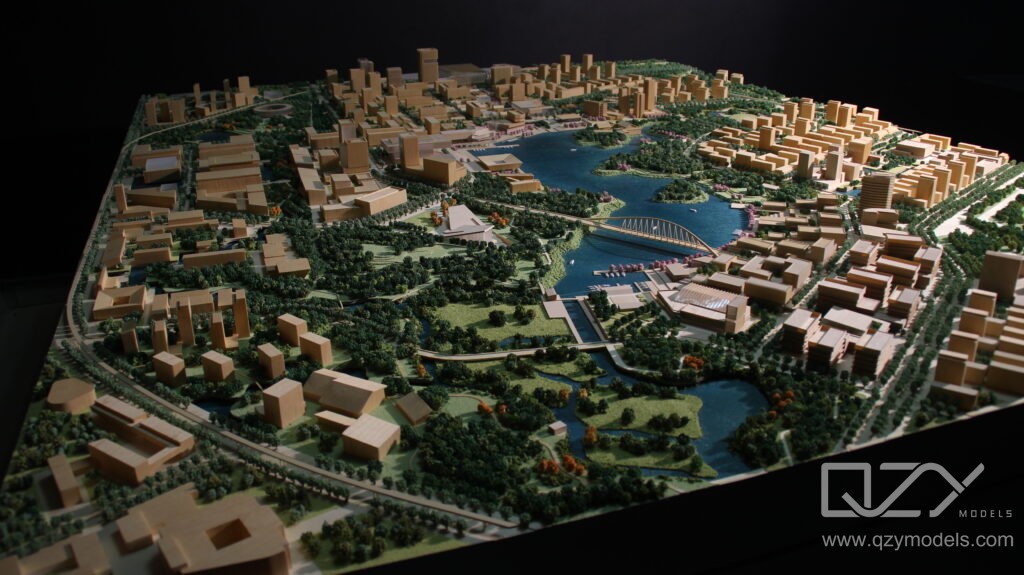
Why Do Architectural Models Need a Scale? How to Identify Model Scales and Choose the Right One for Your Project
Scaled architectural models play a vital role in presentation, evaluation, and communication. Compared with digital renderings, physical models show spatial relationships, massing, and overall design intent more intuitively.
In model making, Scale (比例) is one of the core concepts. Knowing why we use scale, how to identify model scales, and how to choose the right scale for different projects is crucial for architects, developers, and design teams when commissioning models.
{{image: architectural studio with designers discussing around physical scale models on a table}}
Why Architectural Models Use Scale
Real buildings are large—tens or even hundreds of meters tall—so we can’t build models at full size. The solution is to reduce dimensions by a fixed ratio while keeping all elements in true proportion. That’s the basic idea of model scale.
For example:
A 1:100 model means:
1 unit in the model represents 100 units in reality.
If a wall is 10 meters long in real life, it will be 10 centimeters in the model.
1:100 office and apartment models
[imageUrl1][imageUrl2]
Scaling down enables several important functions:
1. Preserve true proportions
Every element is reduced by the same ratio, so the model reflects the design accurately.
2. Show large projects as a whole
For mixed-use complexes, campus plans, or large developments, a smaller scale lets you show the full master plan on one base.
3. Communicate design more clearly
Clients, investors, and review agencies often find spatial relationships and design logic easier to grasp in a physical model than in drawings.
4. Aid design analysis
During design, architects use scaled models to study massing, spatial relationships, and context.


How to Identify a Model’s Scale
You can determine a model’s scale in several ways.
1. Check the label
Most professional models list the scale on the base or nameplate, such as:
1:50
1:100
1:200
1:500
1:1000
These numbers state the ratio between the model and the real building.

2. Measure a known dimension
If there’s no label, measure something with a standard size to infer the scale.
For example:
A door is about 2.1 meters tall in reality
If the door in the model is 2.1 centimeters tall
the scale is 1:100.
3. Use the scale of figurines
Model figures are standardized, so their height can indicate the scale.
Common references:
| Scale | Figure height |
|---|---|
| 1:50 | about 36 mm |
| 1:100 | about 18 mm |
| 1:200 | about 9 mm |
| 1:500 | about 3–4 mm |
These figures help viewers read size and proportion quickly.
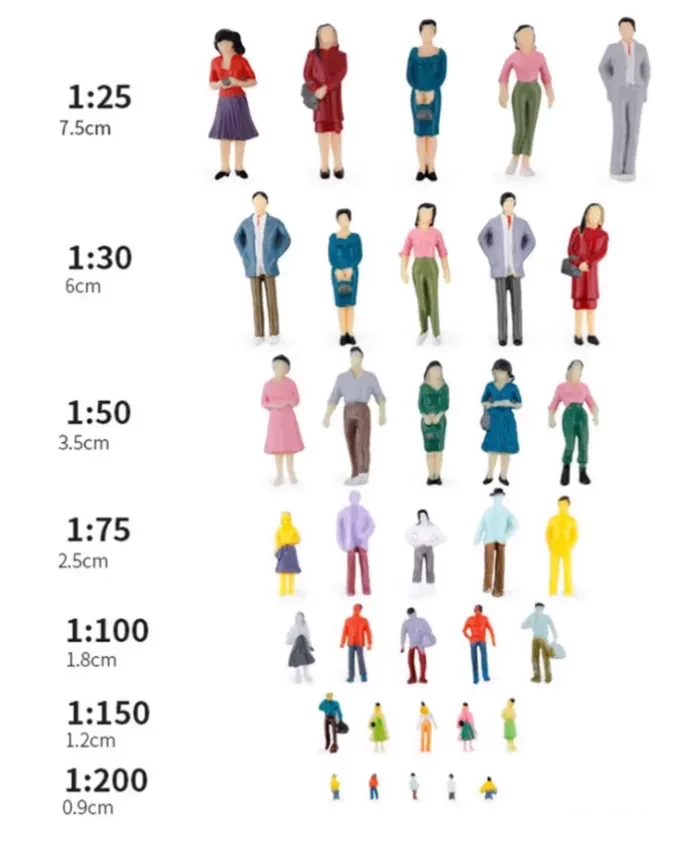
Common Architectural Model Scales
Different scales suit different project types. The choice depends on project size, required level of detail, and display space.
In general:
Larger scale → more detail
Smaller scale → broader scope
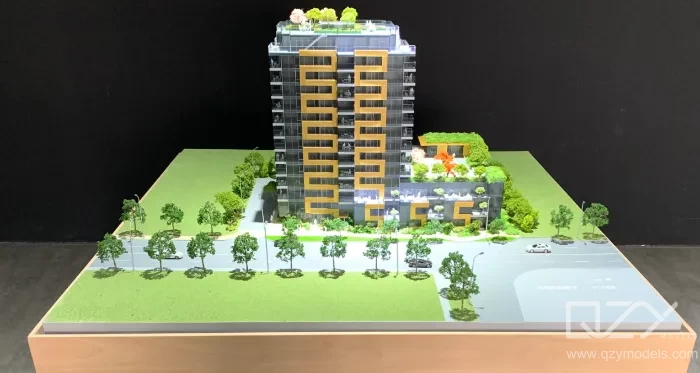
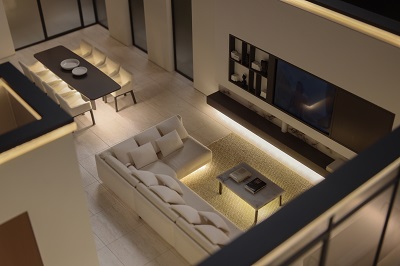
1:50 Scale — Interior or high-detail architectural models
Compared with 1:100, 1:50 is a larger scale.
Use 1:50 or even larger when you need very fine detail, such as:
1:40
1:30
1:25
1:10
1:5
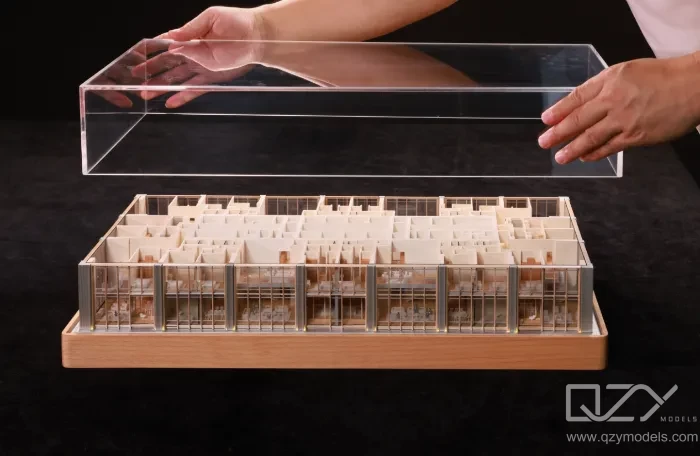
1:100 mall section
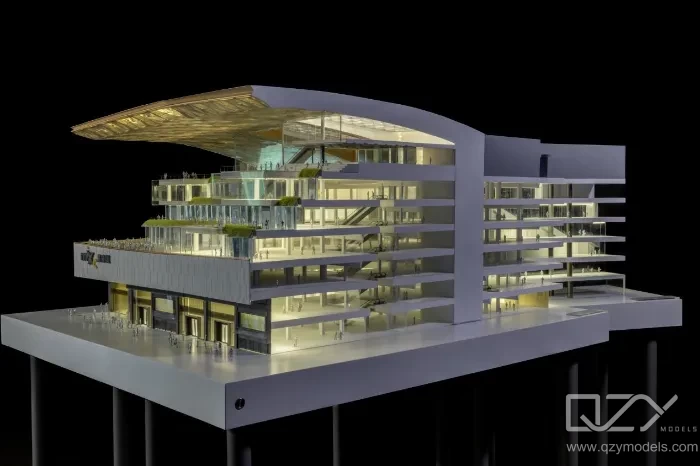
1:100 building section model
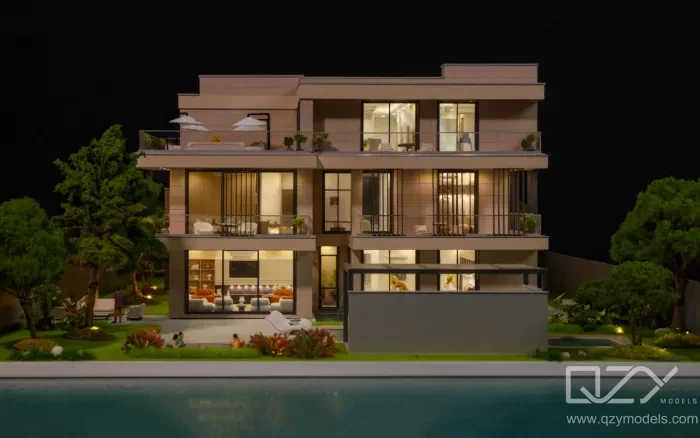
1:50 single villa model
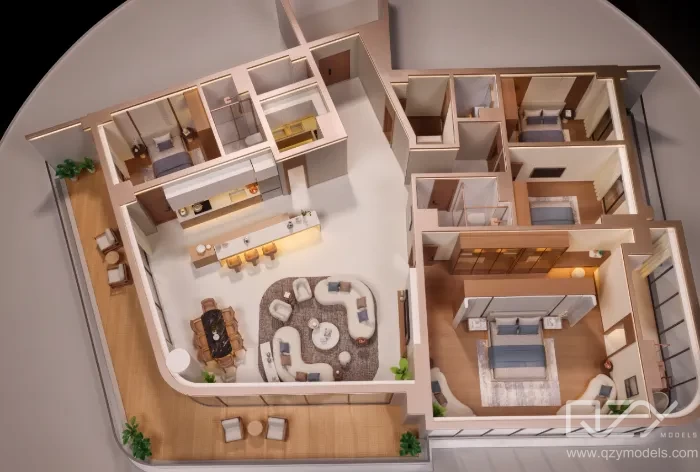
1:25 interior model
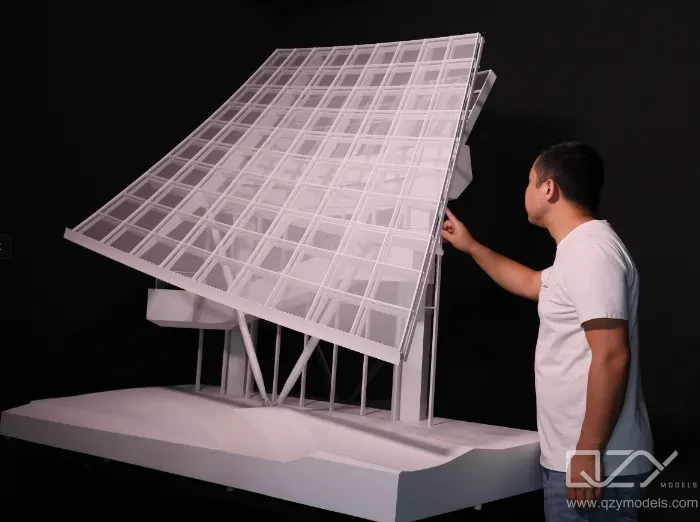
1:20 theater facade detail section model
1:8 piano gift model
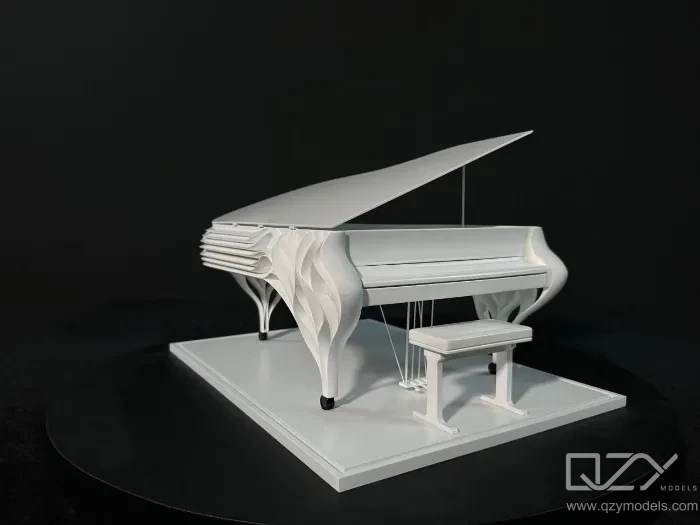
Common uses:
Interior design models
Apartment unit models
Exhibition models
Facade or section study models
Advantages:
Clearly shows furniture, lighting, materials, and layout
Accurately represents materials and construction details
This scale works well for design reviews and professional displays.
Keep in mind these models are bulky and more expensive to build.
1:100 / 1:150 Scale — Common display models
1:100 and 1:150 are among the most common display scales.
Common uses:
Residential building models
Commercial building models
Public building models
Competition models
Advantages:
Good balance between detail and overall size
Moderate footprint
Shows facade design and basic spatial structure clearly
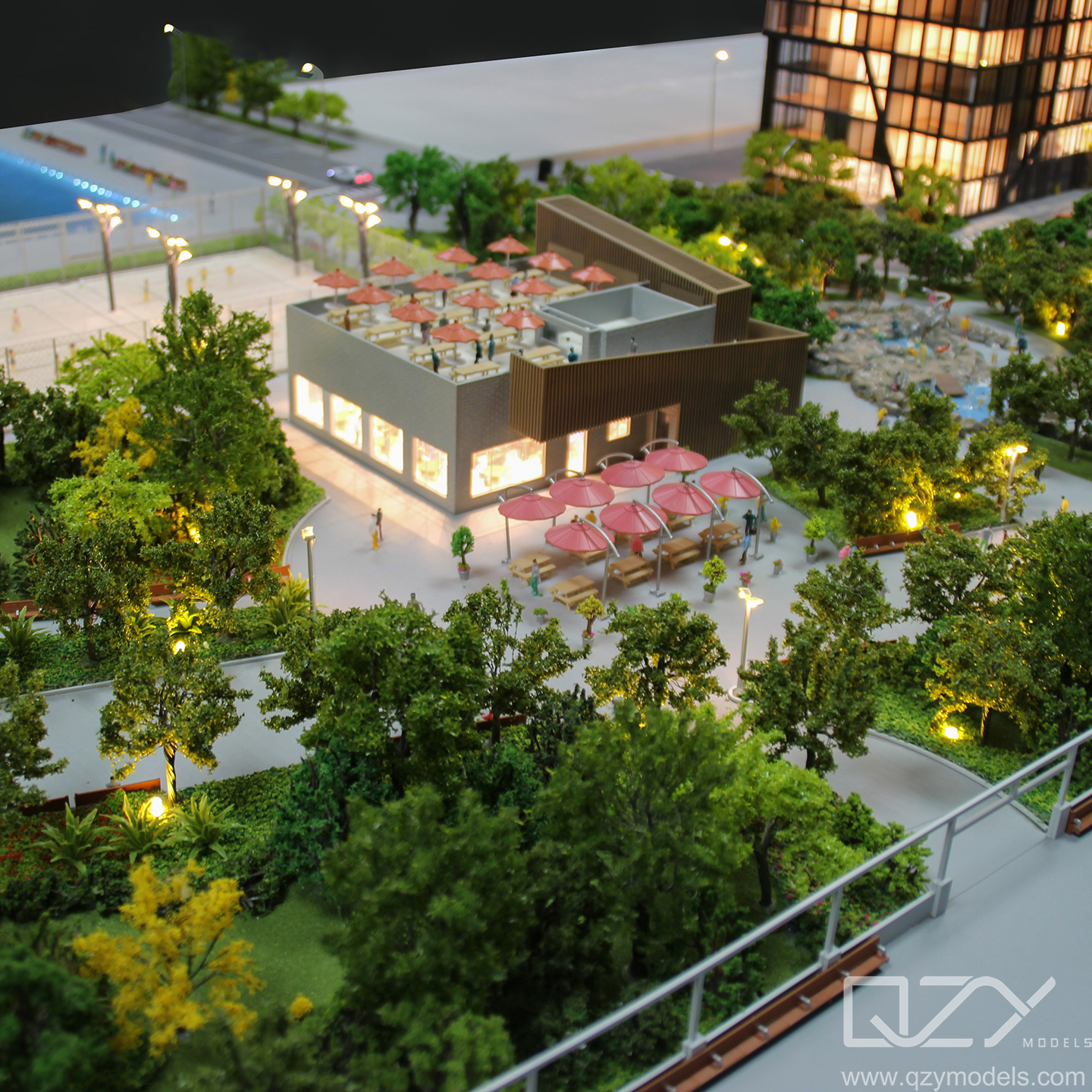
1:100 apartment model

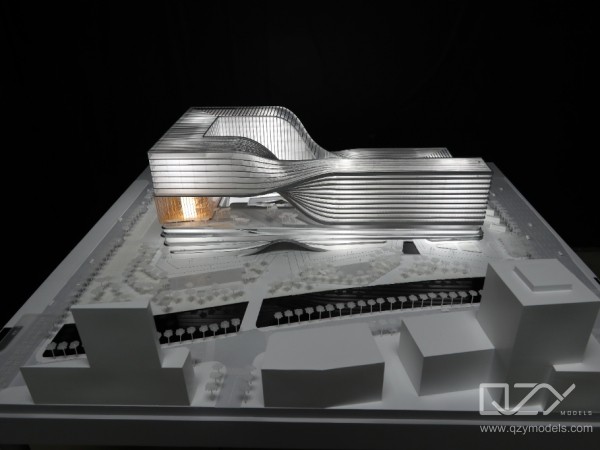
1:100 stadium model

1:150 office and apartment complex

1:200 / 1:300 Scale — Medium-scale project models
1:200 or 1:300 often show buildings together with their surroundings.
Common uses:
Residential community planning models
Medium-sized commercial project models
Urban block development models
Competition presentation models
Advantages:
Shows buildings, landscape, and public spaces together
More compact overall
Good value relative to presentation effect
1:200 residential community model

1:300 residential community model + 1:1000 city masterplan model

1:500 Scale — Masterplan models
1:500 is common for masterplans of large developments.
Common uses:
Real estate masterplan models
Mixed-use development projects
Large community projects
Urban design projects
Advantages:
Can show multiple building clusters in one model
Clearly presents roads, landscape, and functional zones
Can depict multi-level transport systems
This scale often appears in sales centers and municipal planning exhibits.
1:500 community masterplan model

1:1000 and smaller — Urban planning models
City- or region-scale plans use smaller scales.
Common uses:
City masterplans
Airport planning
Industrial park planning
Regional planning models
Advantages:
Covers very large areas
Emphasizes urban structure and zoning over building detail
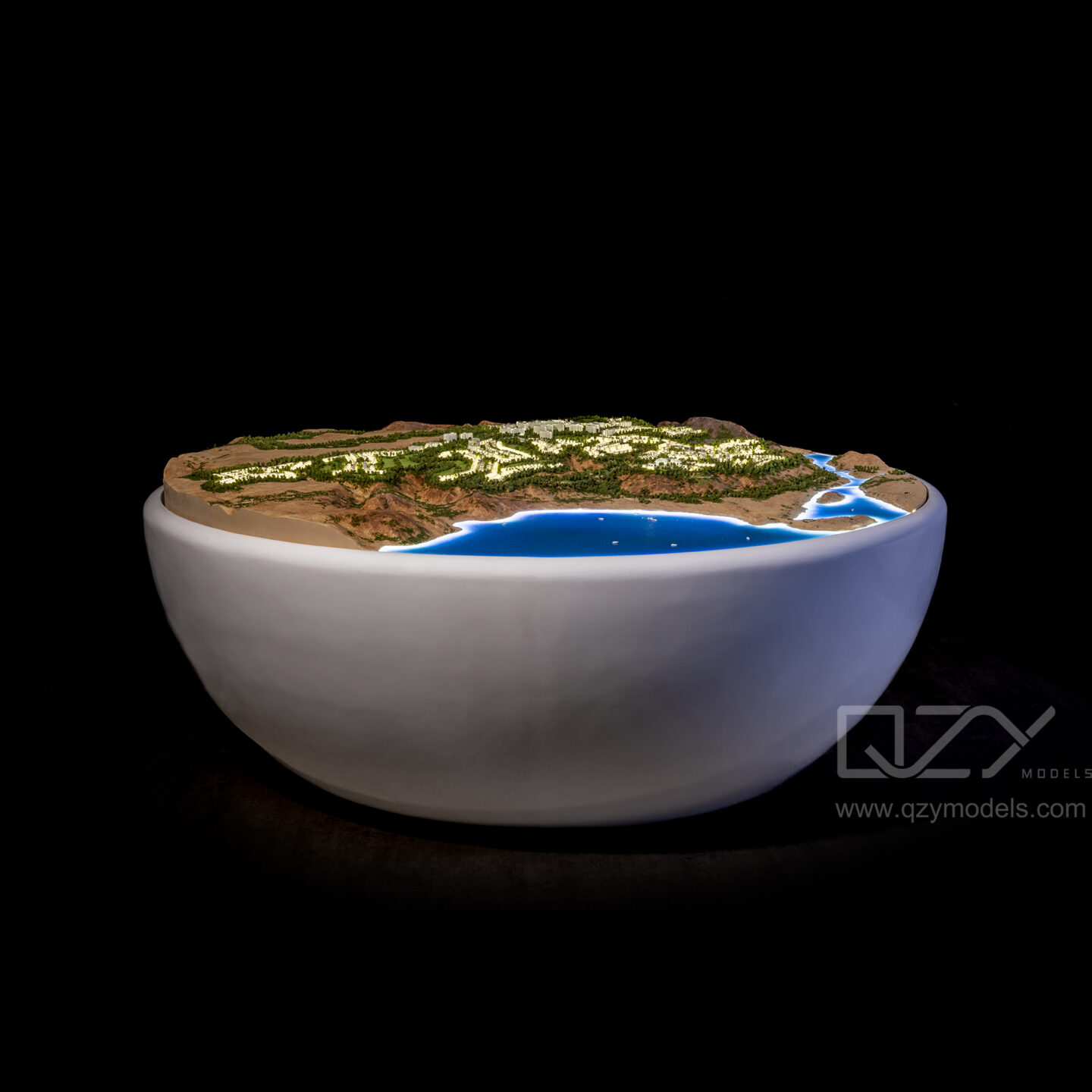
1:1000 urban planning model

1:1500 urban planning model

1:3000 urban planning model

How to Choose the Right Scale
Choosing the right scale is one of the key decisions when commissioning a model. Consider these factors together.
1. Project size
Larger projects usually need smaller scales to control cost and footprint.
For example:
Single building → 1:20–1:75
Residential community → 1:100–1:300
Large developments → 1:200–1:500
Urban planning → 1:500–1:3000
2. Detail requirements
If you need to show interiors or facade details, choose a larger scale.
High-detail scales:
1:20
1:50
1:75
1:100
Low-detail scales:
1:300
1:400
1:500
1:600
1:800
1:1000
3. Display space
Models sit in sales centers, galleries, or offices, so the available space matters.
Most display models range from 1 to 5 meters in length and width.
Size depends on:
Project size
Exhibition space
Overall budget
Make a combined assessment.
4. Budget
Larger scales usually mean:
More materials
Longer production time
Higher shipping costs
Balance presentation quality with budget.
5. Purpose
Different purposes call for different scales:
| Purpose | Recommended scales |
|---|---|
| Interior design review | 1:20–1:75 |
| Architectural display | 1:50–1:300 |
| Real estate sales display | 1:100–1:500 |
| Urban planning | 1:500–1:3000 |
Summary
Scaled models remain one of the most effective ways to present architectural design. Scale directly affects presentation, detail, and overall size.
When choosing scale, weigh project size, detail needs, display space, and budget. With the right scale, a well-made model can express the design accurately and anchor the space visually.