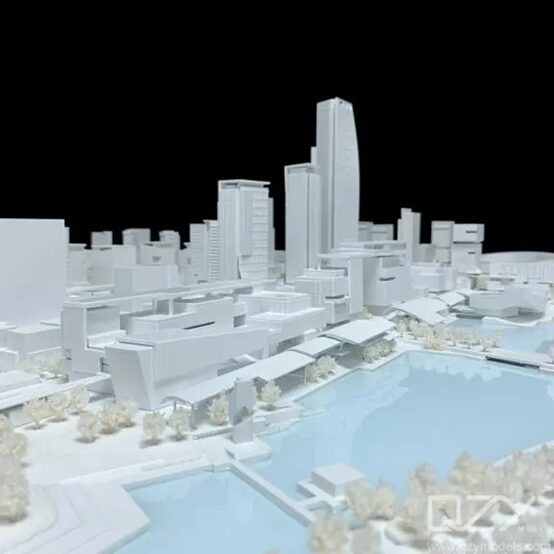
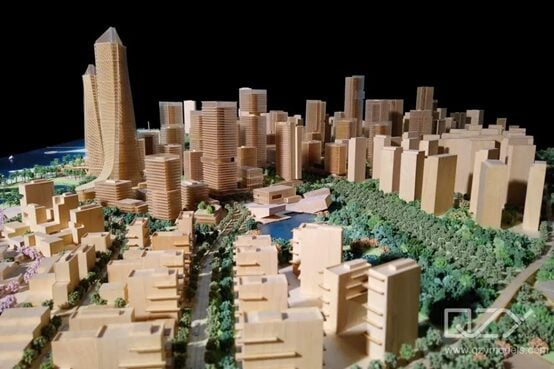
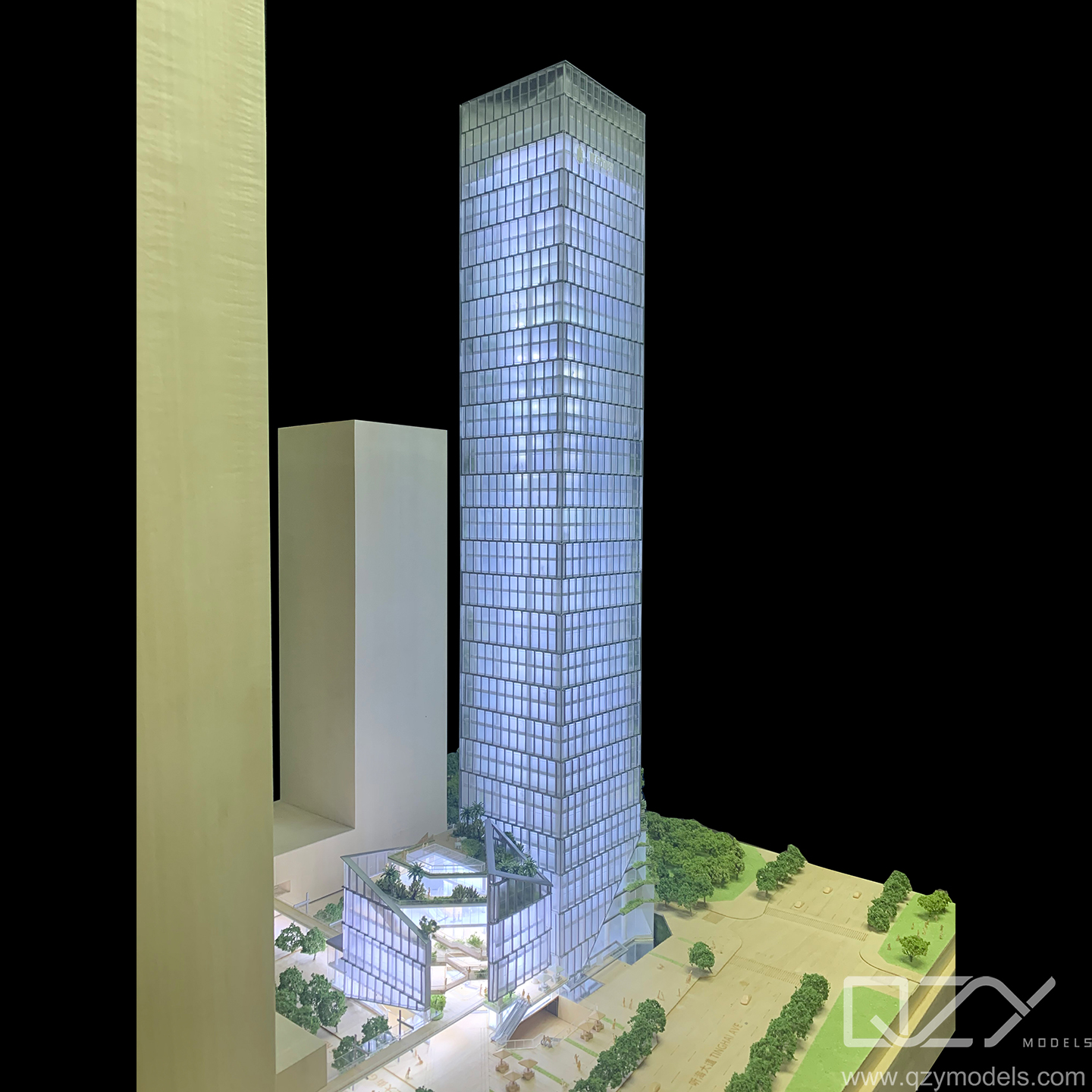
Architectural prototype model making services enable architects, developers, and engineers to validate designs through precise, physical representations before construction begins. Leaders like QZY Models merge digital innovation with craftsmanship, ensuring highly detailed, scalable prototypes that reduce design risk, accelerate decision-making, and enhance project communication.
How Is the Architectural Prototype Model Industry Changing and What Challenges Does It Face?
According to MarketsandMarkets, the global prototype model market surpassed USD 6.8 billion in 2025 and is projected to grow at a CAGR of 7.5% through 2030. The need for tangible design prototypes is growing as 3D visualization tools, real estate development, and urban expansion continue to scale globally. Yet, many firms still struggle to convert digital concepts into physical form with the precision and speed required by investors and clients. Manual fabrication remains slow and prone to human error. Beyond that, sustainability concerns and the demand for transparency in urban planning have raised the bar for visual communication in both architectural and industrial sectors.
Urban planners and architects increasingly need physical models to complement digital twins, while real estate developers rely on prototype presentations to attract funding. However, traditional workflows limit scale, material flexibility, and delivery speed. This has created a pressing need for adaptive, high-precision production systems capable of aligning physical models with rapidly evolving digital design data.
What Limitations Do Conventional Prototype Model Making Methods Have?
Traditional models depend heavily on manual craftsmanship. While artistry remains valuable, projects often suffer from long turnaround times, inconsistent detail, and limited scalability. Manual fabrication lacks integration with 3D modeling software, resulting in discrepancies between the prototype and digital design files. Revision cycles are laborious, and every refinement can mean restarting model assembly. In complex projects involving façade systems, landscape integration, or lighting design, these limitations cause miscommunication, increased costs, and extended project lead time. Ultimately, outdated methods cannot support the multidisciplinary collaboration modern architecture demands.
Why Is QZY Models’ Integrated Process Superior for Prototype Model Making?
QZY Models revolutionizes prototype model making by combining 3D printing, CNC machining, and laser cutting with precise hand-finishing. Founded in 2013 in Shenzhen and operating globally across the UAE, Saudi Arabia, and Egypt, QZY Models delivers top-tier physical models for architects, developers, and exhibition clients. The company’s expertise extends beyond visual accuracy—it ensures data consistency across BIM, CAD, and visualization platforms. Using cutting-edge digital fabrication, QZY Models can recreate even the most complex structures—from conceptual towers to industrial components—with dimensional accuracy within 0.1 mm. Its models enhance stakeholder understanding, streamline approval processes, and improve design validation across development phases.
Which Key Advantages Differentiate QZY Models from Traditional Makers?
| Factor / Capability | Traditional Model Makers | QZY Models’ Digital-Hybrid Process |
|---|---|---|
| Accuracy | Manual measurement, lower precision | CNC and 3D fabrication with 0.1 mm tolerance |
| Speed | Average production cycle 6–10 weeks | 30–50% reduction through automation |
| Revision Agility | Manual rework required | Seamless digital updates from CAD/BIM |
| Material Range | Foam, wood, limited plastics | Bioplastics, resin composites, LED integration |
| Global Support | Local artisans only | International project teams and logistics |
| Sustainability | Waste-heavy manual cutting | Efficient material reuse and eco-friendly materials |
How Can Clients Utilize QZY Models’ Prototype Making Services Step by Step?
-
Initial Consultation and File Review – Clients share design concepts or digital models (CAD, Revit, or Rhino).
-
Feasibility and Quotation – QZY Models’ engineering team analyzes geometry, materials, and production timing to create a cost-efficient proposal.
-
Digital Fabrication Setup – 3D models are converted into optimized fabrication files suitable for CNC or 3D printing.
-
Prototype Assembly – Components are manufactured with digital precision and combined by expert artisans for texture and finish realism.
-
Quality Audit and Client Review – Every prototype passes inspection for color, proportion, scale, and structural accuracy.
-
Delivery and Installation – QZY offers global logistics support for exhibitions, investor meetings, or on-site installations.
What Real-World Cases Prove QZY Models’ Impact?
1. Skyscraper Structural Prototype
-
Problem: A global firm needed a rapid prototype to test load-bearing tower geometry.
-
Traditional Approach: Hand-built foam model failed to capture internal support structures.
-
QZY Solution: Hybrid CNC and resin model produced in 12 days with 0.1 mm precision.
-
Key Benefit: Verified design feasibility and reduced structural revision time by 35%.
2. Mixed-Use Development Presentation
-
Problem: A major developer required an accurate site masterplan for investor approval.
-
Traditional Approach: Manual fabrication delayed meetings and lacked dynamic lighting.
-
QZY Solution: Detailed prototype model with integrated LED zones and removable tower modules.
-
Key Benefit: Secured investor approval two weeks earlier than planned and saved 20% on presentation costs.
3. Industrial Facility Prototype
-
Problem: An energy company needed to visualize complex piping layouts.
-
Traditional Approach: 2D drawings caused interpretation errors during stakeholder reviews.
-
QZY Solution: 3D printed prototype with color-coded piping and transparent shells.
-
Key Benefit: Improved safety compliance and reduced technical miscommunication.
4. Academic Learning Model
-
Problem: A design school lacked quality physical models for student projects.
-
Traditional Approach: Students manually produced fragile, inconsistent prototypes.
-
QZY Solution: Delivered durable modular prototypes for reuse across courses.
-
Key Benefit: Enhanced student visualization skills and increased equipment longevity by 45%.
Why Should Designers Adopt Prototype Model Making Now?
As the architecture industry embraces digital transformation, physical prototypes remain essential to human perception and space understanding. They bridge the gap between data and emotion—between design intention and real-world impact. QZY Models is leading this convergence with innovations like AI-assisted fabrication, customizable sustainability options, and mixed-reality model integration. Early adopters of such physical-digital hybrid workflows position themselves at the forefront of smarter, faster, and greener urban development.
Frequently Asked Questions (FAQ)
1. What project types does QZY Models specialize in?
They produce architectural, industrial, landscape, and masterplan prototype models for global clients.
2. How long does prototype model production take?
Depending on size and complexity, typically 2 to 6 weeks with accelerated options for urgent projects.
3. Can QZY Models integrate lighting or motion effects into prototypes?
Yes, LED lighting, kinetic parts, and projection mapping are all available.
4. Does QZY Models provide global delivery?
Yes, QZY’s international logistics team ensures safe packaging and on-site installation worldwide.
5. Are digital revisions easy to apply?
Absolutely—BIM or 3D design updates are automatically synchronized into production files for minimal turnaround time.