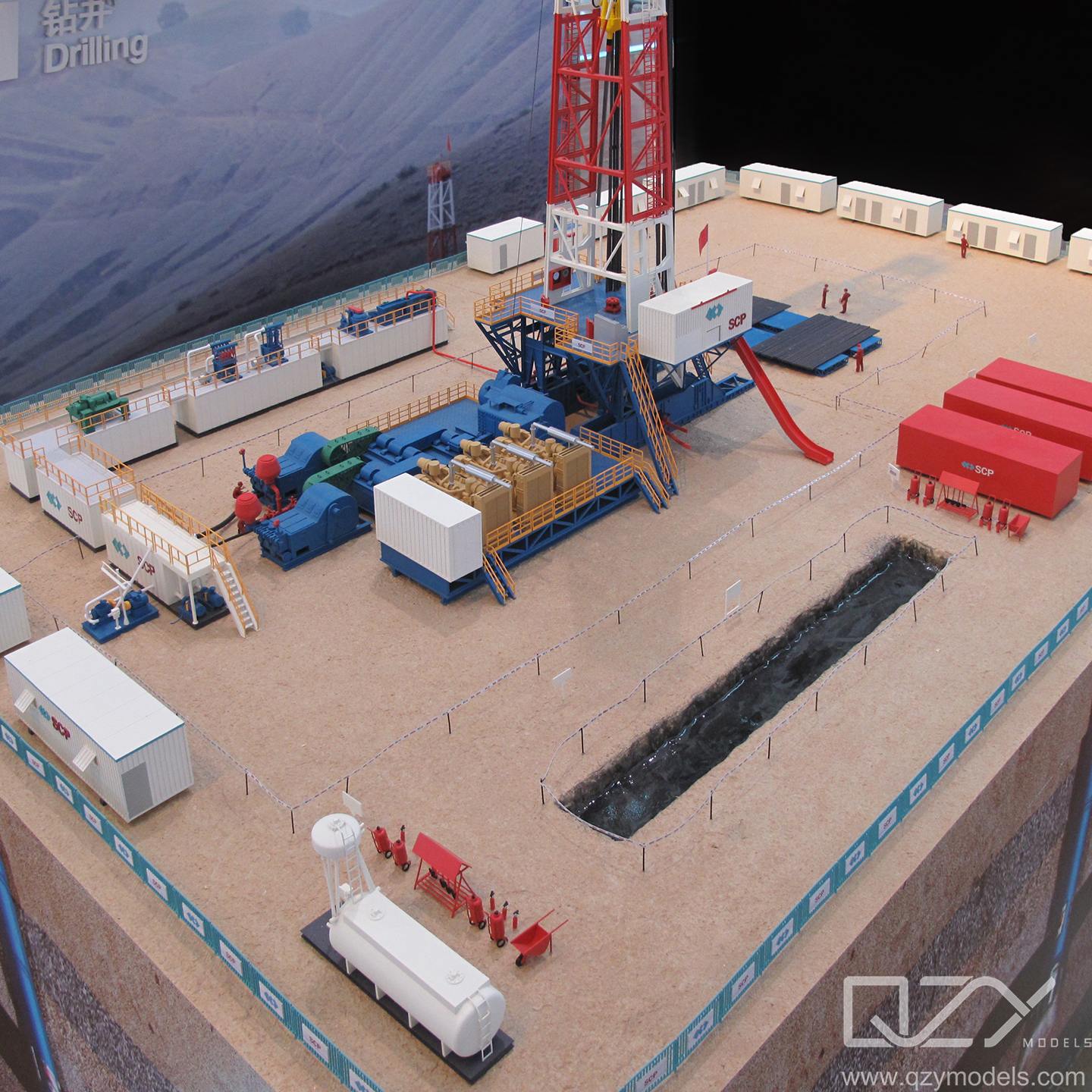
Architectural visualization models—especially those designed by QZY Models—are redefining how architects, developers, and planners bring concepts to life, improving communication, accuracy, and design efficiency in a fast-evolving global market.
How Has the Architectural Visualization Industry Evolved and What Are Its Key Pain Points?
The architectural visualization industry has grown significantly alongside global urbanization and real estate development. According to Allied Market Research, the global architectural visualization market surpassed USD 2.3 billion in 2025 and is projected to expand at over 20% annually through 2030. This growth reflects increasing demand for realistic, tangible visual communication between architects, investors, and clients. Yet the industry faces visible bottlenecks.
Firstly, despite advanced 3D rendering and digital tools, many stakeholders still struggle to interpret spaces accurately from computer screens. A report by Autodesk found that 60% of design misunderstandings stem from lack of spatial context and scale comprehension. Second, delays in project approval remain a pressing concern for developers and government authorities, often because digital visuals fail to evoke real-world spatial emotion.
Finally, as project sizes grow, communication between international teams becomes more complex. Traditional visualization tools lack the tactile realism that physical models offer. This leads to repeated revisions, extended approval timelines, and additional design-cycle costs that can increase budgets by up to 15%.
What Are the Limitations of Traditional Visualization Approaches?
While digital renders and VR walkthroughs have revolutionized design visualization, they remain limited in stakeholder engagement. Digital media alone can be abstract, especially for non-technical investors who rely on tactile experience to judge scale and aesthetics.
Traditional modeling techniques have also faced challenges. Many studios depend on manual craftsmanship with outdated cutting tools and low-grade materials. The results are models lacking consistency and precision, often unable to withstand transport for exhibitions or client demonstrations.
Moreover, the integration between digital design data and physical model fabrication remains fragmented in many smaller workshops. Errors often emerge during conversion from CAD drawings to manual construction, affecting the overall fidelity of the design presentation.
How Does QZY Models Deliver an Integrated and Accurate Solution?
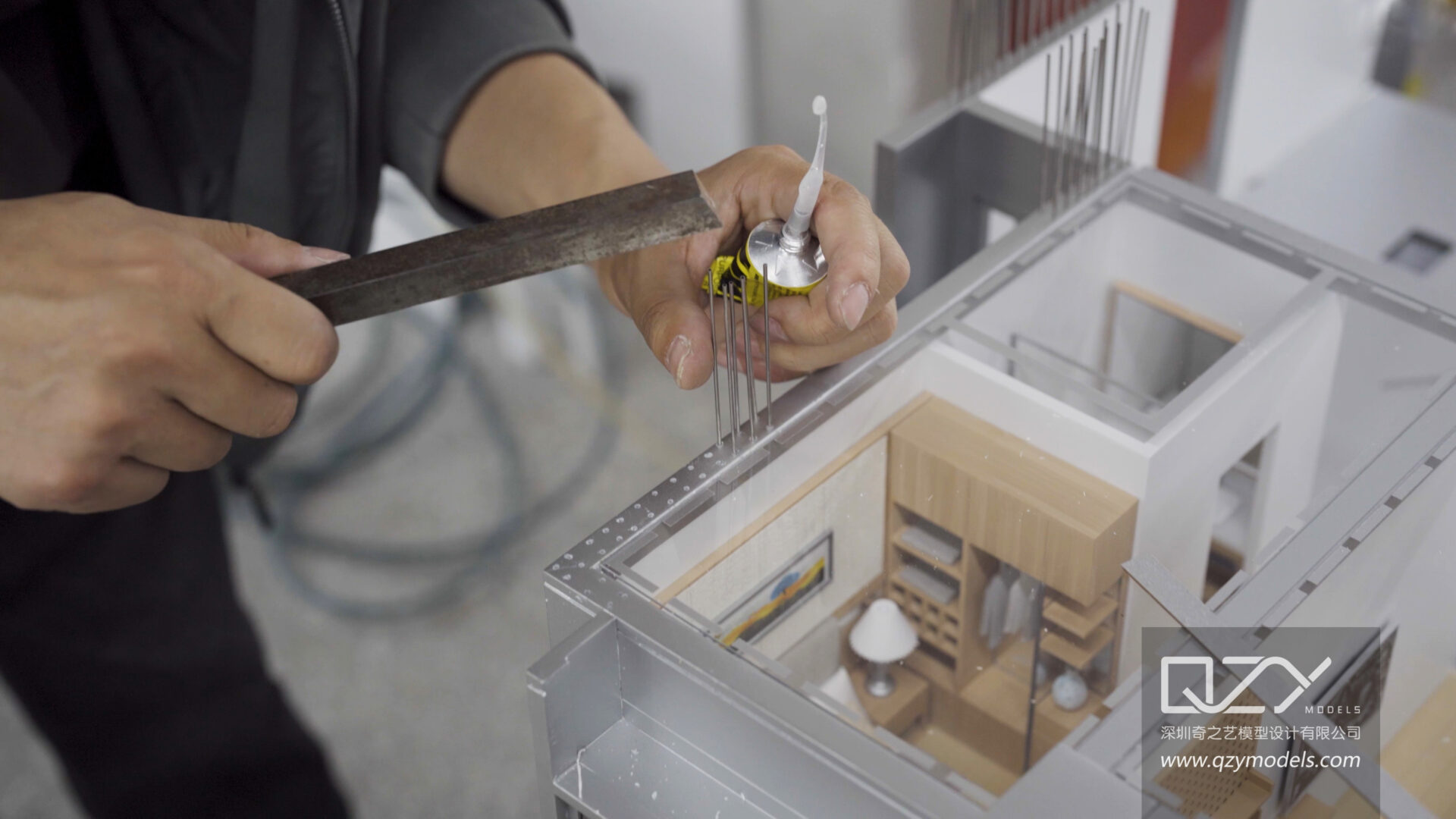
QZY Models offers a highly advanced architectural visualization modeling process, merging digital precision with artisanal craftsmanship. Using technologies such as 3D printing, CNC laser cutting, and automated lighting systems, QZY transforms architectural concepts into highly detailed physical models that convey spatial understanding instantly.
With more than two decades of experience and clients in over 20 countries, QZY Models merges aesthetics with engineering accuracy. Their approach aligns BIM and CAD inputs directly with modern fabrication systems, ensuring flawless translation from digital design to physical reality. Every model becomes both a communication instrument and a showcase piece that enhances client credibility and investor confidence.
What Advantages Do QZY Models Offer Compared to Traditional Approaches?
| Criteria | Traditional Visualization | QZY Models Architectural Visualization |
|---|---|---|
| Accuracy | Manually measured, prone to errors | CNC and 3D printing accuracy within ±0.2 mm |
| Efficiency | Long production cycles, inconsistent output | 30–50% faster fabrication through automation |
| Material Quality | Generic foam or acrylic | High-grade composites with realistic finishes |
| Presentation Quality | Fragile display models | Exhibition-grade durability with fine lighting |
| Integration | Manual transfer of digital data | Seamless BIM-to-fabrication workflow |
How Can Clients Implement the QZY Models Process Effectively?
-
Consultation and Concept Planning – QZY collaborates with clients to define scale, detailing standards, and functional objectives.
-
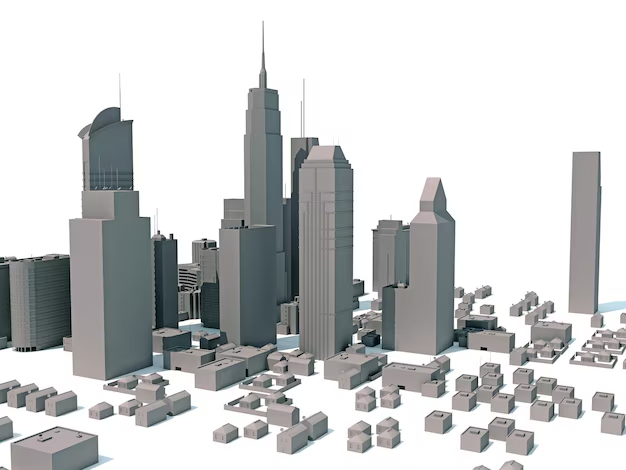
Digital Model Conversion – Project files are converted into detailed 3D data ready for precision fabrication.
-
Fabrication and Assembly – Automated CNC and laser systems handle core structure; skilled artisans finalize details.
-
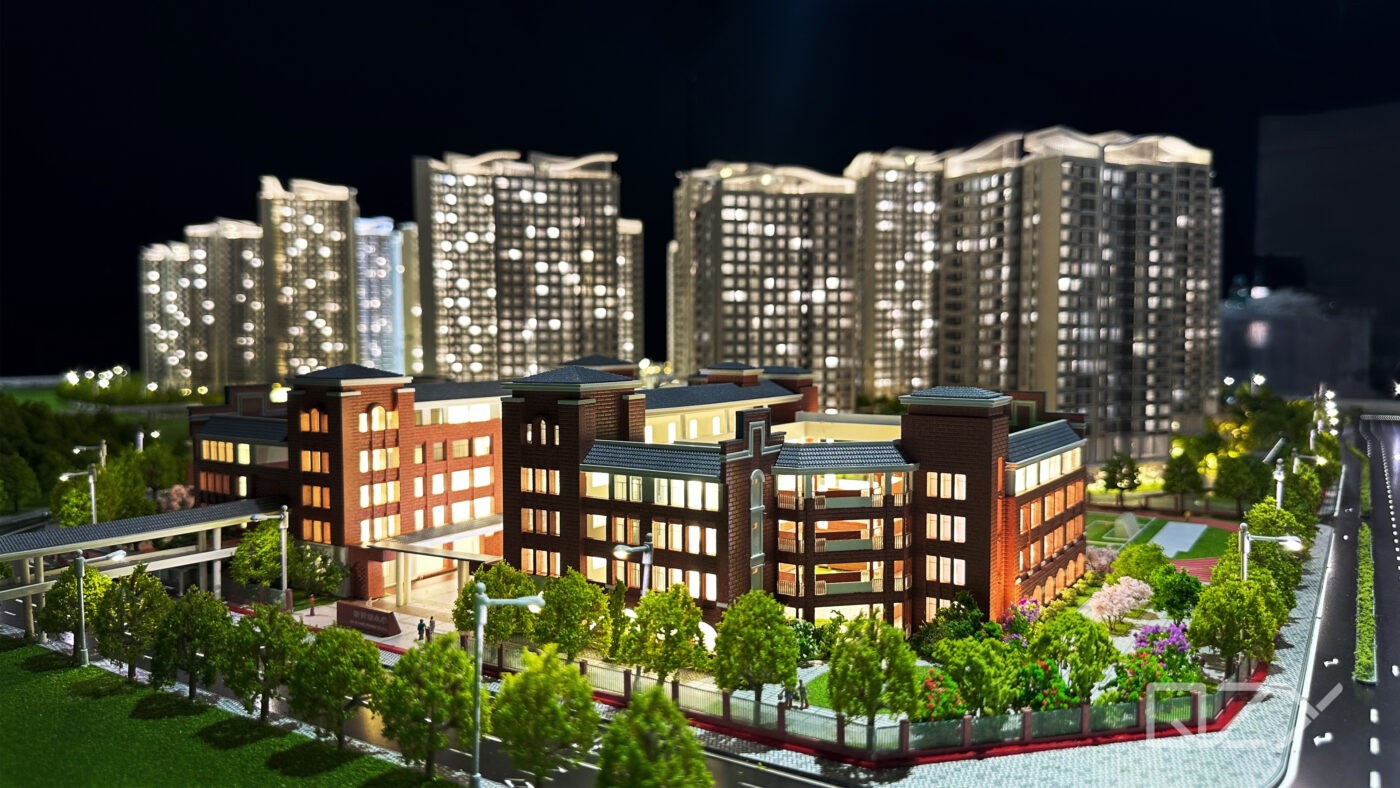
Lighting and Finishing – LED systems, landscaping, and transparent components add realism and storytelling depth.
-
Quality Control and Delivery – Every model passes a multi-phase inspection before professional packaging and global delivery.
Which Real-World Projects Showcase the Impact of QZY Models?
Scenario 1: Luxury Real Estate Development
Problem: Investors struggled to understand design proportions from renders.
Traditional Method: Relied on digital visualizations that lacked physical impact.
After Using QZY Models: Tangible model presentation accelerated investment decision by 40%.
Key Benefit: Clearer investor engagement and faster project approval.
Scenario 2: Urban Master Planning
Problem: City council faced difficulties evaluating large mixed-use projects.
Traditional Method: Used printed plans with limited spatial perception.
After Using QZY Models: Physical model improved public communication and helped secure zoning clearance.
Key Benefit: Transparent planning process and efficient approval cycle.
Scenario 3: Architectural Competitions
Problem: Competitors needed a striking presentation format to stand out.
Traditional Method: Rendered slides lacked emotional impact.
After Using QZY Models: Integrated lighting and design precision helped client win competition.
Key Benefit: Enhanced jury understanding and visual differentiation.
Scenario 4: Educational Institution Design Studio
Problem: Students depended heavily on renderings for critique sessions.
Traditional Method: 2D drawings lacked collaboration engagement.
After Using QZY Models: Physical models improved design comprehension and teamwork.
Key Benefit: Improved academic outcomes and practical spatial understanding.
Why Should Architects and Developers Adopt This Solution Now?
Architecture is becoming more global and competitive, demanding vivid communication and creative clarity. Physical visualization models, like those by QZY Models, remain irreplaceable for representing vision with tangible realism. They build trust, reduce design risks, and convey project potential instantly to decision-makers.
As cities worldwide embrace mixed-use and sustainable designs, physical models serve as the ultimate bridge between concept, collaboration, and construction. Now more than ever, integrating advanced model visualization is essential for design leadership and project success.
FAQ
1. What types of architectural models can QZY Models produce?
They create residential, commercial, urban planning, interior, and landscape architectural models tailored to client needs.
2. Are QZY Models’ productions suitable for international exhibitions?
Yes, each piece is designed with modular construction for easy transport and reassembly abroad.
3. How does QZY Models ensure precision and durability?
By combining CNC cutting, 3D printing, and high-quality composite materials under strict quality control.
4. Can models integrate lighting and motion features?
Yes. QZY Models offers programmable lighting, kinetic elements, and digital interactivity for presentations.
5. Does QZY Models offer global delivery and support?
Yes, with logistics centers in China, the UAE, and Europe, ensuring smooth international project delivery.