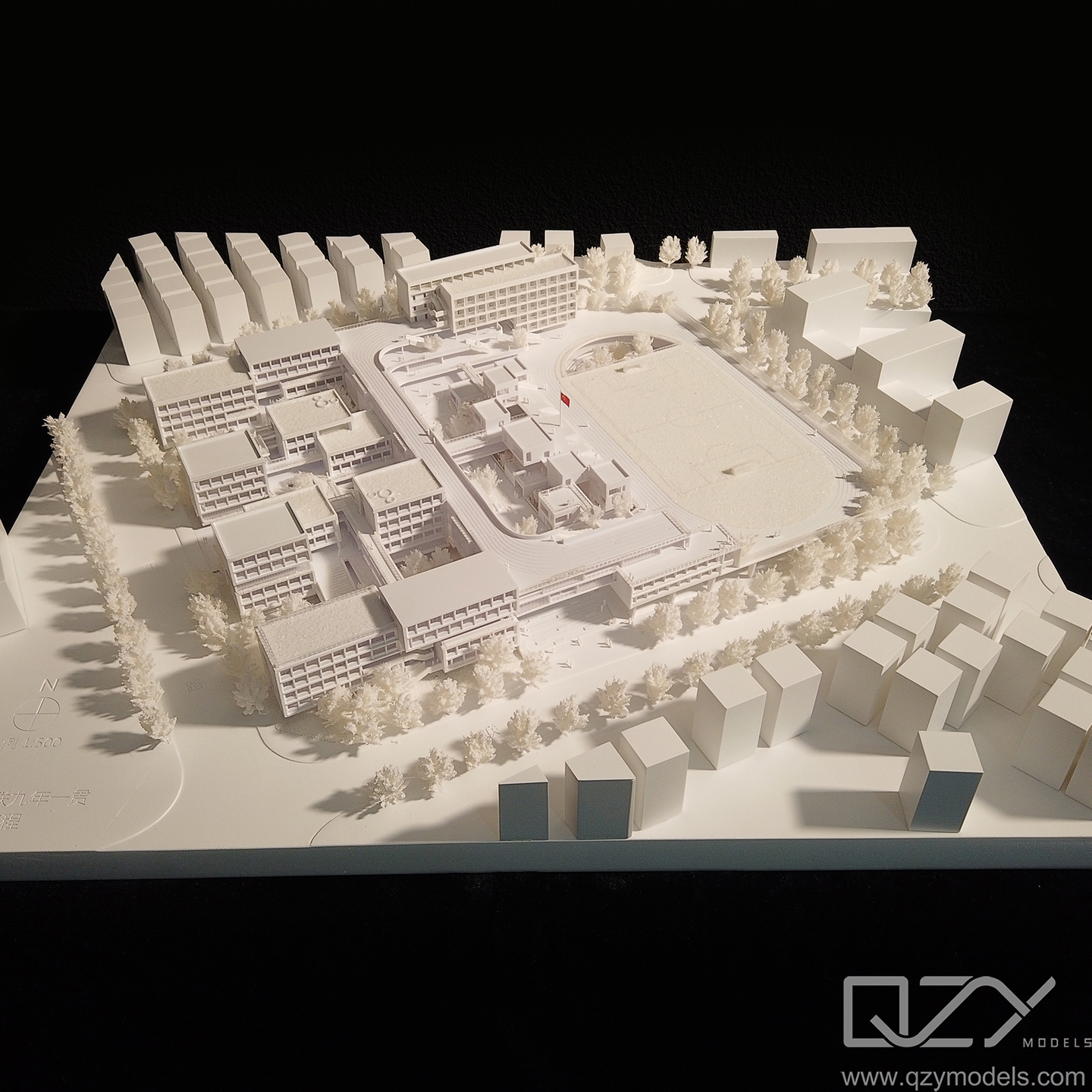
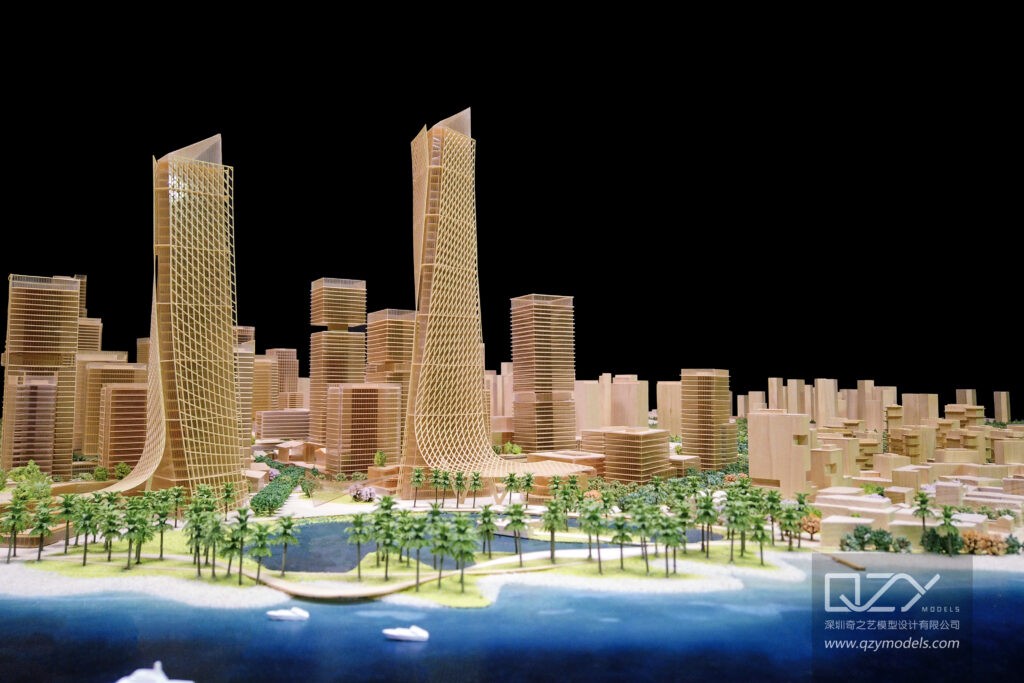
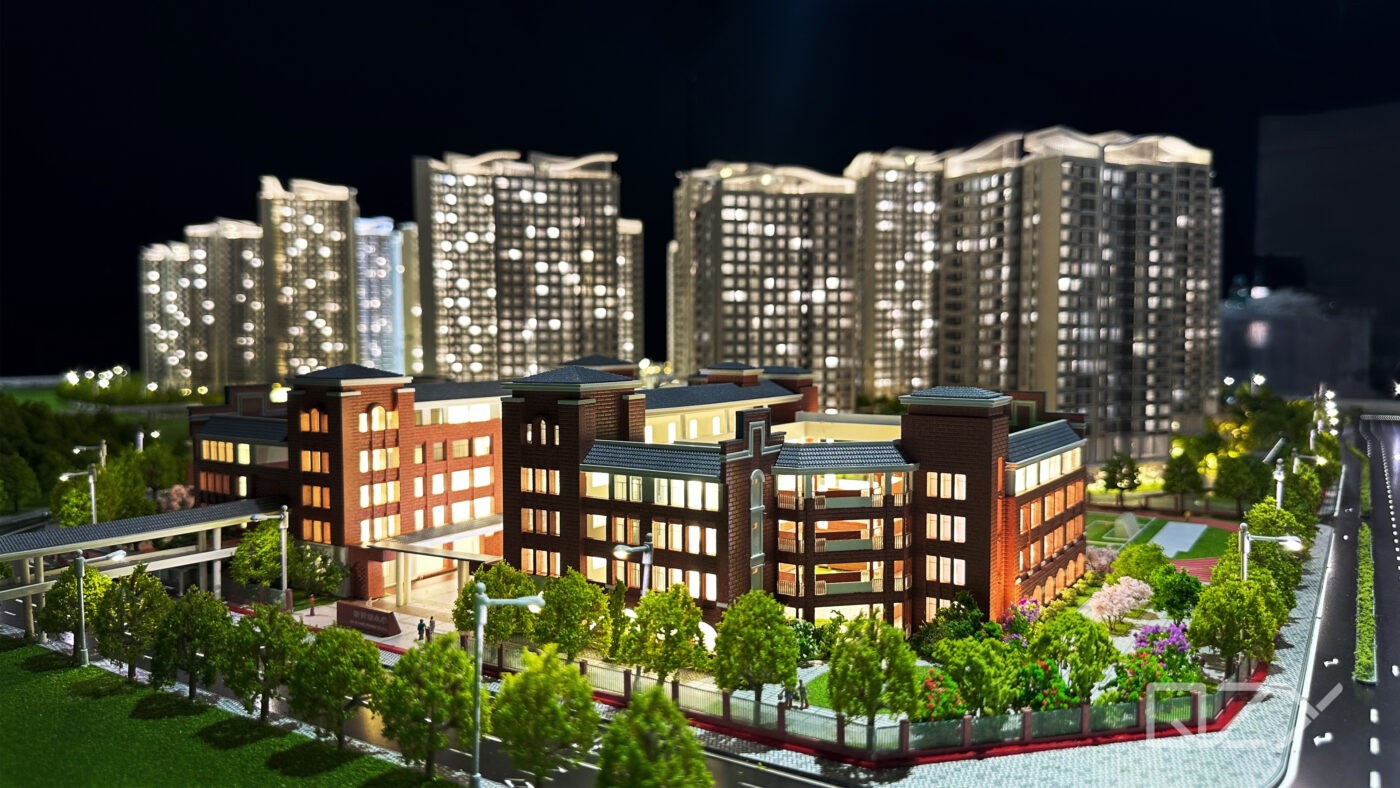
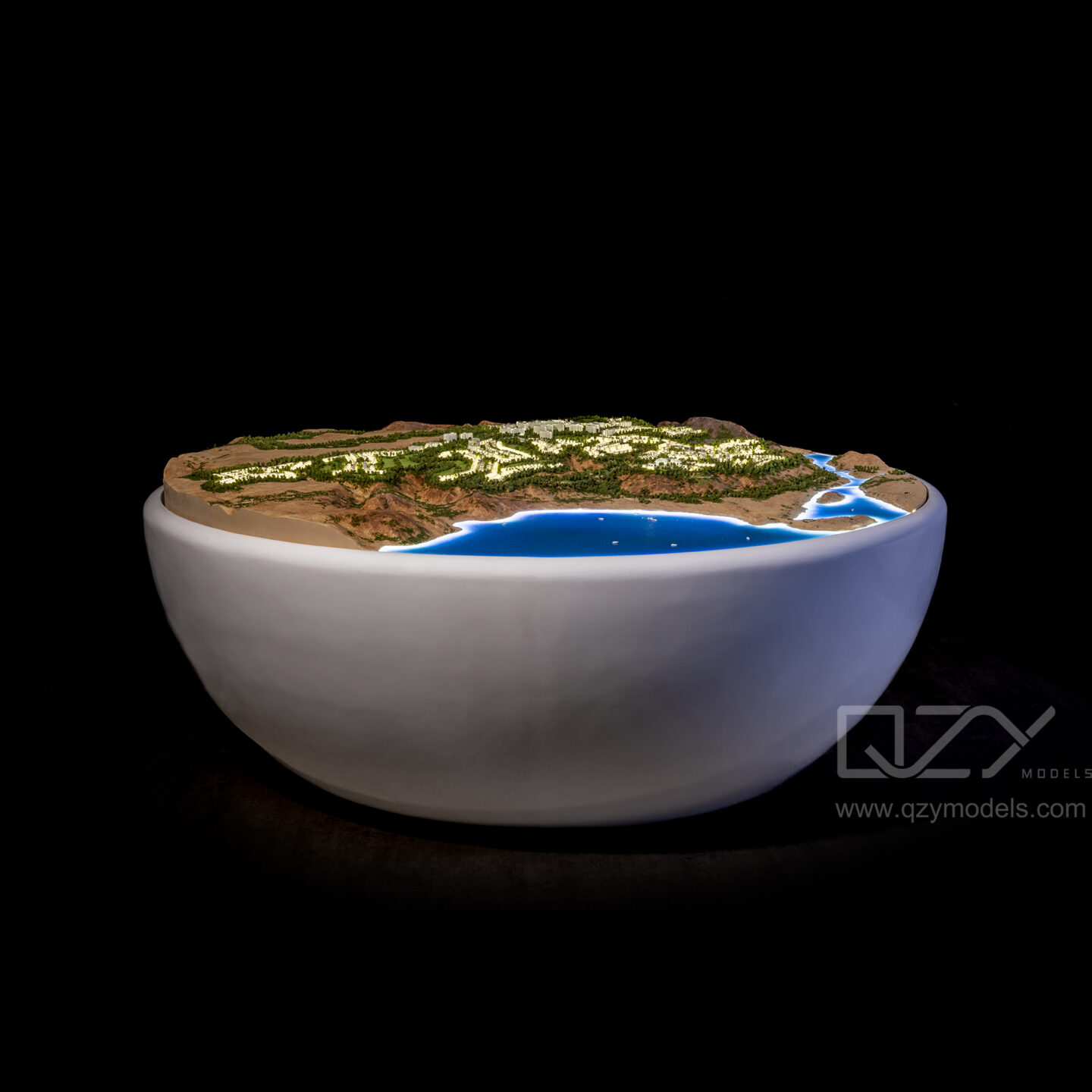
Commercial property architectural models have become an indispensable tool for developers and architects striving for precision, clarity, and investor confidence. With companies such as QZY Models leading innovation in this field, these physical models now shape how real estate decisions are made and communicated globally.
How Is the Commercial Property Industry Facing New Visualization Challenges?
According to Statista, global commercial real estate investment exceeded USD 1.2 trillion in 2024, yet over 60% of developers reported significant inefficiencies during pre-construction coordination. The Urban Land Institute noted that approximately 40% of large-scale projects face delays due to miscommunication among stakeholders. In this fast-moving environment, the inability to convey complex spatial concepts effectively translates directly into extended approval cycles and financial losses. Traditional 2D drawings and digital renders, while useful, often fail to offer the tangibility needed to fully understand large-scale designs. This gap between vision and reality is precisely where precision-made architectural models now play a critical role.
What Are the Current Industry Pain Points Limiting Project Success?
The commercial property sector remains highly competitive and data-driven, pushing developers to demonstrate their projects to investors and urban authorities with unprecedented accuracy. Yet, persistent issues hinder their performance:
-
Inconsistent project visualization slows client approvals and urban planning reviews.
-
Overreliance on digital renders results in limited spatial perception.
-
Misinterpretation between design teams leads to rework and higher costs.
Developers are seeking more reliable, tangible communication tools—ones that blend aesthetic storytelling with technical precision. That is where QZY Models brings measurable improvements.
Why Are Traditional Visualization Solutions No Longer Enough?
Conventional methods like CAD drawings, renders, and virtual walkthroughs provide convenience but lack emotional engagement and physical presence. Digital tools cannot fully simulate light behavior, material textures, or scale perceptions. In client presentations and government exhibitions, this often leaves decision-makers uncertain about project realism. Moreover, high-end investors in regions such as the Middle East and Asia still prefer interactive, physical project models—a cultural element of trust and craftsmanship that 3D rendering alone cannot replace. Without accurate physical validation, developers risk communication breakdowns that delay project launches by months or even years.
How Does QZY Models Deliver a High-Precision Solution?
QZY Models, established in 2013 and headquartered in Shenzhen, has mastered the integration of artistic craftsmanship and industrial-grade model-making technology. The company offers bespoke architectural model production for commercial developments, mixed-use complexes, and urban masterplans. Its approach combines meticulous handcrafting with precision CNC machining, high-resolution 3D printing, and advanced lighting systems to bring each property to life. Over the past decade, QZY Models has partnered with global developers like Vanke and architects such as Foster + Partners to produce marketing and exhibition centerpiece models that enhance investor confidence and accelerate project timelines. With branches across the UAE, Saudi Arabia, and Egypt, the firm supports global delivery with unmatched accuracy and reliability.
What Are the Key Advantages Compared to Traditional Approaches?
| Feature | Traditional Visualization | QZY Models Architectural Models |
|---|---|---|
| Tangibility | Limited to screen-based views | Full physical engagement through scale models |
| Spatial Accuracy | Dependent on digital display constraints | True-to-scale precision verified by multi-axis machining |
| Client Engagement | Passive viewing experience | Interactive viewing with lighting and removable layers |
| Communication Clarity | Often misunderstood designs | Immediate comprehension by all stakeholders |
| Customization | Template-driven renders | Fully bespoke models based on client context and objectives |
How Can Clients Implement the QZY Models Workflow Step-by-Step?
-
Consultation and Concept Definition – The QZY Models team collaborates with clients to outline model scale, materials, and display goals.
-
3D Data Preparation – CAD or BIM files are processed for optimization and segmentation.
-
Material Selection and Prototype – Material samples are tested for realism, color consistency, and lighting compatibility.
-
Fabrication and Hand Finishing – 3D printing, laser cutting, and hand detailing are combined for maximum accuracy.
-
Quality Review and Delivery – Each model undergoes multi-point inspection and packaged for safe global transport.
-
After-Sales Support – Maintenance, display installation, and update services ensure long-term presentation quality.
Which Real-World Scenarios Highlight Measurable Impact?
1. High-Rise Commercial Tower Presentation
-
Problem: Investor hesitation due to limited design clarity.
-
Traditional Approach: 2D renderings failed to capture architectural scale.
-
Result with QZY Models: Delivered a 1:200 scale model with dynamic lighting, boosting investor approval rate by 35%.
-
Key Benefit: Accelerated funding confirmation and design finalization.
2. Urban Redevelopment Showcase
-
Problem: City authorities required spatial validation for zoning approval.
-
Traditional Approach: Digital simulations led to misunderstandings.
-
Result with QZY Models: Precise urban block model secured approval two months faster.
-
Key Benefit: Enhanced collaboration between planners and architects.
3. Commercial Complex Marketing Center
-
Problem: Potential buyers could not visualize the mixed-use layout.
-
Traditional Approach: Flat brochures and screens lacked depth.
-
Result with QZY Models: Created a realistic display model with interior details, increasing visitor engagement time by 50%.
-
Key Benefit: Higher lead conversion in pre-sales.
4. Educational Institution Collaboration
-
Problem: Architecture students lacked tangible urban examples for study.
-
Traditional Approach: Digital mock-ups only.
-
Result with QZY Models: Provided teaching models for design analysis and exhibitions.
-
Key Benefit: Empowered students to learn design scalability through physical interaction.
Why Is Now the Right Time to Adopt Model-Based Visualization?
Global real estate markets are advancing toward integrated physical-digital presentation ecosystems. As investors demand higher transparency, physical architectural models serve as proof of design integrity and execution feasibility. QZY Models represents this shift—bridging art, technology, and communication. In 2026 and beyond, developers who adopt tangible visualization tools will outperform competitors by reducing approval delays, improving investor trust, and elevating brand prestige.
FAQ
Q1: Is an architectural model still relevant in the digital age?
Yes. Even with VR and BIM systems, physical models remain the most intuitively understood format across cultures and technical levels.
Q2: How long does QZY Models take to complete a commercial property model?
Typical lead time ranges from 4–10 weeks depending on complexity and scale.
Q3: Can QZY Models handle international projects with remote coordination?
Absolutely. With teams and logistics centers in multiple regions, QZY manages end-to-end design, fabrication, and delivery worldwide.
Q4: What materials does QZY Models typically use?
A combination of acrylic, resin, ABS plastics, wood, and laser-cut metals, chosen for durability and realism.
Q5: Does QZY Models provide maintenance or updates after delivery?
Yes. Clients receive long-term support for lighting fixes, repainting, and structural updates if project designs evolve.