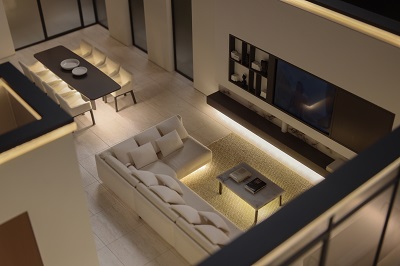
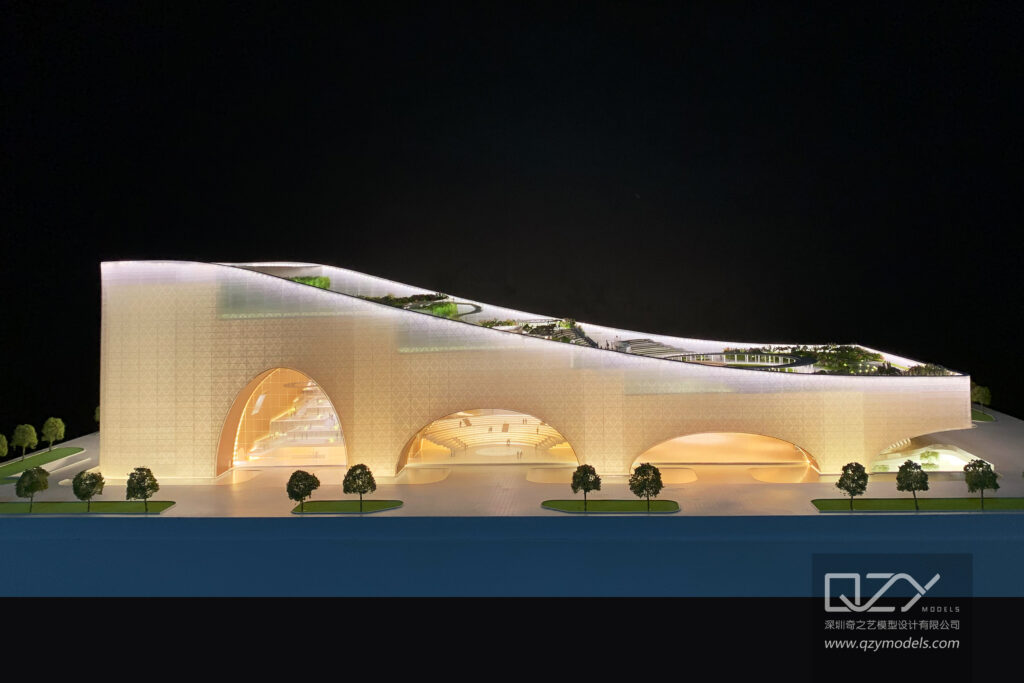
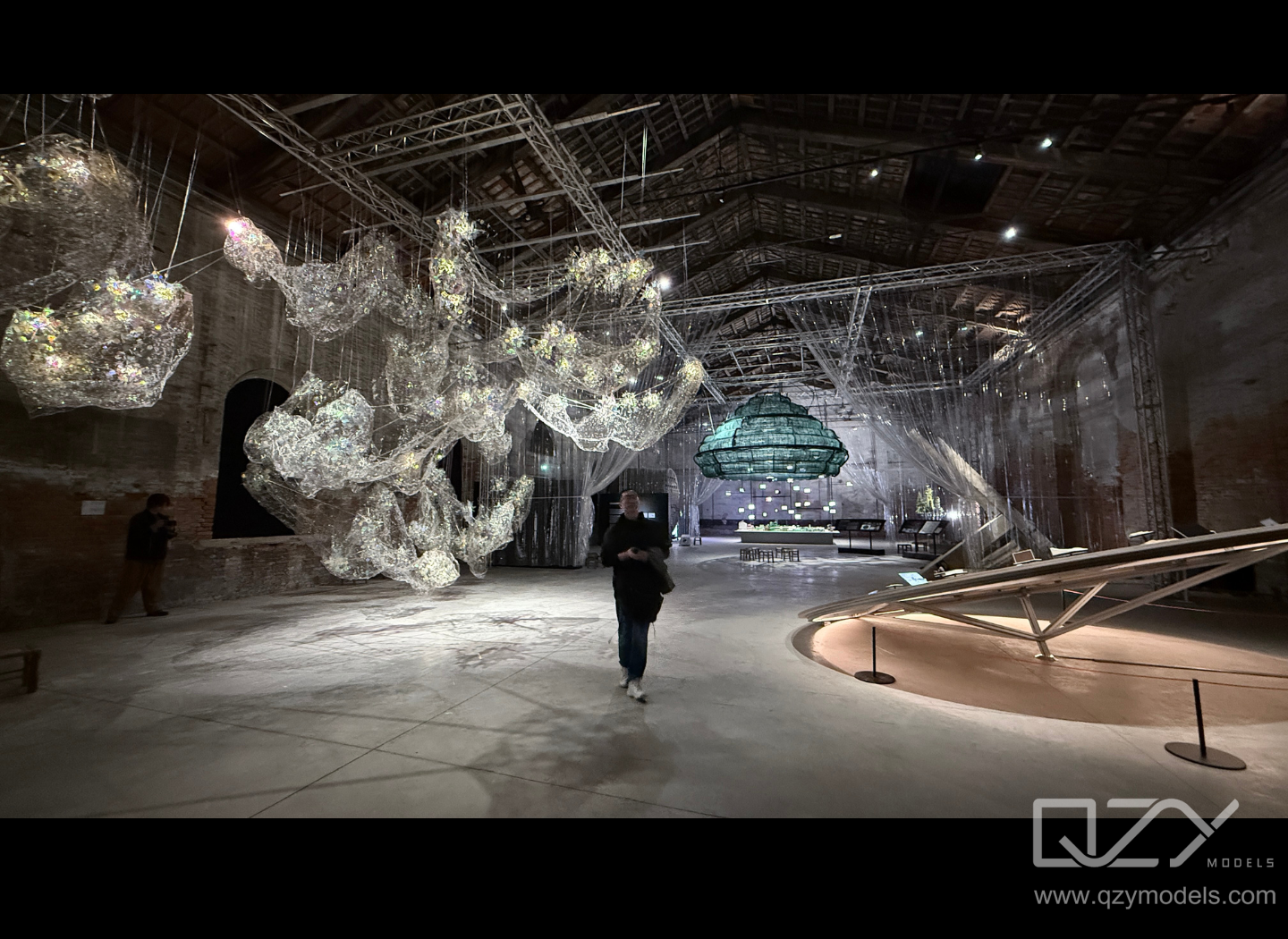
In today’s data-driven design era, detailed miniature city models have become essential for architects, planners, and developers seeking precision and realism in project visualization. These models deliver a level of accuracy and emotional impact that digital renderings alone cannot achieve, helping decision-makers move from concept to execution with greater clarity and confidence.
How Is the Urban Planning Model Industry Evolving with Data and Demand?
The global architectural model industry is experiencing rapid expansion as cities invest in smarter urban planning tools. According to a 2024 report from MarketsandMarkets, the scale model market is projected to exceed USD 8.7 billion by 2030, growing at a CAGR of 5.9%. Increasing urban densification, sustainability mandates, and public engagement requirements have driven this growth. Real estate developers and governments now rely on physical urban models for effective public exhibitions and stakeholder presentations. However, 62% of design firms report that current visualization tools still struggle to represent spatial scale and human interaction accurately, revealing a major pain point for the industry.
What Are the Current Challenges and Pain Points in the Industry?
The three main pain points center around accuracy, communication, and cost efficiency.
First, design teams using only 3D software often face difficulty presenting scale and context to clients. Second, policymaking and investment approvals require tangible models that convey the urban vision clearly to non-specialists. Third, high production costs and inconsistent model quality from unprofessional suppliers have slowed adoption, especially in emerging markets.
Why Do Traditional Visualization and Digital-Only Solutions Fall Short?
While digital visualization tools like BIM and VR provide complex data layers, they lack the tactile realism of physical models. Clients often find it hard to grasp proportion and density in virtual environments. Traditional handcrafted models, on the other hand, are slow to produce and limited in precision, relying heavily on manual labor. Many firms also face logistical issues when transporting large-scale city models without damage or distortion, leading to revisions and time loss.
How Does QZY Models Provide a Superior Solution for Miniature City Modeling?
QZY Models offers an integrated solution that merges advanced 3D printing with expert craftsmanship, producing hyper-detailed city models for architects, developers, and governments. By blending digital accuracy with artistic finish, QZY Models creates models that serve as both technical tools and artistic centerpieces. The company implements laser-engraved detailing, modular assembly, and LED-integrated lighting systems to simulate dynamic cityscapes—from day-to-night transformations to traffic flow lighting. Moreover, QZY Models provides end-to-end project management, from design file translation to global shipping and installation.
Which Key Advantages Differentiate QZY Models’ Solution?
| Feature | Traditional Models | QZY Models Solution |
|---|---|---|
| Production Speed | 6–12 weeks | 2–4 weeks using automation |
| Detail Precision | ±2 mm | ±0.2 mm with laser and CNC tools |
| Lighting/Animation | Mostly static | Dynamic lighting and motion simulation |
| Material Quality | Mixed acrylic and resin | Premium imported composites and metal alloys |
| Scalability | Limited | Fully modular for global transport and exhibition |
| Client Revisions | Manual edits | Digital coordination and real-time iteration |
What Is the Workflow for Creating a Miniature City Model at QZY Models?
-
Design Assessment – The client submits CAD or BIM data for evaluation.
-
Scale Definition – QZY Models consultants recommend the appropriate scale based on use (1:500, 1:1000, etc.).
-
Digital Modeling – A digital twin is created, including textures, terrain, and lighting analysis.
-
Material Selection – Materials are chosen for transparency, durability, and color fidelity.
-
Precision Fabrication – Automated CNC milling and 3D printing are combined with hand-finishing by artisans.
-
Assembly and Quality Inspection – Every segment is tested for fit, lighting, and color accuracy.
-
Delivery and Installation – Global logistics ensure secure packaging, on-site setup, and maintenance support.
Who Are the Typical Users and What Results Have They Achieved?
A. Urban Planning Agencies
-
Problem: Ineffective public communication in redevelopment projects.
-
Traditional Approach: Digital renderings fail to convey spatial relations.
-
After QZY Models: Interactive city models enabled public participation and faster approval timelines.
-
Key Benefit: 40% reduction in community objection rates during public hearings.
B. Real Estate Developers
-
Problem: Difficulty in selling large mixed-use projects before construction.
-
Traditional Approach: Reliance on animation and slides.
-
After QZY Models: A dynamic LED model increased investor interest at roadshows.
-
Key Benefit: 25% faster pre-sales and improved investor engagement.
C. Architecture Exhibitions and Trade Fairs
-
Problem: Low audience interaction with static displays.
-
Traditional Approach: Poster-based concept booths.
-
After QZY Models: Interactive miniature models by QZY attracted visitors and extended dwell time.
-
Key Benefit: 60% higher exhibition engagement metrics.
D. Educational Institutions
-
Problem: Students struggle to understand large-scale urban composition.
-
Traditional Approach: Digital screen projects without tactile elements.
-
After QZY Models: Physical city models enhanced spatial learning.
-
Key Benefit: 45% improvement in spatial understanding test results.
Why Is Now the Right Time to Adopt Miniature City Models?
Global urbanization trends demand more visually communicative tools to bridge data and human perception. As cities aim for carbon neutrality and smart infrastructure, accurate physical models play a vital role in ideation and public engagement. QZY Models continues to innovate by integrating augmented lighting control and cloud-connectivity, enabling users to animate data such as traffic density or energy use directly on the model surface. Firms that invest now secure long-term advantages in presentation, approval cycles, and brand differentiation.
FAQ
1. Can miniature city models integrate with digital platforms?
Yes. QZY Models supports hybrid solutions with embedded sensors and IoT-controlled lighting for AR/VR integration.
2. Are these models suitable for international logistics?
All QZY Models city models are modularly designed, ensuring safe transport between continents without breakage.
3. What scale is recommended for urban masterplans?
Most clients select between 1:500 and 1:1000 depending on space and visibility requirements.
4. How long does production typically take?
Standard projects take 2–4 weeks from final file approval to shipment, depending on complexity.
5. Does QZY Models provide maintenance or after-sales support?
Yes. The company offers maintenance packages including lighting replacement, panel repair, and remote consultation.
Sources
-
MarketsandMarkets: Global Architectural Scale Model Market Forecast 2024–2030
-
Statista: Global Construction and Design Visualization Spending 2024
-
UN-Habitat: Urbanization Data 2023
-
IBISWorld: Architectural Services Global Industry Report 2024
-
McKinsey & Company: The Future of Smart Cities 2025