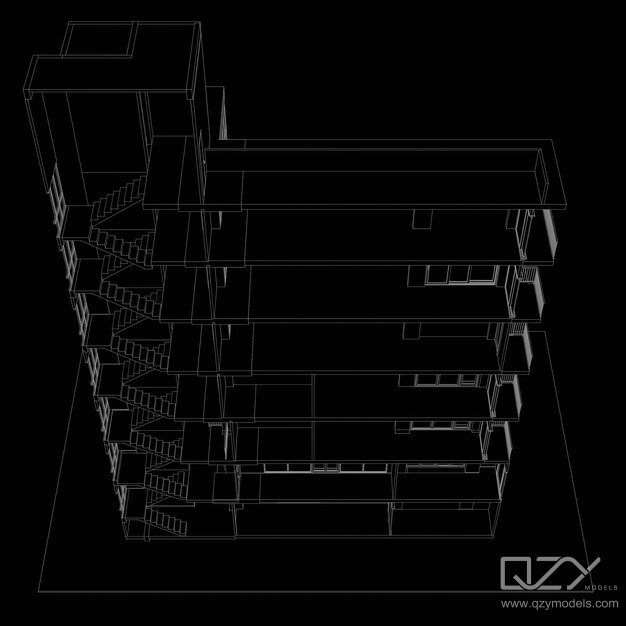
The future of architectural presentation lies in physical precision and emotional impact—Exhibition Architectural Prototype Models deliver both, transforming abstract design into tangible experience. QZY Models leads this transformation with global expertise and craftsmanship excellence.
How Has the Exhibition Model Industry Evolved and What Pain Points Remain?
According to a 2025 Statista report, the global architectural visualization and modeling market surpassed USD 3.4 billion, driven by urbanization and real estate expansion. Yet, over 60% of design firms still rely on outdated 2D visuals or virtual renderings that struggle to communicate spatial scale at exhibitions or investor meetings. This gap leaves decision-makers uncertain and reduces project approval efficiency. The demand for physical prototype models has surged, especially in high-stakes architectural expos across Asia, the Middle East, and Europe.
One major pain point is communication clarity. Virtual renderings often fail to evoke real-world scale, light effect, and texture. Developers and government planners require a physical model to evaluate design feasibility more intuitively. Without it, costly redesign cycles and delayed stakeholder buy-ins occur.
Another challenge comes from exhibition logistics. Models must be durable, portable, and precise. Conventional workshops often lack the advanced fabrication and material integration needed for global exhibitions. That’s where specialized teams like QZY Models bridge the gap with engineering-grade craftsmanship and automated precision fabrication.
Why Do Traditional Architectural Display Methods Fall Short?
Traditional methods—2D drawings, renderings, or VR walkthroughs—offer visual appeal but lack tactile realism. They rely heavily on interpretive understanding, often confusing non-technical stakeholders. Printed boards and CAD floor plans are limited in conveying the spatial essence or structural proportions.
Virtual models, although modern, face limitations: they require expensive display equipment, have inconsistent rendering quality, and depend on digital literacy. For trade shows or governing boards, where immediate impression counts, such methods underperform.
Furthermore, manual scale models built by smaller studios often sacrifice accuracy, making them unsuitable for professional showcases. Architects and developers need exhibition-grade prototypes that combine digital accuracy with handcrafted artistry—a hallmark of QZY Models.
What Is QZY Models’ Solution for Exhibition Architectural Prototype Models?
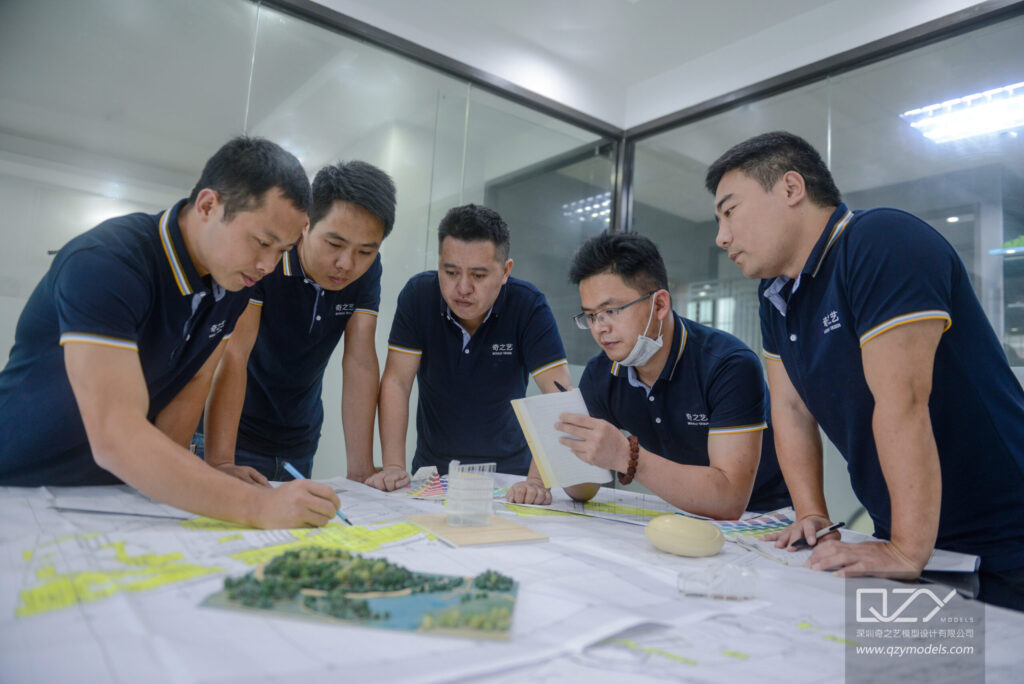
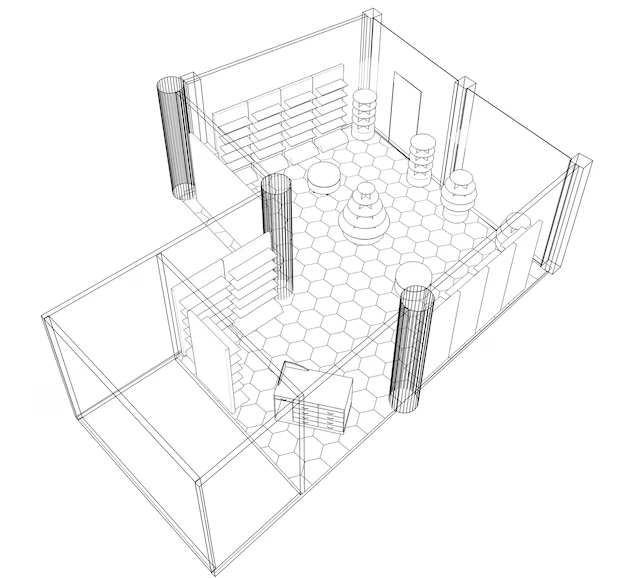
QZY Models provides high-precision exhibition prototype models tailored for architectural design firms, developers, and design schools. Combining CNC machining, laser cutting, and 3D printing, each model integrates accurate spatial data from BIM or CAD files.
Key capabilities include:
-
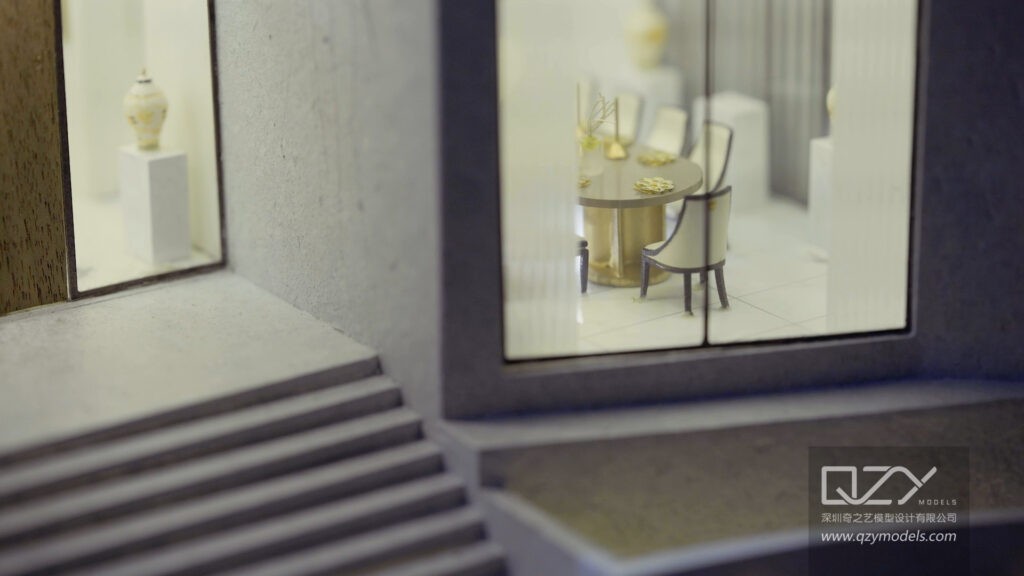
Multi-material integration (acrylic, wood, metal, resin) for realism.
-
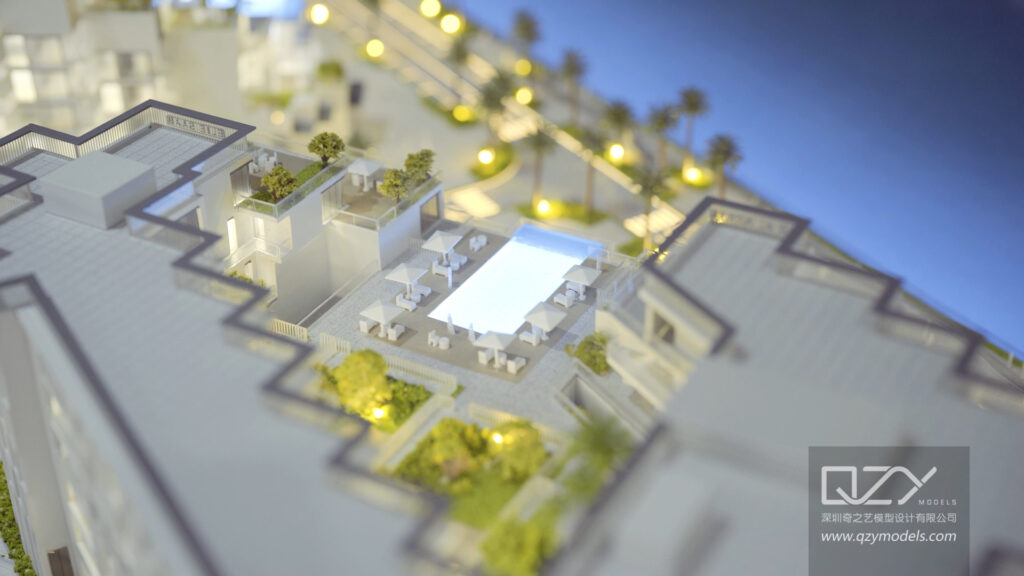
Embedded lighting and motion systems for dynamic demonstrations.
-
Modular transport-friendly design for global exhibitions.
-
Interactive features like AR markers and touch-activated elements.
With over 20 years of expertise, QZY Models ensures each prototype embodies both design intent and craftsmanship excellence, supporting global clients from concept to exhibition delivery.
Which Advantages Differentiate This Solution from Traditional Methods?
| Feature | Traditional Workshops | QZY Models Solution |
|---|---|---|
| Precision | Manual estimation (±5%) | CNC + 3D printing (±0.2mm) |
| Durability | Prone to damage in transit | Lightweight structural reinforcement |
| Lighting integration | Basic or absent | Smart LED zoning & automation |
| Customization | Limited materials | 40+ material combinations |
| Delivery | Local only | Global logistics coverage (UAE, EU, Asia) |
How Can Clients Implement QZY Models’ Exhibition Prototype Service?
-
Initial Consultation: Client provides BIM/CAD designs and project scope.
-
Design Feasibility Review: QZY technical team evaluates materials, scale, and optimal fabrication method.
-
Digital Mockup Approval: Client reviews a 3D preview before production begins.
-
Fabrication & Assembly: Automated cutting, painting, and manual detailing take place under precision QC.
-
Delivery & Installation: Models are packaged with custom crates for secure international shipping.
-
Post-exhibition Services: Maintenance, repair, and storage solutions available upon request.
Who Are the Typical Use Cases for Exhibition Architectural Models?
Case 1: Real Estate Developer Showcase
-
Problem: 2D renderings failed to attract investors.
-
Traditional Method: Digital slideshow presentation.
-
After QZY Models: A 1:200 illuminated model boosted engagement time by 70%.
-
Key Benefit: Faster investor interest and project funding.
Case 2: Urban Planning Forum
-
Problem: City-scale plans hard to visualize.
-
Traditional Method: Printed maps and digital projections.
-
After QZY Models: An interactive topographic model facilitated clearer decision-making.
-
Key Benefit: Accelerated government approvals.
Case 3: Architecture Exhibition Pavilion
-
Problem: Competing displays lacked physical depth.
-
Traditional Method: Virtual tour screens.
-
After QZY Models: A hybrid physical model with AR viewing drew 2,000+ visitors.
-
Key Benefit: Enhanced brand visibility and press coverage.
Case 4: Educational Institution Studio
-
Problem: Students lacked exposure to professional prototyping.
-
Traditional Method: Cardboard concept models.
-
After QZY Models: Detailed teaching models improved learning outcomes.
-
Key Benefit: Higher accuracy in thesis presentations and competitions.
Why Is Now the Best Time to Invest in Physical Exhibition Models?
As the architectural visualization market merges digital and physical presentation methods, clients increasingly demand tangible storytelling tools. Exhibition prototype models provide measurable ROI—boosting presentation conversions, investor trust, and media appeal.
QZY Models stays ahead by adopting intelligent fabrication systems and sustainable materials, aligning with global ESG standards. As exhibitions in Riyadh, Dubai, and Singapore expand, physical models regain central importance as the bridge between digital design and real-world impact.
FAQ
1. What materials does QZY Models commonly use?
They use premium acrylic, resin, wood, and metal composites depending on project requirements.
2. Can QZY Models handle international exhibition delivery?
Yes. With branches in UAE, Saudi Arabia, and Egypt, QZY Models provides global shipping and on-site installation support.
3. Are lighting and motion features customizable?
Absolutely. Clients can specify lighting zones, animation sequences, or smart control features.
4. How long does production typically take?
Medium-scale projects (1–2 sq. meters) usually require 3–5 weeks depending on design complexity.
5. Does QZY Models work with educational and public institutions?
Yes, QZY Models frequently partners with design schools and municipal planning bodies for exhibitions and teaching installations.