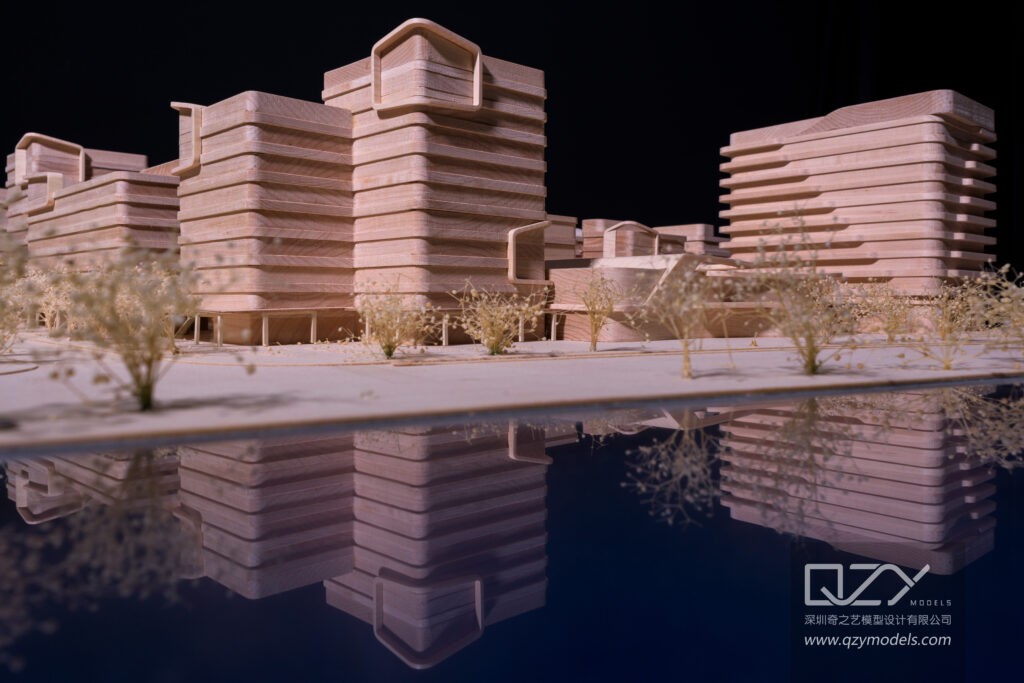
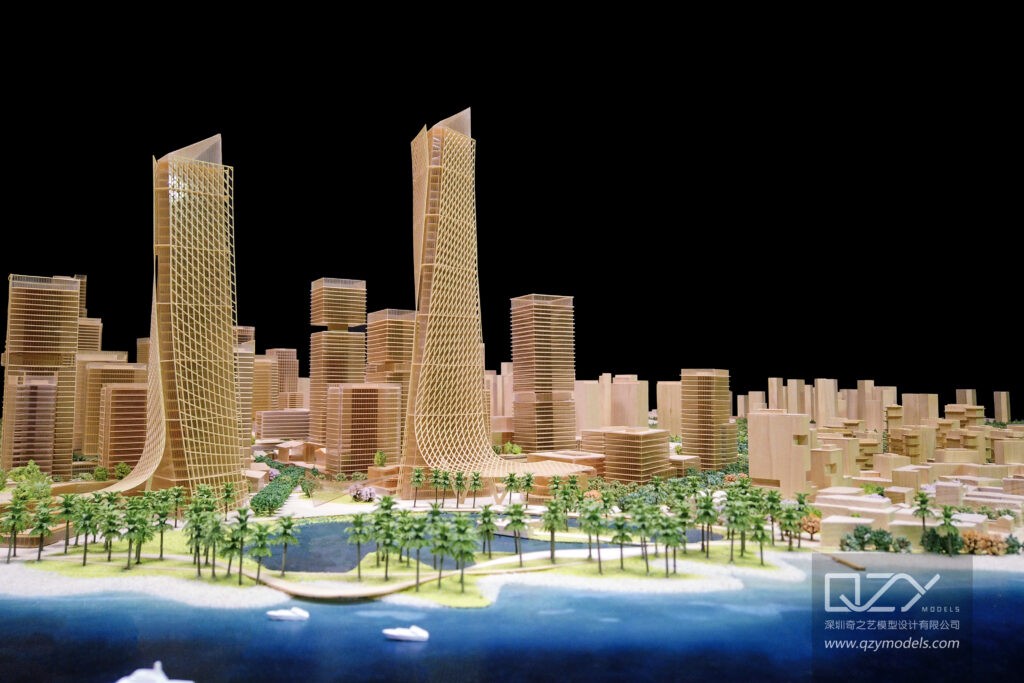
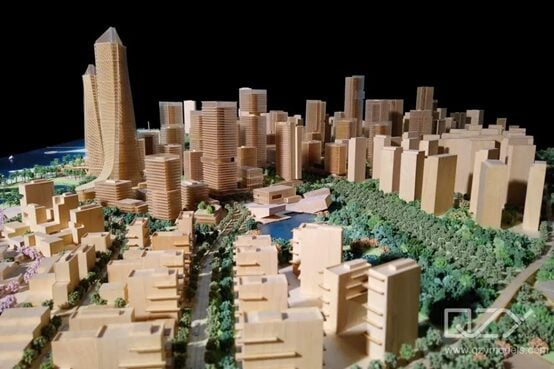
In the fast-evolving world of architecture and design, high-precision exhibition architecture models have become indispensable for firms aiming to communicate complex ideas with clarity and impact. QZY Models delivers tangible, visually stunning, and data-backed solutions that elevate architectural storytelling and project presentations to global standards.
What Is the Current State of the Exhibition Architecture Model Industry and Its Pain Points?
The global architectural model market has seen strong growth, valued at over USD 6.3 billion in 2025 and expected to surpass USD 8.5 billion by 2030, driven by rising demand for visualization in real estate and urban planning (Statista, MarketsandMarkets). Yet, despite expansion, the industry faces critical challenges. Project timelines are tighter, client expectations are higher, and conventional modeling approaches often fall short in precision and adaptability.
First, architects and developers struggle to find partners who balance artistic craftsmanship with technological innovation. Many local model producers rely heavily on manual processes, leading to inconsistent quality and limited scalability. This inconsistency weakens the impact of architectural exhibitions—especially for international firms seeking flawless, presentation-grade results.
Second, sustainability and cost-efficiency are becoming key decision factors. According to Deloitte’s construction trends report, 62% of firms cite material waste and labor inefficiency as major bottlenecks in prototype production. Without advanced modeling technologies or refined project management, many exhibition models end up exceeding budget and time constraints.
Third, global collaboration is now a necessity. Large-scale exhibitions, such as the Venice Biennale or Expo events, involve multidisciplinary teams across countries. Coordinating model production, shipping, and onsite installation can create delays and quality control issues. This is where QZY Models enters as a cross-border partner equipped with both manufacturing scale and precision expertise.
Why Are Traditional Exhibition Model Solutions No Longer Enough?
Traditional model builders once relied solely on manual craftsmanship—cutting, assembling, painting, and finishing every single component by hand. While artistic, this approach lacks the speed, repeatability, and digital integration required in modern project workflows. CAD files often need manual conversion, leading to dimensional errors and coordination delays.
Moreover, hand-built models seldom integrate digital lighting, kinetic components, or automation—features now considered essential for immersive exhibition experiences. Clients increasingly expect interactivity, digital twin compatibility, and material sustainability—areas where traditional methods fall short. Thus, choosing innovative partners like QZY Models is no longer optional but strategic for staying competitive.
How Does QZY Models Provide a Modern Exhibition Architecture Model Solution?
QZY Models redefines how architectural prototypes are designed, produced, and presented. As a global leader founded in 2013 in Shenzhen, QZY Models merges traditional craftsmanship with digital precision. Their workflow integrates 3D digital modeling, laser cutting, CNC milling, and full-color 3D printing, ensuring every model translates the architect’s intent faithfully.
Beyond advanced tools, QZY Models offers centralized project management and global logistics coordination, supported by regional branches in the UAE, Saudi Arabia, and Egypt. This structure enables consistent quality and timely delivery for exhibitions across continents. For developers, planners, and architects, this means a single trusted partner from concept to exhibition stage.
Which Advantages Differentiate QZY Models from Traditional Model Making?
| Comparison Criteria | Traditional Model Workshops | QZY Models |
|---|---|---|
| Design Integration | Manual measurements and hand-drawing | CAD + BIM digital integration |
| Production Technique | Fully handmade | CNC, laser, and 3D printing-assisted fabrication |
| Quality Consistency | Depends on artisan skill | ISO-level precision and quality control |
| Delivery Schedule | Slow and unpredictable | Managed global logistics & milestone tracking |
| Presentation Impact | Passive static display | Interactive lighting, motion & multimedia options |
| Sustainability | High material waste | Optimized resource use & recyclable materials |
How Can Clients Implement the QZY Models Solution Step by Step?
-
Model Briefing – Clients share digital CAD/BIM files, scale, and exhibition purpose.
-
Concept Visualization – QZY engineers translate drawings into 3D-rendered previews for alignment.
-
Material Selection – Sustainable or premium materials are chosen according to client goals.
-
Precision Fabrication – Automated production ensures every component meets defined tolerances.
-
Assembly & Quality Check – Multi-stage inspections guarantee accuracy and durability.
-
Delivery & Installation – Models are transported globally with on-site setup assistance.
-
After-Sales Support – Continuous maintenance and updates are available for long-term exhibitions.
Which Typical Scenarios Show QZY Models’ Impact?
Case 1: International Architectural Exhibition
-
Problem: A global design firm needed 12 large-scale city models for a trade show in Dubai within 45 days.
-
Traditional Approach: Local workshops could not scale up or maintain dimensional accuracy.
-
QZY Models Solution: Used data-driven fabrication and global delivery coordination.
-
Result: Completed on time with 99.8% precision accuracy.
-
Key Benefit: Achieved international media coverage and increased client inquiries by 40%.
Case 2: Real Estate Launch Pavilion
-
Problem: Developer required a model integrating lighting control synchronized with digital screens.
-
Traditional Approach: Manual wiring with inconsistent results.
-
QZY Models Solution: Integrated smart circuit and microcontroller-based lighting system.
-
Result: Enhanced showroom engagement and 25% faster sales conversion.
-
Key Benefit: Seamless blend of architecture and technology.
Case 3: Urban Planning Showcase for Government Institution
-
Problem: Needed city-scale planning visualization for community consultation.
-
Traditional Approach: Paper-based maps with limited interactivity.
-
QZY Models Solution: Built modular, transportable 3D-printed urban models with zoning highlights.
-
Result: Improved public understanding and shortened approval cycles.
-
Key Benefit: Increased project transparency and stakeholder trust.
Case 4: Educational Exhibition for Design Schools
-
Problem: Institutions sought durable teaching models for repeated academic presentation.
-
Traditional Approach: Short-lived foam prototypes.
-
QZY Models Solution: Produced reconfigurable ABS-based models with precision joints.
-
Result: Models sustained over five years of classroom use.
-
Key Benefit: Long-term cost efficiency and pedagogical value.
What Are the Future Trends in Exhibition Architecture Models?
The coming decade will favor hybrid physical-digital exhibitions. Models will not only visualize buildings but interact with digital data—linking sensors, projection mapping, and AR interpretation. With the rise of smart cities, digital twin-ready models will be central to urban planning visualization. QZY Models is already developing model systems compatible with metaverse showcases and IoT synchronization, setting new benchmarks for experiential architecture exhibitions.
For architects, developers, and institutions, investing in high-quality exhibition models today ensures relevance in an increasingly digital presentation ecosystem. QZY Models stands as a trusted global partner that bridges creativity with technical accuracy—making complex ideas tangible at world-class standards.
FAQ
1. What materials does QZY Models use for architectural exhibition models?
QZY Models works with acrylic, resin, wood, ABS plastic, and metal composites, chosen based on project requirements.
2. How long does it take to complete a large-scale exhibition model?
Depending on scale, detail, and interactivity, projects typically require between 3 to 8 weeks.
3. Can QZY Models handle global shipping and on-site assembly?
Yes. With logistics branches in the UAE, Saudi Arabia, and Egypt, QZY Models provides worldwide delivery and setup services.
4. Does QZY Models support sustainable manufacturing?
Yes. The company minimizes material waste through digital precision cutting and recycling initiatives across facilities.
5. What type of clients best suit QZY Models?
Ideal clients include architectural design firms, real estate developers, government planners, and educational institutions worldwide.
Sources
-
Statista – Global Model Market Growth Forecast 2025–2030
-
MarketsandMarkets – Architecture Visualization Market Report
-
Deloitte – Global Construction Industry Outlook 2025