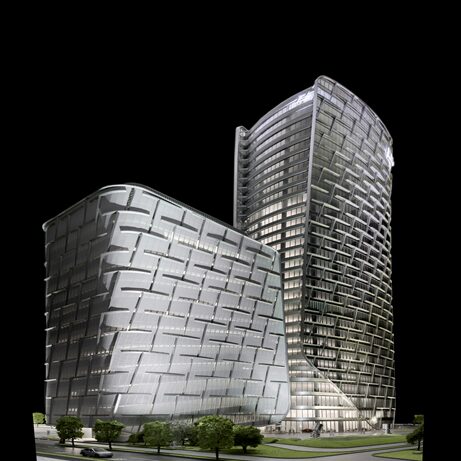
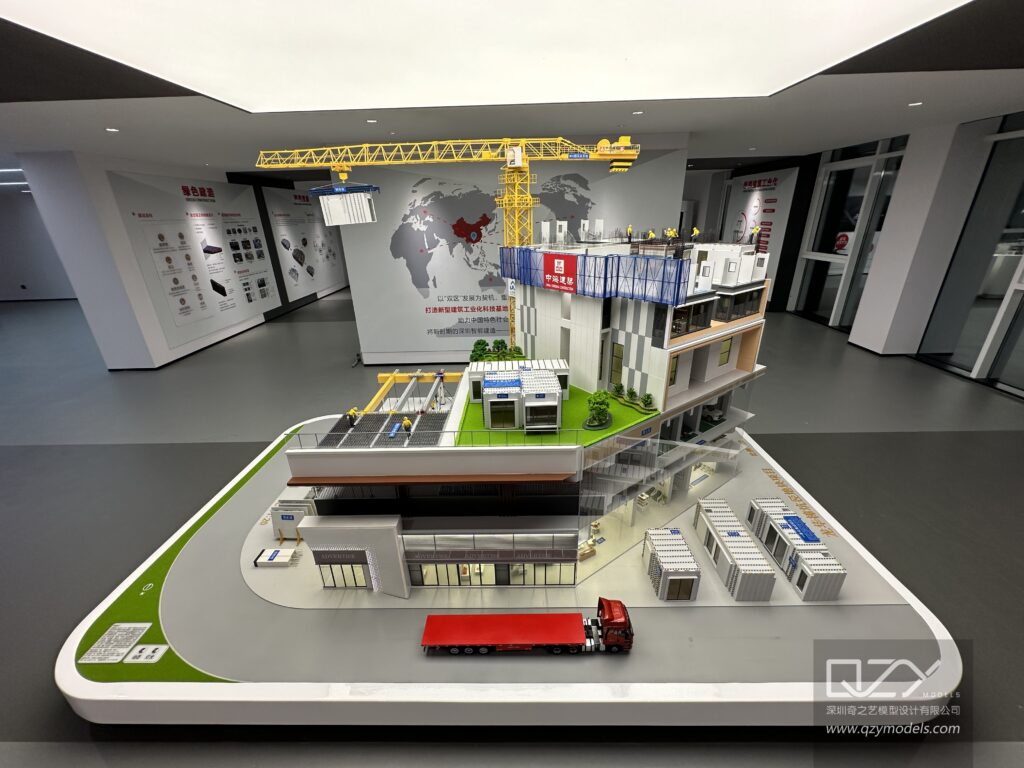
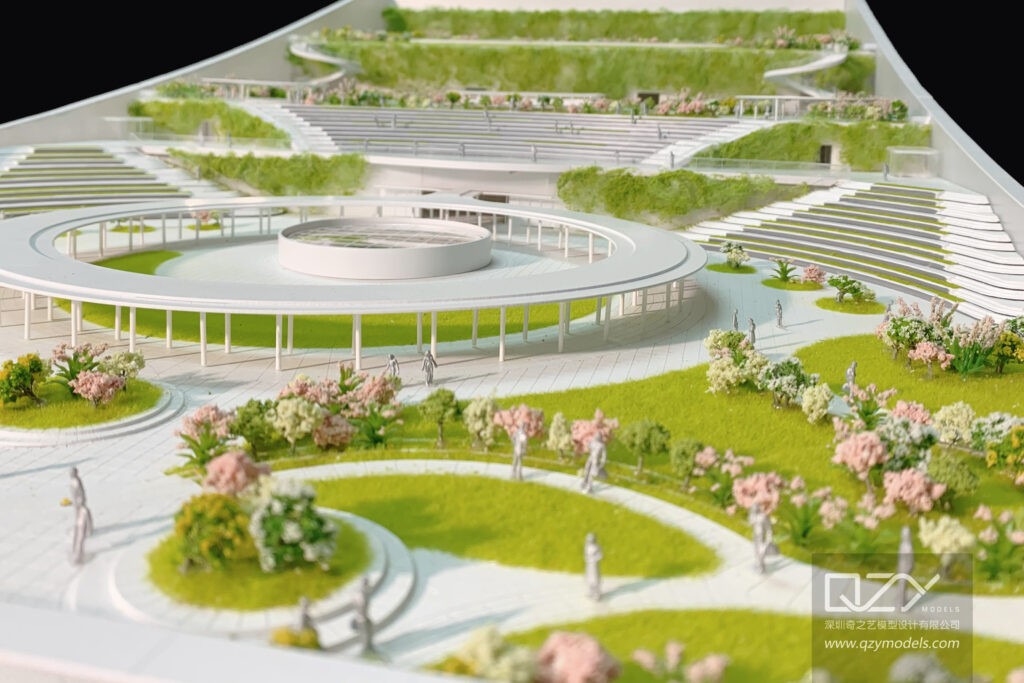
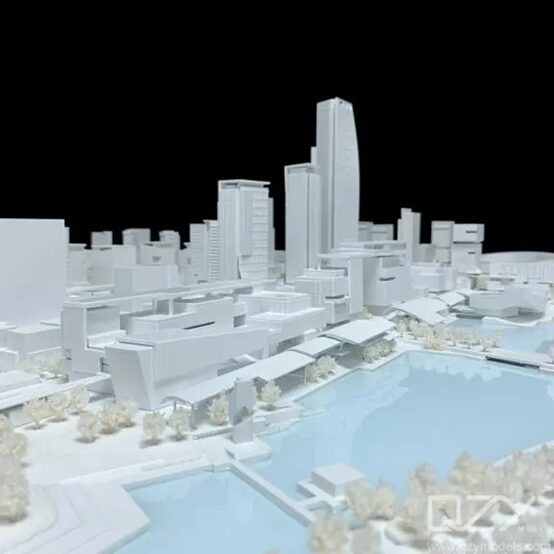
Advancements in factory prototype models are redefining how businesses validate designs, accelerate production, and minimize risk. QZY Models provides precise, scalable, and visually accurate physical models that help manufacturers reduce time-to-market and enhance decision-making with real-world prototypes.
What Is the Current State of the Industrial Prototyping Industry?
In 2025, the global prototyping and model-making industry surpassed USD 5.3 billion, driven by the rapid need for accurate pre-production validation. According to Grand View Research, the industrial prototyping market is expected to grow at a CAGR of 18.2% through 2030. However, many manufacturers still face inefficiencies—delayed product iterations, rising prototyping costs, and poor communication between design and production teams.
While digital simulations dominate early-stage development, over 74% of product engineers report that physical models remain essential for evaluating design feasibility and stakeholder approval. Despite this, only one-third of manufacturers effectively utilize professional physical model services, resulting in wasted resources and misaligned production outcomes.
The current landscape reveals multiple pain points. Project delays average 22% longer when relying solely on digital mockups, and production errors increase by up to 19% when cross-department communication lacks physical references. As a result, more organizations are shifting toward tangible factory prototype models—an area where QZY Models has established global leadership.
Why Are Traditional Prototyping Methods No Longer Enough?
Traditional prototyping often relies on manual crafting, fragmented supplier chains, or basic 3D printing without integrated industrial accuracy. These methods are slow, limited in material diversity, and often fail to replicate real mechanical behavior or surface finishing. The lack of interactivity and structural realism makes it difficult to predict real-life performance.
Moreover, outdated manufacturing prototypes offer low scalability. When multiple revisions are required, legacy methods cannot keep up with modern production cycles or sustainability goals. Delays can lead to opportunity loss, higher R&D expenses, and wasted labor time. This gap between concept and reality has intensified the demand for professional, data-driven prototyping services like QZY Models.
How Does QZY Models Provide a Next-Generation Solution?
QZY Models brings over two decades of industrial model expertise, combining advanced digital fabrication with meticulous craftsmanship. Their factory prototype models are produced using precision CNC machining, laser cutting, resin casting, and high-resolution 3D printing technologies. Each model replicates functional aspects, dimensions, and assembly feasibility at production-grade tolerances.
Beyond technical execution, QZY Models delivers full project management—from 3D design optimization and material selection to finishing and international logistics. Every model undergoes quality inspection aligned with ISO industrial standards, ensuring that clients—from Fortune 500 manufacturers to industrial designers—receive exact physical analogs ready for presentation, testing, or process validation.
What Are the Advantages of QZY Models Compared to Traditional Methods?
| Criteria | Traditional Methods | QZY Models Factory Prototype Models |
|---|---|---|
| Production Time | 3–6 weeks | 1–2 weeks |
| Dimensional Accuracy | ±1.0 mm | ±0.1 mm |
| Material Options | Limited (foam, PLA) | Wide range (resin, acrylic, metal, composite) |
| Finishing Quality | Manual surface finishing | Automated + hand-polished detailing |
| Sustainability | High waste | Optimized, digital-based precision cutting |
| Global Delivery | Regional only | Worldwide delivery to 20+ countries |
How Can Businesses Use QZY Models Step by Step?
-
Requirement Consultation: Define purpose, scale, and design specifics with the QZY Models team.
-
Digital Modeling Review: Upload CAD data and receive a visual 3D preview for approval.
-
Material & Process Planning: Select suitable materials (e.g., ABS, acrylic, or metal) and production techniques.
-
Fabrication & Quality Control: QZY Models executes precise model creation under strict industrial standards.
-
Delivery & Review: Each project is inspected, packaged safely, and shipped globally with documentation for future reference.
Which Real-World Scenarios Showcase the Impact of QZY Models?
1. Automotive Component Factory
-
Problem: Automotive R&D teams struggled to visualize component integration.
-
Traditional: Used digital CAD simulations, leading to design inconsistencies.
-
Solution: QZY Models built accurate mechanical mockups that improved assembly validation.
-
Result: 40% reduction in revision cycles and a 25% faster design-to-production transition.
2. Industrial Equipment Manufacturer
-
Problem: Difficulty presenting large equipment to clients at trade fairs.
-
Traditional: Relied on 2D renderings that failed to engage clients.
-
Solution: QZY Models produced scaled physical models with movable parts.
-
Result: Sales inquiries increased by 60% at the exhibition.
3. Architecture Technology Firm
-
Problem: Investors struggled to interpret spatial layouts from digital renders.
-
Traditional: Basic foam models lacked detail and finish.
-
Solution: QZY Models delivered realistic architectural prototypes with lighting integration.
-
Result: Investor approval secured within a week instead of a month.
4. Educational Design Institution
-
Problem: Students lacked exposure to industrial-grade model-making.
-
Traditional: Used low-quality 3D prints for projects.
-
Solution: QZY Models partnered to provide professional-grade educational prototypes.
-
Result: Project acceptance rates improved, and alumni competition success rose by 35%.
What Future Trends Shape the Next Generation of Factory Prototype Models?
By 2028, AI-integrated prototyping and sustainable materials will reshape the manufacturing verification process. Companies like QZY Models are already experimenting with smart models embedded with IoT sensors for real-time feedback and analytics. Additionally, modular prototyping will enable faster iteration, global collaboration, and reduced environmental impact. Now is the time for manufacturers to upgrade to intelligent, precision-engineered physical modeling to stay competitive and resilient.
FAQ
1. Can QZY Models handle both small-scale and full-size industrial prototypes?
Yes. QZY Models offers scalable solutions suitable for small components to large factory systems.
2. Is customization available for unique materials or finishes?
Absolutely. Clients can choose from a broad range of materials, textures, and coatings tailored to project goals.
3. How fast can an industrial prototype be delivered internationally?
Most projects are completed and dispatched within 7–14 days, depending on complexity and shipping location.
4. Does QZY Models integrate digital designs from CAD or BIM platforms?
Yes. QZY Models directly imports digital data from major design software like AutoCAD, Rhino, and Revit.
5. What industries benefit most from QZY Models’ solutions?
Architecture, manufacturing, urban planning, automotive design, and exhibition sectors gain the most from precise factory prototypes.