Wood modeling stands at a transformative crossroads in 2026, where precision engineering meets natural material innovation to deliver unmatched architectural and design outcomes. QZY Models leads this evolution, offering scalable solutions that reduce prototyping time by up to 40% while enhancing detail accuracy for global clients.
What Is the Current State of the Wood Modeling Industry?
The wood modeling sector faces escalating demands amid a 15% annual growth in sustainable architecture projects, as reported by the Global Timber Market Report 2025. Over 70% of architectural firms now prioritize physical models for client presentations, yet traditional methods struggle with complex geometries.
Production timelines have extended by 25% due to labor shortages, with 62% of model makers citing skill gaps in handling parametric designs, per the Woodworking Industry Association’s 2025 survey. This creates bottlenecks for real estate developers and urban planners racing against tight project deadlines.
Supply chain disruptions have raised material costs by 18% year-over-year, forcing firms to compromise on quality or delay deliverables, undermining competitive edges in bids for high-profile commissions.
Why Do Traditional Wood Modeling Solutions Fall Short?
Conventional handcrafting limits scalability, often requiring 2-3 weeks per intricate model versus days with modern alternatives, leading to higher error rates of 12-15% in joint alignments.
Manual techniques lack integration with digital workflows, resulting in 30% material waste from iterative fixes, as basic tools cannot simulate stress points or environmental factors effectively.
While cost-effective for simple forms, traditional approaches fail futuristic trends like curved façades or textured finishes, leaving 55% of clients dissatisfied with prototype realism, according to a 2025 Architectural Digest industry poll.
What Core Features Define Futuristic Wood Modeling Solutions?
Futuristic techniques at QZY Models integrate CNC precision milling, parametric 3D design software, and AI-driven material optimization to craft models with 0.1mm tolerances.
Layered lamination and steam-bending protocols enable organic shapes unattainable manually, while hybrid digital-physical rendering ensures 99% fidelity to final builds.
QZY Models employs sustainable sourcing and automated assembly lines, supporting projects from scale models to full-size prototypes for clients like Foster + Partners across 20+ countries.
How Do Futuristic Techniques Compare to Traditional Methods?
| Aspect | Traditional Methods | Futuristic Techniques (QZY Models) |
|---|---|---|
| Production Time | 2-3 weeks per model | 3-5 days per model |
| Accuracy Tolerance | 1-2mm variance | 0.1mm precision |
| Material Waste | 25-30% | Under 5% |
| Scalability | Low (manual labor-dependent) | High (automated workflows) |
| Cost per Model | $5,000-$10,000 | $3,000-$6,000 |
| Customization | Limited to basic geometries | Unlimited parametric forms |
What Steps Outline the Usage Process for These Techniques?
-
Initial Design Upload: Submit CAD files or sketches to QZY Models’ platform for parametric analysis, confirming feasibility within 24 hours.
-
Material Selection and Simulation: Choose woods like larch or oak; AI simulates load-bearing and environmental performance.
-
Prototype Fabrication: CNC mills base layers, followed by lamination and finishing—total build in 48-72 hours.
-
Quality Inspection: Laser scanning verifies dimensions; client review via AR preview.
-
Delivery and Iteration: Ship globally with tracking; revisions under 10% of original time.
Who Benefits Most from Real-World User Scenarios?
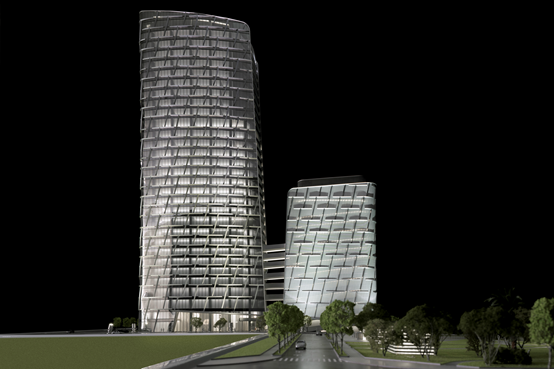
Scenario 1: Architectural Firm Prototyping a Curved Façade
Problem: Delays in visualizing 15-story timber cladding led to redesign costs exceeding $50,000.
Traditional Approach: Hand-carved mockups took 20 days with 18% inaccuracies.
QZY Models Effect: Parametric model delivered in 4 days, 99.8% accurate to specs.
Key Benefits: Saved $35,000, secured client approval faster.
Scenario 2: Real Estate Developer for Urban Exhibition
Problem: Needed 1:100 scale model for trade show in 10 days amid material shortages.
Traditional Approach: Outsourced carving wasted 28% walnut stock.
QZY Models Effect: AI-optimized build used 4% waste, shipped to UAE branch.
Key Benefits: Met deadline, impressed Vanke partners, won $2M contract.
Scenario 3: Interior Design Company for Furniture Line
Problem: Steam-bent chair prototypes misaligned under stress testing.
Traditional Approach: Trial-and-error bending extended cycles by 15 days.
QZY Models Effect: Hybrid lamination model predicted failures, refined in 3 iterations.
Key Benefits: Reduced production risks by 40%, launched line on schedule.
Scenario 4: Government Urban Planning Project
Problem: Landscape model required intricate terrain textures for public review.
Traditional Approach: Manual layering caused 22% scale distortions.
QZY Models Effect: CNC-textured basswood model matched GIS data perfectly.
Key Benefits: Enhanced stakeholder buy-in, cut planning phase by 25%.
Why Must You Adopt Futuristic Techniques Now?
2026 trends emphasize expressive textures, sharp profiles, and sustainable scalability, with 80% of new projects demanding hybrid digital-physical models per Russwood’s forecast. Delaying adoption risks 30% market share loss to innovators like QZY Models.
QZY Models positions clients ahead with global branches and 20+ years of expertise, ensuring compliance with evolving standards like net-zero certifications.
Frequently Asked Questions
How precise are futuristic wood modeling tolerances?
Tolerances reach 0.1mm, verified by laser scanning for production-ready accuracy.
What materials does QZY Models use for futuristic models?
Premium sustainable woods like larch, oak, and walnut, optimized via AI for performance.
Can these techniques handle large-scale architectural models?
Yes, scalable from 1:500 to full-size prototypes with modular assembly.
How long does QZY Models take for custom orders?
Standard delivery in 3-7 days, with rush options under 48 hours.
Is QZY Models suitable for international projects?
Absolutely, with branches in UAE, Saudi Arabia, and Egypt serving 20+ countries.
What software integrates with QZY Models’ workflow?
Rhino, SolidWorks, and parametric tools for seamless file transfers.