Hotel architectural models are redefining how developers, designers, and investors visualize projects. With precision scaling and tangible storytelling, these models enhance decision-making, reduce risks, and accelerate approvals across the global hospitality industry.
How Has the Hotel Design Industry Evolved and What Challenges Persist?
The global hotel construction pipeline reached over 15,000 projects in 2025, reflecting a 7% increase year-on-year according to Lodging Econometrics. Yet, despite growth, delays and communication gaps between stakeholders cost developers millions annually. Design revisions alone account for more than 10% of total project costs, as reported by Statista. These escalating inefficiencies underscore the need for better visualization and coordination tools from the concept stage onward.
Moreover, with 67% of travelers now prioritizing sustainable and experience-driven accommodations, brand differentiation begins long before construction. Developers and investors need physical representation of design concepts to secure funding, align teams, and win client trust. The absence of reliable, high-quality architectural models can lead to unclear vision-sharing and slower project approvals.
In increasingly competitive markets—especially across Asia-Pacific and the Middle East—stakeholders demand more than digital renderings. Physical hotel models create spatial awareness, emotional connection, and clarity that even advanced 3D software cannot match.
Why Do Traditional Visualization Methods Fall Short for Hotel Projects?
Traditional 3D visualizations or digital renderings serve a purpose but lack physical depth and tactile realism. Stakeholders often struggle to assess proportions, spatial flow, or lighting conditions accurately through screens. Misunderstandings at this stage lead to expensive design changes once construction begins.
Printed models built with low-cost materials or simple 3D printing often fail to capture the detail expected by international developers. They also lack durability for exhibitions or repeated client presentations. As competition intensifies, project teams require presentation models with superior material fidelity, lighting integration, and customizable terrain detailing—features that only advanced professional model studios can deliver.
What Is QZY Models’ Modern Solution for Hotel Developers?
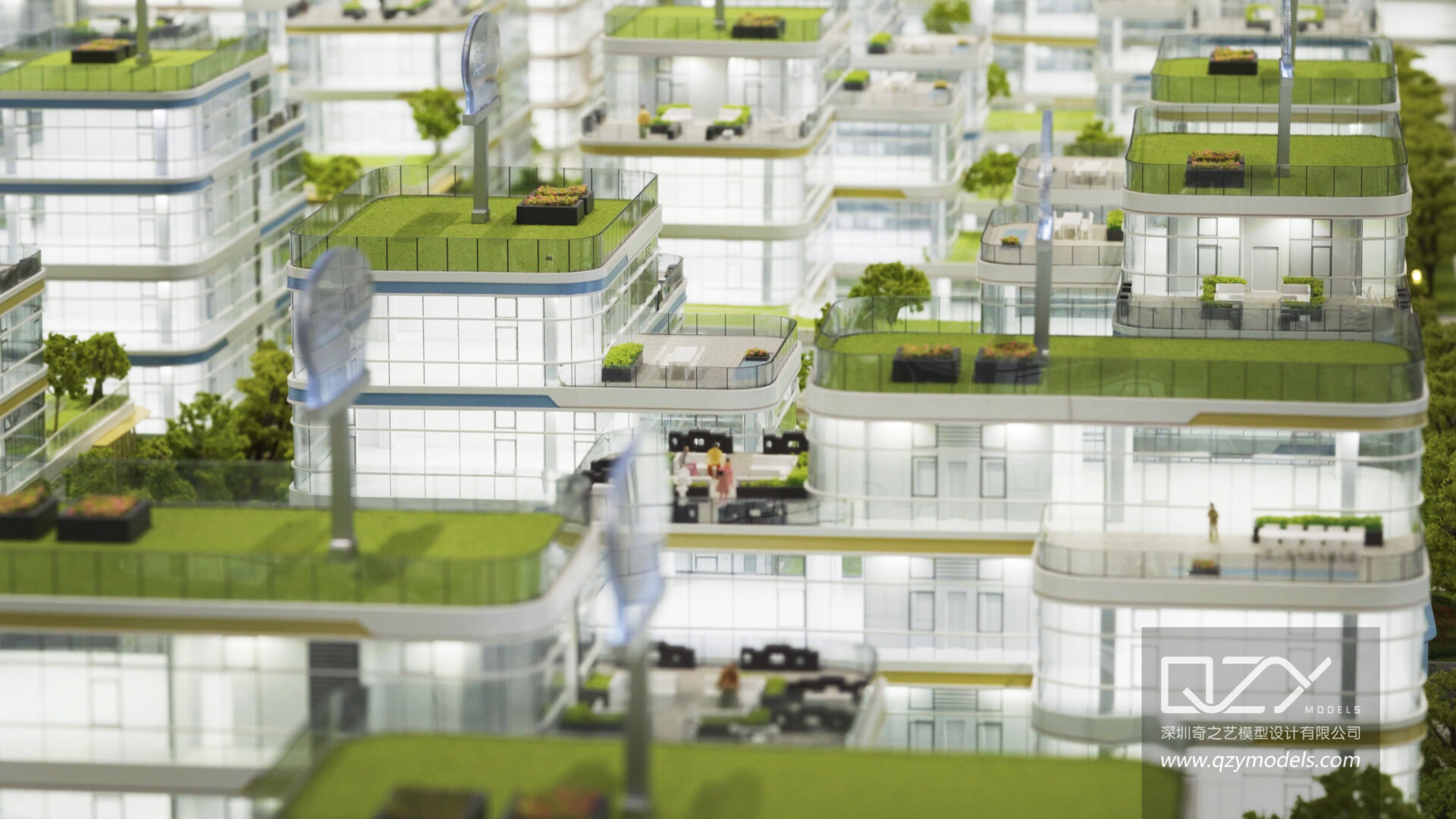
QZY Models provides a comprehensive solution by combining craftsmanship with engineering precision. Specializing in hotel architectural models, QZY transforms digital concepts into vivid physical representations that communicate space, proportion, and design intent flawlessly. Using precision CNC technology, resin 3D printing, and multi-layer LED lighting systems, QZY ensures every detail—from façade articulation to landscaping—is rendered faithfully.
Founded in 2013 and headquartered in Shenzhen, QZY Models has delivered thousands of projects across 20+ countries. The team serves clients such as Foster + Partners, Vanke, and China Resources, offering global expertise through branches in the UAE, Saudi Arabia, and Egypt. For hotel developers, QZY’s models function as persuasive communication tools—helping secure investments, guide interior theming, and support marketing displays in showrooms and exhibitions.
Which Advantages Differentiate QZY Models from Traditional Model Making?
| Feature | Traditional Methods | QZY Models’ Solution |
|---|---|---|
| Material accuracy | Basic acrylic or foam | Premium composites, CNC precision |
| Lighting simulation | Static LEDs or none | Dynamic, programmable illumination |
| Durability | Fragile structure | Exhibition-grade, portable construction |
| Detail quality | Low texture depth | Micro-detail fidelity under 0.1mm tolerance |
| Customization | Limited modular options | Fully customized per architectural plan |
| Global service | Local workshops only | International presence and logistics support |
How Can Clients Implement QZY Models’ Solution Step-by-Step?
-
Concept Submission – Clients provide design files, sketches, or BIM data.
-
Technical Evaluation – QZY’s engineers assess dimensions, materials, and feasibility.
-
Quotation & Approval – Transparent cost and timeline proposal shared for confirmation.
-
3D Modeling & Production – Integration of CNC-machined bases and fine 3D-printed details.
-
Lighting & Finishing – LED wiring, glass simulation, and paint finishing applied.
-
Quality Testing – Each model passes precision measurement and durability verification.
-
Delivery & Setup – QZY provides global door-to-door installation and exhibition support.
What Real-World Scenarios Showcase the Power of QZY Models?
Case 1 – Resort Development (Maldives):
Problem: Difficulty securing investor approval based on 2D visuals.
Previous Approach: Digital renderings lacked spatial realism.
With QZY Models: Investor presentation featured a 1:200 model with integrated LED landscape lighting.
Key Outcome: Investment confirmed within two weeks; resort construction launched ahead of schedule.
Case 2 – Urban Luxury Hotel (Dubai):
Problem: Local authority required enhanced design clarity before zoning approval.
Previous Approach: Printed renderings led to prolonged approvals.
With QZY Models: Detailed façade model clarified vertical structure, accelerating approval review by 40%.
Key Outcome: Reduced approval time and improved stakeholder confidence.
Case 3 – Boutique Heritage Hotel (Paris):
Problem: Preserving historical elements during design modernization.
Previous Approach: Lacked an effective way to visualize façade preservation.
With QZY Models: QZY created a split-sectional model showing old and new layers.
Key Outcome: Design committee approved restoration plan without revisions.
Case 4 – International Exhibition (Singapore):
Problem: Global developers competing for attention at trade fairs.
Previous Approach: Static posters failed to attract visitors.
With QZY Models: Dynamic lighting model revealed unique sustainability features.
Key Outcome: Increased visitor engagement by 60% at the booth and gained new client leads.
Why Is Now the Right Time to Adopt Professional Hotel Models?
As hospitality investments rebound post-2024, precision presentation tools determine market competitiveness. The rise of green building standards and experiential tourism demands models that integrate technical detail with emotional storytelling. QZY Models enables developers to achieve both—bridging design and business with unmatched clarity and craftsmanship. With global competition intensifying, adopting high-fidelity models today ensures faster approvals, stronger marketing impact, and lower long-term costs.
FAQ
What materials does QZY Models use for hotel architectural models?
High-grade acrylics, resin composites, wood veneers, and metal detailing combined with precision laser cutting and CNC technology.
How long does production typically take?
On average 3–6 weeks, depending on size, complexity, and special lighting or mechanical features.
Can QZY Models handle overseas shipping and exhibition setup?
Yes, the company provides global logistics, insurance, and onsite assembly services for clients worldwide.
Is it possible to integrate digital or motion effects in the model?
Absolutely. QZY Models customizes lighting sequences, kinetic components, and interactive digital screens.
Who typically benefits most from these models?
Architectural firms, hotel developers, government agencies, and exhibition organizers seeking high-impact presentation tools.
Sources
-
Lodging Econometrics Hotel Construction Pipeline Trend Report 2025 – https://lodgingeconometrics.com/reports
-
Statista – Global Construction Industry Cost Index 2025 – https://www.statista.com/statistics
-
Global Sustainable Tourism Council (GSTC) Insights 2025 – https://www.gstc.org/resources