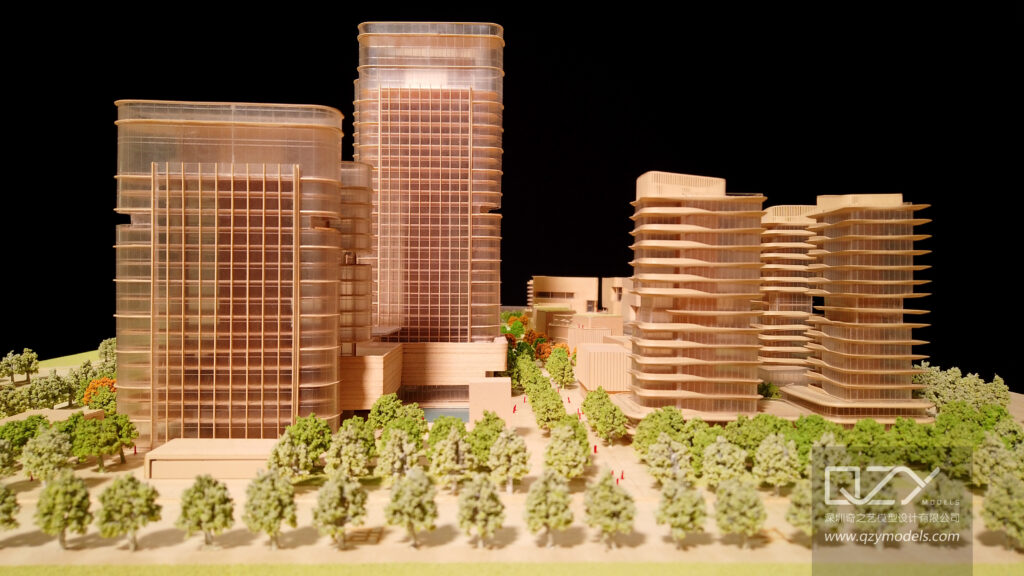
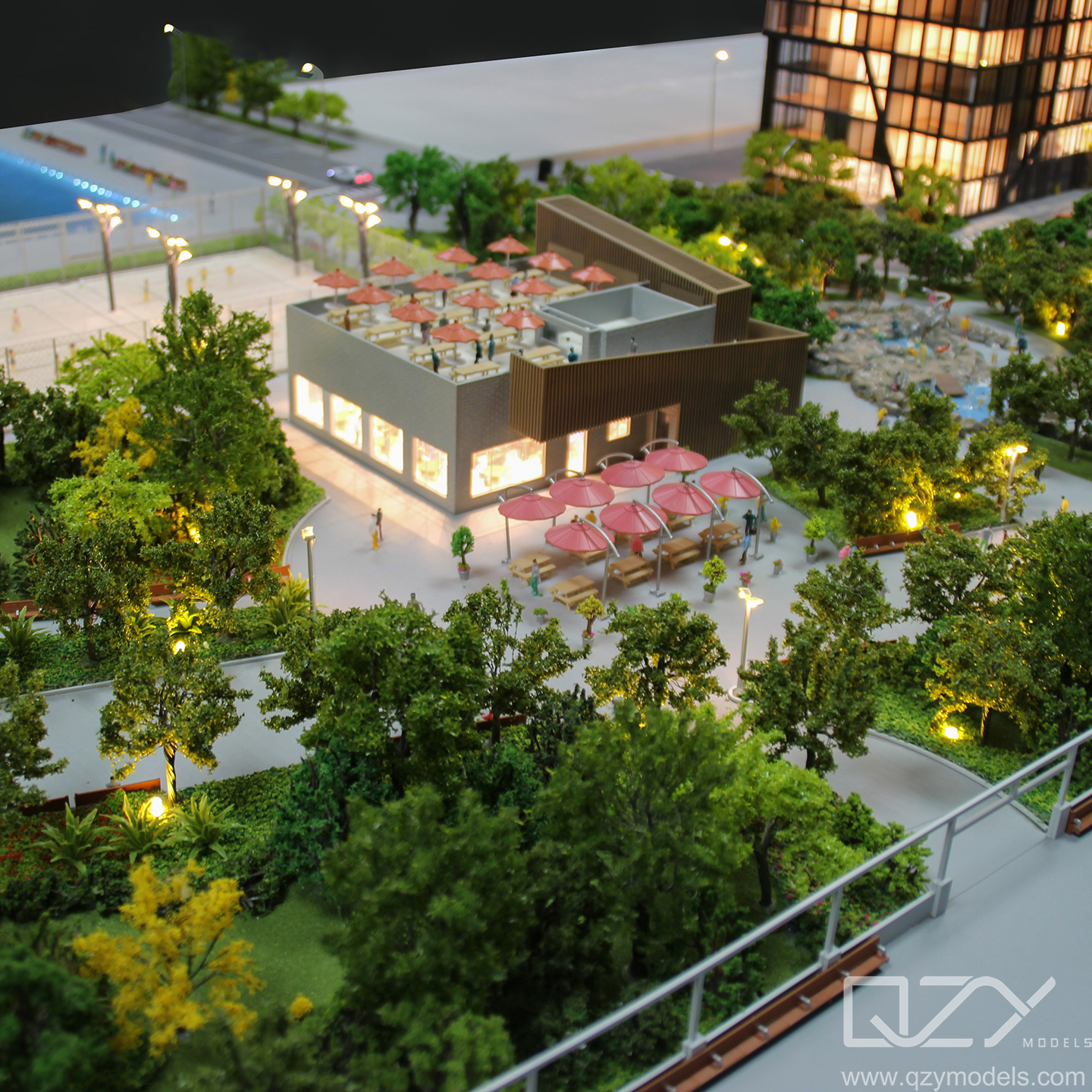
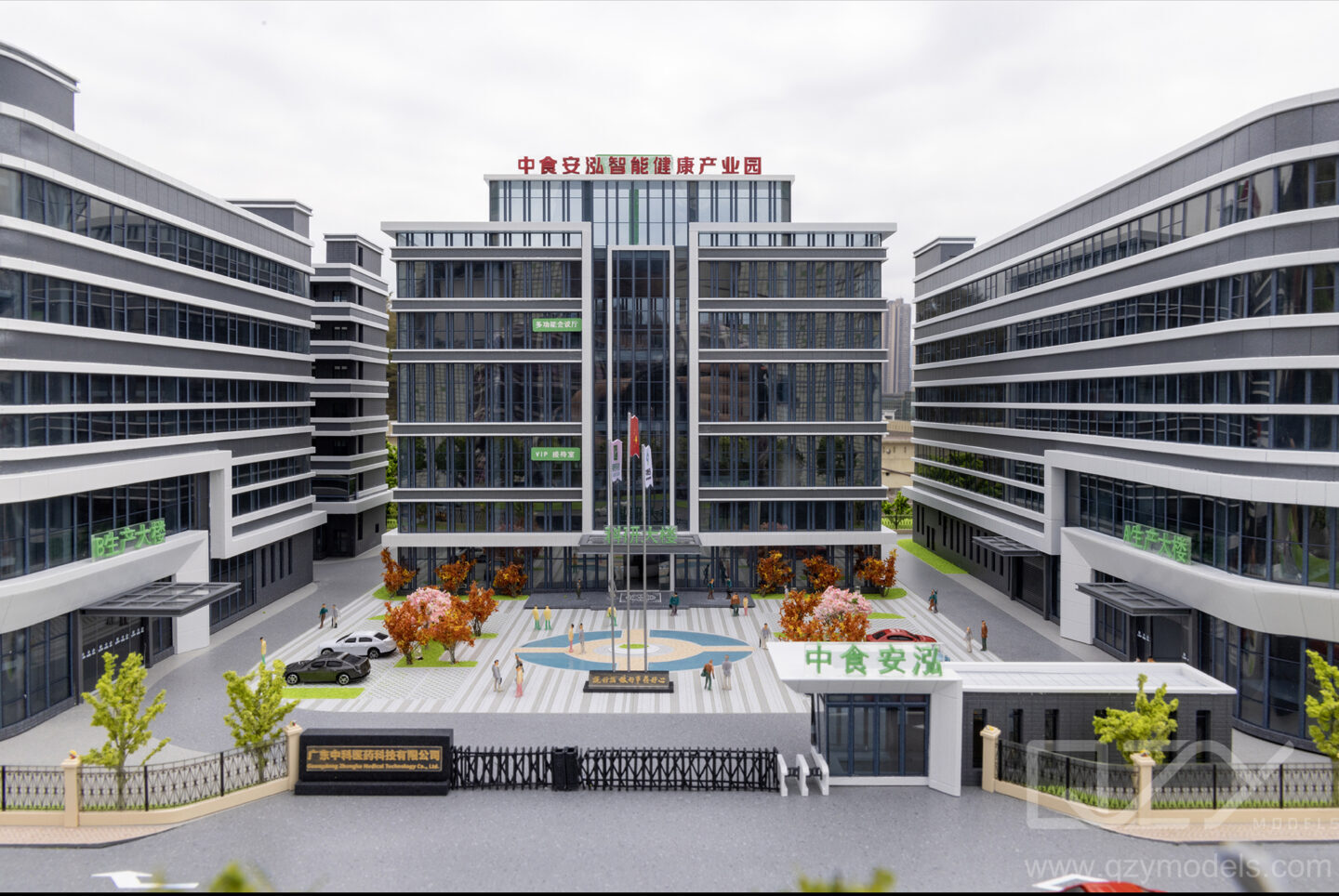
In an era where virtual rendering dominates design visualization, physical architecture models remain a critical bridge between creativity and communication—delivering tactile precision and emotional impact that digital tools alone cannot replicate. QZY Models is redefining this craft with cutting-edge fabrication technologies and global-scale expertise.
How Is the Current Architecture Industry Facing Visualization Challenges?
According to the World Architecture 100 Report 2025 by Building Design, over 68% of global firms cite “stakeholder communication” as the toughest stage of the design process. Despite massive investments in BIM and 3D visualization software, many decision-makers—especially non-technical stakeholders—still struggle to understand space, scale, and proportion. The industry’s current visualization deficit means projects risk costly misalignments. The Royal Institute of British Architects (RIBA) further notes that poor visualization contributes to nearly 30% of client changes post-design approval.
Architectural and real estate decision cycles are accelerating. Developers, cities, and investors now demand faster visualization turnaround without compromising detail. Yet, the disconnect between digital concepts and physical comprehension widens, raising stakes for design accuracy and project buy-in.
QZY Models addresses this critical gap by merging artisanal craftsmanship with industrial precision—producing tangible architectural narratives that resonate across cultures, languages, and professional disciplines.
Why Are Traditional Visualization Methods No Longer Enough?
Traditional visualization relies heavily on 2D renderings, CAD drawings, and VR walkthroughs. Though efficient, these formats remain abstract for clients unfamiliar with spatial geometry. Printed plans flatten perception, while digital models can’t always convey material texture or ambient light accurately. For public exhibitions or investor presentations, physical presence often outperforms virtual simulations in engagement and clarity.
Moreover, large-scale and complex developments require multi-sensory representation—something traditional renderings can’t deliver. Stakeholders want to “see and feel” the design, not just imagine it. Here lies the enduring relevance—and delay—of handmade models when managed inefficiently.
What Makes QZY Models the Game-Changer in Physical Architecture Models?
QZY Models integrates digital fabrication with artisanal detailing, offering a hybrid production model that combines laser cutting, CNC milling, and 3D printing for unmatched realism. Founded in 2013 by Richie Ren, the company has delivered thousands of architectural and industrial models for clients in over 20 countries, including Foster + Partners, Vanke, and China Resources.
Their key capabilities include:
-
High-precision scale modeling for masterplans, towers, interiors, and landscapes.
-
Integration of LED lighting, moving parts, AR overlays, and transparent materials.
-
Bespoke packaging and modular transport systems to serve global exhibitions.
-
Full-service workflow—from digital CAD translation to post-installation maintenance.
By innovating both process and presentation, QZY Models enables architects and developers to communicate vision faster, sharper, and more convincingly.
Which Advantages Clearly Differentiate QZY Models from Traditional Methods?
| Comparison Aspect | Traditional Model Production | QZY Models Approach |
|---|---|---|
| Production Speed | 4–8 weeks manual crafting | 1–3 weeks hybrid automated |
| Material Precision | Hand-cut variations | Laser and CNC accuracy up to 0.1 mm |
| Lighting & Motion Integration | Limited or static | Dynamic illumination and kinetic components |
| Global Delivery | Local or regional logistics | Worldwide shipping and on-site assembly |
| Sustainability | Often uses non-recyclable materials | Uses eco-friendly composites and bioplastics |
How Can Clients Implement QZY Models’ Solution Step by Step?
-
Concept Submission: Clients share CAD or BIM files, scale, and design intent.
-
Technical Consultation: QZY’s design engineers optimize geometry for model production.
-
Material Selection: Sustainable and realistic materials matched to project finishes.
-
Fabrication: Automated laser-cutting, 3D printing, and manual assembly combined.
-
Quality Testing: Lighting, aesthetics, and durability verified.
-
Global Logistics: Safe packaging, delivery, and installation support.
-
After-Sales Support: Maintenance and refurbishment services for long-term display.
Who Benefits the Most from QZY Models’ Solutions? (Four Real Scenarios)
Case 1 – Urban Masterplan Presentation (Government Client)
Problem: Municipal clients struggled to visualize large-scale zoning.
Traditional: 2D maps failed to convey spatial height difference.
With QZY Models: A 1:500 illuminated model simplified discussion.
Outcome: Project approval time reduced by 35%.
Case 2 – Luxury Real Estate Sales (Developer)
Problem: High-value investors hesitant due to abstract visualizations.
Traditional: Renders lacked emotional engagement.
With QZY Models: Tangible scaled model built trust.
Outcome: Showroom visit-to-sale conversion increased by 42%.
Case 3 – International Expo Display (Architectural Firm)
Problem: Competing firms dominated exhibitions with immersive displays.
Traditional: Poster boards underperformed.
With QZY Models: CNC-cut and lit models attracted crowds.
Outcome: 3x increase in booth engagement and collaboration inquiries.
Case 4 – Academic Demonstration (Design School)
Problem: Students lacked access to professional prototyping.
Traditional: Cardboard models inconsistent in quality.
With QZY Models: Partnership provided 3D milling and mentorship.
Outcome: 90% of students reported improved understanding of massing and scale.
What Future Trends Define the Evolution of Physical Architecture Models?
The line between digital and physical models is blurring rapidly. Data-driven fabrication, AR-enhanced displays, and IoT-integrated scale models are shaping next-generation presentations. According to MarketsandMarkets, the global architectural model market is projected to reach USD 2.3 billion by 2030. As sustainability and precision manufacturing expand, innovators like QZY Models are setting new performance and environmental standards. Investing now ensures creative teams stay ahead in client communication, sales effectiveness, and design credibility.
Can Common Questions About Physical Architecture Models Be Answered?
1. What scale options are available for different project types?
From 1:50 interior cutaways to 1:1000 masterplans, scalability adapts to client and site scope.
2. How long does model production usually take?
Turnaround ranges from 2 to 4 weeks on average, depending on size and material complexity.
3. Are physical models still relevant in the digital era?
Yes—tactile visualization remains irreplaceable for emotional impact and investor confidence.
4. Can QZY Models ship internationally without damage?
Their reinforced modular packaging ensures global transport safety and easy assembly.
5. Does QZY Models support model restoration or updates?
Yes, upgrade and restoration services keep models presentation-ready for years.
Sources
-
Building Design, World Architecture 100 Report 2025
-
Royal Institute of British Architects (RIBA), Client Decision-Making and Visualization Study 2024
-
MarketsandMarkets, Architectural Model Market Forecast 2025–2030