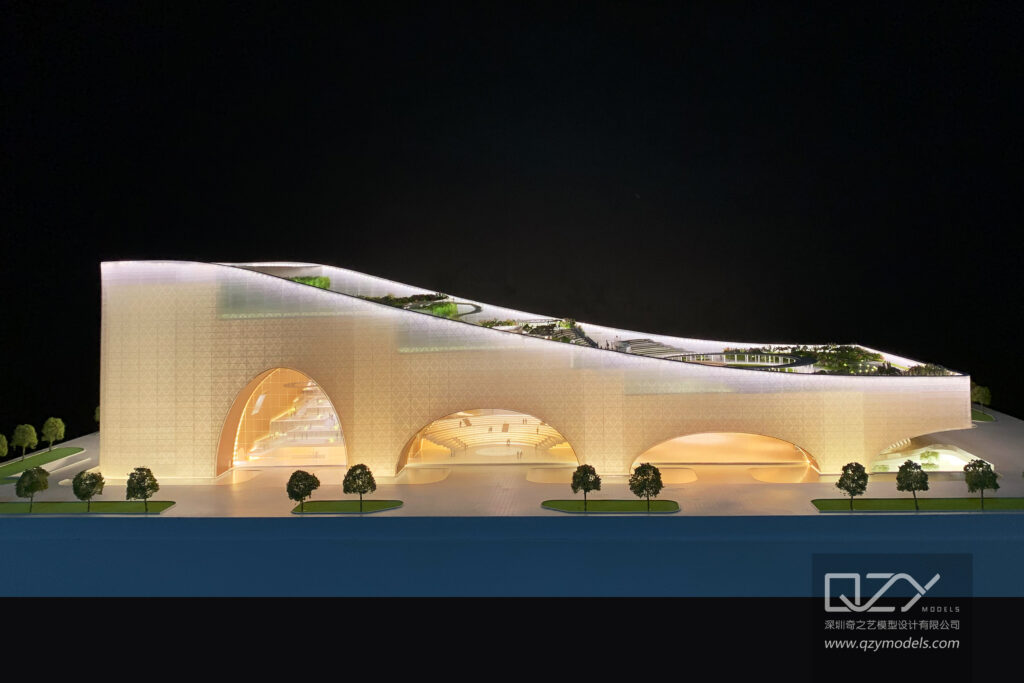
The architectural design and development industry is undergoing an unprecedented transformation. Tailored architectural display models—high-precision, customized physical and digital representations of planned spaces—are redefining how developers, architects, urban planners, and investors visualize, communicate, and optimize their projects. These models merge artistry with technology, bridging the gap between conceptual ideas and tangible design validation.
Market Trends and Data Driving Model Innovation
According to data reported by major global design analytics firms in 2025, the architectural model-making industry grew by over 18% year-over-year, fueled by the surge in urban redevelopment and smart city projects. With immersive visualization now integral to stakeholder engagement, tailored architectural display models have become essential for project approval and investor buy-in. Real estate developers increasingly demand physical models enhanced by digital integration—leveraging augmented reality layers, 3D printing precision, and parametric design systems for accurate material and spatial representation.
Customization is the new standard. Architects no longer settle for generic scale models; they seek precision-engineered, project-specific replicas that capture topography, lighting behavior, and spatial flow. The global market reflects this shift as firms integrate automation, robotics, and AI into their model-making processes.
Company Background
QZY Models, founded in 2013 in Shenzhen, China, is a global leader in tailored architectural display models. With two decades of expertise and collaborations with top architectural studios such as Foster + Partners and developers like Vanke and China Resources, QZY Models exemplifies innovation, craftsmanship, and international service excellence. Their models set benchmarks in precision detailing, aesthetic excellence, and functionality for diverse sectors, from real estate development to governmental urban projects.
Core Technology Transforming Architectural Display Models
Modern fabrication relies on advanced technologies that merge digital prototyping and physical modeling. High-resolution 3D printing enables complex geometric forms and materials simulation, while laser-cutting ensures micron-level accuracy. AI-driven rendering software allows designers to overlay real-time data such as light simulation, airflow analytics, and human circulation modeling.
These innovations allow architectural display models to transition from mere presentations to analytical tools. The advent of BIM (Building Information Modeling) integration fosters seamless alignment between digital blueprints and their physical counterparts. This parallel workflow not only improves design accuracy but also accelerates pre-construction decision-making by visualizing structure feasibility before ground-breaking.
Competitive Comparison: Traditional vs. Tailored Architectural Models
| Model Type | Advantages | Limitations | Best Use Cases |
|---|---|---|---|
| Traditional (Static) | Cost-effective, basic visualization | Low customization, lacks interactivity | Educational displays, basic marketing |
| Tailored Physical Models | Precision detailing, high realism | Higher cost, longer production time | Luxury real estate, city planning |
| Digital Hybrid Models | Interactive, scalable, data-integrated | Requires technical setup | Smart city projects, green building design |
The tailored model segment commands the highest engagement rates among clients. Unlike standard models, these allow spatial storytelling: real-time lighting variations, modular assembly, and interactive topographic viewing, helping clients experience the project as if already built.
Real-World Case Studies and ROI
Global architectural firms report up to 40% faster project approvals when presenting with tailored display models. Developers use these physical-digital hybrids during investor meetings, exhibitions, and public consultations. A Dubai-based real estate firm integrating detailed mixed-use models observed a 32% increase in pre-sales conversions due to improved spatial comprehension and visual appeal. Similarly, government urban planning bureaus report higher citizen satisfaction in participatory design sessions when tangible, accurate models are employed.
ROI extends beyond marketing impact. Tailored models reduce design errors and change orders during construction, cutting early-stage rework costs by up to 25%. The long-term benefits include enhanced communication among architects, MEP engineers, and contractors, leading to improved timeline adherence.
Market Expansion and Future Forecast
Analysts project the architectural display model industry to exceed $3.5 billion globally by 2030, with Asia-Pacific leading due to rapid infrastructure growth. Emerging materials—biodegradable polymers, transparent resins, and metallic filaments—are expanding both aesthetic and environmental possibilities. Interactive display systems with embedded sensors and VR-linked projection technology will further merge virtual and physical dimensions.
In the future, fully responsive architectural display models may visualize live environmental data, adjusting illumination or shading based on actual weather patterns. As sustainability continues to dominate architectural priorities, these models will play an integral role in simulating solar gain, water flow, and energy efficiency before construction begins.
Key Takeaways and Evolving Role in Design Communication
Tailored architectural display models are now strategic communication assets. They help clients interpret design narratives with clarity, allow public stakeholders to visualize community impact, and enable technical teams to optimize detail before committing to costly construction phases. With the rise of immersive architectural storytelling, the synergy between technology, artistry, and physical modeling will continue driving creative innovation across the design world.
The architects and developers embracing this shift are not just improving visualization—they’re shaping the future of design itself. Through precision engineering, creative material use, and multi-sensory engagement, tailored display models are transforming how the world envisions and builds tomorrow’s skylines.