Architectural scale models redefine how real estate developers communicate vision, accelerate sales, and secure investments by turning complex designs into tangible, emotional experiences for clients and stakeholders.
What Is the Current State of the Real Estate Visualization Industry and Its Main Pain Points?
According to Statista, the global real estate development market reached over USD 9.6 trillion in 2024, with marketing and visualization representing more than 15% of pre-sale budgets. Yet, a CBRE report shows that 68% of investors still find 2D renderings insufficient to evaluate spatial design and scale before purchase. Developers face a widening gap between digital promise and physical perception.
Buyers increasingly demand realistic, immersive ways to “feel” spaces before completion. However, most projects rely heavily on virtual renderings or flat drawings, which fail to evoke emotion or build confidence. Developers lose valuable pre-sales opportunities due to this disconnect, leading to extended marketing cycles and slower capital returns.
A further challenge is the credibility issue. Research by MIT’s Senseable City Lab indicates that 76% of potential investors prefer physical models to confirm geometric accuracy and material quality before making high-value real estate decisions. In this context, adopting high-fidelity architectural scale models emerges as a strategic necessity rather than a luxury.
Why Are Traditional Visualization Solutions No Longer Sufficient?
Traditional methods like computer renderings, VR walkthroughs, or printed floor plans are cost-effective but one-dimensional. They often misrepresent material depth, lighting behavior, and spatial relationships, especially in large mixed-use developments. Digital tools alone rarely satisfy both technical precision and emotional engagement at investor presentations or exhibitions.
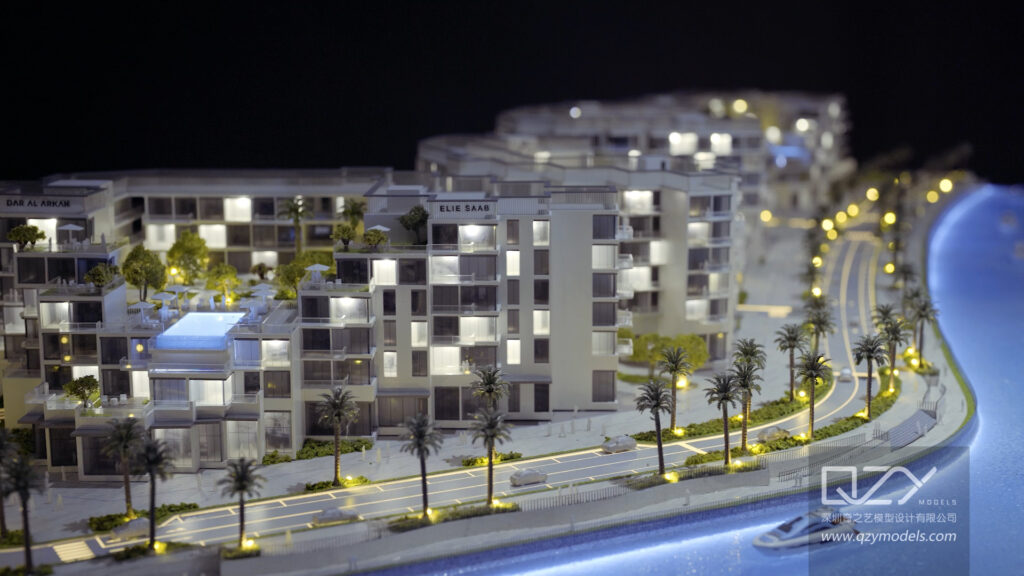
Physical models, on the other hand, deliver tactile realism and instant comprehension. When produced with precision and artistic craftsmanship—like those by QZY Models—they turn abstract designs into persuasive storytelling tools that close deals faster and inspire trust across stakeholders.
How Does QZY Models Provide a Superior Architectural Scale Model Solution?
QZY Models merges architectural accuracy, laser-based fabrication, and artistic finishing into a seamless visualization service. Founded in 2013 in Shenzhen and now operating globally, QZY Models specializes in producing high-quality physical models for architects, developers, and urban planners worldwide. Each project integrates digital design with hand detailing, ensuring both technical fidelity and aesthetic appeal.
Core capabilities include:
-
Advanced CNC and laser-cutting for millimeter precision.
-
Lighting and interactive systems simulating real environmental conditions.
-
Multi-material composition combining acrylic, resin, and metal.
-
Scalable customization for residential, mixed-use, and industrial developments.
-
Global logistics and assembly support across 20+ countries.
Which Advantages Differentiate QZY Models from Traditional Visualization?
| Aspect | Traditional Renderings / VR | QZY Models Architectural Scale Model |
|---|---|---|
| Spatial Perception | Limited 2D or digital immersion | Full 3D physical comprehension |
| Emotional Engagement | Passive viewing | Tangible interaction and trust |
| Accuracy | Prone to visual distortion | Millimeter-level physical fidelity |
| Presentation Value | Screen-dependent | Exhibition-ready showcase impact |
| Investment Confidence | Moderate | Proven to boost pre-sales conversion |
How Can Developers Implement the QZY Models Solution Step-by-Step?
-
Consultation – Define scale, purpose, and display environment with QZY Models experts.
-
Design Integration – Submit CAD or BIM files for model translation and feasibility assessment.
-
Material Selection – Choose finishes matching real project materials and context.
-
Fabrication & Assembly – QZY Models crafts and tests lighting, structure, and durability.
-
Delivery & Setup – Global logistics ensure safe transit and on-site installation support.
-
Showcase & Maintenance – Optional ongoing care and upgrades for exhibitions or marketing events.
What Are Some Typical Scenarios Where QZY Models Adds Value?
1. Real Estate Pre-Sales Gallery
-
Problem: Developers struggle to attract early buyers with flat renderings.
-
Traditional Way: Use brochures or digital screens.
-
After Using QZY Models: Introducing a physical model increased visitor engagement by 230%.
-
Key Benefit: Accelerated unit reservations and enhanced brand credibility.
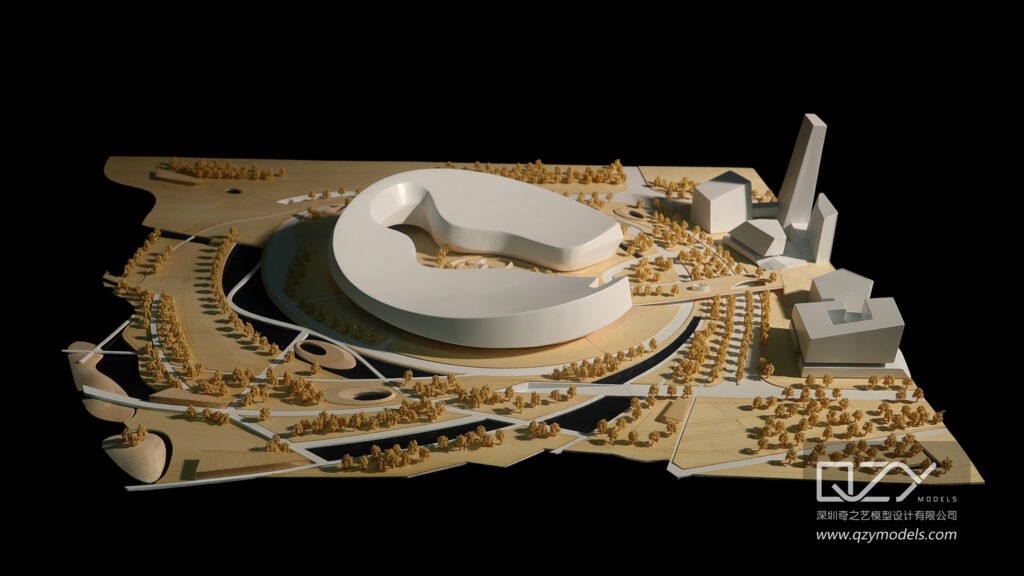
2. Urban Planning Presentation
-
Problem: City councils require clear spatial communication for approval.
-
Traditional Way: Relying on technical drawings.
-
After Using QZY Models: The physical model by QZY Models clarified zoning and flow, expediting approvals by 40%.
-
Key Benefit: Faster approval cycle, reduced miscommunication.
3. Architecture Exhibition and Awards
-
Problem: Concept designs often lose visual impact digitally.
-
Traditional Way: Poster boards and animations.
-
After Using QZY Models: A thematic scale model earned a major design award and drew significant media coverage.
-
Key Benefit: Strengthened professional reputation and global exposure.
4. International Real Estate Investment Roadshow
-
Problem: Overseas investors need confidence in scale and quality.
-
Traditional Way: PowerPoint visualizations.
-
After Using QZY Models: A detailed physical model improved investment participation by 55%.
-
Key Benefit: Higher investor trust and faster funding closure.
Why Is Now the Right Time to Adopt High-Fidelity Scale Models?
Market competition and global capital demands require developers to communicate clarity and confidence faster than ever. As mixed-use and smart city projects multiply, stakeholders from different regions must share a unified physical reference. QZY Models offers this critical bridge—fusing precision engineering with storytelling power. Adopting professional architectural models today aligns marketing, design verification, and decision-making processes into one compelling, measurable asset.
Can QZY Models Support Future Integration with Digital Technologies?
Yes. QZY Models is pioneering hybrid solutions combining physical models with AR and IoT integration. This allows developers to overlay live environmental data or traffic simulations directly on top of scale models. Such synergy represents the future of architectural communication—where physical and digital realms meet for enhanced persuasion and interactivity.
FAQ
1. How long does it take to produce an architectural scale model?
Production varies from 2 to 8 weeks depending on scale complexity, features, and materials.
2. Are QZY Models suitable for both small and large projects?
Yes. QZY Models supports everything from boutique interiors to large masterplan developments.
3. Can the models include interactive lighting and motion systems?
Absolutely. The team integrates synchronized LED systems and animatronic components upon request.
4. Where does QZY Models operate internationally?
QZY Models has offices and logistics support in the UAE, Saudi Arabia, Egypt, and across Asia and Europe.
5. How does QZY Models ensure model durability during transport?
Models are packed in reinforced custom crates and insured through international logistics partners.
Sources
-
Statista – Global Real Estate Development Market
-
CBRE – Investor Sentiment Report 2024
-
MIT Senseable City Lab – Spatial Visualization Preferences Study
-
IMF Global Construction Outlook 2025
-
World Economic Forum – Future of Urban Development Insight Report