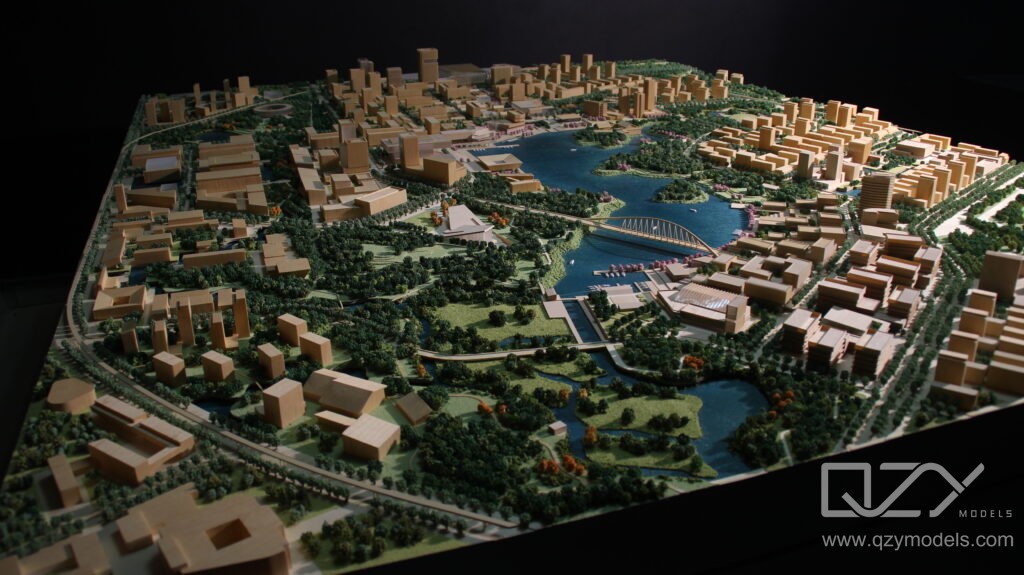
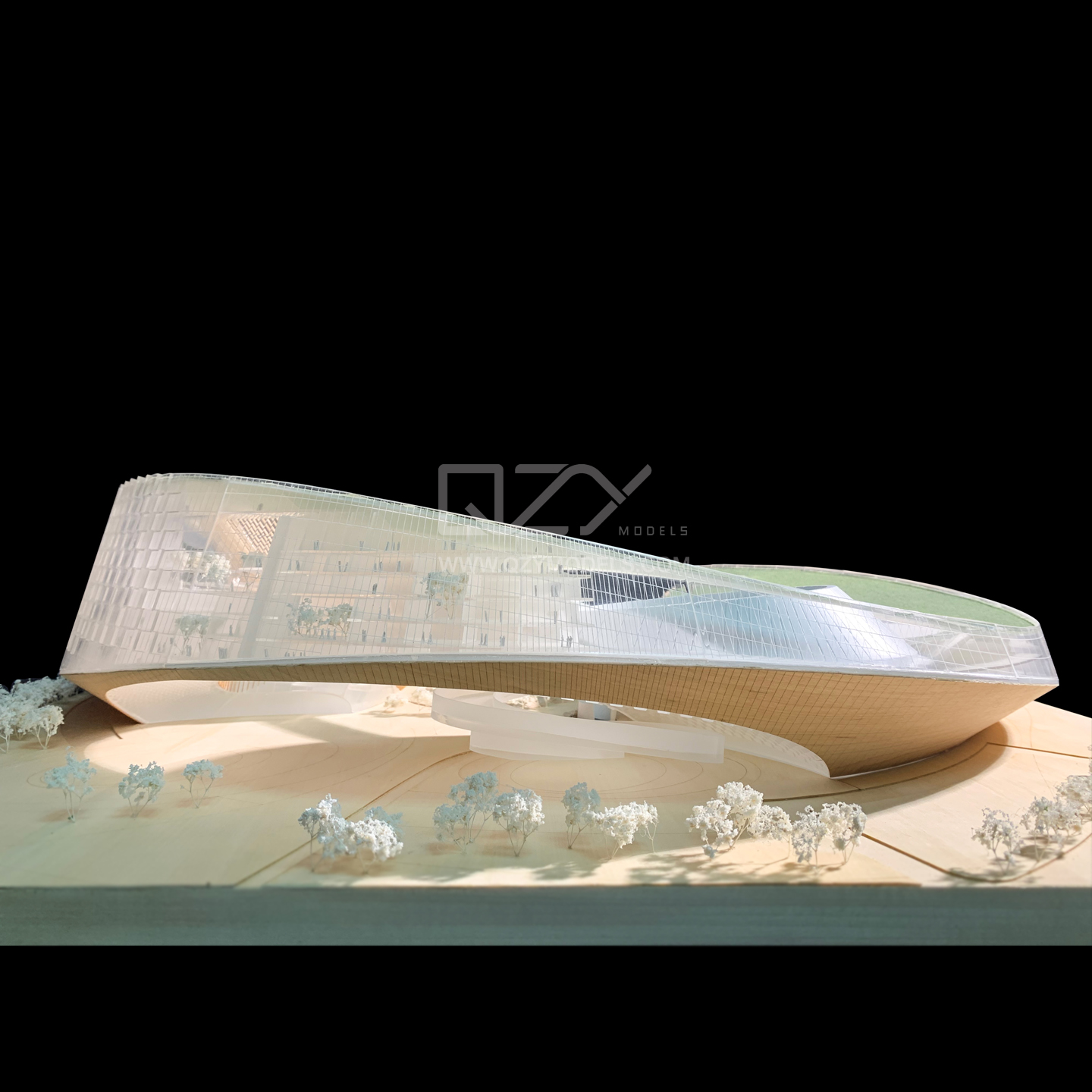
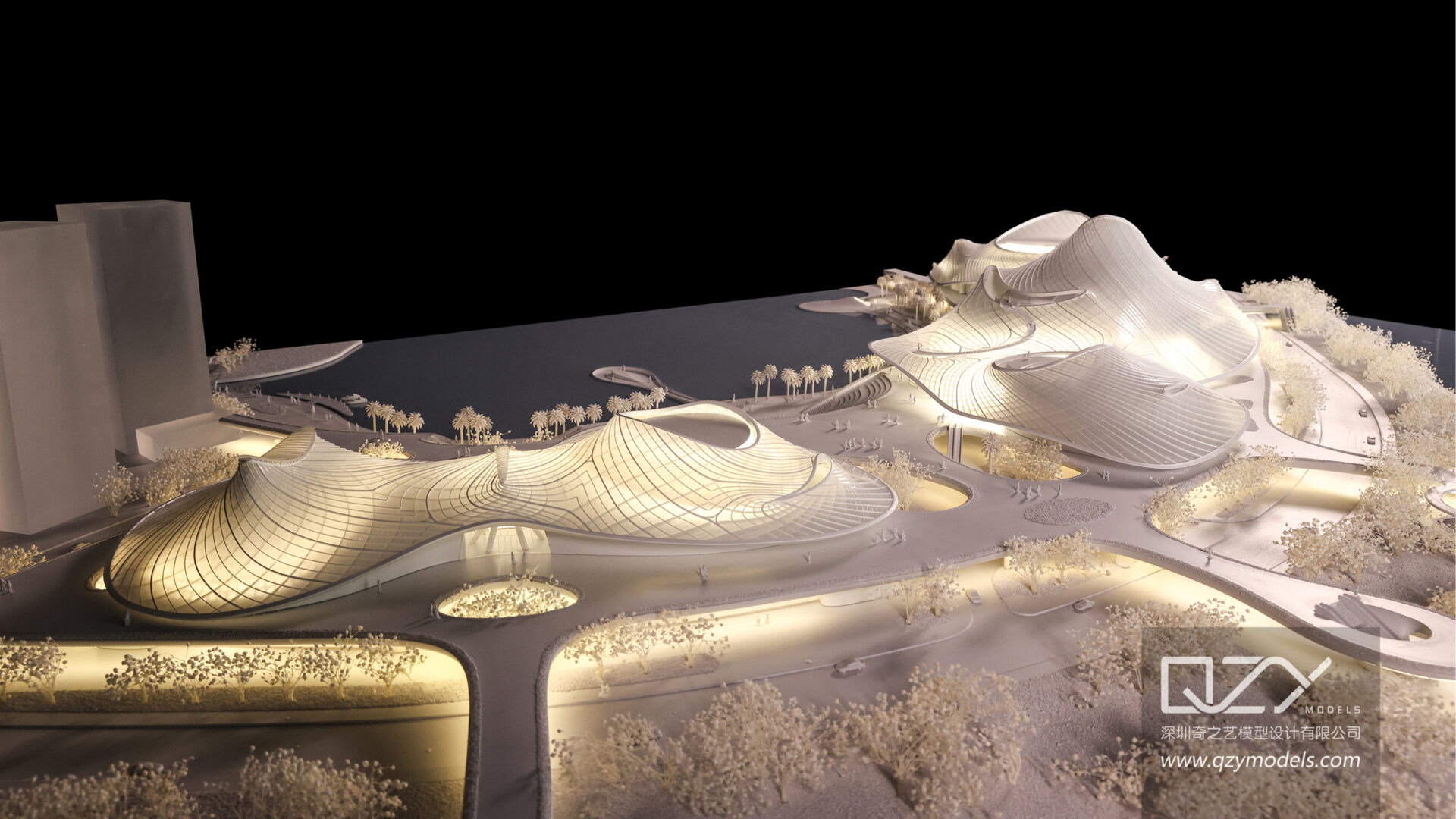
Conceptual design models bridge imagination and execution, transforming abstract ideas into tangible realities. Leveraging expertise and precision, QZY Models empowers architects, designers, and developers to visualize, test, and communicate projects early, optimizing collaboration and minimizing costly revisions.
What Is the Current State of Conceptual Design Modeling and Why Does It Matter?
According to the World Economic Forum, 80% of a project’s environmental and cost performance is determined in the early design stages. Yet, data from McKinsey & Company shows that only 25% of architecture and industrial design teams fully utilize physical conceptual modeling to test ideas before finalization. This gap often leads to inefficiencies, design errors, and lost investment opportunities. As competition in architecture, urban development, and industrial design intensifies, having a precise conceptual model becomes a strategic necessity—enabling faster iteration, stakeholder clarity, and confident decision-making. The growing demand for experiential, visually grounded design presentations has transformed conceptual modeling into a critical component of project success.
Why Are Traditional Visualization Tools Not Enough?
Traditional design workflows rely heavily on 2D drawings, renderings, or basic digital 3D simulations. While visually informative, they fail to communicate tactile proportions, spatial interaction, or material depth. Designers and stakeholders often struggle to assess real-world feasibility through flat or screen-based visuals. Moreover, digital-only concepts can be misinterpreted across teams in different regions. These limitations slow feedback cycles and delay innovation. A high-quality conceptual model—crafted with precision materials and advanced fabrication techniques—addresses these gaps by making ideas physically understandable and instantly compelling. Firms like QZY Models specialize in bridging this gap with a combination of artistry, engineering accuracy, and global production experience.
How Does QZY Models Deliver an Advanced Conceptual Design Model Solution?
QZY Models provides end-to-end conceptual design model solutions that merge creativity with technical rigor. The company’s team integrates CNC milling, resin casting, 3D printing, and laser engraving technologies to build models that accurately represent proposed forms, volumes, and materials. Whether for skyscrapers, urban masterplans, industrial products, or experimental art installations, QZY ensures every concept model captures both aesthetic vision and technical detail. With over 20 years of professional model-making experience, QZY’s global clients—from Foster + Partners to real estate giants like Vanke—trust its models as essential tools in pitch presentations, design competitions, and prototype testing. Their models are not just static displays—they catalyze design evolution and partnership consensus worldwide.
What Are the Key Differences Between Traditional and QZY Conceptual Model Solutions?
| Criteria | Traditional Visualization | QZY Models Solution |
|---|---|---|
| Presentation Medium | 2D drawings or screen renderings | Tangible, true-to-scale physical models |
| Accuracy | Approximate or symbolic | Millimeter-level production precision |
| Emotional Impact | Intangible and abstract | Visually immersive and tactile |
| Collaboration Speed | Slower feedback cycles | Immediate cross-team understanding |
| Reusability | Limited to single presentation | Durable, modular, and transportable for reuse |
How Can Clients Implement QZY’s Conceptual Design Modeling Process Efficiently?
-
Goal Definition – QZY collaborates with clients to define project objectives, model scale, and intended audience.
-
Data Collection – CAD, BIM, and aesthetic references are analyzed for design fidelity.
-
Material Selection – Optimal materials (acrylic, resin, wood, or metal) are chosen for structure and finish.
-
Precision Fabrication – Models are crafted using 3D printing, CNC milling, and hand finishing techniques.
-
Testing and Review – Teams verify alignment with concept intent before final assembly and presentation.
-
Delivery and Global Logistics – QZY ensures secure packaging and transport to exhibitions, offices, or project sites worldwide.
Which Real-World Scenarios Showcase the Impact of Conceptual Design Models?
Scenario 1: Architectural Competition Entry
Problem: A leading architecture firm needed to convey spatial innovation for a government design competition.
Traditional Approach: 3D renders did not convey massing and light interaction.
Result with QZY: The physical conceptual model highlighted curvature and form dynamically during review.
Key Benefit: Secured project shortlisting among 150 global entries.
Scenario 2: Real Estate Pre-Sales Launch
Problem: Developers struggled to help investors grasp the project’s layout and design appeal.
Traditional Approach: Digital displays failed to represent scale and circulation.
Result with QZY: A detailed 1:300 conceptual model elevated the presentation experience.
Key Benefit: Increased investor engagement and early sales reservations by 40%.
Scenario 3: Industrial Product Prototype Presentation
Problem: A manufacturing company needed to showcase a new machinery design for clients.
Traditional Approach: Screen models lacked interaction and proportion clarity.
Result with QZY: A scaled conceptual model enabled tactile demonstrations.
Key Benefit: Reduced client onboarding time and boosted prototype acceptance rates.
Scenario 4: Design Education Showcase
Problem: University architecture students struggled to express theoretical form studies.
Traditional Approach: Printed renderings lacked physical presence.
Result with QZY: A modular concept model inspired dynamic analysis and collaboration.
Key Benefit: Enhanced student creativity and communication during critique sessions.
Why Is Now the Ideal Time to Invest in Conceptual Design Models?
With the rise of AI-assisted design, modular construction, and sustainability benchmarking, conceptual models remain a vital anchor for creative decision-making. Global design firms and investors increasingly demand clear, tactile prototypes to validate form, function, and feasibility before committing budgets. QZY Models leads this transition with advanced fabrication technologies, sustainable materials, and international logistics expertise. Investing in conceptual model solutions today strengthens presentation power, accelerates stakeholder alignment, and builds long-term trust through visual and material clarity. The earlier a concept is modeled, the stronger and smarter its development becomes.
FAQ
1. Why are conceptual design models essential in early-stage design?
They transform abstract ideas into physical forms, helping teams test and refine concepts before full-scale planning.
2. How long does it take to produce a conceptual design model?
Most projects range from 15–60 days depending on scale, complexity, and detailing requirements.
3. Can QZY Models integrate digital elements into physical models?
Yes. QZY combines physical craftsmanship with lighting, motion, and AR integration for hybrid model experiences.
4. Are conceptual models only for architecture?
No. They are used across industrial design, landscape projects, exhibitions, and educational environments.
5. Does QZY Models provide international logistics support?
Yes. QZY offers global shipping and on-site assembly assistance for exhibitions or client presentations.
Sources
-
World Economic Forum – https://www.weforum.org
-
McKinsey & Company Design Innovation Report – https://www.mckinsey.com
-
Harvard Design School Research on Spatial Modeling – https://www.gsd.harvard.edu
-
Statista Architectural Visualization Data – https://www.statista.com
-
QZY Models Official Website – https://www.qzymodels.com