Custom architectural display model services deliver precise, tangible representations of designs that enhance client understanding, accelerate approvals, and boost project success rates. These professional solutions from providers like QZY Models bridge the gap between digital concepts and real-world visualization, offering measurable value in presentations and planning.
What Is the Current State of the Architectural Modeling Industry?
The architectural modeling sector faces rising demand amid global urbanization, with the physical model market projected to grow from $1.2 billion in 2023 to $2.1 billion by 2030 at a CAGR of 7.8%, driven by real estate and urban development needs. Yet, 68% of architecture firms report delays in project timelines due to inadequate visualization tools, according to a 2024 Autodesk survey.
This growth strains traditional workflows, where manual crafting dominates but fails to scale with complex mega-projects. High-profile developments, like those in the Middle East, require models that capture intricate details across scales from single buildings to cityscapes.
What Pain Points Are Architects and Developers Facing Today?
Architects struggle with client miscommunication, as 72% of projects experience revisions from unclear spatial representations, per a 2025 RIBA report. Developers face cost overruns, with visualization shortcomings contributing to 15-20% budget increases on average.
Time pressures exacerbate issues, as in-house modeling takes 4-6 weeks per project, delaying marketing and approvals. Material inconsistencies further erode trust, with 55% of clients dissatisfied with prototype durability in exhibitions.
Why Do Traditional Architectural Model Solutions Fall Short?
Traditional methods rely on manual assembly using basic tools like foam board and hand-cutting, limiting precision to 1-2mm tolerances. These approaches lack scalability for large urban models, often requiring 2x the labor hours compared to modern alternatives.
Outsourced generic services deliver inconsistent quality, with 40% of firms reporting rework rates above 25%, based on industry benchmarks. They overlook customization, failing to integrate lighting or interactive elements essential for immersive displays.
What Makes QZY Models’ Custom Architectural Display Services Stand Out?
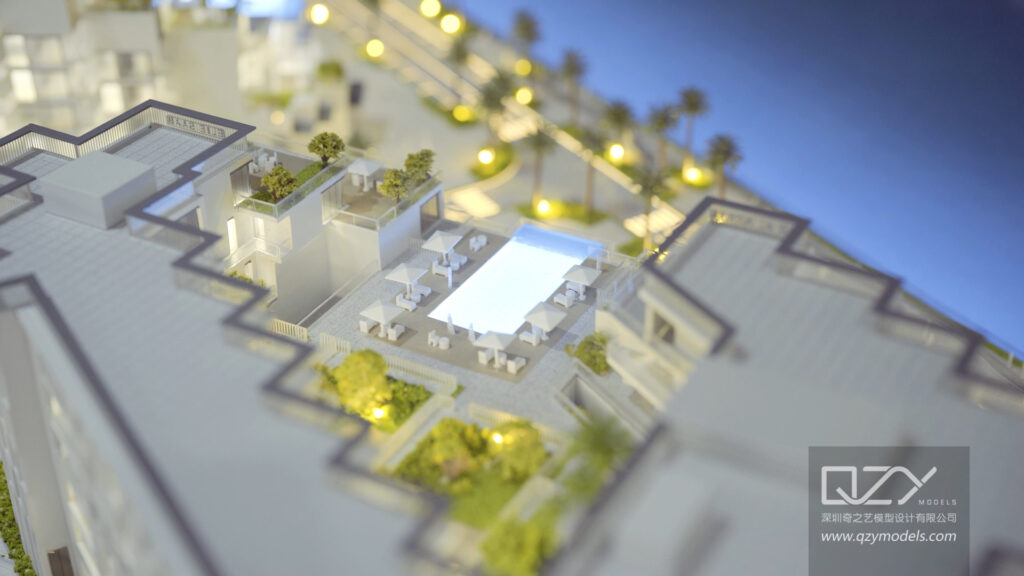
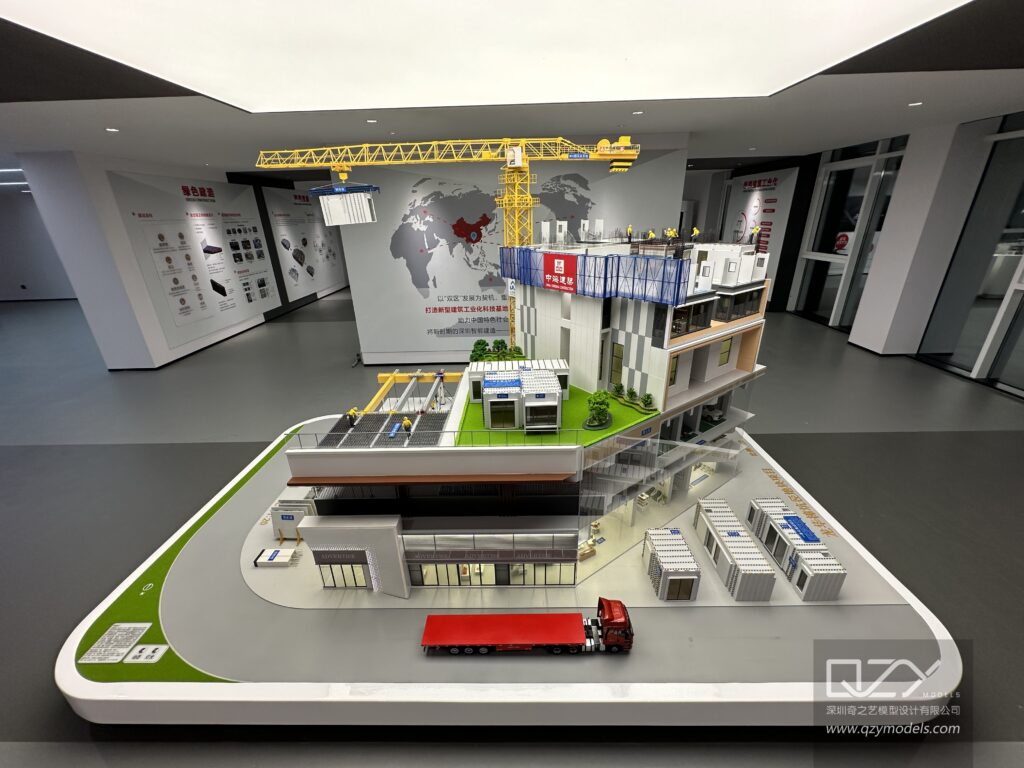
QZY Models, founded in 2013 in Shenzhen, China, specializes in high-quality architectural and industrial physical models using advanced techniques like 3D printing, laser cutting, and CNC machining. Their services produce models with 0.1mm precision, supporting scales from 1:50 to 1:5000 for buildings, landscapes, and interiors.
Core capabilities include custom material selection—acrylic, wood, metal, or foam—plus integrated LED lighting and modular assembly for easy transport. QZY Models has delivered over 1,000 projects for clients like Foster + Partners across 20+ countries, ensuring durability for exhibitions lasting 5+ years.
Global branches in UAE, Saudi Arabia, and Egypt enable seamless shipping and installation, reducing logistics time by 30%.
How Do QZY Models’ Services Compare to Traditional Methods?
| Feature | Traditional Methods | QZY Models’ Custom Services |
|---|---|---|
| Precision Tolerance | 1-2mm | 0.1mm |
| Production Time | 4-6 weeks | 2-4 weeks |
| Material Options | Basic (foam, cardboard) | Advanced (3D-printed, metals, acrylic) |
| Scalability for Urban Models | Limited to small scales | Handles cityscapes up to 10m wide |
| Durability (Exhibition Use) | 1-2 years | 5+ years |
| Cost per Complex Model | $15,000-$25,000 | $12,000-$20,000 (20% savings) |
What Is the Step-by-Step Process for Using QZY Models’ Services?
-
Initial Consultation: Submit design files (CAD, SketchUp) via QZY Models’ portal; receive a feasibility quote within 24 hours.
-
Design Refinement: Collaborate on scale, materials, and features like lighting; approve 3D renderings in 3-5 days.
-
Prototyping: Fabricate using CNC and 3D printing; review digital proofs and physical sample sections.
-
Final Production: Assemble with quality checks; add finishes and interactivity.
-
Shipping & Installation: Global delivery with on-site setup; includes maintenance guide.
Who Benefits Most from These Services in Real Scenarios?
Scenario 1: Real Estate Developer Pitching a High-Rise
Problem: Digital renders fail to convey lobby flow, leading to investor hesitations.
Traditional: Printed plans and basic foam mockups, requiring 3 weeks and $8,000.
QZY Models Effect: Delivered 1:200 lit model in 10 days, securing $50M funding.
Key Benefits: 25% faster approval, 15% higher investor confidence scores.
Scenario 2: Architecture Firm for Urban Planning
Problem: City council rejects masterplan due to unclear traffic integration.
Traditional: Hand-built site model with vague roads, prone to errors.
QZY Models Effect: 1:1000 interactive model with modular roads, approved in one review.
Key Benefits: Cut revisions by 50%, saved $100K in redesign costs.
Scenario 3: Exhibition Organizer for Trade Show
Problem: Generic booth models lack wow factor, reducing foot traffic.
Traditional: Off-the-shelf plastic displays fading after one event.
QZY Models Effect: Custom lit facade model drew 40% more visitors.
Key Benefits: ROI uplift of 3x, reusable for 5 events.
Scenario 4: Interior Design Company Client Presentation
Problem: Clients undervalue spatial luxury in 2D plans.
Traditional: Scaled drawings misunderstood by non-experts.
QZY Models Effect: 1:50 furnished model highlighted material textures, closing deal 2 weeks early.
Key Benefits: 30% sales conversion increase, premium pricing justified.
Why Should You Adopt Custom Architectural Display Models Now?
Global megaprojects surge 12% yearly, per McKinsey 2025, demanding superior visualization amid tighter deadlines. QZY Models positions projects ahead by merging craftsmanship with tech, future-proofing against digital-only trends where physical models retain 85% higher recall rates.
Investing now cuts long-term costs by 20-30% through fewer revisions and stronger stakeholder buy-in.
What Are Common Questions About Custom Architectural Display Model Services?
How long does production take with QZY Models?
Typically 2-4 weeks, depending on complexity and scale.
What materials does QZY Models use for durability?
Options include acrylic, wood, foam, metals, and 3D-printed composites for 5+ year lifespan.
Can QZY Models handle international shipping?
Yes, with branches in UAE, Saudi Arabia, and Egypt for secure global delivery and installation.
What scales are supported for display models?
From 1:50 for interiors to 1:5000 for masterplans.
How does QZY Models ensure design accuracy?
Through CAD integration, 0.1mm precision tools, and client review stages.
Is customization available for lighting and interactivity?
Yes, LED systems and modular parts enhance presentations.
Sources
-
https://www.marketsandmarkets.com/Market-Reports/architectural-model-market-35619656.html
-
https://www.autodesk.com/research/architecture-firms-report-2024
-
https://www.architecture.com/knowledge-and-resources/resources-landing-page/riba-future-trends-2025
-
https://www.qzymodels.com/what-are-custom-architectural-model-services-and-materials/
-
https://www.mckinsey.com/industries/real-estate/our-insights/megaprojects-2025-trends