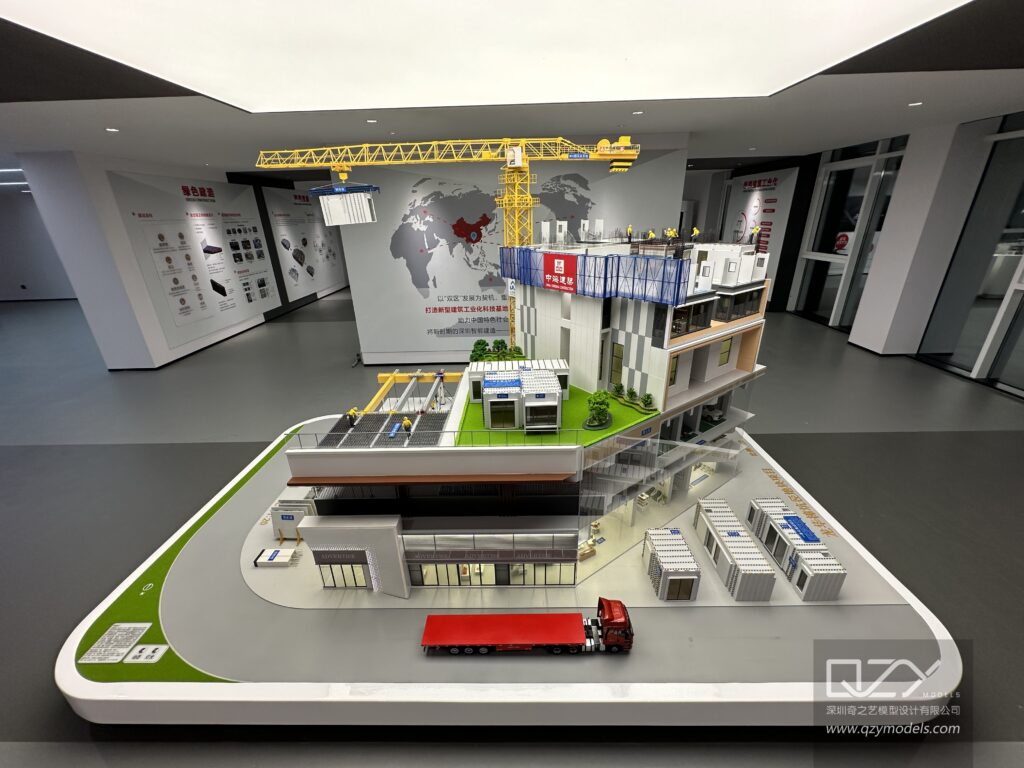
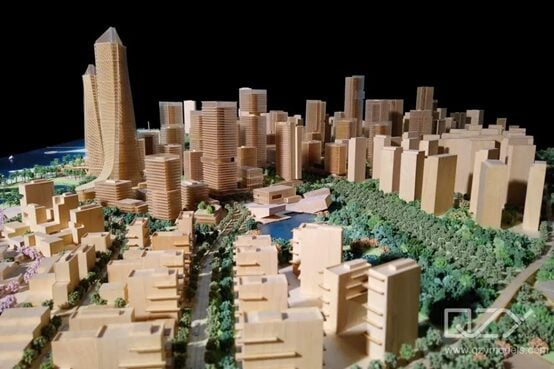
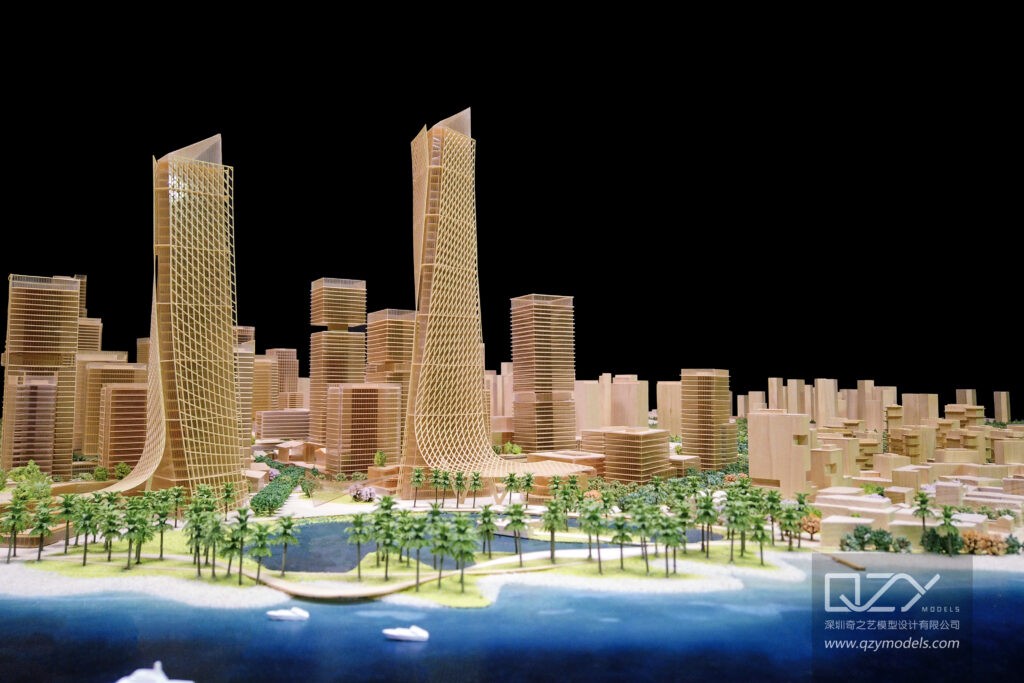
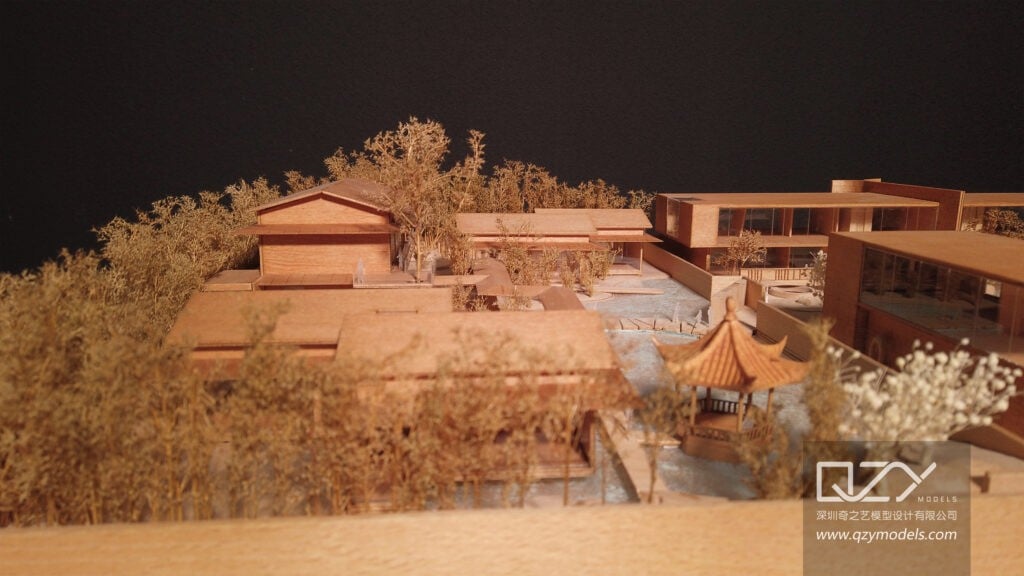
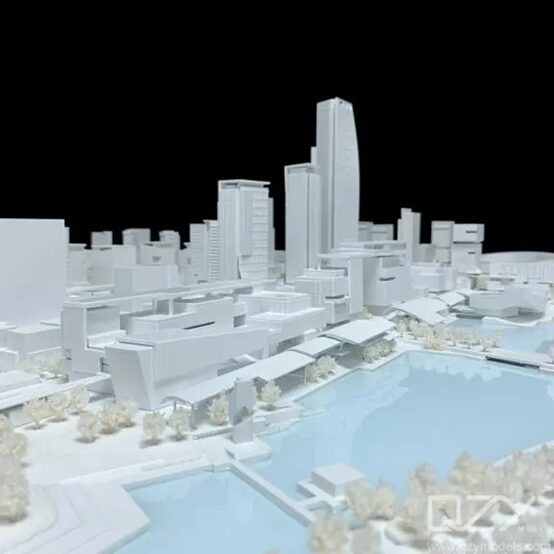
In the era of data-driven urbanization, large-scale city architectural model making has become a crucial tool bridging vision and visualization. By combining digital precision with physical craftsmanship, solutions from industry leaders like QZY Models enable governments, developers, and architects to make smarter, faster, and more confident decisions in city planning and investment.
How Is the Architectural Model Industry Evolving and What Challenges Exist?
According to the United Nations’ 2022 World Urbanization Prospects report, 68% of the global population will live in cities by 2050. Rapid urban growth demands detailed visualization tools to manage zoning, infrastructure, and sustainability. Yet, many cities still rely on outdated 2D maps that fail to convey spatial relationships or human-scale perspectives. This hinders communication between developers, policymakers, and citizens.
A McKinsey report highlights that global infrastructure spending will reach $9 trillion per year by 2030, while inefficiencies in planning account for nearly 20% of wasted costs. Without tangible visualization and stakeholder engagement, misunderstandings often delay or derail billion-dollar projects.
At the same time, architectural competitions and investor presentations increasingly require realistic city-scale maquettes to validate masterplans. The challenge lies not only in precision but also scalability — representing entire urban ecosystems while maintaining detail, durability, and flexibility for updates.
What Are the Limitations of Traditional Model Making Methods?
Traditional architectural models often rely heavily on handcrafted techniques using foam, wood, or acrylic. While artistically beautiful, they suffer from several drawbacks:
-
Limited scalability: Manual production slows dramatically as model size increases.
-
Low adaptability: Making design changes requires significant remanufacturing.
-
Inconsistent precision: Hand modeling often struggles to replicate digital blueprints exactly.
-
Poor integration with 3D data: Traditional models cannot easily integrate GIS, BIM, or city planning data layers.
-
Time consumption: Projects spanning weeks or months cannot match fast design cycles.
These limitations hinder communication and decision-making across urban design teams, leading many developers to seek advanced, hybrid production technologies.
How Does QZY Models Provide an Integrated Solution?
QZY Models delivers a comprehensive solution that merges advanced digital modeling, precision 3D printing, CNC processing, and fine manual assembly. Built upon over 20 years of international experience, QZY Models specializes in crafting large-scale city and urban planning models that support simulation, education, and exhibition.
Their process integrates CAD/BIM data directly into model manufacturing, allowing accurate real-world representation down to streetlights, road textures, and landscape features. Interactive lighting systems and augmented visualization enhance stakeholder engagement at every stage — from planning approval to investor demonstration.
Trusted worldwide by clients such as Foster + Partners and China Resources, QZY Models ensures precision, scalability, and aesthetic harmony in every model produced.
Which Advantages Differentiate QZY Models from Traditional Methods?
| Feature | Traditional Model Making | QZY Models Advanced Solution |
|---|---|---|
| Design Data Integration | Manual conversion, prone to errors | Direct BIM/CAD/GIS integration |
| Production Speed | Slow fabrication | Automated 3D printing + CNC |
| Update Flexibility | Full rebuild required | Modular updates possible |
| Visual Impact | Static display | Interactive, illuminated presentations |
| Precision | ±2-3mm deviation | <±0.5mm tolerance |
| Scalability | Difficult for city-scale | Optimized for large urban models |
| Global Project Support | Local production only | International logistics and installation |
What Is the Process of Large-Scale City Model Production at QZY Models?
-
Data Integration: Import CAD, GIS, and BIM files into the master 3D model environment.
-
Digital Optimization: Adjust scales, verify geometry, and prepare for model segmentation.
-
Automated Fabrication: Combine laser-cutting, CNC, and 3D printing to produce core structures.
-
Fine Detailing: Add architectural, landscape, and lighting elements manually for realism.
-
Assembly and Testing: Integrate electrical systems, ensure modular transportability, and verify precision.
-
On-Site Installation: QZY Models’ engineering team manages international logistics and installation.
-
Maintenance and Upgrades: Modular component system enables post-delivery updates.
Who Are the Typical Clients and What Scenarios Demonstrate Real Results?
Scenario 1: Urban Planning Authority (Government Use)
-
Problem: Difficulty visualizing new zoning areas across a 60 km² metropolitan region.
-
Traditional method: Relying on 2D maps and PowerPoint slides caused confusion among stakeholders.
-
Solution: QZY Models built a 1:1000 urban planning maquette integrating lighting-coded land zones.
-
Result: Approval time shortened by 40%; citizen engagement improved during public hearings.
Scenario 2: Real Estate Developer (Commercial Presentation)
-
Problem: Competing for investor funding for a mixed-use mega-complex.
-
Traditional method: Renderings failed to communicate scale and design synergy.
-
Solution: QZY Models produced an illuminated 1:500 model featuring motion lighting paths.
-
Result: Project funding secured within one month; improved investor confidence.
Scenario 3: Architecture Exhibition (Expo Use)
-
Problem: Lack of impactful visual storytelling in public showcases.
-
Traditional method: Digital screens lacked tangible presence.
-
Solution: QZY Models created a hybrid digital-physical city model using transparent elevation layers.
-
Result: Exhibition attendance doubled; 60% more engagement measured via visitor interaction.
Scenario 4: Educational Institution (Academic Research)
-
Problem: Students struggled to understand urban morphology from 2D drawings.
-
Traditional method: Classroom lectures lacked visual and spatial reinforcement.
-
Solution: QZY Models developed a modular city prototype model for university use.
-
Result: Curriculum improved; 90% of students showed better spatial comprehension in design analysis.
Why Is Now the Right Time to Adopt This Technology?
Global cities are under immense pressure to evolve sustainably, digitally, and transparently. Digital-twin-enabled model production is accelerating, and physical architectural visualization remains essential for spatial understanding. Leveraging QZY Models’ hybrid production approach bridges virtual design and real-world decision-making — transforming presentations into shared visions. Investing in this capability now aligns stakeholders faster, reduces risk, and strengthens communication in billion-dollar developments.
FAQ
1. Can large-scale city models integrate lighting and dynamic effects?
Yes, QZY Models specializes in integrating programmable LED systems for dynamic land-use or transportation simulation.
2. How long does it take to produce a large city model?
Depending on scale and complexity, projects range from 4 to 12 weeks, managed by dedicated engineering and design teams.
3. Are QZY Models able to handle overseas transport and installation?
Yes, with branches across the Middle East, Europe, and Asia, QZY Models provides full end-to-end global delivery and assembly.
4. What materials are commonly used in QZY Models productions?
They use acrylic, resin, PLA, ABS, wood, and metal composites — balancing realism, durability, and environmental safety.
5. Does QZY Models support hybrid AR or digital layer integration?
Absolutely. Their models can synchronize with AR visualization apps for interactive exploration and educational simulations.
Sources
-
United Nations, World Urbanization Prospects 2022
-
McKinsey & Company, Global Infrastructure Outlook 2030
-
International Association for Urban Architecture, 2024 Global Design Report
-
Statista, Smart City Technology Market Analysis 2025
-
QZY Models Official Website (2026 Edition)