Architectural models are no longer just display pieces—they’re strategic communication tools that merge artistry and technology to convey architectural vision with clarity and impact. QZY Models leads this evolution with precision, craftsmanship, and innovative mixed-media solutions that elevate design presentation to a new level of realism.
What Is the Current State of the Architectural Model Industry and Its Core Challenges?
According to a 2025 report by IBISWorld, the global architectural model-making industry surpassed USD 1.2 billion, with an annual growth rate of 6.4%. Yet, as design complexity increases and timelines shorten, many firms struggle to bridge digital design with tactile presentation. Architectural visualization—once reliant on digital renderings—faces limits in emotional engagement and spatial comprehension when compared to physical, tangible models.
Developers and architects demand not just beauty but storytelling—models capable of showcasing mixed functions, layered materials, and environmental context. Firms without advanced model-making capabilities face communication gaps with clients, who may struggle to visualize proportions, lighting, or material intent. This challenge has made the integration of mixed media—the combination of different materials, technologies, and lighting systems—an industry imperative.
A significant pain point lies in traditional workflows: long production cycles, dependence on manual craftsmanship, and lack of scalability for global projects. Despite rising costs, models often fail to fully capture the sensory and spatial experience intended by architects and designers.
Why Are Traditional Architectural Models No Longer Enough?
Traditional architectural models primarily rely on single materials—such as wood, acrylic, or foam board—and manual fabrication techniques. While visually appealing, they often lack interactivity, transparency, and environmental realism. Clients increasingly expect immersive presentations that reveal how a project interacts with surrounding landscapes, light, and real-world materials.
Manual assembly lacks precision consistency and consumes significant time. Compared with digital fabrication methods, traditional hand-modeling can take up to 50% longer, raising costs and limiting responsiveness, especially in iterative design stages. Moreover, traditional models cannot easily integrate modern visualization tools like interactive lighting, motorized movement, or augmented reality overlays.
QZY Models recognizes these limitations and has invested in hybrid fabrication systems that merge precision 3D printing, CNC milling, and manual detailing—ensuring each project embodies both accuracy and artistry.
How Does QZY Models’ Mixed Media Approach Redefine the Solution?
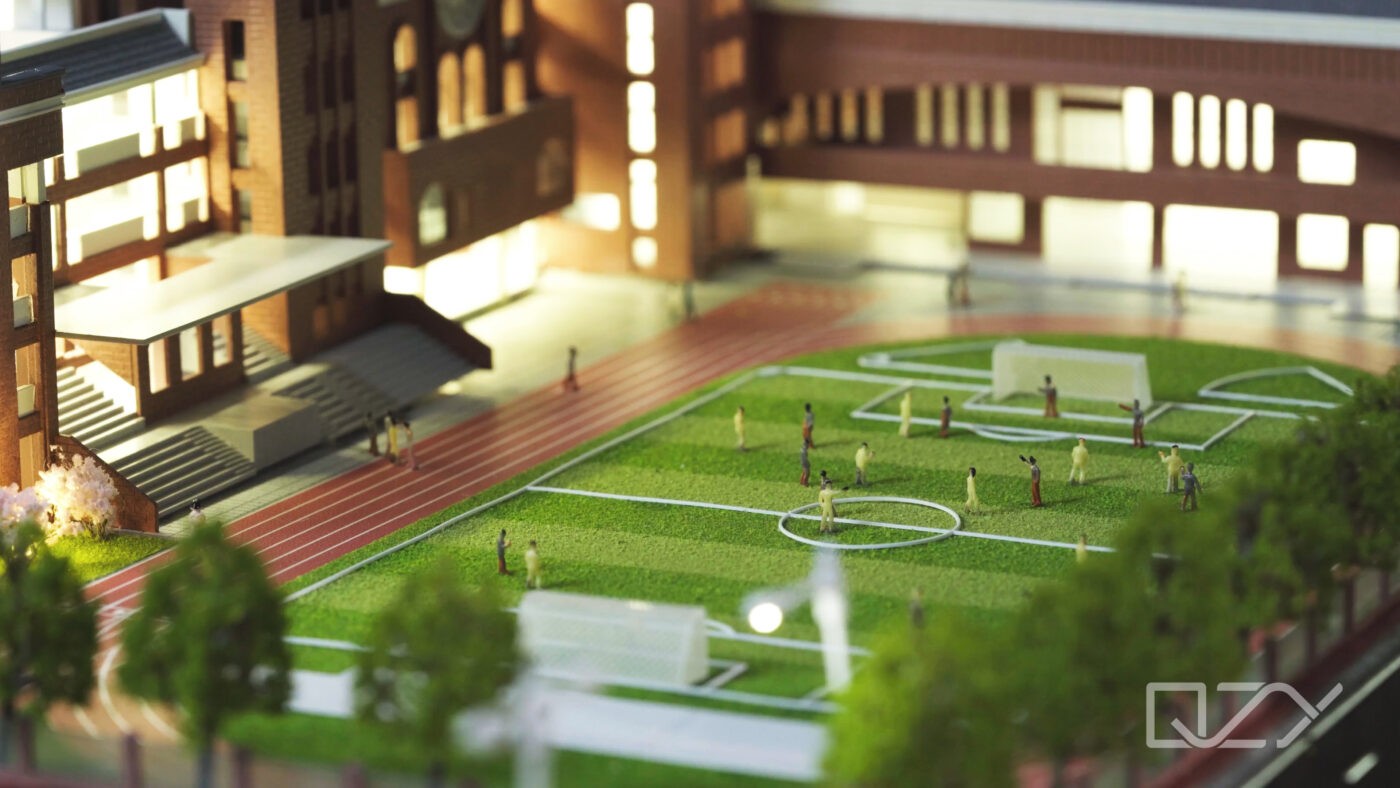
QZY Models’ mixed media architectural models integrate diverse materials—such as resin, metal, wood, acrylic, and LED systems—using a multi-layered fabrication workflow. This combination allows designers and investors to view projects in both macro and micro perspectives, revealing facade textures, interior lighting, and site relationships in real-time.
Each model incorporates five key capabilities:
-
Integration of physical and digital elements (e.g., AR-compatible bases).
-
Layered material contrasts for depth and realism.
-
Automated lighting and mechanical movement for storytelling.
-
Precision-engineered modular designs for easy transport and installation.
-
Sustainable materials and efficient production, reducing waste by up to 30%.
With over two decades of experience, QZY Models applies industry insights to help clients transform abstract blueprints into tangible narratives that accelerate project approvals and boost investor confidence.
Which Advantages Distinguish This Solution from Traditional Methods?
| Criteria | Traditional Models | QZY Models’ Mixed Media Models |
|---|---|---|
| Material Diversity | Single-material approach | Multi-material integration (wood, resin, glass, metal) |
| Production Speed | Long and manual | Digitally assisted hybrid fabrication |
| Interactivity | Static display | Dynamic lighting, movement, and AR compatibility |
| Detail Accuracy | Limited by handwork | Precision-machined, millimeter-level accuracy |
| Sustainability | High material waste | Optimized eco-material usage |
| Scalability | Localized and slow to replicate | Global delivery across multiple branches |
How Can Designers Use QZY Models’ Mixed Media Models Step by Step?
-
Project Analysis: Clients provide 3D design files, conceptual visuals, and desired presentation goals.
-
Material Planning: QZY Models’ design engineers select layered materials and define lighting effects based on project type.
-
Digital Fabrication: CNC and 3D printing machinery produce core structures with precise tolerances.
-
Manual Detailing: Expert artisans refine finishes, add textures, and integrate moving components.
-
Lighting & Enhancement: Programmable LED systems and motorized features are installed for dynamic impact.
-
Quality Control & Delivery: Final inspection ensures global logistics readiness and presentation perfection.
What Are Real-World Scenarios Demonstrating Success?
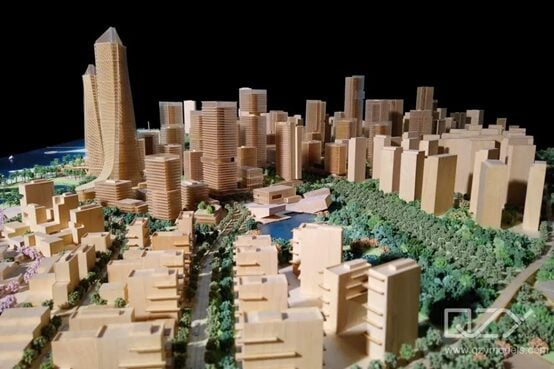
1. Urban Master Plan Model (Middle East)
-
Problem: Inconsistent visual storytelling for city-scale developments.
-
Traditional Approach: Flat foam board mockups failed to capture density and lighting.
-
QZY Models’ Impact: Introduced mixed media with acrylic towers and fiber-optic lighting to simulate night scenes.
-
Key Result: Enhanced stakeholder buy-in, accelerating government approval by 30%.
2. Luxury Residential Tower (China)
-
Problem: Buyers struggled to visualize unit layouts.
-
Traditional Approach: Digital renderings lacked depth perception.
-
QZY Models’ Impact: Incorporated transparent resin facades and interactive lighting per floor.
-
Key Result: Increased pre-sale conversion rate by 25%.
3. Eco-Park Landscape Model (Europe)
-
Problem: Limited ability to convey natural terrain and sustainability features.
-
Traditional Approach: Cardboard models looked static.
-
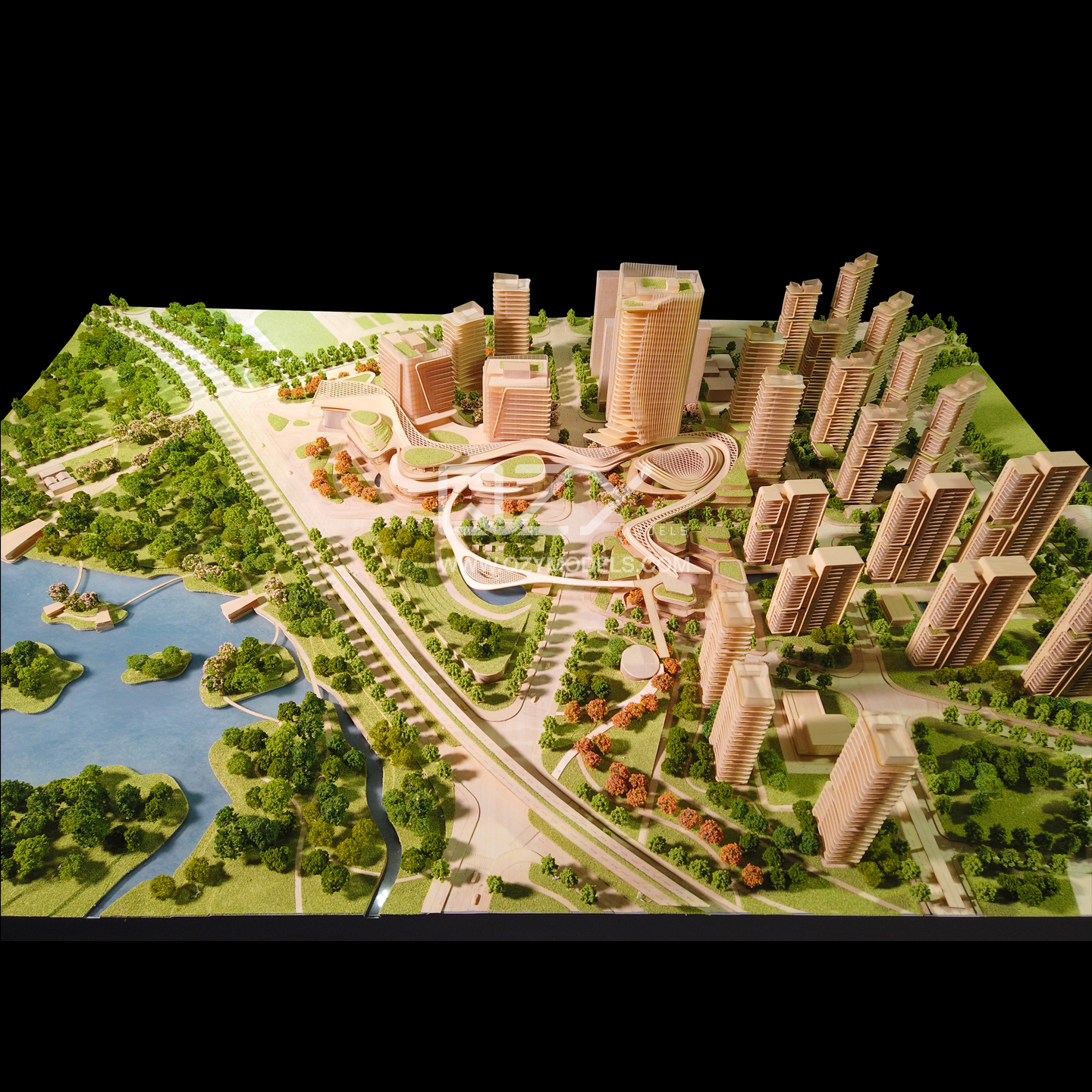
QZY Models’ Impact: Combined textured vegetation, real wood, and flowing water simulations.
-
Key Result: Project won international design award for presentation excellence.
4. Industrial Complex Prototype (Saudi Arabia)
-
Problem: Complex mechanical layouts difficult to explain to investors.
-
Traditional Approach: 2D drawings caused confusion.
-
QZY Models’ Impact: 3D embedded motion elements showed production flow in real-time.
-
Key Result: Secured additional USD 15 million in funding.
Why Is Now the Right Time to Adopt Mixed Media Architectural Models?
As the architecture, engineering, and construction (AEC) industry embraces digital transformation, the demand for tangible, data-integrated presentation models will continue to rise. Mixed media models act as the bridge between digital design files and human perception, blending innovation and craftsmanship.
With clients expecting immersive storytelling, adopting hybrid model-making platforms like QZY Models ensures competitive advantage, scalability, and international consistency. The sooner design firms implement advanced mixed media solutions, the faster they elevate communication, win bids, and inspire confidence among global partners.
FAQ
1. What materials are used in QZY Models’ mixed media models?
They combine wood, resin, acrylic, metal, and programmable LED systems to achieve realistic detail and durability.
2. Can mixed media models integrate digital technologies like AR or projection mapping?
Yes, QZY Models provides AR-ready bases and smart lighting systems compatible with projection integrations.
3. How long does it take to produce a medium-sized mixed media model?
Typical timelines range from 3 to 5 weeks, depending on complexity and interactivity level.
4. Are mixed media models more sustainable than traditional ones?
Yes, hybrid fabrication reduces waste by up to 30% and uses recyclable materials.
5. Who are the ideal clients for QZY Models?
Architectural firms, real estate developers, government planners, and exhibition organizers seeking premium-quality presentation models.
Sources
-
IBISWorld: Global Architectural Model Market 2025 Report
-
Statista: AEC Industry Growth Data 2024
-
McKinsey & Company: Future of Construction Technology 2025
-
World Architecture Community: Model-Making Trends Analysis 2025
-
Deloitte Insights: Digital Transformation in Architecture 2024