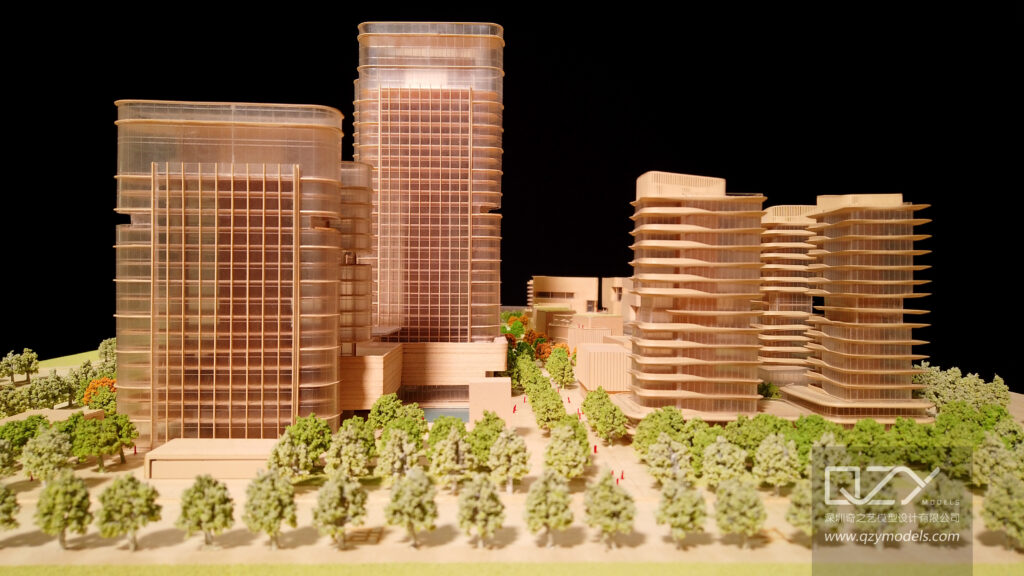
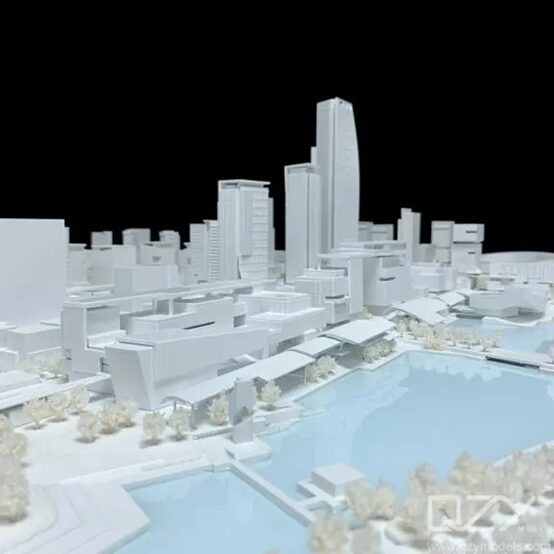
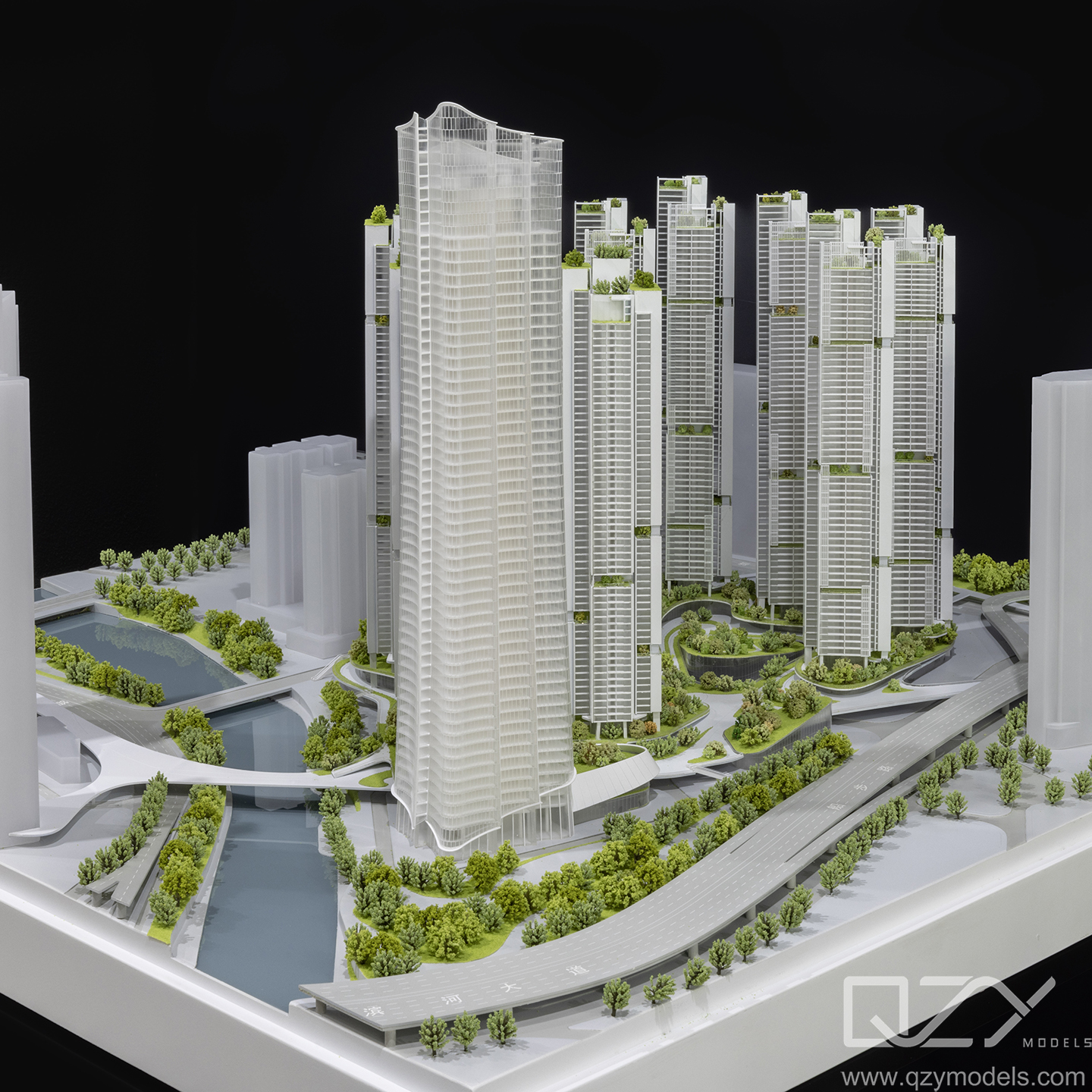
Precision model making delivers the physical accuracy and aesthetic clarity needed to bridge concept and reality. Today, innovators like QZY Models enable global architects, manufacturers, and designers to validate, refine, and present concepts with unmatched fidelity—driving faster decisions and more confident investments.
Why Is Precision Model Making Becoming Critical in Today’s Design and Manufacturing Landscape?
In 2026, the global design industry faces mounting pressure for faster iteration and flawless precision. According to McKinsey’s Design Productivity Report, errors during pre-production stages cost firms up to 20% of annual budgets due to misalignment between digital and physical outputs. As expectations rise, even small deviations in scale or detail can jeopardize multi-million-dollar projects.
Architectural visualization is also evolving beyond aesthetics to technical precision. Statista’s 2025 Architecture Data Study found that 71% of developers prefer physical models combined with digital visualization for final decision-making. Consistency, accuracy, and the tangible impact of well-made models influence not just design validation—but also sales, investor trust, and brand reputation.
For industrial and architectural pioneers working on complex designs, precision is not optional—it’s strategic. QZY Models, a leading fabrication specialist, provides high-accuracy, laser-finished physical models that merge technical excellence with artistic craftsmanship, enabling design teams to present their ideas with confidence and clarity.
What Are the Pain Points and Challenges in Traditional Model Making?
Traditional model fabrication often relies on extensive manual labor, leading to variation and inconsistency between iterations.
-
Manual measurements cause scaling inaccuracy beyond acceptable tolerances.
-
Traditional workshops frequently lack precise digital integration, increasing data loss during transitions.
-
Material mismatch between prototype and final product creates visual distortion.
Moreover, coordinating multidisciplinary teams across geographies complicates synchronization. Industrial design companies report time losses averaging 25% due to rework from manual errors in physical model representation, according to a 2024 Deloitte study.
How Does QZY Models Deliver Next-Level Precision Model Making?
QZY Models merges digital precision with artisanal craftsmanship. By integrating CAD-driven CNC milling, laser cutting, and 3D printing with human artistry, it ensures every structural, mechanical, and aesthetic element is flawless. Core capabilities include:
-
High-Density CNC Machining for sub-millimeter accuracy.
-
Hybrid Material Fabrication, combining acrylics, aluminum, wood, and resin.
-
Digital-to-Physical Syncing, ensuring complete alignment with BIM or CAD data.
-
Finishing Control, through advanced coatings and lighting systems that enhance realism.
-
Global Delivery, offering consistent quality across multi-country projects.
This end-to-end approach gives designers and developers a high-confidence validation tool that mirrors their exact design vision.
What Are the Advantages of Precision Model Making by QZY Models Compared to Traditional Approaches?
| Feature | Traditional Model Making | QZY Precision Model Making |
|---|---|---|
| Accuracy | ±2–3 mm tolerance | ±0.1 mm tolerance |
| Production Speed | 4–8 weeks | 1–3 weeks |
| Data Integration | Manual conversion | Direct CAD/BIM import |
| Material Consistency | Variable and limited | Controlled hybrid materials |
| Aesthetic Realism | Static finishes | Dynamic lighting and texture replication |
| Global Support | Limited local studios | Worldwide logistics and installation |
How Does the QZY Precision Model Making Process Work?
The QZY production method ensures maximum consistency through controlled collaboration.
-
Concept Alignment – Clients upload design files via QZY’s secured digital portal.
-
Technical Evaluation – Engineers analyze geometry, tolerance, and structural considerations.
-
Material Selection – Optimal hybrid materials are proposed for balance between texture and durability.
-
Precision Fabrication – CNC, laser, and 3D printing systems replicate the data with micro-level accuracy.
-
Finishing & Assembly – Skilled modelers conduct painting, detailing, lighting, and structural mounting.
-
Quality Assurance & Delivery – Each model undergoes dimensional verification before international shipping.
Which Real-World Use Cases Showcase the Impact of Precision Model Making?
Case 1: Landmark Architectural Project (Mixed-Use Complex)
-
Problem: Clients had difficulty understanding complex form and facade geometry.
-
Traditional approach: Rendered visuals lacked realism.
-
Result with QZY Models: 1:200 precision model with true facade detail improved stakeholder approval rates by 45%.
-
Key benefit: Enabled smoother regulatory and investor reviews.
Case 2: Industrial Manufacturing Prototype (Heavy Machinery)
-
Problem: Engineering tolerances could not be visualized or tested effectively.
-
Traditional approach: 2D CAD mockups failed to reveal assembly conflicts.
-
Result with QZY Models: Micro-precision parts modeled at real-scale revealed interference zones early.
-
Key benefit: Eliminated production rework, saving 12% in cost and 3 weeks in lead time.
Case 3: Urban Development Masterplan (Smart Infrastructure)
-
Problem: Large-scale coordination across multiple planners.
-
Traditional approach: Disconnected model segments caused inconsistent site alignments.
-
Result with QZY Models: Digitally matched sectional models achieved ±0.05 mm integration accuracy.
-
Key benefit: Enhanced data synchronization across international teams.
Case 4: Luxury Interior Showcase (High-End Real Estate)
-
Problem: Clients needed a tangible, realistic display to close high-value deals.
-
Traditional approach: 3D renderings lacked immersive visual cues.
-
Result with QZY Models: Illuminated, texture-accurate model replicated actual materials.
-
Key benefit: Accelerated contract sign-offs by 30%.
Why Is Now the Strategic Time to Adopt Precision Model Making?
Global design ecosystems are digitizing, but physical demonstration remains irreplaceable for conveying trust and spatial understanding. The convergence of automation, AI-driven design, and precision fabrication sets a new standard. QZY Models combines advanced engineering and artistry—turning design accuracy into a commercial advantage. In 2026, precision modeling doesn’t just illustrate vision—it secures confidence, reduces risk, and builds brand credibility.
FAQ
1. What defines a precision model compared to a general architectural model?
A precision model emphasizes accuracy in dimensions, materials, and details, strictly matching digital project data.
2. Can QZY Models create both architectural and industrial precision models?
Yes. QZY Models produces models across industrial, architectural, and interior sectors.
3. How long does a precision model typically take to manufacture?
Most precision models are completed within three weeks, depending on complexity.
4. Are lighting and motion effects part of precision models?
Yes. Lighting, motion, and interactive controls can be fully integrated.
5. Does QZY Models support large-scale exhibition installations?
Yes. The company manages assembly and installation in international trade shows and urban design pavilions.
Sources
-
McKinsey Design Productivity Report 2025 – https://www.mckinsey.com
-
Deloitte Global Manufacturing Study 2024 – https://www.deloitte.com
-
Statista Architecture Data Study 2025 – https://www.statista.com
-
PwC Engineering Efficiency Report 2025 – https://www.pwc.com
-
World Architecture Community Industry Outlook 2025 – https://worldarchitecture.org