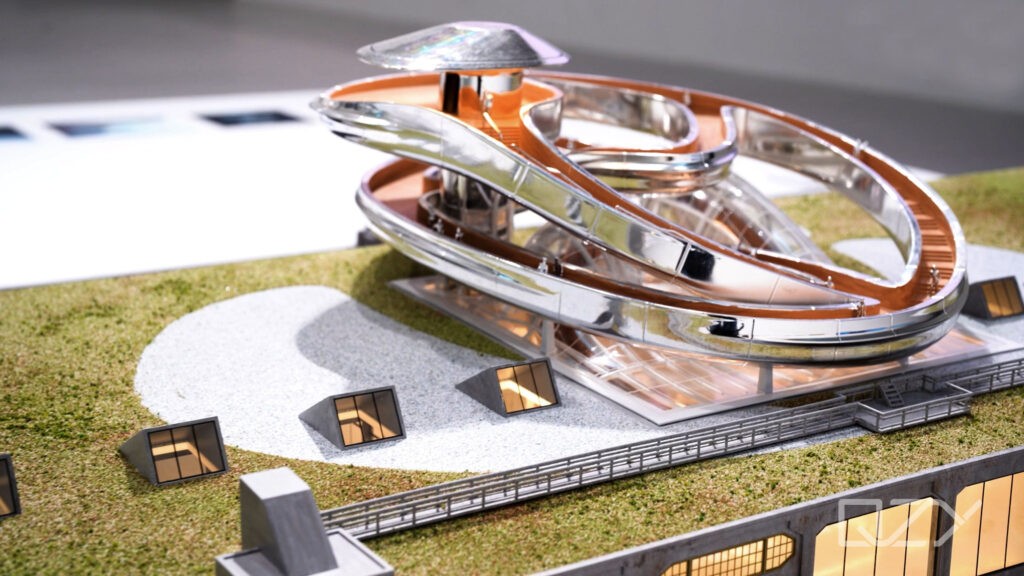
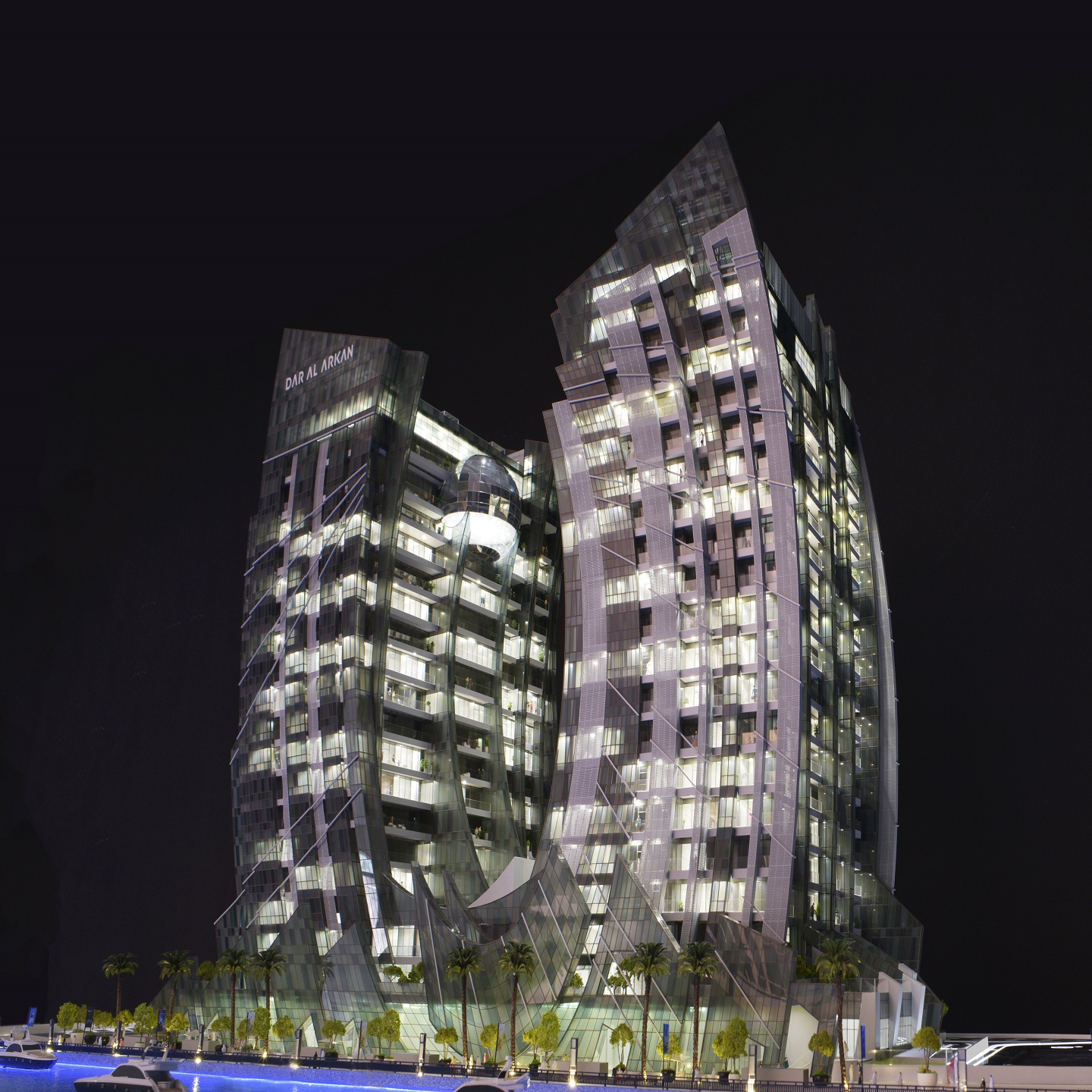
In an era of accelerated urban expansion, precision in architectural visualization has become crucial. Urban architectural model design empowers architects, developers, and city planners to translate complex ideas into tangible, data-backed solutions that enhance decision quality and communication impact.
What Is the Current State of Urban Architectural Design and Its Pain Points?
According to UN-Habitat, by 2050, nearly 68% of the global population will live in urban areas, intensifying the demand for smarter design and visualization of urban spaces. Yet, a striking report from McKinsey (2024) revealed that over 40% of large-scale urban development projects exceed their budgets due to poor communication between stakeholders and inaccurate design forecasting. These figures reveal an urgent need for higher-fidelity visualization tools.
Traditional CAD renderings, while powerful, often fall short in conveying spatial relationships, scale perception, and environmental integration—key elements when planning entire urban districts. City planners now grapple with investor skepticism, delayed approvals, and public misunderstanding stemming from 2D design limitations.
Adding to this, sustainability demands and complex building codes increase the need for iterative visualization models that allow precise analysis of light, airflow, and pedestrian movement. Without physical or hybrid models, planning precision and stakeholder confidence suffer significantly.
Why Are Traditional Solutions No Longer Enough?
Digital renderings and VR models revolutionized early ideation but remain abstract to many audiences. They cannot fully capture tactile realism or provide on-site presentation impact. Scale models created with conventional manual methods—although beautiful—are often slow to produce, inconsistent in detail, and difficult to adapt once modifications arise.
Moreover, large development projects require cross-disciplinary feedback loops. Manual processes limit collaboration and hinder real-time updates, causing time lags that can cost millions. As demand rises for smart and sustainable city projects, a new model-making paradigm is essential—one that merges precision craftsmanship with modern digital fabrication.
How Does QZY Models Redefine Architectural Model Design?
QZY Models brings together craftsmanship, technology, and global experience to redefine how urban models are conceived and built. With offices across Shenzhen, the UAE, and Saudi Arabia, QZY provides comprehensive solutions for architectural visualization by integrating digital 3D modeling, CNC milling, and laser-cutting techniques.
Their expertise allows them to design and fabricate intricate city masterplans, mixed-use complexes, and landscape models with precision and realism that digital-only tools cannot match. Each model serves as a communication bridge between architects, government agencies, and investors—facilitating approvals and accelerating project implementation.
QZY Models also provides adaptive workflows: from digital concept modeling to material selection and lighting simulations, every stage is data-driven, ensuring consistency and measurable accuracy throughout the design cycle.
Which Advantages Differentiate QZY Models’ Solution from Traditional Methods?
| Feature / Benefit | Traditional Model Design | QZY Models Solution |
|---|---|---|
| Production speed | Manual and time-intensive | Automated hybrid fabrication, faster by up to 60% |
| Detail precision | Dependent on artisan skill | Digitally guided with sub-millimeter accuracy |
| Update flexibility | Hard to modify once built | Modular digital base enables quick updates |
| Sustainability | High material waste | Optimized 3D printing and recycled materials |
| Presentation impact | Limited realism | Enhanced lighting, texture, and interactivity |
| Cross-team collaboration | Minimal integration | Cloud-based coordination and feedback loops |
QZY Models’ unique approach combines artistry and digital intelligence—bridging gaps between design intent and public understanding.
How Can Clients Implement the QZY Model Design Process?
-
Consultation & Briefing: Define the scope, model type, and visualization purpose.
-
Digital Data Analysis: Import CAD/BIM files for 3D conversion and geographic alignment.
-
Design & Detailing: Apply accurate scale, material mapping, and lighting plans.
-
Fabrication: Use hybrid 3D printing, CNC cutting, and hand-finishing for premium detailing.
-
Review & Delivery: Perform multi-stage quality checks before secure global shipping.
-
Post-Project Support: Provide maintenance, repair, and update options for long-term usage.
What Are Four Real-World Scenarios of Application?
Scenario 1 – Urban Planning Bureau:
Problem: Difficulty conveying masterplans to public audiences during city redevelopment meetings.
Traditional Method: Used 2D printouts and slides, leading to confusion and limited feedback.
QZY Models Solution: Built a 3D scale model with lighting to simulate public infrastructure.
Key Outcome: Shortened approval cycles by 35% and enhanced stakeholder trust.
Scenario 2 – Real Estate Developer (Vanke Project):
Problem: Investors struggled to visualize mixed-use complex layouts.
Traditional Method: Relied on digital renders lacking depth and realism.
QZY Models Solution: Delivered a modular architectural model integrating LED zoning.
Key Outcome: Boosted pre-sale investment confidence and project marketing engagement.
Scenario 3 – Architecture Exhibition:
Problem: Exhibitors needed dynamic, portable city models for international expos.
Traditional Method: Fragile models limited in transportation.
QZY Models Solution: Engineered lightweight, detachable urban model units with custom frames.
Key Outcome: Reduced logistics costs by 22% while increasing visual impact.
Scenario 4 – Educational Institution:
Problem: Architecture students lacked exposure to tactile model design techniques.
Traditional Method: Manual model-making constrained by materials and precision tools.
QZY Models Solution: Implemented digital fabrication workshops and guided learning kits.
Key Outcome: Improved student project accuracy and interdisciplinary collaboration.
What Does the Future of Urban Architectural Model Design Look Like?
As artificial intelligence, GIS mapping, and digital twins reshape urban visualization, hybrid physical-digital models will become the new global standard. QZY Models is already investing in AI-assisted fabrication and mixed-reality integrations where physical models link directly to smart city data dashboards.
Investing in precise architectural modeling today not only shortens development lifecycles but also enhances spatial storytelling—a critical factor in winning public, investor, and governmental confidence. In an increasingly competitive landscape, now is the time to make visualization measurable, realistic, and impactful.
FAQ
1. What types of projects can QZY Models handle?
QZY Models supports urban planning, mixed-use developments, landscape design, and industrial facilities for global clients.
2. How long does it take to produce an urban model?
Production time averages 3–6 weeks depending on complexity, model scale, and detailing requirements.
3. Does QZY Models provide international shipping?
Yes, QZY Models has global logistics support, with secure deliveries across more than 20 countries.
4. Can digital models be integrated with lighting or moving parts?
Absolutely. QZY incorporates LED lighting, kinetic systems, and interactive elements based on project goals.
5. Who are QZY Models’ main clients?
Their clients include top architects, real estate developers, and government planning agencies worldwide.