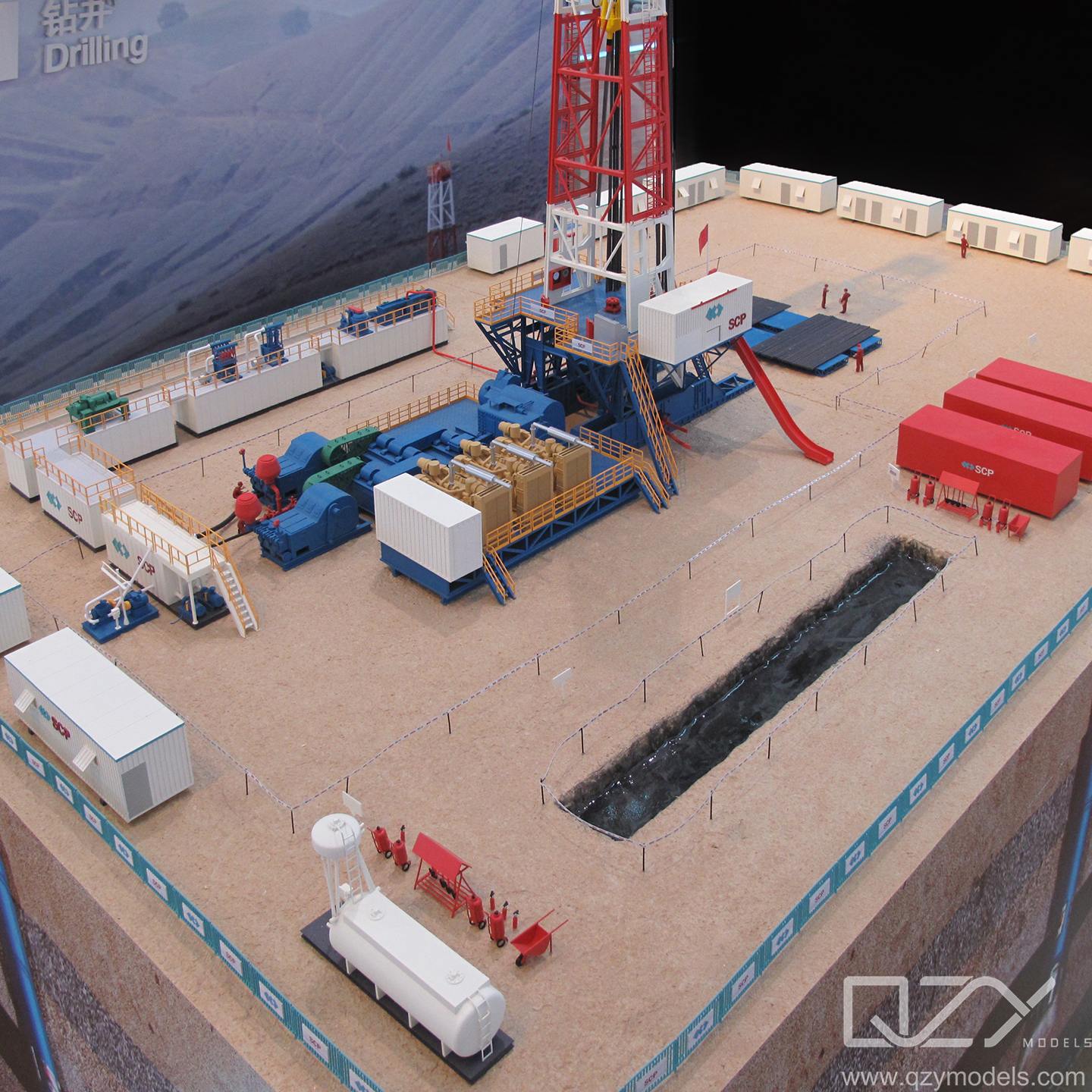
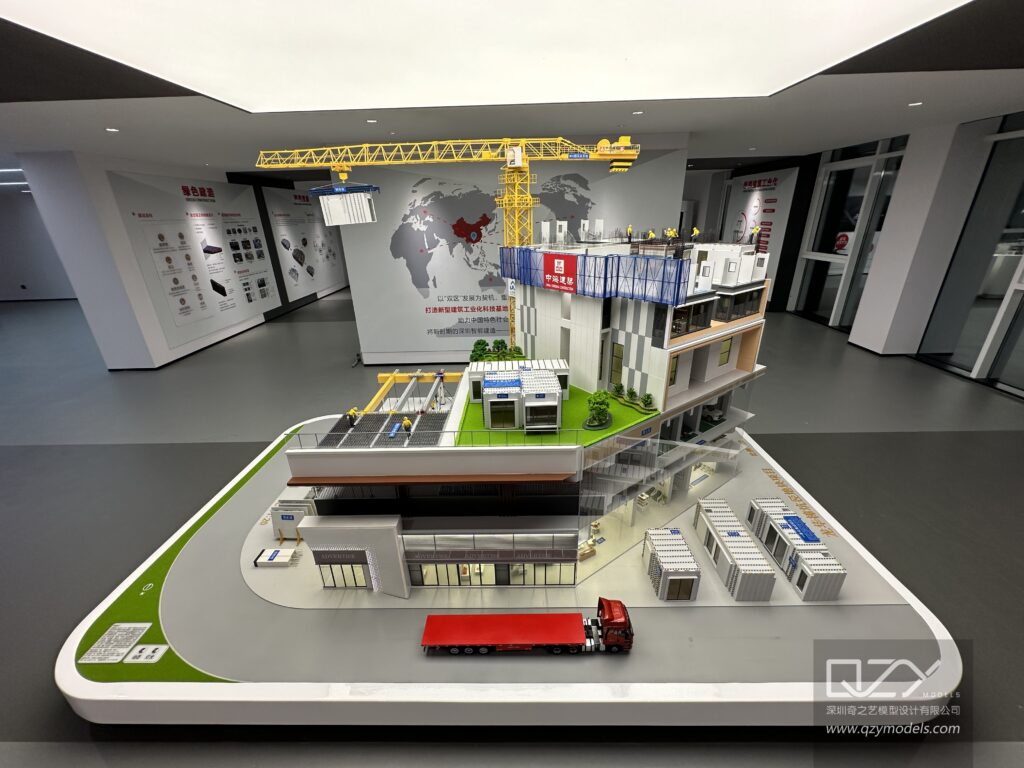
Ensuring dimensional accuracy in large-scale architectural concept models requires precise scaling, digital-to-physical fidelity, and rigorous quality control. By leveraging laser calibration, CAD verification, and advanced material management, expert teams like QZY Models transform vast architectural visions into perfectly scaled, structurally reliable, and visually impressive models.
What Factors Affect Dimensional Accuracy in Large-Scale Models?
Dimensional accuracy in large models depends on scale choice, fabrication methods, environmental conditions, and human oversight. Larger models are prone to cumulative errors if calibration is inconsistent. Specialists at QZY Models implement quality assurance systems to align every component with exact specifications, maintaining proportional integrity across sprawling layouts.
| Factor | Impact on Accuracy | Prevention Technique |
|---|---|---|
| Scale ratio | Controls visual proportion | Maintain consistent 1:200–1:500 ratios |
| Material expansion | Can warp parts | Use stable acrylics, resins, or treated wood |
| Fabrication tool error | Distorts geometry | Daily calibration of CNC, laser, and 3D printers |
How Do Scaling Techniques Affect Model Precision?
Scaling dictates proportional fidelity and the level of detail represented. Large masterplans often use 1:500 or 1:1000 scales for clarity, while intricate sections may use 1:100 to preserve texture and pattern. At QZY Models, automated CAD adjustments and script-based conversions maintain sub-millimeter accuracy across all model sections, ensuring proportional consistency.
Which Fabrication Methods Guarantee Dimensional Stability?
Laser cutting, 3D printing, and CNC milling translate digital geometry into precise physical forms. Laser cutting is ideal for façade elements, CNC milling for topography and foundations, and 3D printing for decorative or complex textures. QZY Models integrates these methods through hybrid workflows, maximizing structural precision and material performance.
| Fabrication Method | Dimensional Precision | Example Component |
|---|---|---|
| CNC milling | ±0.1 mm | Terrain and foundation plates |
| Laser cutting | ±0.05 mm | Façade modules and windows |
| SLA 3D printing | ±0.01 mm | Ornamental details |
Why Are Tolerance Controls Essential in Large Projects?
Tolerance controls prevent minor deviations from accumulating and misaligning large-scale models. Every component is managed within strict limits—often below ±0.02 mm at QZY Models—ensuring seamless assembly and faithful representation of architectural plans.
What Role Does Digital Verification Play in Accuracy Assurance?
Digital verification aligns physical models with 3D digital plans, detecting discrepancies before fabrication. BIM-linked workflows and proprietary auditing scripts at QZY Models ensure every line, proportion, and alignment meets design intent, reducing risk of errors across large, complex models.
Who Oversees Dimensional Quality Control in Professional Studios?
Quality control is managed by specialist engineers and model makers who monitor fabrication at every stage. At QZY Models, CAD engineers, production managers, and finishing technicians perform digital and physical inspections, verifying fit, tolerance, and surface integrity before final assembly.
When Should Dimensional Calibration Begin?
Calibration starts in the digital modeling phase to prevent errors from propagating. Establishing baselines, verifying master drawings, and calibrating equipment early—practices implemented by QZY Models—ensures the first physical cuts and assemblies accurately reflect design data.
Why Is Environmental Control Crucial for Model Accuracy?
Stable temperature and humidity prevent warping or expansion of sensitive materials like acrylic or wood. QZY Models maintains climate-controlled fabrication rooms to protect large-scale models from environmental fluctuations, ensuring consistent dimensional fidelity during production and shipping.
How Can Modular Assembly Preserve Dimensional Precision?
Modular assembly divides massive models into individually calibrated sections, allowing precise fabrication, verification, and surface finishing before reassembly. QZY Models designs interlocking connectors with minimal tolerance gaps to maintain alignment across multi-meter urban or masterplan models.
Could AI and Machine Learning Improve Model Accuracy?
AI analyzes geometric data, predicts deviations, and automates tolerance adjustments. Machine learning tracks fabrication errors and corrects inconsistencies in real time. QZY Models is integrating AI with hybrid workflows to elevate precision and reduce human error in large-scale model production.
QZY Models Expert Views
“Large-scale architectural model accuracy requires a balance of engineering and artistry. At QZY Models, we combine laser calibration, AI-based verification, and environmental discipline to achieve precision down to 0.01 mm. Accuracy is more than numbers—it ensures architects can trust our models to communicate their vision flawlessly.”
— Richie Ren, Founder of QZY Models
Conclusion
Dimensional accuracy in large architectural models combines technology, materials, and expert craftsmanship. Through precise scaling, fabrication control, verification, environmental management, and modular assembly, teams like QZY Models deliver models that faithfully represent complex designs, providing confidence and clarity to architects, developers, and stakeholders.
FAQs
1. How do large models maintain proportional integrity?
By using modular sections calibrated individually and aligned digitally for seamless assembly.
2. What is the acceptable tolerance for high-precision models?
Professional standards are typically below ±0.05 mm, with elite studios like QZY Models achieving ±0.02 mm.
3. How does QZY Models prevent dimensional drift during transport?
Models are shipped in climate-controlled cases with shock absorption and reassembly instructions.
4. Are composite materials reliable for large-scale accuracy?
Yes. Tested composites provide consistent stability and strength over time.
5. Which technologies lead precision improvements today?
AI-based inspection systems and hybrid digital-fabrication pipelines set the benchmark for model accuracy.