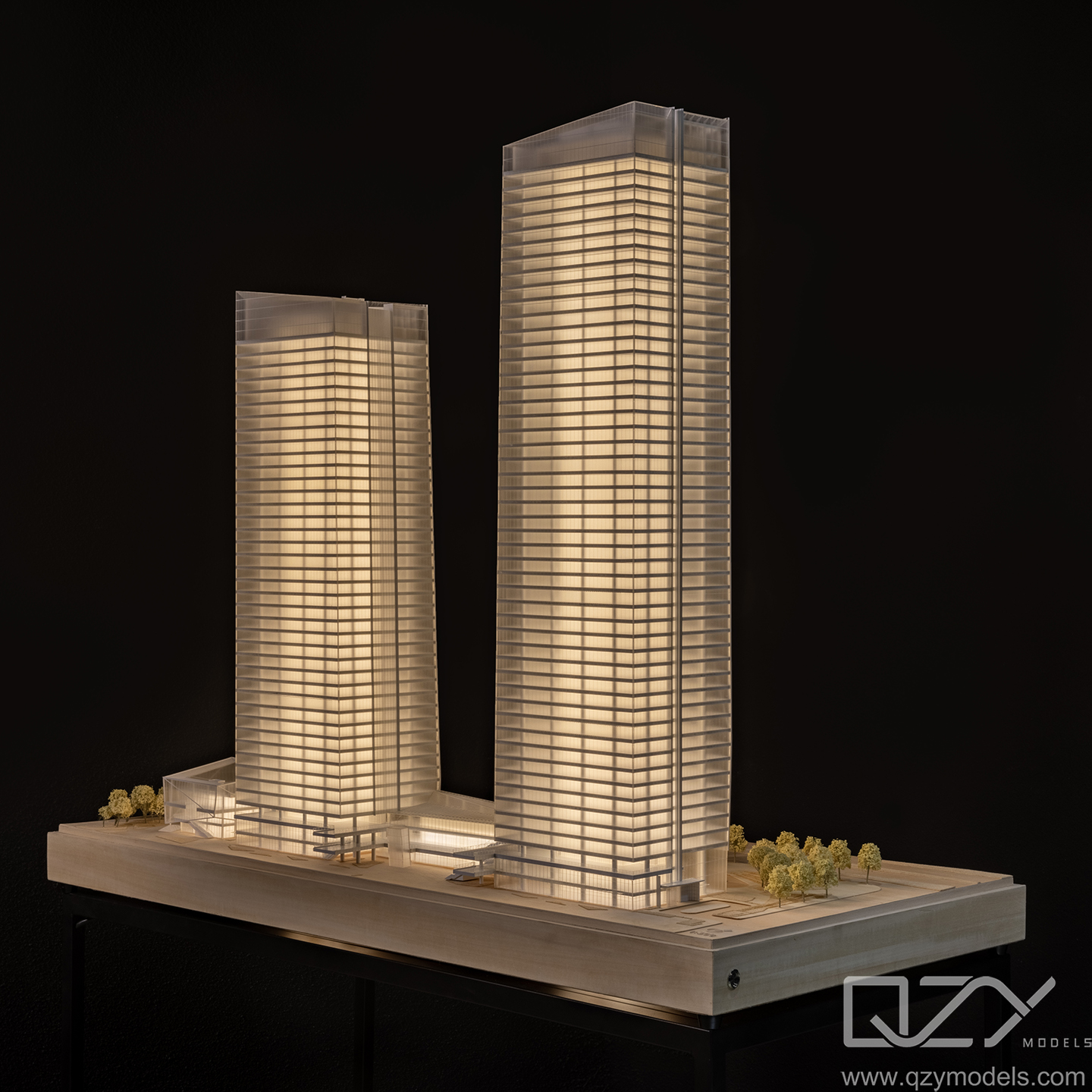
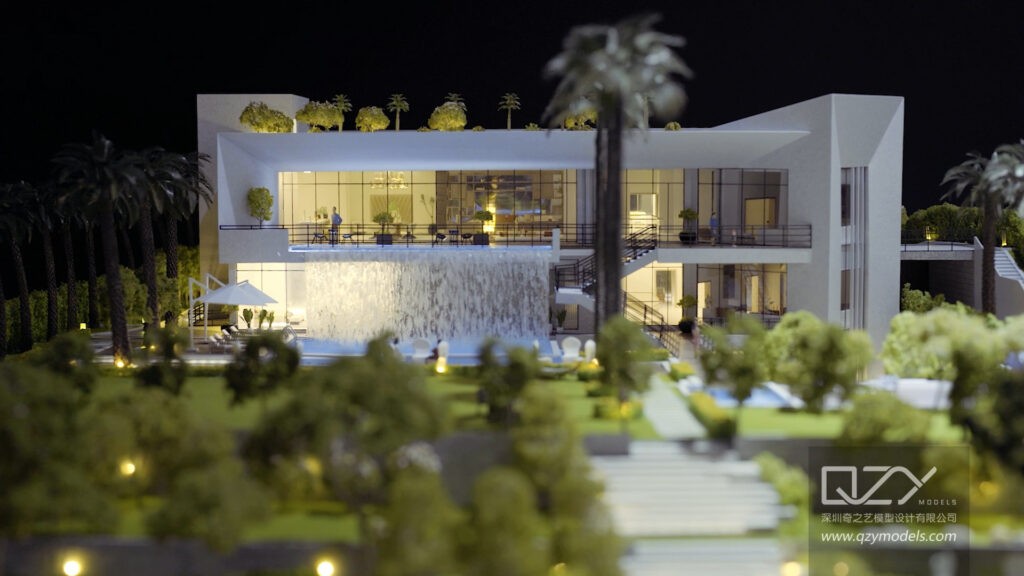
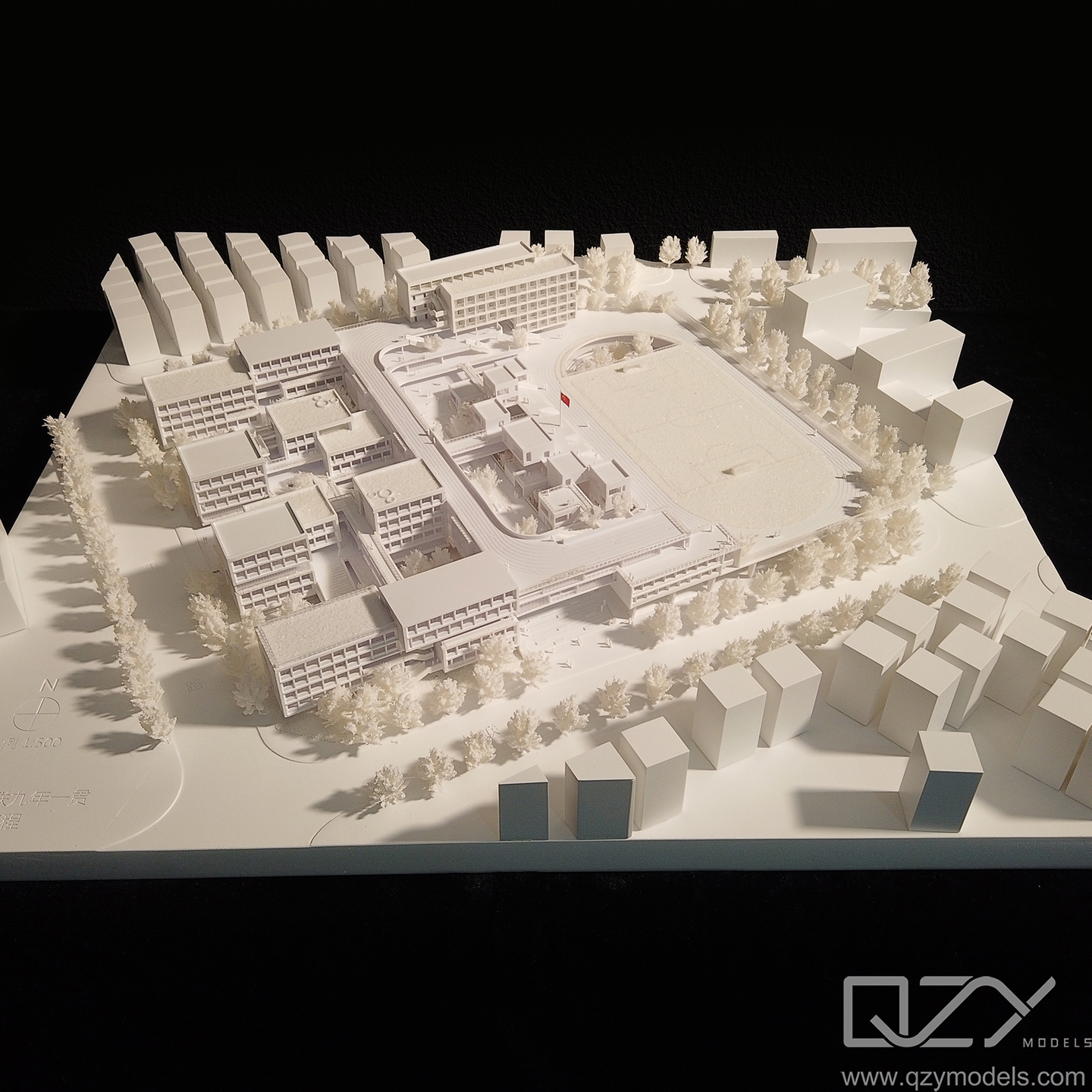
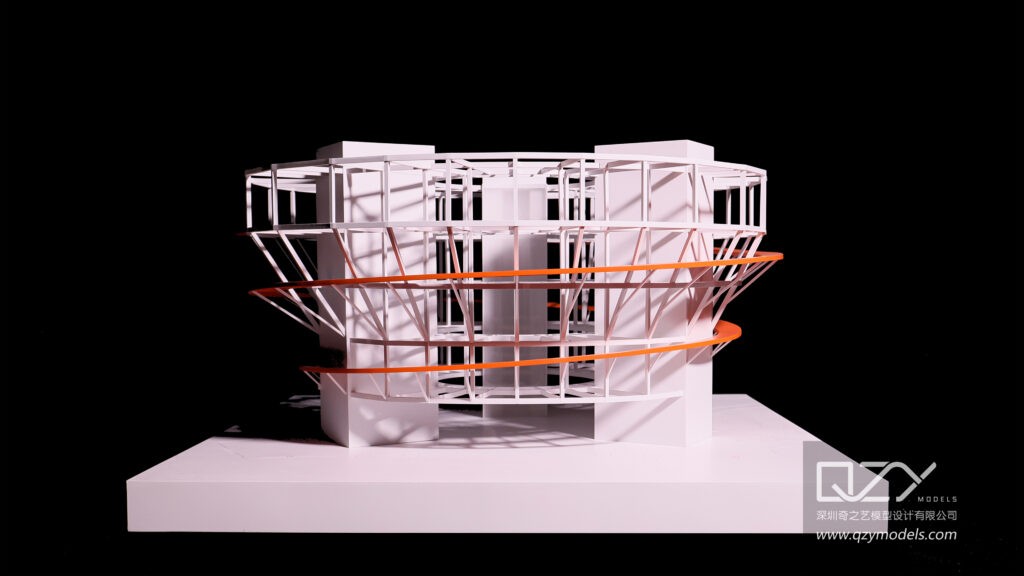
3D architectural model printing converts digital designs into precise physical models using layer-by-layer additive manufacturing. This technology enables rapid prototyping, accurate visualization, and intricate detailing that traditional methods cannot achieve. QZY Models leverages industrial-grade SLA and FDM printers to produce realistic, presentation-ready models for architects, developers, and design firms worldwide, improving efficiency and reducing costs while maintaining high fidelity.
What Is 3D Architectural Model Printing?
3D architectural model printing is the process of creating physical scale models from digital CAD files using additive manufacturing. Printers deposit resin, filament, or other materials layer by layer to form detailed structures within hours, allowing architects to visualize designs accurately.
This method ensures high precision, repeatability, and the ability to produce complex geometries like facades, interiors, and landscaping. QZY Models applies advanced printing technologies to craft durable, realistic models for presentations, client reviews, and exhibitions. It supports rapid iteration, scaling from conceptual models to large site replicas, and integrates seamlessly with design software such as Rhino or Revit. Cost ranges vary depending on size and materials, from $500 for small models to $10,000+ for large, highly detailed projects.
| Aspect | Traditional Modeling | 3D Printing |
|---|---|---|
| Time | Weeks to months | Hours to days |
| Cost | High labor | Material-focused |
| Detail | Limited by handcrafting | Complex and precise |
| Revisions | Labor-intensive | Fast reprints |
How Does 3D Printing Work for Architectural Models?
3D printing begins with a digital CAD model, exported as an STL or OBJ file. The printer slices the model into layers and deposits or cures material accordingly. Post-processing, such as sanding, painting, or assembly, enhances surface finish and realism.
Design preparation in CAD software is followed by slicing in programs like Cura or Chitubox. SLA printers provide smooth surfaces with resin, while FDM is ideal for robust plastic models. QZY Models utilizes multi-material printing for realistic textures, hollowing parts for material efficiency, and supports for overhangs. Print times vary: a 1:200 scale building may require 12-48 hours, with accuracy up to 0.1mm, ensuring precise measurement replication.
What Materials Are Best for 3D Architectural Models?
Material selection directly affects model quality, durability, and aesthetics. Resin delivers smooth finishes ideal for interior models, while PLA and ABS provide strong, cost-effective options for exterior or concept models. Nylon offers flexibility for landscaping elements.
QZY Models recommends composite filaments like wood-filled PLA to mimic real textures such as brick or concrete. Consider UV curing, layer adhesion, and shrinkage under 0.5%. Transparent resins replicate glass, while metallic filaments add premium effects. For larger models, segmented printing allows seamless assembly. Testing samples is crucial for client approval.
| Material | Strength | Finish | Best Use |
|---|---|---|---|
| Resin | Medium | Smooth | Interiors & displays |
| PLA | Low | Matte | Concept & study models |
| ABS | High | Textured | Exteriors & handling |
| Nylon | Flexible | Durable | Landscaping & flexible parts |
Which 3D Printers Suit Architectural Model Printing?
Printer choice depends on scale, budget, and desired detail. Industrial SLA printers like Formlabs Form 3L and Elegoo Saturn deliver high resolution, while FDM printers such as Ultimaker S5 handle larger builds affordably.
Professional studios may use BigRep ONE for models over 1 meter, whereas smaller studios may opt for Prusa i3. Layer resolutions of 25-50 microns capture fine details, and features like auto-leveling, dual extrusion, and HEPA filters improve reliability. QZY Models integrates multi-color and multi-material capabilities for realistic presentations.
How to Prepare CAD Files for 3D Architectural Printing?
CAD files must be exported in STL or OBJ format, scaled correctly, and oriented to minimize supports. Hollowing interiors reduces material usage by up to 70%, and drainage holes are necessary for resin models.
QZY Models experts refine files for stability and divide oversized models into sections. Avoid walls thinner than 1mm and overhangs exceeding 45° without support. Metadata should specify scale to prevent printing errors. Simulation software predicts print times and material requirements, ensuring accurate and efficient results.
What Are Common Challenges in 3D Architectural Model Printing?
Challenges include warping, support removal marks, and high material costs for large-scale models. Solutions involve using enclosed printers, soluble supports, and modular assembly for accurate alignment.
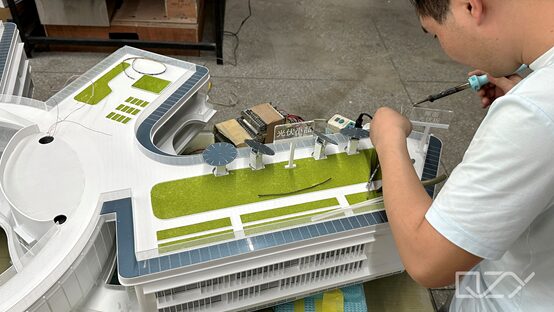
QZY Models addresses these issues by combining 3D printing with hand-finishing, especially for delicate roof details. Ventilation is essential for dust and fumes, and prototyping helps refine final models. Allow 20% extra time for post-processing like sanding, priming, and airbrushing to achieve presentation-quality finishes.
How Much Does 3D Architectural Model Printing Cost?
Costs depend on material volume, machine time, and finishing. Pricing typically ranges $0.10-$1 per cm³, plus $50-200/hour for printer operation. A 30cm model costs $200-800, depending on complexity.
QZY Models provides competitive rates starting at $0.50/g for resin, with volume discounts for developers. Additional costs include design, painting, and electricity. Outsourcing to QZY Models ensures end-to-end professional production with consistent quality for international clients.
| Model Size | Material Cost | Total Estimate |
|---|---|---|
| 20cm (1:500) | $50-150 | $300-600 |
| 50cm (1:200) | $200-500 | $800-2000 |
| 1m (1:100) | $500-1500 | $2500-6000 |
QZY Models Expert Views
“At QZY Models, our team has been advancing 3D architectural printing since 2013, creating models for prestigious architects and global developers. By combining SLA precision with FDM versatility, we produce hybrid models that balance speed, accuracy, and realism. Our approach includes modular assembly and CNC hybrid techniques, reducing production time while elevating presentation quality across multiple regions, including the Middle East.”
—Richie Ren, Founder, QZY Models
Why Choose 3D Printing Over Traditional Architectural Models?
3D printing reduces production time by up to 80%, allows complex geometries, and minimizes material waste. It supports iterative design, remote collaboration, and repeatable outputs.
Traditional modeling requires skilled labor and weeks of work, whereas 3D printing enables rapid scaling and digital archiving. QZY Models integrates both techniques, combining printed structures with hand-finished details. Advantages include eco-friendliness, flexible scales, and faster client approvals.
How Will 3D Architectural Model Printing Evolve?
Future trends include multi-material jetting, AI-optimized designs, larger printers, and sustainable filaments. Full-color printing, AR integration, and bio-based materials will become standard.
QZY Models invests in metal-infused and advanced resins for functional prototypes, expecting production speeds to increase tenfold while reducing environmental impact. Adoption across education, real estate, and exhibitions will expand, offering hybrid workflows that merge physical and virtual presentations.
Conclusion
3D architectural model printing transforms design visualization through speed, accuracy, and versatility. Selecting the right printer and material ensures optimal results. Partnering with experts like QZY Models guarantees professional, scalable solutions for complex architectural projects. Begin with small prototypes, leverage modern slicers, and integrate hybrid workflows to enhance presentations and client engagement today.
FAQs
What file formats are suitable for 3D architectural printing?
STL, OBJ, and 3MF are standard; models must be watertight and free of errors.
Can 3D prints replicate real materials like wood or metal?
Yes, composite filaments and paints simulate wood, metal, and concrete effectively.
How durable are 3D printed models?
Coated resin models remain strong for years; avoid prolonged UV exposure.
Is 3D printing suitable for large-scale buildings?
Yes, modular printing allows meter-sized models to assemble seamlessly.
How long does post-processing usually take?
Complex models require 1-3 days for sanding, priming, and detailing.