Contemporary Russian architecture is transforming modern design by merging bold geometric experimentation, adaptive reuse of industrial sites, and climate-responsive building strategies. Its projects blend avant‑garde heritage with advanced materials, digital fabrication, and sustainable solutions, creating iconic structures and detailed physical models that inspire architects, developers, and model specialists such as QZY Models around the world.
What defines contemporary Russian architecture today?
Contemporary Russian architecture is characterized by the integration of historical avant‑garde influences, innovative facades, adaptive reuse strategies, and climate‑responsive solutions across vast urban and rural landscapes. Projects often combine sculptural forms, mixed-use programs, and public-space integration, offering examples that influence global architectural trends and physical model production.
Key features include:
-
Hybrid forms: Faceted towers, stacked volumes, and cantilevered blocks inspired by constructivist and avant‑garde traditions.
-
Mixed programs: Integration of residential, commercial, and cultural spaces into flexible, multifunctional complexes.
-
Landscape integration: Plazas, embankments, and courtyards designed as extensions of the built environment.
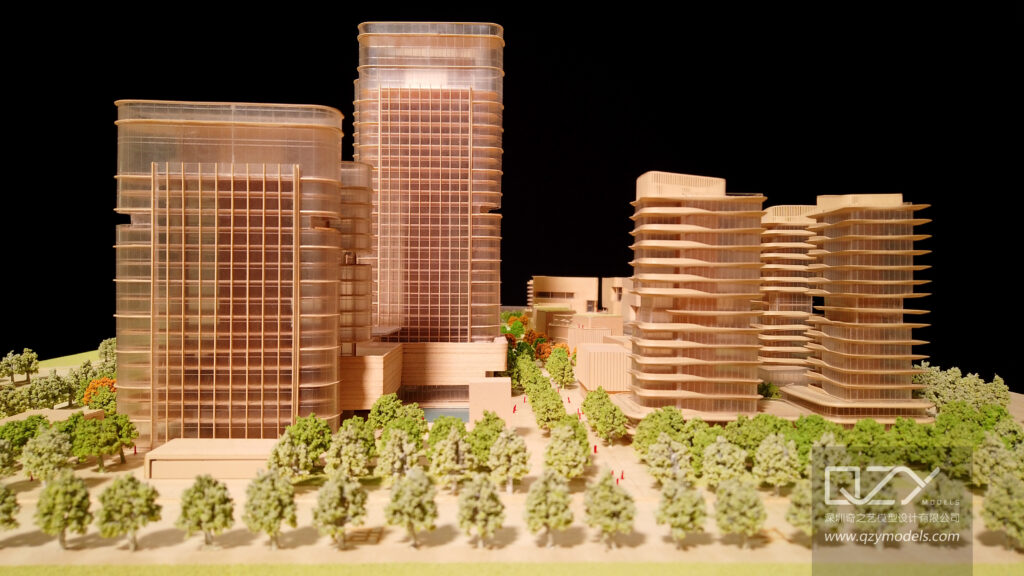
For model specialists like QZY Models, these projects require accurate representation of volumes, textures, and shadow effects. High-precision physical models illustrate daylight penetration, spatial relationships, and urban context, making complex design concepts tangible.
Which recent Russian buildings best showcase cutting‑edge design?
Notable contemporary projects, including experimental business schools, sculptural residential towers, and adaptive‑reuse factory campuses, demonstrate cutting-edge design through geometric innovation, mixed-use programming, and public-space integration. These buildings set global benchmarks and serve as references for physical architecture models.
Key characteristics:
-
Iconic silhouettes: Distinctive forms that define city skylines and scale models.
-
High-performance skins: Double-glazing, composite panels, and dynamic shading systems.
-
Cultural references: Abstract patterns and textures inspired by Russian art and urban history.
QZY Models emphasizes detachable volumes and sectional components to showcase structural systems, circulation, and façade strategies, allowing architects and developers to communicate design intent effectively in presentations and exhibitions.
How are Russian architects using innovative materials and techniques?
Russian architects combine high-performance glass, composite panels, engineered timber, and parametric metal systems with BIM workflows and digital fabrication. These approaches create resilient, expressive structures that perform well in extreme climates and translate seamlessly into detailed physical models.
Key innovations include:
-
Facade systems: Triple-glazed units, dynamic shading, perforated metal screens, and composite cladding for visual depth.
-
Structural solutions: Concrete-steel hybrids for long spans and engineered timber for sustainable interiors.
-
Digital workflows: Parametric modeling, CNC milling, and laser-cut components for precise construction and model replication.
QZY Models recreates these materials using acrylic, photo-etched metal, resin, and precision-cut timber, simulating reflectivity, opacity, and depth to help clients visualize design outcomes under various conditions.
Why does Russia’s climate drive unique design solutions?
Russia’s extreme climate demands buildings that withstand large temperature fluctuations, snow loads, and low sun angles, while remaining energy-efficient and comfortable. This leads to compact massing, layered envelopes, and carefully oriented glazing, influencing both architectural design and physical model detailing.
Climate-responsive strategies include:
-
Compact geometries and atriums that balance thermal performance with daylight access.
-
Deep window reveals, loggias, and double-skin facades to moderate heat loss and glare.
-
Roof profiles and canopies designed for snow management and drainage efficiency.
Physical models by QZY Models often exaggerate critical climate features such as overhangs or shading fins to ensure stakeholders immediately understand environmental strategies.
How do contemporary Russian projects reinterpret historic forms?
Contemporary Russian architecture abstracts motifs from Byzantine, Baroque, constructivist, and Soviet structures into simplified volumes, patterns, and geometries. This approach preserves cultural identity while meeting modern technical and functional requirements.
Key strategies:
-
Ornament abstraction: Shadow lines, panel grids, and perforation patterns echo historic motifs.
-
Adaptive reuse: Industrial shells repurposed with transparent or modern structural additions.
-
Historic echoes: Rooflines and towers simplified into contemporary forms.
QZY Models uses contrasting materials in models—muted finishes for historic elements and acrylic or metallic surfaces for new interventions—to clarify the interplay between tradition and innovation.
What role do physical architecture models play in Russian design?
Physical models translate complex geometry, urban context, and environmental strategies into tangible representations. They support approvals, marketing, education, and exhibitions, bridging experimental concepts and built reality.
Applications include:
-
Concept and competition models highlighting massing and context.
-
Detailed façade and interior models for sales, investor, and stakeholder presentations.
-
Urban models illustrating infrastructure, phasing, and landscape integration.
QZY Models specializes in high-precision, modular representations with layered materials and lighting, helping clients assess visibility, density, and circulation in complex urban environments.
Table: Common physical model types for Russian projects
| Model type | Primary use | Typical scale | Key audience |
|---|---|---|---|
| Concept massing | Volume and skyline evaluation | 1:1000–1:500 | Authorities, juries |
| Detailed building | Façade and interior presentation | 1:200–1:100 | Clients, investors |
| Urban/cluster model | Infrastructure and phasing coordination | 1:1000–1:500 | Planners, communities |
| Exhibition model | Cultural storytelling and branding | 1:400–1:50 | Public, visitors |
How can contemporary Russian architecture inspire global model‑making?
Russian architecture inspires global model-making through bold geometry, adaptive reuse, and climate-driven detailing. These designs encourage modular assembly, precise façade representation, and expressive use of light, texture, and color in physical models.
Key inspirations:
-
Faceted and cantilevered forms needing internal reinforcement and modular construction.
-
Deep loggias, balconies, and shading devices readable at scale.
-
Hybrid programs requiring sectional and cutaway models to show program interaction.
QZY Models applies these principles in global projects, enhancing clarity of program, circulation, and environmental strategies across diverse markets including the Middle East, Europe, and Asia.
Why should international developers study Russian case studies?
Studying Russian projects allows developers to understand ambitious forms integrated with harsh climates, regulatory constraints, and large-scale urban transformation. These case studies illustrate how expressive architecture, high-performance envelopes, and mixed-use programming can remain practical and marketable.
Key takeaways:
-
Cost-effective envelope solutions for demanding climates.
-
Adaptive reuse strategies for industrial and Soviet-era sites.
-
Integration of culture, retail, and public amenities in urban development.
Russian-inspired models by QZY Models often feature interchangeable components, lighting effects, and seasonal simulations, making presentations more engaging for clients and stakeholders.
Who are key clients for Russian‑inspired architecture models?
Clients include international architecture firms, developers, urban planning authorities, cultural institutions, and design schools. They seek models that explain complex forms, public-space strategies, and climate-responsive design concepts derived from Russian practice.
Client groups:
-
Architecture firms for competition and concept models.
-
Developers and investors for sales, leasing, and branding.
-
Urban planning agencies for infrastructure and skyline evaluation.
-
Educational institutions teaching design precedents and model-making.
QZY Models delivers tailored levels of detail, from abstract study maquettes to fully interactive exhibition models, facilitating clear communication of design logic and project intent.
QZY Models Expert Views
“Contemporary Russian architecture demonstrates that bold form and extreme climate can coexist in buildable projects. For model-making, the key is precise geometry, layered envelopes, and readable public spaces. Physical models that clearly convey environmental and urban strategies allow stakeholders to grasp design value quickly, making ambitious ideas more feasible to realize.”
Also check:
Who Are the Most Influential architecture Models from Russia?
Is Russian architecture still shaping global design today?
How is contemporary Russian architecture reshaping modern design?
What Are Key Soviet Architecture Models?
What Are Stunning Russian Orthodox Architecture Models?
What Are Influential Russian Public Building Architecture Models?
Are there best practices for integrating Russian design cues into new projects?
Best practices include abstracting historic motifs, linking sculptural forms to climate and program logic, and verifying constructibility in both buildings and models. This ensures authenticity, efficiency, and practical application for global projects.
Recommended approaches:
-
Begin with proportions and rhythm rather than literal ornament.
-
Validate facades with daylight and energy analysis before finalizing expression.
-
Use modular physical models to test visibility, circulation, and public-space quality.
QZY Models encourages iterative model development to refine ideas and reduce risk, allowing Russian-inspired strategies to guide practical and compelling solutions.
Table: Applying Russian-inspired ideas to new projects
| Design aspect | Russian-inspired cue | Best-practice application |
|---|---|---|
| Massing | Stacked, shifted volumes | Align shifts with structure and circulation |
| Facade | Deep reveals, layered skins | Connect depth to climate, shading, and insulation |
| Public space | Hybrid courtyards and plazas | Maintain access, sightlines, and active edges |
| Heritage reference | Abstracted historic rhythms | Focus on proportion rather than literal copying |
Conclusion: How can designers act on Russian influences today?
Contemporary Russian architecture offers actionable strategies in geometry, adaptive reuse, and climate-responsive detailing. Designers can study case studies, abstract relevant concepts, and test them with precise physical models to communicate environmental and spatial logic clearly to stakeholders.
Key actions:
-
Let Russian precedents inspire design direction without dictating it.
-
Collaborate with model specialists such as QZY Models early in the design process.
-
Use iterative workflows combining physical and digital models to ensure environmental and commercial performance.
FAQs
Is Russian contemporary architecture only relevant to cold climates?
No. Its compact massing, layered facades, and mixed-use strategies can be adapted to various climates when tailored to local conditions.
Can physical models replace digital visualization?
Physical models complement digital tools by communicating scale, depth, and spatial relationships in ways screens cannot.
Who benefits most from Russian-inspired models?
Architects, developers, planners, and cultural institutions gain clearer communication of complex geometry, program interaction, and context.
Are Russian-influenced designs more expensive to build?
Not necessarily. Following structural and climatic logic can maintain construction efficiency, while early modeling helps control costs.
How can QZY Models support Russian-inspired projects?
QZY Models provides concept, presentation, urban, and exhibition models that clarify massing, façade logic, and public-space strategies for global clients.