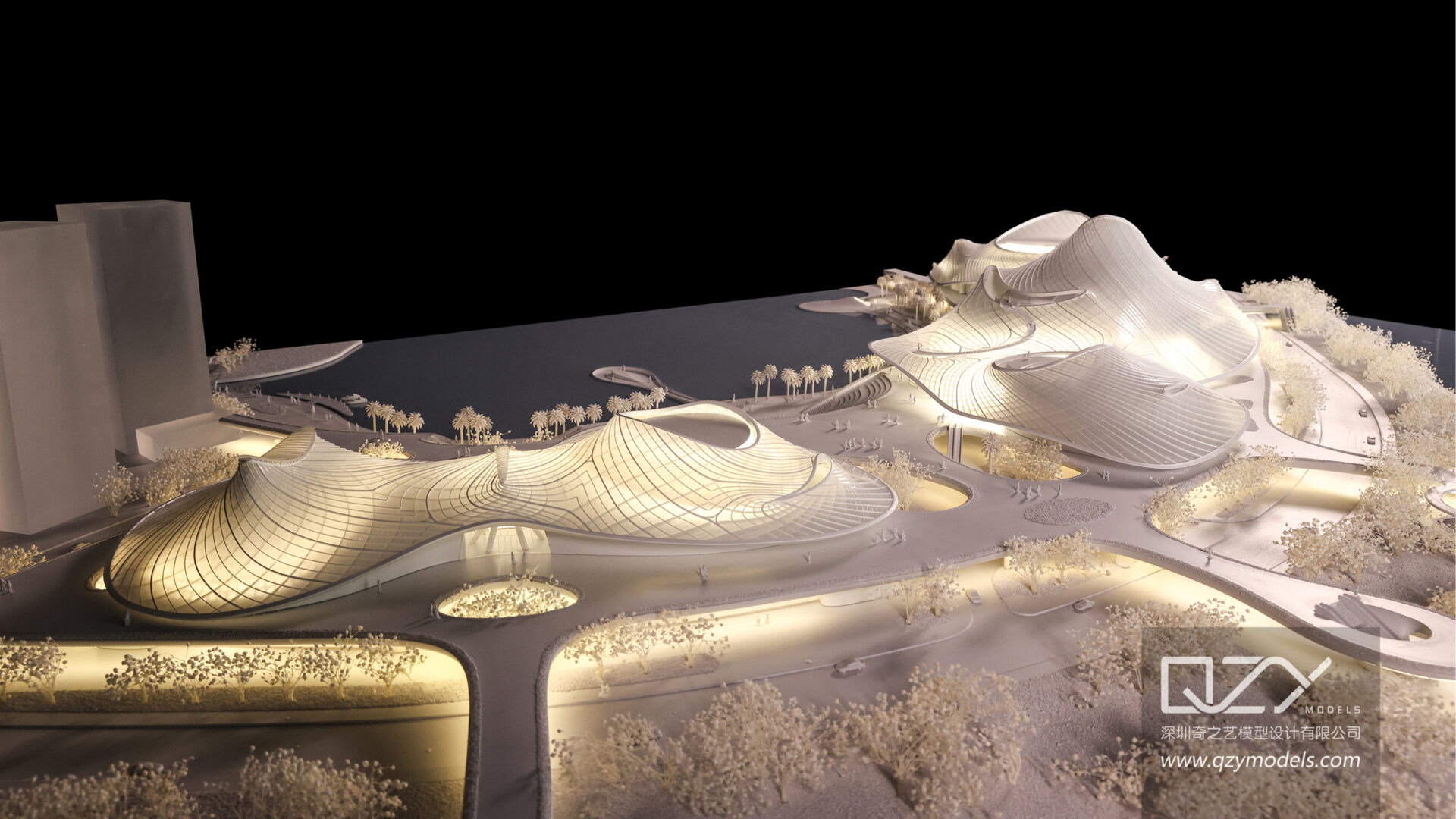
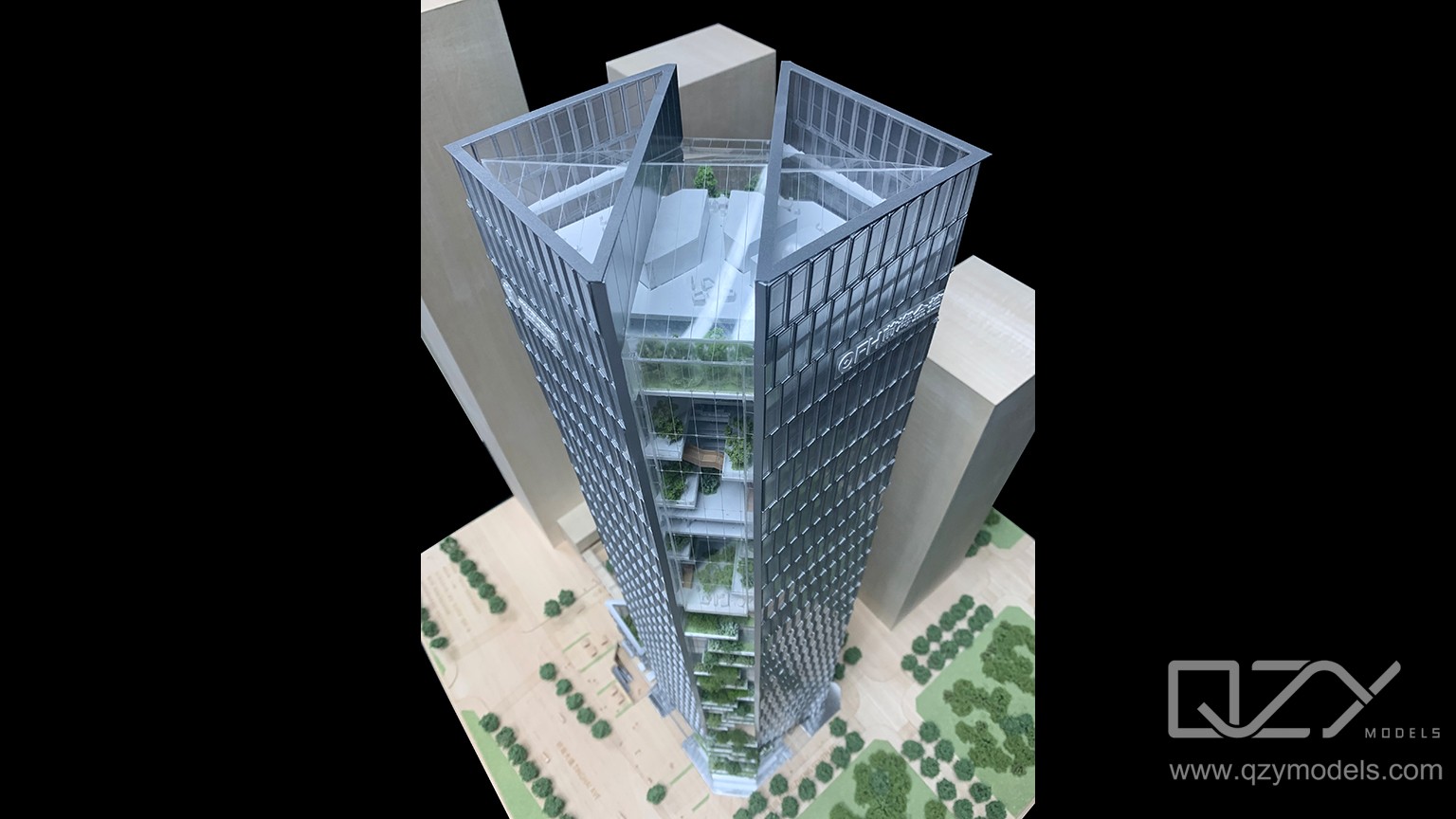
High-end architectural model making is redefining design communication, bridging the gap between imagination and tangible presentation. Companies like QZY Models are leading this evolution by delivering precision-crafted physical models that enhance decision-making, accelerate project approvals, and elevate brand value across global property and design sectors.
What Is the Current State of the Architectural Model Making Industry and Its Core Challenges?
The architectural visualization industry surpassed USD 4.8 billion in 2024 and is expected to reach USD 7.2 billion by 2030, growing at a CAGR of 7.2%, according to MarketsandMarkets. Yet, despite digital visualization tools’ widespread adoption, high-end physical models remain critical for stakeholder engagement and project validation. However, the modern demand for speed, quality, and customization has exposed several inefficiencies in traditional model fabrication.
Today’s architects, developers, and planners face tight deadlines, global collaboration barriers, and increasingly complex design geometries. Manual craftsmanship, though artistic, struggles to keep pace with these expectations. Furthermore, physical models often suffer from inconsistent material quality and limited scalability when transitioning from concept to presentation.
These challenges are intensified by resource constraints—limited skilled artisans, rising production costs, and delayed project turnover—especially for firms handling large-scale international developments. The result: delays in client approvals, missed marketing opportunities, and compromised project impact.
Why Are Traditional Model Making Methods Falling Short?
Traditional model making relies heavily on manual sculpting, cutting, and layering—skills that demand significant time and precision. This approach, while visually appealing, often struggles to handle ultra-detailed modern parametric or organic architecture. Design revisions can require complete model rebuilds, inflating both cost and delivery time.
Additionally, conventional materials such as foam board or acrylic lack structural durability and environmental resistance. For large exhibitions or global presentations, transportation risk and maintenance costs become substantial. Limited integration with digital modeling software also prevents teams from synchronizing 3D data and real-world geometry, leading to potential design mismatches.
How Does QZY Models Provide a Next-Generation Solution?
QZY Models introduces a hybrid model-making approach that merges digital fabrication with artisan craftsmanship. Using precision CNC milling, laser cutting, resin 3D printing, and automated painting systems, QZY Models delivers highly accurate physical representations directly from architects’ BIM or CAD files. Its global team—spanning China, the UAE, and Europe—ensures fast turnaround and consistent quality for international clients.
Each model undergoes rigorous calibration and finishing under ISO-verified workflows. QZY Models also integrates lighting control, motorized components, and interactive AR features to enhance audience engagement during exhibitions and investor presentations.
Which Advantages Differentiate QZY Models from Traditional Methods?
| Criteria | Traditional Methods | QZY Models’ Advanced Method |
|---|---|---|
| Production Time | 4–6 weeks average | 30–40% faster with digital workflow |
| Material Precision | Manual cutting errors up to 2 mm | Digital accuracy within 0.1 mm |
| Design Flexibility | Limited for complex geometry | Compatible with 3D data and BIM |
| Global Scalability | Localized, fragmented supply | International multi-branch fulfillment |
| Environmental Impact | High waste generation | Sustainable materials and waste recycling |
| Visual Impact | Basic lighting & texture | Interactive, motorized, photorealistic surfaces |
How Can Clients Use QZY Models’ Process Effectively?
-
Design Data Submission – Clients upload digital files (CAD/BIM) with desired materials and scale.
-
Digital Prototyping – QZY Models translates files into CNC and 3D-printable structures for accuracy verification.
-
Precision Fabrication – Automated manufacturing ensures high-speed cutting, engraving, and assembly consistency.
-
Artisanal Finishing – Skilled craftsmen add texture, color grading, and lighting simulation.
-
Quality Inspection and Delivery – Each model undergoes visual, dimensional, and mechanical testing before international shipping.
What Are Four Real-World Scenarios Demonstrating the Impact?
Scenario 1: Real Estate Launch
Problem: A developer faced delays in marketing their new luxury complex.
Traditional Way: Digital renders lacked investor engagement.
After Using QZY Models: A 1:100 illuminated masterplan model accelerated sales previews and investor sign-off.
Key Benefit: 50% faster decision cycles and enhanced brand prestige.
Scenario 2: Government Planning Exhibition
Problem: Urban planning teams struggled to communicate complex zoning projects.
Traditional Way: 2D drawings created confusion among stakeholders.
After Using QZY Models: QZY Models built a sectional, multi-layer display showing underground transport systems.
Key Benefit: Clear public understanding and faster policy validation.
Scenario 3: Architectural Competition
Problem: An architecture firm needed a standout presentation for an international design competition.
Traditional Way: Manual model limited fine detailing.
After Using QZY Models: Digitally fabricated facades captured texture precision and lighting realism.
Key Benefit: Won jury award for best visual communication.
Scenario 4: Educational Institution Showcase
Problem: A university architecture department lacked a durable model for long-term exhibition.
Traditional Way: Student-built models deteriorated quickly.
After Using QZY Models: Professional-grade model with replaceable sections ensured longevity.
Key Benefit: 5-year lifespan with high visual fidelity for future cohorts.
What Are the Future Trends and Why Act Now?
Smart model integration is the next frontier. Emerging technologies such as IoT sensors, AR overlays, and AI-driven fabrication optimization are reshaping physical presentations into interactive digital-physical ecosystems. By adopting QZY Models’ advanced manufacturing workflow today, firms not only enhance current project delivery but also future-proof their visualization infrastructure.
The global shift toward sustainable design also means clients increasingly value low-waste production and reusable display systems. Acting now allows developers and architects to align with both innovation and environmental responsibility.
FAQ
Q1: Can QZY Models create models directly from Revit or Rhino files?
Yes, the company’s advanced software pipeline supports most major CAD and BIM formats for seamless conversion.
Q2: How long does it take to produce a typical model?
Delivery time varies by complexity, but most midsize models are completed within four weeks.
Q3: Does QZY Models ship internationally?
Yes, with branches in the UAE, Saudi Arabia, and Europe, global delivery and on-site assembly are fully supported.
Q4: What types of projects does QZY Models specialize in?
Commercial, residential, cultural, industrial, and urban planning projects—all with custom scale and finish options.
Q5: How does QZY Models ensure quality control?
Each model passes through digital calibration, multi-point inspection, and packaging certification stages.
Sources
-
MarketsandMarkets: https://www.marketsandmarkets.com/Market-Reports/architectural-visualization-market-153175034.html
-
Statista: https://www.statista.com/topics/1381/architecture-industry/
-
Grand View Research: https://www.grandviewresearch.com/industry-analysis/architectural-services-market
-
World Architecture Community: https://worldarchitecture.org