3D printing architecture models transforms digital CAD designs into precise physical replicas. By exporting STL or OBJ files, slicing with software like Cura or PrusaSlicer, and printing on FDM or SLA machines, architects achieve high-detail facades, interiors, and masterplans. QZY Models applies optimized scales, supports, and post-processing techniques to deliver professional, photorealistic models for client presentations and rapid prototyping.
What Are 3D Printed Architecture Models?
3D printed architecture models are scaled physical representations of buildings or urban sites created layer by layer from digital designs using additive manufacturing. They enable accurate visualization of complex geometries and architectural details, exceeding traditional handcrafting in speed and precision.
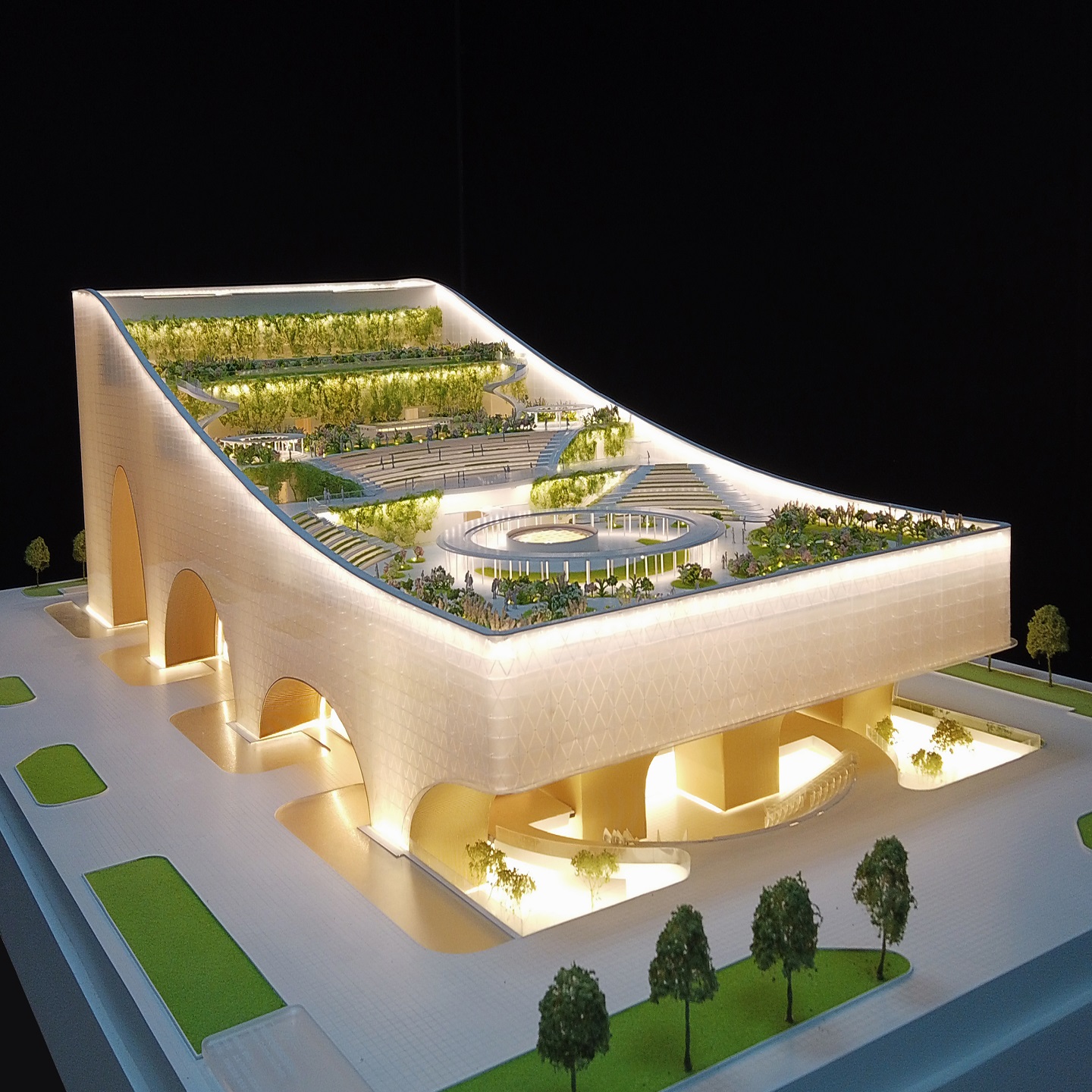
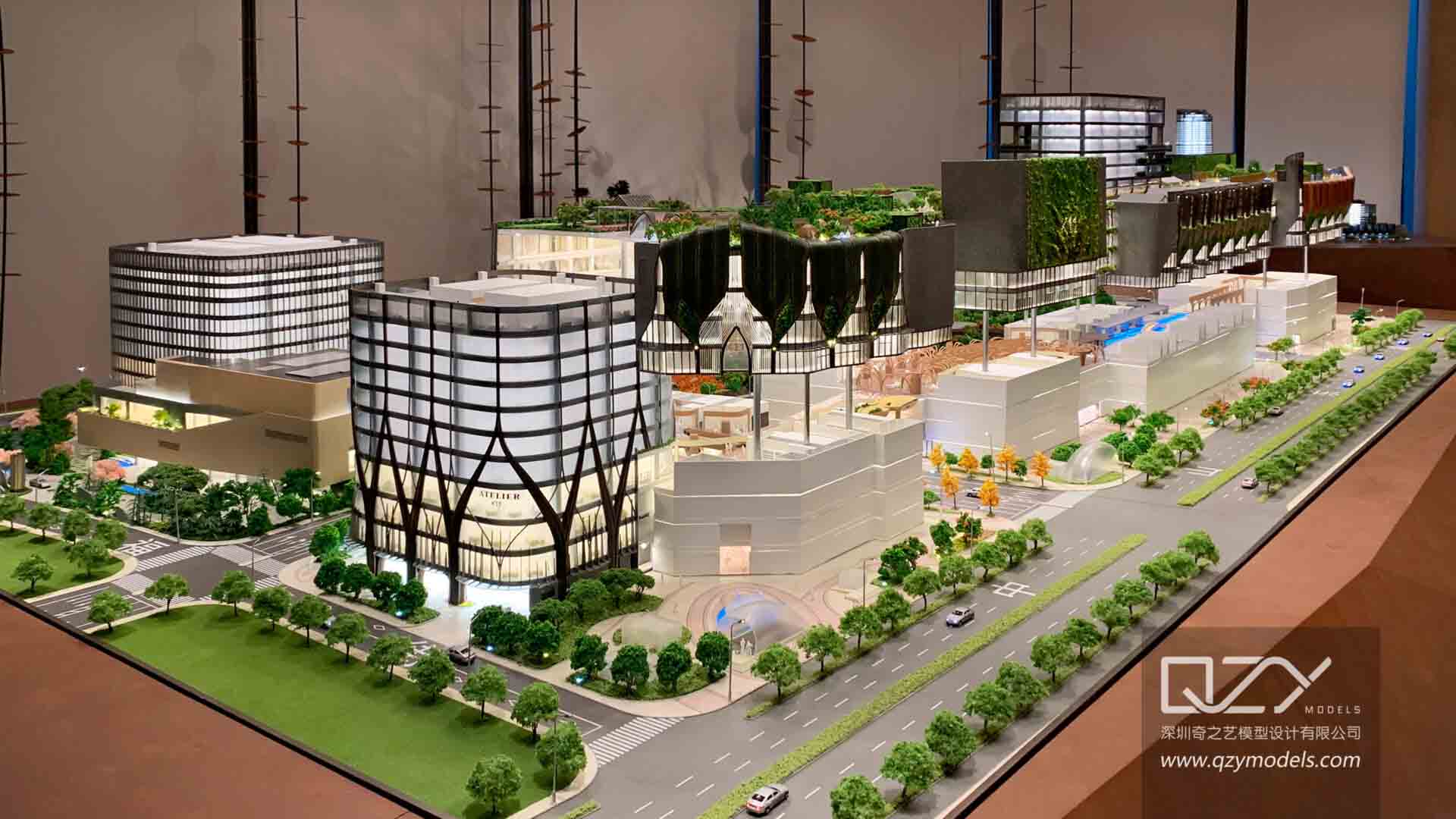
QZY Models combines digital 3D printing with traditional craftsmanship to produce stunning models for clients like Foster + Partners. This integration captures intricate facades, lattice structures, and interior layouts impossible with manual methods. Applications range from urban planning to interior mockups and industrial prototypes, with high-resolution SLA printers ensuring photorealistic results.
Why Use 3D Printing for Architecture Models?
3D printing reduces production time from weeks to hours and cuts labor costs by up to 70%. Complex designs with overhangs, lattices, or organic forms can be realized with minimal material waste. QZY Models reports threefold faster turnarounds for Vanke projects, allowing iterative design adjustments without exceeding budgets.
Benefits include:
-
Faster iterations: Rapid prototyping accelerates client feedback.
-
Cost efficiency: Reduced labor and material usage.
-
Sustainability: PLA filaments and resins reduce environmental impact.
-
Detail fidelity: Fine textures, lattice structures, and facades are achievable.
| Benefit | Traditional Methods | 3D Printing |
|---|---|---|
| Time | Weeks | Hours/Days |
| Cost | High labor | 50-70% less |
| Detail | Limited | Intricate |
| Iterations | Few | Unlimited |
How to Prepare Designs for 3D Printing?
Preparation ensures clean, accurate prints. Architects use CAD software such as Rhino, SketchUp, or Revit to export STL or OBJ files. Models must be watertight, scaled appropriately (commonly 1:200), and oriented to minimize supports.
QZY Models specialists optimize prints by hollowing interiors for resin efficiency and adding drainage holes to prevent trapped material. Key steps:
-
Modeling: Parametric tools for scalability.
-
Slicing: Adjust layer height (0.1–0.2mm), infill 20%, and overhangs at 45°.
-
Supports: Tree-like structures for minimal surface marks.
Test prints at coarser settings before final production to identify potential errors.
What Materials Work Best for 3D Prints?
Material choice dictates strength, finish, and realism. PLA is ideal for affordable prototypes, ABS/ASA provides durability, and resin (SLA) achieves high-detail facades. PETG balances flexibility and strength, while composites like woodfill mimic textures.
QZY Models uses resin for luxury 1:100 models to capture delicate window mullions, while FDM efficiently handles 1:500 site plans.
| Material | Strength | Detail | Cost | Best For |
|---|---|---|---|---|
| PLA | Medium | Good | Low | Concepts |
| Resin | High | Excellent | Medium | Facades |
| ABS | High | Fair | Low | Exteriors |
| PETG | High | Good | Medium | Interiors |
Post-processing with primers improves paint adhesion and surface finish.
Which 3D Printers Suit Architecture Models?
Printer selection depends on model size, detail, and production volume. FDM printers like Prusa i3 and Ultimaker S5 suit larger models economically, while SLA printers such as Anycubic Photon or Formlabs provide sub-50μm layer resolution for intricate textures. Industrial options like Stratasys manage very large builds.
QZY Models leverages hybrid workflows—FDM for massing, SLA for facades—to balance speed and precision across multiple international offices.
Categories:
-
Desktop FDM: Budget-friendly, 200x200mm build.
-
Resin SLA: High resolution, detailed facades.
-
Large-format printers: Over 1m builds for masterplans.
How to Post-Process 3D Printed Models?
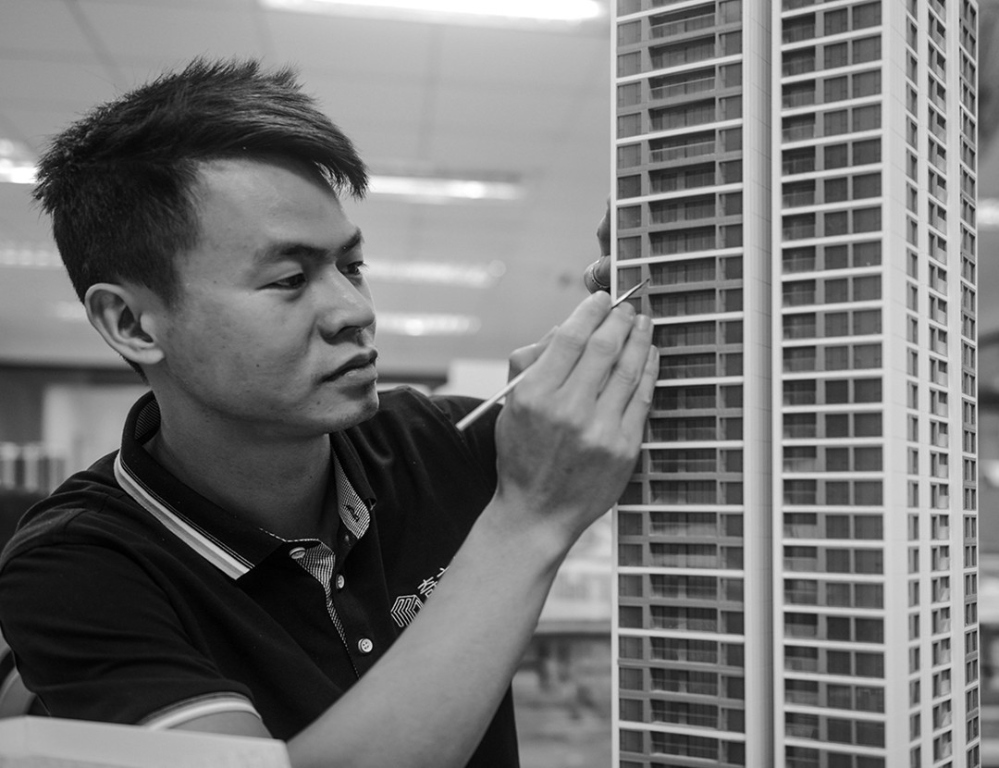
Post-processing elevates models to professional standards. Steps include support removal, sanding, applying filler or primer, painting, and sealing. Resin prints require UV curing; ABS can be vapor-smoothed.
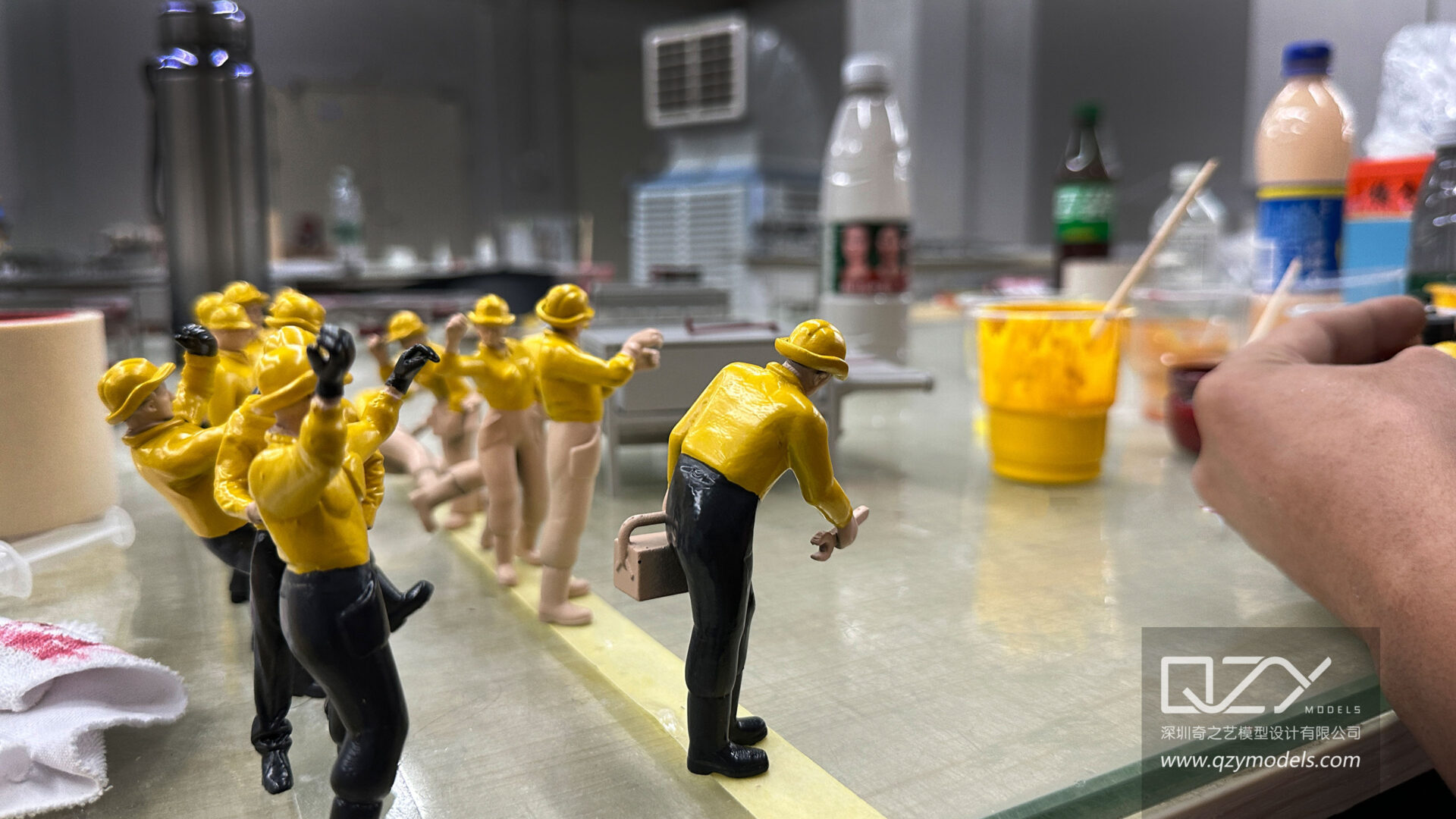
QZY Models applies wet-sanding (400–2000 grit), airbrushed metallic paints, and landscaped bases to achieve exhibition-quality realism. Techniques:
-
Smoothing: Epoxy or primer coatings.
-
Detailing: Dry-brush highlights.
-
Bases: Acrylic or resin landscapes for presentation.
QZY Models Expert Views
“3D printing allows architects to iterate designs rapidly, turning digital concepts into physical prototypes overnight. At QZY Models, we integrate SLA precision with CNC bases for hybrid models. A Saudi tower project at 1:200 demonstrated lattice details impossible by hand. Our process—digital design, physical print, post-processing—ensures accuracy and visual impact for clients including Foster + Partners.”
—QZY Models Team
What Scales Optimize 3D Architecture Prints?
Scales between 1:100 and 1:200 are ideal for building models, balancing detail with printer capability. Larger scales, such as 1:50, require high-resolution printers. Site plans often use 1:500 or greater.
| Scale | Printer Type | Detail Level | Build Time |
|---|---|---|---|
| 1:500 | FDM | Massing | Short |
| 1:200 | FDM/Resin | Facades | Medium |
| 1:100 | Resin | High | Long |
| 1:50 | Industrial | Ultra | Very Long |
QZY Models calibrates models to bed sizes to maximize efficiency without sacrificing accuracy.
How Does 3D Printing Compare to Traditional Methods?
3D printing is significantly faster, cheaper for multiple iterations, and excels in producing complex geometries. Traditional handcrafting delivers exceptional surface finishes. Hybrid workflows combining 3D printing and manual detailing often achieve the best balance of speed, precision, and visual quality.
QZY Models saves clients up to 60% in cost while maintaining bespoke quality.
Can 3D Prints Scale to Full Construction?
Large-scale 3D printing can construct walls and structures using concrete or specialized extruders. Models at 1:50 serve as prototypes for houses or urban elements. Challenges include build speed, regulatory compliance, and material properties, but QZY Models demonstrates feasibility in prototyping urban innovations.
Conclusion
3D printed architecture models deliver speed, precision, and design flexibility. Key takeaways: choose the right material for detail, iterate digitally and physically, and integrate hybrid finishing for professional presentation. QZY Models offers turnkey solutions, combining cutting-edge printing with expert craftsmanship for superior client-ready models.
FAQs
What resolution is best for 3D architecture prints?
0.05–0.1mm layers for SLA; 0.2mm layers suffice for FDM massing models.
Is PLA strong enough for display models?
Yes, for visual presentation. Use PETG or ABS for handling and structural reinforcement, applied by QZY Models as needed.
How long does a 1:200 building print take?
FDM: 4–12 hours; resin SLA: 24+ hours depending on detail.
Can I paint 3D prints directly?
Prime first for adhesion; acrylics work best after sanding.
What is the largest practical 3D model scale?
1:50 interiors on professional printers; larger scales require modular assembly.